That Sambir is a special town I had known for a long time. And now the chance came to see it for myself. Two hours on the road on the Stryi — Sambir suburban train, and a rather short autumn day ahead.

By the railway station I saw a monument to the deported Ukrainians. The sculpture of a woman with three children is set on rails laid out in the shape of a cross. She walks her own way of the cross, as did hundreds of thousands of Ukrainians deported to Siberia by the Bolshevik authorities from the territories of post-war Poland.

Here is the new Cathedral of the Protection of the Holy Mother of God. It was built on the site of a park that had been laid out in Soviet times right on top of a cemetery. Now this ground holds sculptural compositions of the episodes of the Way of the Cross of Jesus Christ. Landscaping work was still going on here.


Sambir is a town of different religious denominations, and there are many churches here. The most ancient one stands in the centre. Propping up the sky is the Roman Catholic church of the Beheading of John the Baptist, built in 1530 with Gothic elements on the site of a church burned down by the Tatars.


The Church of St Peter Koniushkevych is one of the finest Orthodox churches of the Kyiv Patriarchate.

The Church of the Nativity of the Holy Mother of God, built in 1738, keeps the relics of St Valentine. Lovers, take note.

The hall of organ and chamber music is housed in the former Bernardine church. But there was no concert that day, alas. Next door, in the former monastery, is the college of culture. How could it not be here? Sambir is a town of cultural traditions and educational institutions.

I saw School No. 1.

In front of the building of the social sciences and humanities faculty of the I. Ya. Franko Drohobych Pedagogical University stands a monument to the poet.

Along the way my eye kept catching a multitude of monuments and memorial plaques.


The town hall, built in the 17th century, needs to be photographed early in the morning. There are a lot of people around, and children hang off the cannons. Sambir is a town of tourists.

A woman came up to me and asked me to photograph her by the town hall. I took her handbag so that this eternal ladies' attribute would not be in her hands. I took a few shots, and we talked a little. It turned out that she was a Lviv woman who had come to photograph the landmarks on her day off. I noted to myself that we had a lot in common, even outwardly, the same details in our clothes. Of course, being a photographer, she could not fail to notice this either. We got on very well, in spite of my far from «Galician» accent.
The district administration occupies a very large building, so that every official can have an office of their own. And opposite it stands the small Children's House of Creativity, which is in need of repair.


I also got to know the head of the «Prosvita» public organisation, whose building I had been photographing. Oleksandra Orestivna invited me in to look at the premises and told me about the society's work and its plans, and that this house, built in 1904, is an architectural monument of local significance. A memorial plaque in honour of I. Ya. Franko, who spoke here in 1913, is set into the wall.

Then Oleksandra Orestivna took me to the library on the opposite side of the street. This too is an architectural monument, the former Kozakevych villa of 1909. I talked with the librarians. They told me with pride that there are readers, mostly long-standing and devoted ones. But there are young people too, which is a joy. What saddens them is that the roof of the storeroom leaks, and in bad weather they have to rescue the books.


I thanked my new acquaintances, said goodbye and hurried to the museum of history and ethnography. The building dates from 1679 and needs repair. I was met by a charming keeper of the museum's treasures. I noticed long ago that museum workers are beautiful people, with taste, aesthetes. The guide led me into the exhibition hall, told me about the display and even allowed me to photograph the exhibits.


You cannot take everything in within a single day, and I had to run for the suburban train. On the way to the station I kept turning my head in every direction, trying to see and to remember as much as I could.
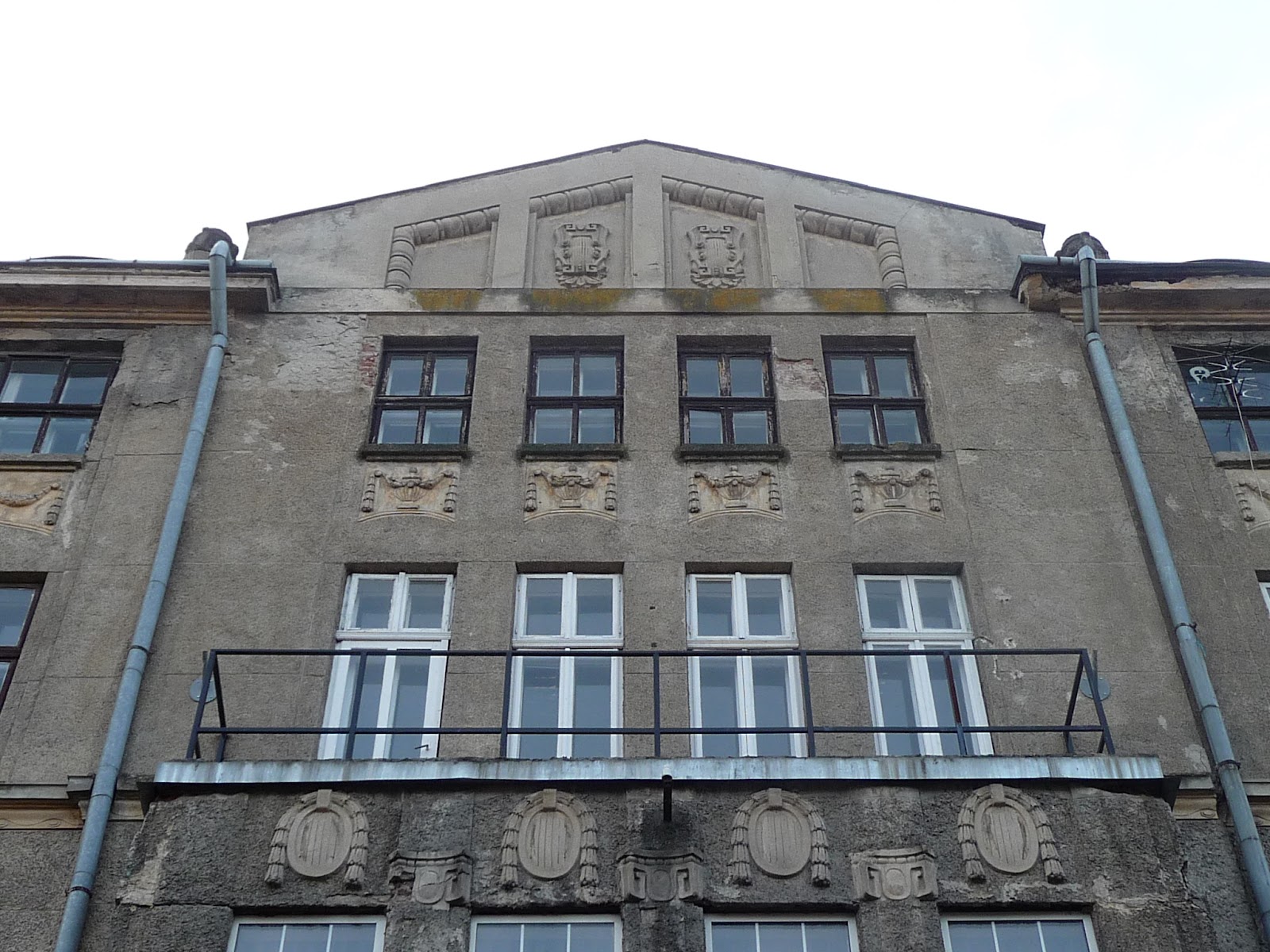
The houses here are all unlike one another. And even the station's service buildings are beautiful too.



By the station a relic of the Soviet socialist competitions has survived, a board of honour. Some are rewarded, and others are spurred on. But now I know that Sambir is a town of working people.

There were a tiresome 20 minutes left until the train. To kill the time I made a forced march to the railway water tower that once served to fill up the steam locomotives. That was the finishing dash of my journey and the full stop of this story.

On the way to Stryi I recalled everything I had seen over the past day, and I am sharing my impressions of it with you.
This story is also available in Ukrainian: Самбір. Пізнавальна екскурсія в княже місто

No comments:
Post a Comment
Leave your impression