Opishnia. The Inexhaustible Source of Ukrainian Pottery and Art Nouveau. A Brief Overview of the State Museum-Reserve
The Poltava region is famous not only for its Gogol places, the Myrhorod waters and the Sorochyntsi Fair. Thirty kilometres from Poltava lies the world-recognised capital of Ukrainian pottery — the village of Opishnia.
Opishnia. Poltava region. The Museum of the Krychevskyi Family
Deposits of sedimentary rocks — clay, sand and loam — favoured the development of the pottery craft more than three centuries ago. The wares of Opishnia's folk craftsmen could be found in every house, and pottery was exported to many countries.
To preserve and popularise the national heritage, in 1986 the state museum-reserve of Ukrainian pottery was created, comprising a library, an archive, a research centre, a publishing house, a gallery of sculptures and several museums.
To visit some of the reserve's sites and learn the history of Opishnia sculpture and toys, a single day is too little. To get acquainted visually with the museum displays, I needed 6 hours, counting the time to cover the considerable distances between the museums.
The bus stopped at the turn to Zinkiv, 700 metres short of the centre of the village. Along the way a find turned up at once — a small building with trapezoidal windows and ceramic decoration in the original style of Ukrainian architectural Art Nouveau, whose birthplace is considered to be the Poltava region.
The most famous architect in the UAM style, Vasyl Krychevskyi, lived and worked in Opishnia. The museum I was hurrying to is named after his creative family. At the crossroads, and then throughout the whole route, signposts inform you of the location of the reserve's sites.
The most distant museums are located 2.3 to 3.8 kilometres from the centre of Opishnia. The nearest, on the street named in honour of the folk craftsmen Yavdokha and Havrylo Poshyvailo, is 250 metres from the signpost. In the building and on the grounds of the former House of Culture, at this centre for popularising the pottery heritage, works by leading ceramic artists and masters of the pottery art are exhibited.
At 2 Partyzanska Street stands a building erected in 1916 in the style of Ukrainian architectural Art Nouveau, to a design by Vasyl Krychevskyi and the technologist-ceramist Yurii Lebishchak, for the pottery demonstration point of the Poltava Governorate.
At the end of the 19th century, the first pottery school on the Left Bank stood on this spot.
In Soviet times the building housed a pottery workshop, an artel, an FZN factory-training school, and an art-ware factory.
In 2013 a museum dedicated to the creative Krychevskyi family was opened in the historic building. Vasyl Krychevskyi — architect, artist, teacher — popularised the work of the Opishnia potters and had a great influence on the development of pottery in this small Ukrainian settlement.
The exhibition halls present works of graphic art and painting by the famous family.
One hall draws attention, arranged to match the interior of Vasyl Krychevskyi's flat, with a display of embroidery, weaving, carving and ceramics.
The Museum of the Krychevskyi Family is rightly considered the national pottery temple of the folk masters of pottery and ceramics.
In memory of the outstanding figures of the pottery art who worked and created in Ukraine, a wall of Ukraine's pottery glory was created, with memorial plaques set up in honour of the devotees of the pottery art.
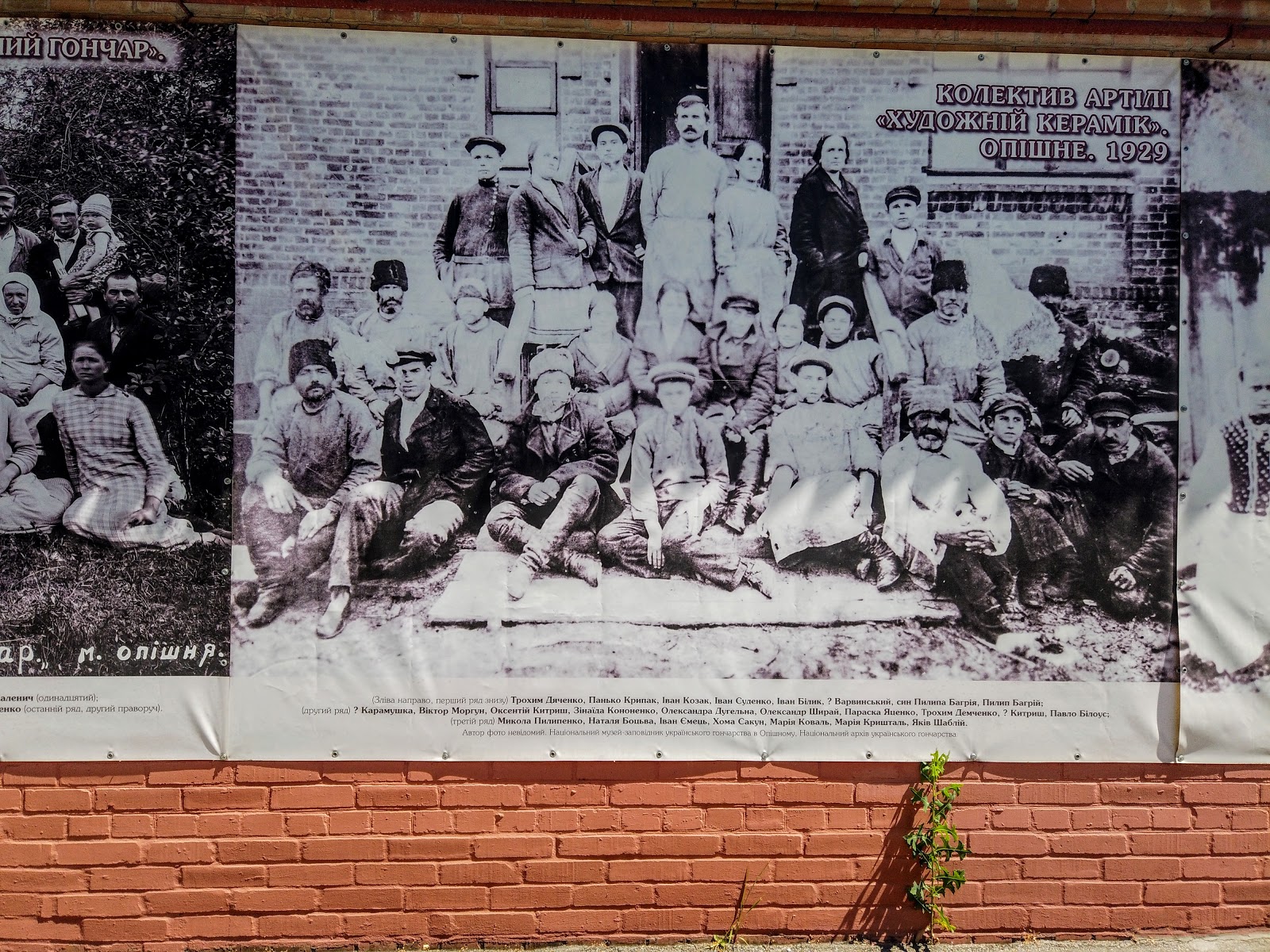
At the "Khudozhnii Keramik" plant worked the enchantress-craftswoman Oleksandra Seliuchenko. She knew all the secrets of making the clay toy.
Into every toy the craftswoman put her soul, and she worried about the fate of her creations — that they be carefully transported and thereafter well kept.
The estate museum of Oleksandra Seliuchenko
The artist took the subjects for her compositions from real village life, giving names to her figurines and to their characters.
In the estate museum of Oleksandra Seliuchenko at 29 Hubaria Street, more than 1,000 examples of the craftswoman's creative legacy are kept.
In the courtyard stands a bust of Oleksandra Fedorivna.
In the early 1970s, the potters Havrylo and Yavdokha Poshyvailo, in order to preserve the best examples of Opishnia ceramics and toys, founded the first pottery museum in Ukraine, which laid the foundation for the creation of the museum-reserve. The ancestral nest of these talented folk masters turned into a centre of spiritual and cultural development, to which people from all over the world came, wishing to see the unique works of art of Ukraine's virtuoso ceramists.
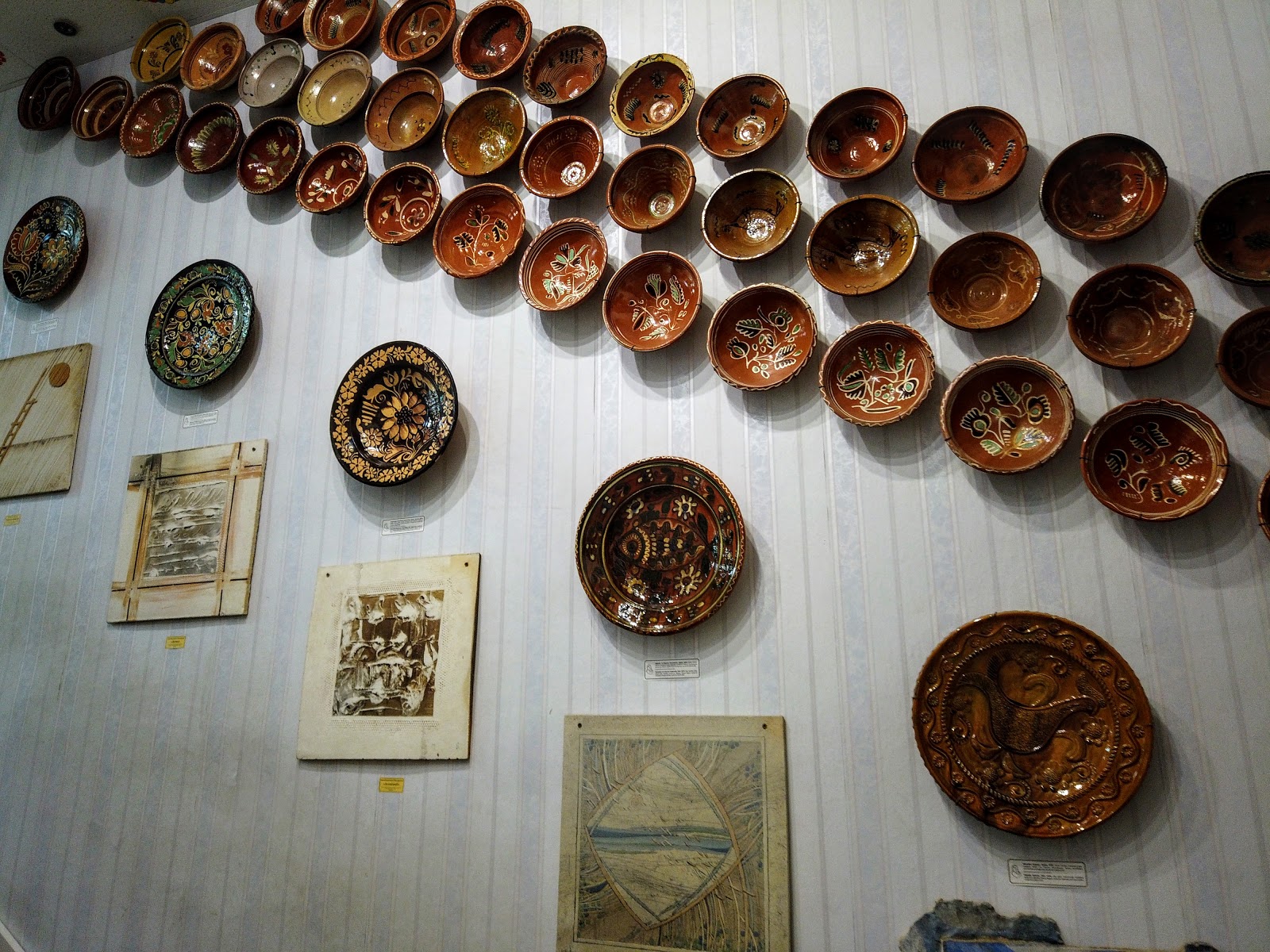
In the Poshyvailo family, pottery had been practised since the 18th century. As a rule, the men created and the women painted their creations, preparing the paints from natural materials. Havrylo Nechyporovych made pots, jugs, vases, dishes, candlesticks, little rams, birds, horsemen and much else. The golden hands of Yavdokha Danylivna skilfully painted the crockery and figurines with floral ornament, flowers and grapevines. Amid the vast variety of the wares, every single piece is one of a kind.
The artistic wares of the Poshyvailo couple were exhibited and represented the art of Ukraine at shows in many countries of the world. The museum has preserved the interior of a village dwelling, the atmosphere of the parental home, on entering which you feel much that is familiar from childhood. On the walls hang photographs of the Poshyvailo dynasty, as was once the case in large and close-knit families. Numerous samples of ceramic ware, an iconostasis, personal belongings and craftsmen's tools round out the picture of the creative and life path of these distinctive representatives of the Opishnia school of ceramics.
The memorial plaques in honour of Yavdokha and Havrylo Poshyvailo on the Krychevskyi-Lebishchak house
The largest area is occupied by the open-air gallery of ceramic sculptures at 102 Partyzanska Street.
In the exhibition-hall premises are gathered literature on pottery and collections of ceramic ware, toys and miniature sculptures.
On the hillocks of the landscape park rise the fantastical sculptural compositions of Opishnia authors and of masters from other regions of Ukraine.
On the glades and slopes are displayed exclusive statues, filigree microsculptures and enormous figures, colourful sketches and cheerful staged scenes in ceramic.
Every composition is a fountain of emotions, imagination and impressions, with varied techniques and unconventional designs.
From the viewing platform a panorama opens onto the picturesque bank of the Vorskla, the Opishnia hillfort of the 18th-19th centuries, and the highest point of the Poltava region — 208 metres above sea level.
The viewing platform. The Opishnia hillfort
Those who wish can take part in a master class in the pottery craft and learn the skills of the ancient potter's profession, gaining heartfelt satisfaction and developing their creative potential.
On the reserve's grounds, folk festivals, art exhibitions, themed competitions, fairs, auctions and presentations are held.
Time leaves its mark on our daily life; new materials have appeared, from which kitchenware and toys are made. But how creative the presence of ceramic ware looks in a cafe or restaurant, as, for example, in the "Staryi Khutir" ethno-village, where travellers can dine and stop for the night.
According to the people of Opishnia, there are fewer craftsmen in their village, but still, those who work with inspiration in the pottery field are the most gifted, uplifted by the historical traditions of Opishnia. Young followers of the traditional Opishnia profession study at the specialised boarding school, the "Collegium of Arts".
The creative works of the Collegium of Arts pupils — a kind of art gallery of future artists on the facade of their alma mater.
On the school grounds, laid out as a mini-museum, I met some eighth-grade boys. Seeing a stranger admiring the works of the young talents, the lads came up, introduced themselves and invited me to look at the pupils' works in the hall of the teaching block.
From the first grade, the pupils are taught by artists and specialists in the pottery trade. The school timetable includes painting, the fundamentals of ceramology and technical drawing, sculpture, colour studies, art history and other specialised subjects. According to these future masters, studying at the collegium is interesting, the teachers are the best and the girls are the prettiest — which means that the source of pottery in Ukraine is inexhaustible.
The museums in the Opishnia reserve are open every day from 8 a.m. to 6 p.m.; on Fridays and Sundays they close one hour earlier. Visitors in the privileged categories receive a discount when buying entrance tickets.
The address of the national reserve of Ukrainian pottery: the village of Opishnia, Zinkiv district, Poltava region.






No comments:
Post a Comment
Leave your impression