
Some 15-20 years ago, in the days before the holiday, letterboxes were stuffed with greetings sent from every corner of the country.

Setting aside all the pre-New Year cares, everyone would pick out glossy cards and sign them for their grandmothers and grandfathers, for other relatives, friends, teachers, colleagues and everyone to whom they wanted to wish all the very best in the coming year.

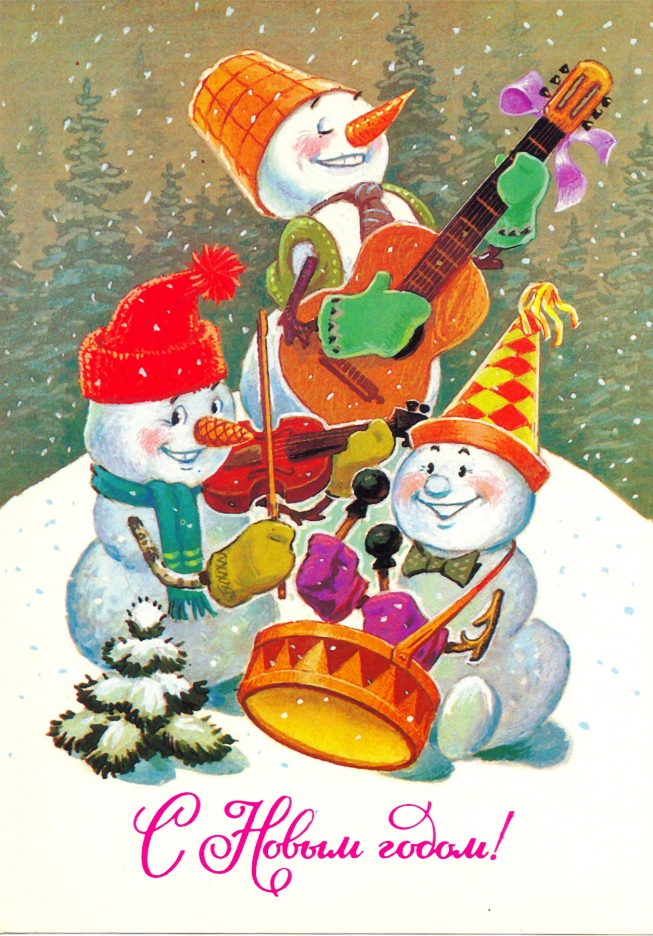
New Year cards with colourful illustrations were very popular in the 20th century, but with the arrival of mobile phones the boom in sending cards gave way to short text messages with identical wording for all subscribers.

It is quite impossible to establish who was the first to send Christmas greetings in an envelope, but history knows that the idea of leaving greetings on paper, if the master of the house was not found at home, occurred to the enterprising Chinese. The practical English, the well-known lawgivers of fashion, are the originators of the tradition of exchanging New Year wishes by post. In 1843 the first Christmas card appeared, showing a close-knit family around the festive table with the inscription: "Merry Christmas and a Happy New Year!" It was this message that opened the way to the printing of New Year cards.

In the Russian Empire the first postcards for Christmas greetings were printed in 1898 by the Community of St Eugenia. The set of 10 cards was created from watercolour drawings by St Petersburg artists and came out in a print run of more than 10,000 copies. One of the pictures showed a Zaporizhzhian Cossack, a character from Repin's painting "The Zaporozhian Cossacks Writing a Letter to the Turkish Sultan". This copy can be considered the first Ukrainian New Year card, although it has no New Year symbols on it, only a place for the text. At the beginning of the 20th century the first New Year cards by Ukrainian authors appear.

In the expectation of the Nativity of Christ, artists used in their works the religious symbols of the holiday and biblical images. Open letters showing carol singers with the star of Bethlehem against a background of Ukrainian churches, village cottages and picturesque landscapes carried a part of the national culture. Sometimes foreign publishers issued cards with lines of greeting in the Ukrainian language.

After the revolution of 1917 the issue of Christmas cards ceased; in their place came postcards with propaganda agitation for the eternal builders of communism. The New Year trees were crowned with red Kremlin stars, and the Spasskaya Tower with its chimes symbolised the holiday across the whole expanse of the USSR right up to its collapse.

The feats of space exploration found their reflection in New Year printing. Images of starships, planets and lunar rovers meant the coming of a new era in the history of humankind.

On the cards Ded Moroz flew on rockets, took part in the Olympics and built the BAM railway. Cards showing fairy-tale and cartoon heroes were meant for young addressees.

A card with two glasses of champagne meant a romantic meeting of the New Year. In the years of independence designers again returned to Christmas themes, with images of the nativity scene, the Christmas star and churches.

In the 1990s the eastern symbols of the New Year and the signs of the Zodiac appeared on the cards.

The illusion of depth or of movement was created by stereo cards, on which Ded Moroz raced along on reindeer with presents while fireworks flew into the air in many-coloured lights.


When you greet those close to you, do not forget to send a card — a postal or a virtual one; the main thing is that it should be done not formally, but with soul.
This story is also available in Ukrainian: Новорічні листівки. Світ казки, перекличка друзів і очікування дива

No comments:
Post a Comment
Leave your impression