Water is a wonderful opportunity for rest, for the body's recovery, and for raising one's capacity to work. Even a single hour of rest on the shore of a lake removes the fatigue of a whole working day. Bathing in a lake is a natural gymnastics for the body's vessels and capillaries. It increases resistance to colds, stimulates the circulation and the work of the heart muscle, improves the metabolism, and has a beneficial effect on the nervous system. The Sloviansk lakes possess an additional set of healing properties.
 |
| Slavkurort. Lake Ropne |
The water contains all the necessary microelements, which are absorbed through the skin. The benefit of the salt lake's mud rests on the predominance of active substances in the reservoir's bottom silt. Bathing can be good for health only in places specially set aside for it.
From the side of the highway, motoring tourists stop on the shore, and stains of petrol are left where they park. Such an attitude to nature leads to a catastrophic worsening of the sanitary-epidemiological situation and to the spread of infections. It is best to bathe in safe or specially equipped places.
At Weisove Lake — in summer there is no room even for an apple to fall.

In 2019 the wild beach was put in order: sand was brought in and alleys were laid out. Entry to the beach and the use of the car park, the canopies, the toilet, and the showers are free.


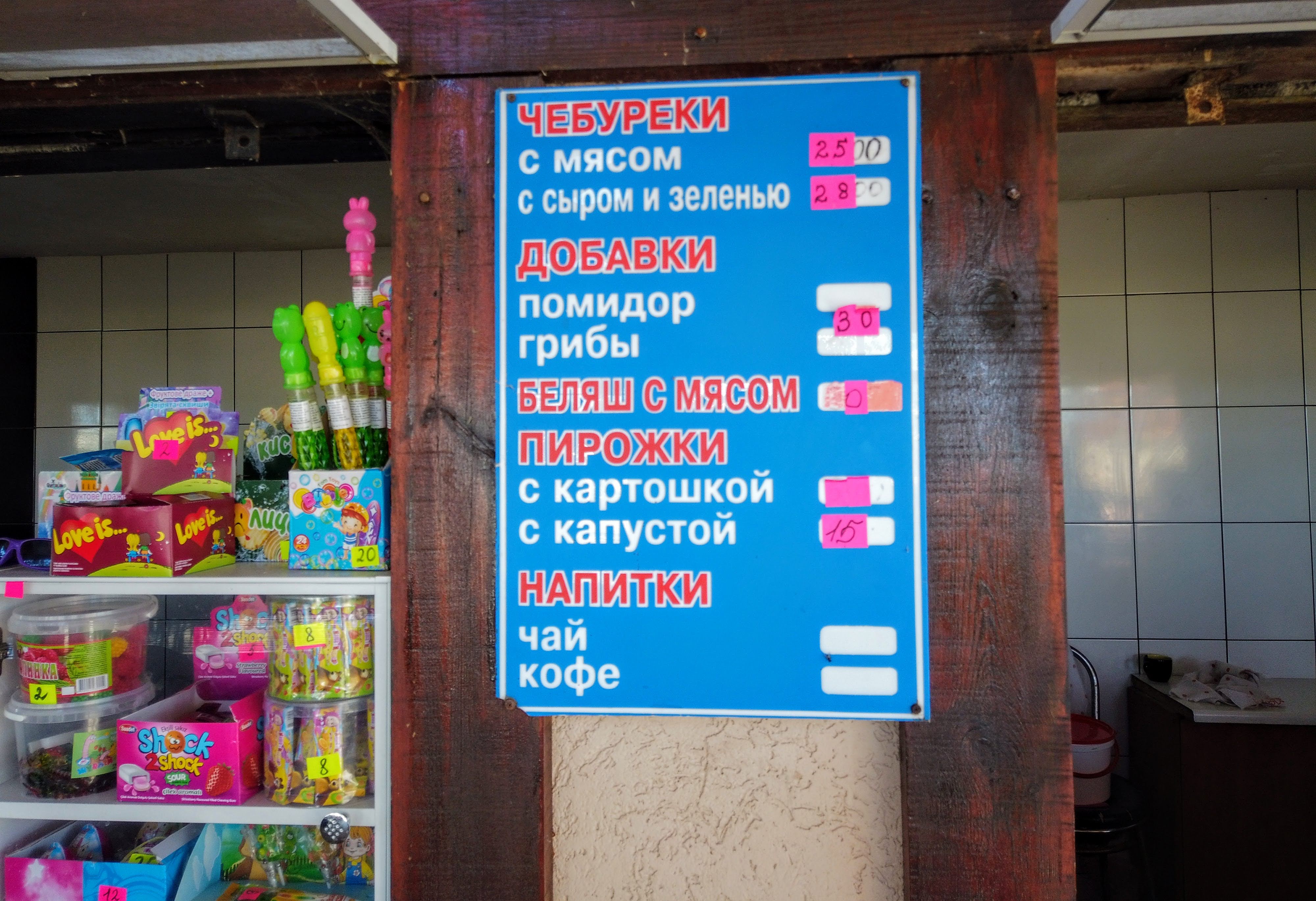
For the resort-goers, cafes, little shops, a first-aid post, and a children's playground have opened.


The depth of Weisove is up to 2 metres, but there are karst sinkholes up to 16 metres deep. Weisove Lake was formerly called Maiatske, Sukhe, and Kryve, and later took its name from the surname of the landowner Weis.


In its salt concentration the reservoir is on a par with the Atlantic Ocean, and the lake's waters were used for the extraction of salt. At the lake, holidaymakers receive medicinal procedures completely free of charge, smearing themselves with a black mass resembling fuel oil.


In its healing properties the bottom silt is not inferior to the muds of the Dead Sea and possesses a stronger therapeutic effect. At European exhibitions the Sloviansk healing product won grand prix awards. In the forming of this natural wealth are involved unique representatives of the microfauna, found nowhere else or only very rarely.


The black sludge is used in treating orthopaedic, cardiovascular, and other diseases. An artificial dam divides the lake into two parts, one of which is filled with bathers, while to the other people come for mud. During floods the dam is submerged by water, and in summer it is covered over by a hardy dweller of the salt marshes, the resilient glasswort.


Along the shore, little houses have been set up for the swans, and warning signs not to feed the waterfowl bread.

No signs with the chemical and biological composition of the lake's water were found; outwardly the water is far from transparent. But it cannot be otherwise with lakes whose bottom is covered with black silt that has been used for treatment for almost 200 years now.

Lake Ropne has the status of a hydrological natural monument. The largest lake was so named for its high salt content. Its bottom is covered with a layer of silt that has radioactive properties.

 |
| Slavkurort. Lake Ropne |
On the northern side of the shore, the extraction of healing mud takes place. On the embankment, viewing platforms have been built overlooking the lake.

The gently sloping bank is overgrown with the ubiquitous reed; the southern strip of the shore is reinforced with concrete slabs.

Entry to the beaches of the "Sloviansky" sanatorium and of the closed health resorts "Donbas" and "Yuvileinyi" is by payment.


 |
| Slavkurort. The beaches |
In the climate-treatment zone there operate sports grounds, showers, toilets, a massage room, and a tennis club. For people with limited physical abilities a convenient descent to the water has been created.


 |
| Slavkurort. The beaches on Lake Ropne |
To bathe, you must go down a metal staircase ruined by corrosion. Doctors do not recommend staying in the water for more than 10 minutes or self-medicating, because of the high biochemical activity of the water and the muds.

Lake Slipne received its name thanks to the old blind horses that lost their sight in the Yuzivka mines. Local peasants bought them for a paltry sum for their households and grazed them on the coastal meadows.
 |
| Slavkurort. Lake Slipne |
The southern part of Slipne Lake is popularly called "the fever". Once a salt works dumped its spent waste here. Some daredevils would climb into the drainage pipe, considering the procedure beneficial. There were repeated cases of loss of consciousness during such treatment. On the dam dividing the lake, the "Cuba" beach has been created, with canopies of reed. Despite the paid entry, there are always many holidaymakers here.


 |
| Slavkurort. The "Cuba" beach |
How to get there?
From the railway station or the bus station in Sloviansk a marshrutka and trolleybus No. 8 run to Slavkurort. At the Slovianskyi Kurort railway station stop the suburban trains Kostiantynivka-Kharkiv, Kostiantynivka-Izium, Sviatohirsk-Blyzniuky, Fenolna-Chervonyi Lyman and the passenger train Kostiantynivka-Ivano-Frankivsk. Along the eastern side of Slavkurort runs the M-03 (E 40) motorway Kyiv-Kharkiv-Dovzhanskyi.

No comments:
Post a Comment
Leave your impression