The sacred architecture of the Hertsa district of the Chernivtsi region has its own peculiarities and has survived in spite of time and events.
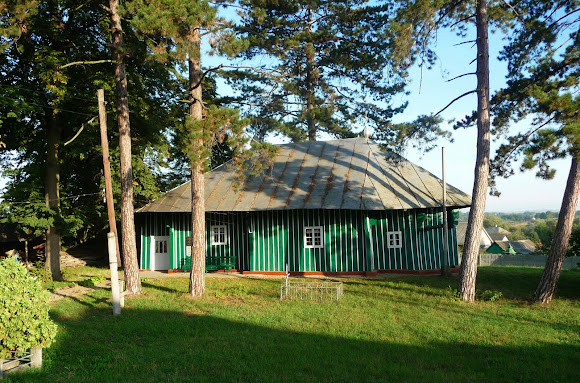 |
| Velykosillia, Hertsa district, Chernivtsi region. The Church of the Nativity. 1762. |
The villages of Velykosillia and Lunka lie 1 to 2 kilometres from the border with Romania.
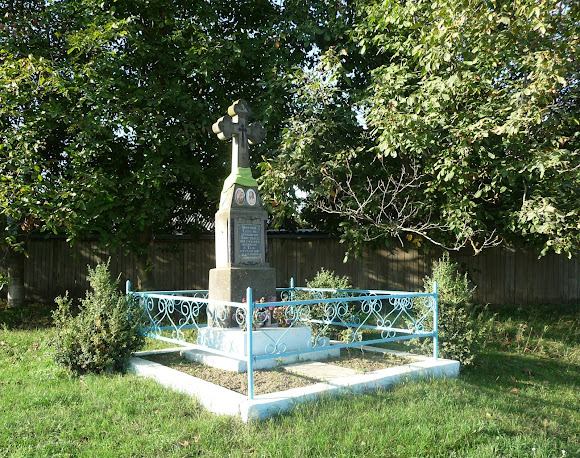 |
| Lunka. Hertsa district. A roadside cross |
For over 600 years the lands of the Hertsa district belonged to the Principality of Moldavia; from 1859 until the Second World War, to Romania. In 1944 the territory passed to the USSR. The Hertsa district is the smallest district by area in Ukraine, in the smallest region, Chernivtsi, by both area and population among the 24 regions of Ukraine.
 |
| Lunka. Hertsa district. A Bukovinian house |
Between 95 and 99 percent of the district's residents speak Romanian, and the service in the Orthodox churches is conducted in this language. The most popular pilgrimage site is
the Holy Ascension Orthodox "Banchen" Monastery.
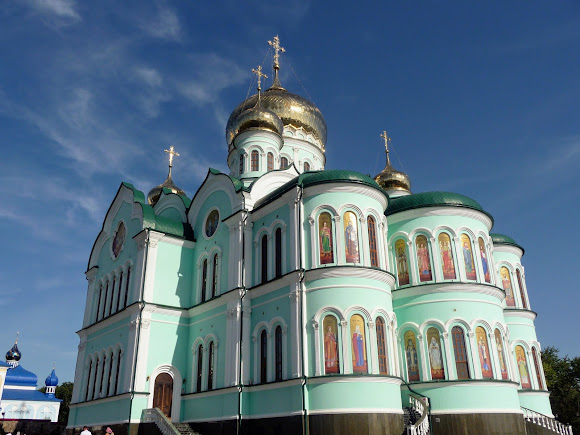 |
| Hertsa district. The Holy Ascension Monastery |
But even in small villages the parishioners make considerable efforts to preserve the sacred sites, many of which are already several centuries old. Velykosillia, from the Romanian name Pilipăuţi, means "a large village".
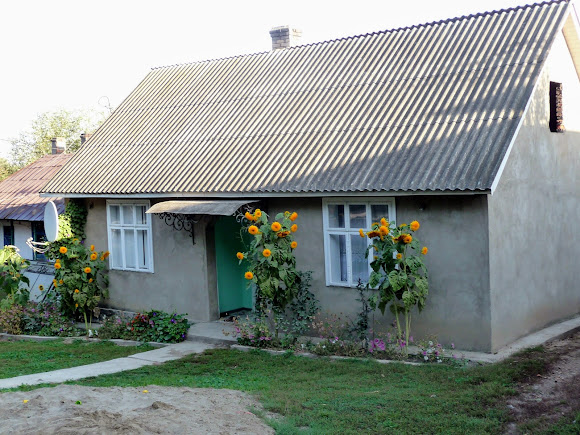 |
| Velykosillia, Hertsa district. An old-style Bukovinian house |
The streets follow the bend of the Herca river and its seven-kilometre tributary the Baranka, which rises in Romania. The residents, numbering a little over a thousand, work in agriculture. Popular folk crafts are wood carving and carpet embroidery. The wooden Church of the Nativity was built in 1762 by Mykhailo Kholban.
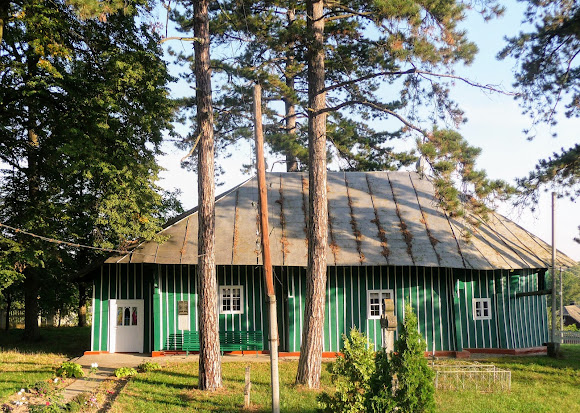 |
| Velykosillia. The Church of the Nativity. 1762. |
This event is recorded on a memorial plaque in Romanian. On the protection plaque, which certifies that the church is an architectural monument, a different date is given — 1767.
 |
| The Church of the Nativity. A two-tier wooden bell tower |
The discrepancy is small; the main thing is that the shrine, which looks very much like a dwelling house, has been preserved.
 |
| The Church of the Nativity. 1762. |
Two small domes indicate that the structure is a place of worship. On its walls, painted green, small square windows show white.
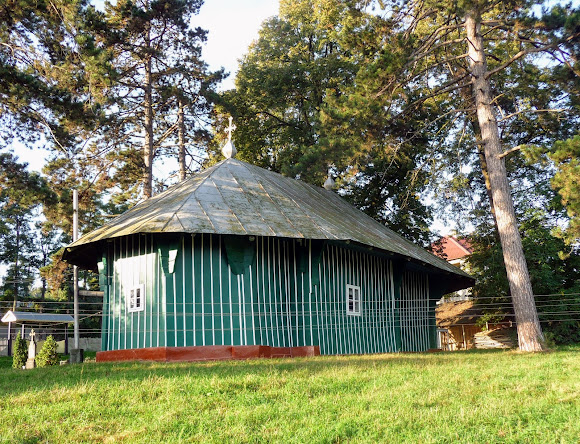 |
| The Church of the Nativity. 1762. |
Along the path leading from the wicket gate to the church entrance, bushes of bright chrysanthemums have been planted.
 |
| The Church of the Nativity. 1762. |
In the churchyard there are modest crosses on the graves of the clergy.
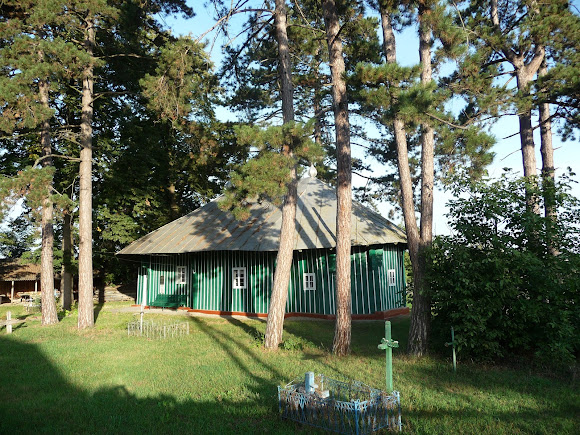 |
| The Church of the Nativity. 1762. |
By the church, as is fitting, there is a well. In these parts water is treated as though it were a holy icon, and the wells are tended like places of worship.
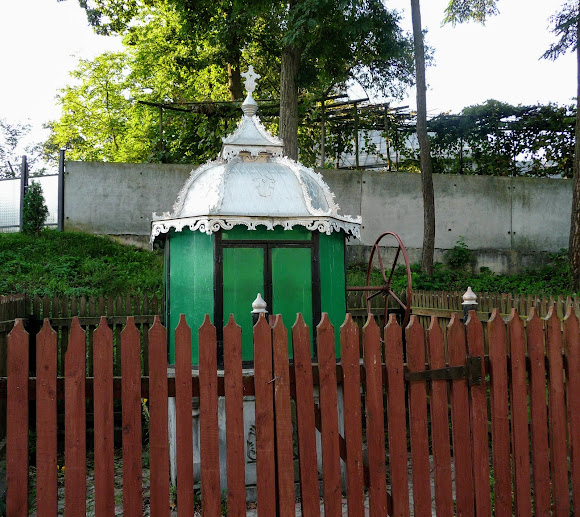 |
| Velykosillia. A well |
I came across another well at the edge of a stony road, with a bench for the weary traveller. I so wanted to find out what the inscription in Romanian said. I looked around — it seemed there was someone at the neighbouring homestead. I called for the owners, a woman came out and, with great respect, told me about the village teacher of Romanian, Valeria Vasylivna Skrypa, who restored the well in 1990. The stone-lined well is 8 metres deep. And the translation of the inscription runs roughly thus: "A person must do good. Water is sacred."
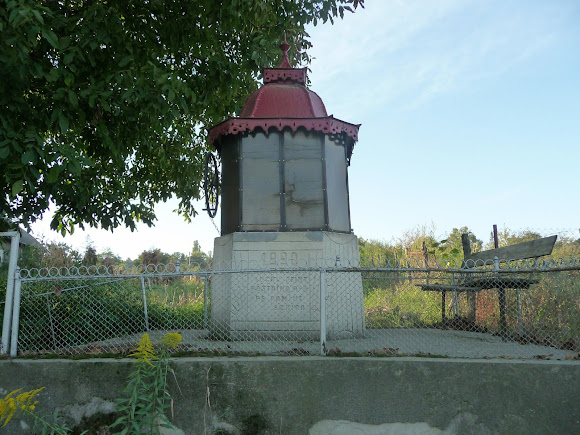 |
| The well, restored in 1990 by the teacher V. V. Skrypa |
I managed to drive to Lunka — the administrative centre of the Lunka village council, which takes in Velykosillia, Mohylivka and the village of Lunka. A kind man who introduced himself as Mykhailo gave me a lift to the turning, and from there it was but a stone's throw to the church.
 |
| Lunka. Hertsa district. A new Bukovinian house |
The village has about 600 residents, and by their own efforts they are repairing the Church of Venerable Paraskeva.
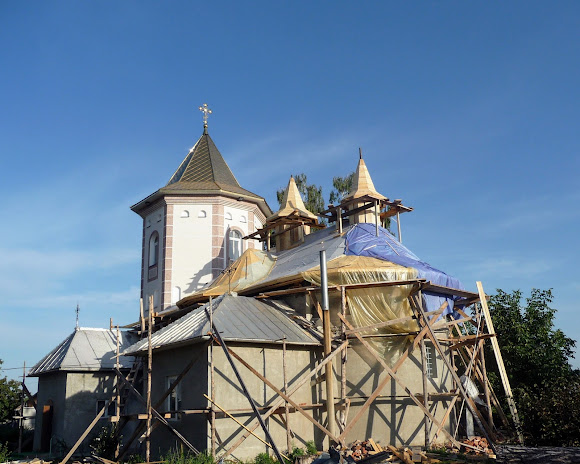 |
| The Church of Venerable Paraskeva. The domes appeared during the restoration |
Scaffolding had been erected around the church.
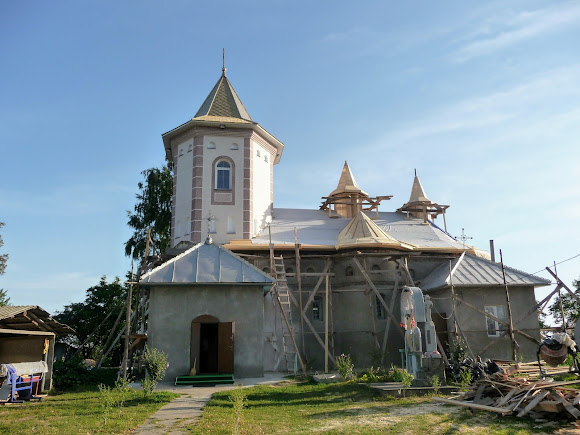 |
| The Church of Venerable Paraskeva. Restoration |
It is thought that the church was built in the late 18th — early 19th century. That is the date of the church icon of Venerable Paraskeva.
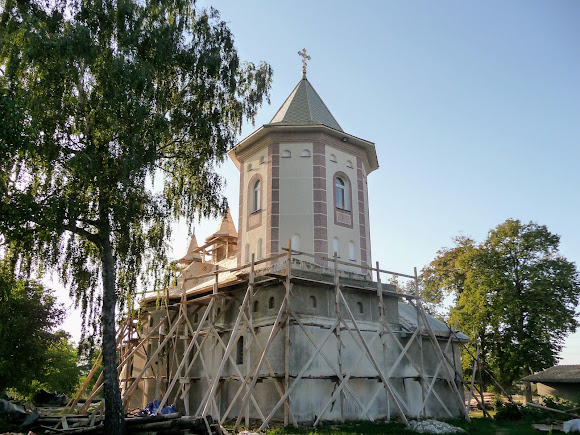 |
| The Church of Venerable Paraskeva. Restoration |
In plan the building belongs to the triconch churches, where a semicylindrical apse is covered by half a dome. This Byzantine Revival style came to Bukovina from Mount Athos.
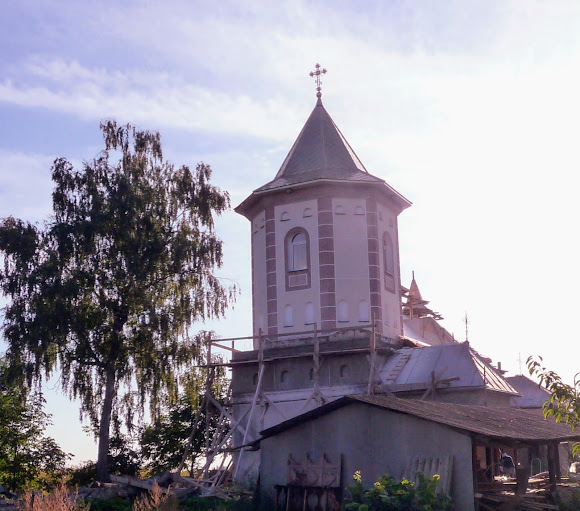 |
| The Church of Venerable Paraskeva. Restoration |
It was a Sunday and, despite the restoration, the church had not closed. On the octagonal tower a bell announced the start of the service.
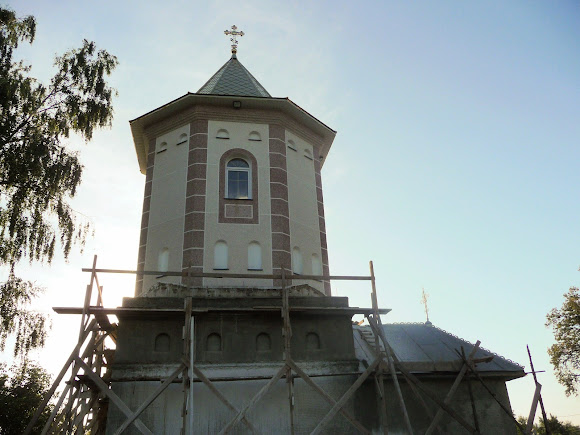 |
| The Church of Venerable Paraskeva. The bell tower |
The well by the entrance to the churchyard stands in a small wooden pavilion, ornamented with openwork carving.
 |
| The Church of Venerable Paraskeva. The well |
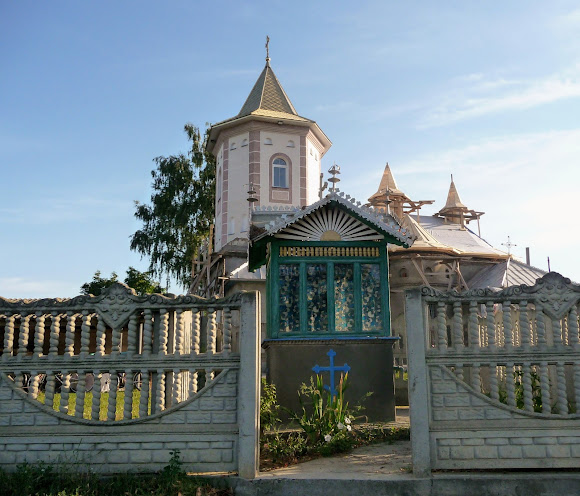 |
| A well in the churchyard |
Metal ornaments are mounted on top, but I could not make out what they were. Perhaps religious symbols.
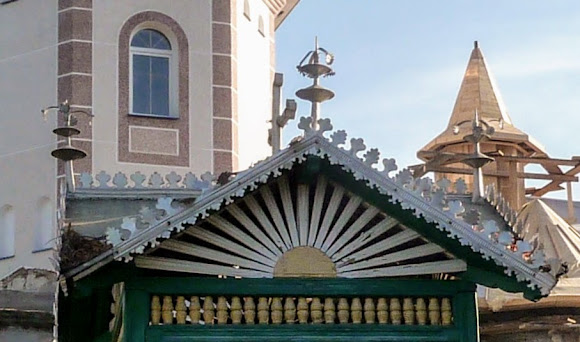 |
| A well with ornaments on its roof |
Waiting at the edge of the village for any kind of transport at all, I saw in the distance the gleaming domes of the Holy Ascension Monastery, which I managed to visit barely an hour later.
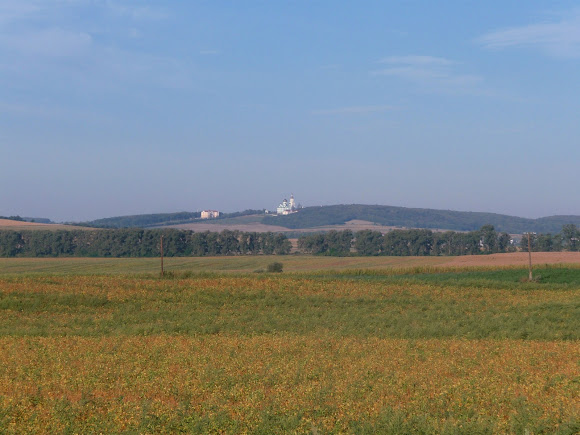 |
| Hertsa district. The Holy Ascension Monastery |
And I got a ride into Herca thanks to a village couple who were driving to the district centre on business. In these parts people do not drive past a lone traveller.


No comments:
Post a Comment
Leave your impression