Chernivtsi is an architectural pearl of Ukraine. A walk through the streets of a city where 706 sites have been granted the status of architectural landmark can be both an instructive excursion and a romantic promenade.
 |
| Chernivtsi. Olha Kobylianska Street. The pedestrian zone |
I'll begin my quick walk from the pedestrian Olha Kobylianska Street, which in different historical eras and under different authorities was called by different names. In the 18th century it was a row of wooden houses. In the 19th century Austrian companies set about erecting stone buildings and laying sewerage and electricity to them. At that time the street was called Herrengasse, which means Lords' Street.
 |
| Chernivtsi. Lords' Street. Czernowitz Postcard Album |
It is still called that today for its lavish appearance, but its official name, in honour of the outstanding Bukovinian writer Olha Kobylianska, the street has borne since 1940.
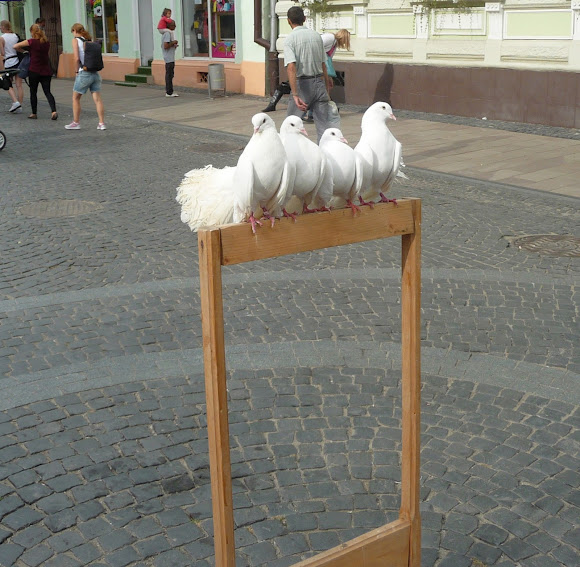 |
| O. Kobylianska St. Pigeons |
On this finest of streets, at the turn of the 19th and 20th centuries, stood government offices, banks, restaurants and shops. The residents of Chernivtsi have always cared attentively for their historical and cultural heritage, and most of the buildings have kept their original appearance.
 |
| O. Kobylianska St. A carriage |
The building of the present-day music school, erected a century and a half ago, was untouched by any radical changes.
 |
| Olha Kobylianska Street, 57. Music School No. 1 |
Residential building No. 55 has 10 different shapes of window openings.
 |
| Olha Kobylianska Street, 55 |
From 1910 the "German House", built by the architect Muller in the Gothic style, was the spiritual and cultural centre of the German community in Chernivtsi.
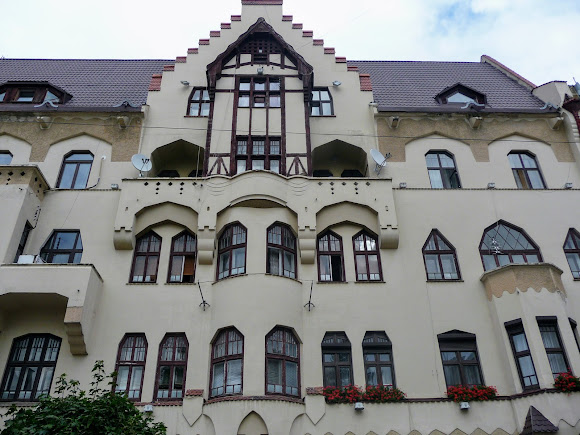 |
| Kobylianska Street, 53. The former German People's House |
The corner building No. 51 is crowned by a graceful dome.
 |
| Kobylianska Street, 51. 1907 |
The scientific library is named after the writer Mykhailo Ivasiuk, father of the composer and poet Volodymyr Ivasiuk.
 |
| O. Kobylianska Street, 47. The M. Ivasiuk Chernivtsi Regional Universal Scientific Library |
This elegant three-storey Art Nouveau building has scarcely changed its appearance over the century and serves as a teaching block for medical students.
 |
| O. Kobylianska Street, 42. Teaching Block No. 1 of the medical academy |
All the best for the children. Kindergarten No. 2 was given the building of a former bank, which was called "the devil's house" because of its 13 windows and the absence of an entrance from the street side.
 |
| O. Kobylianska Street, 40. A pre-school institution |
House No. 38 was built at the end of the 19th century, and it is adorned by a long, striking balcony.
 |
| O. Kobylianska Street, 38 |
The former Polish House was, from the beginning of the 20th century, the seat of the administration of the Polish schools.
 |
| O. Kobylianska Street, 36. The former Polish House |
Houses No. 32 and No. 34 were built at the end of the 19th century without excessive pomp, because their owner, Count Vasylko, disliked architectural ornamentation.
 |
| O. Kobylianska St., 34. The former residential building of the baron brothers Vasylko-Seretsky |
 |
| O. Kobylianska St., 32. The military enlistment office |
Olha Kobylianska Street is closed to public and private transport, and its past is wreathed in wondrous tales and astonishing legends.
 |
| Kobylianska St., 19. The former electrical-engineering establishment of D. Zaidner and the editorial office of one of the newspapers (1869, architect Shrutek). The former provincial government of Bukovina |
The tram line planned along the street at the beginning of the 20th century was never built.
 |
| Chernivtsi. O. Kobylianska St., 17. Second half of the 19th c. |
Always beloved by residents and guests of the city alike, the Lords' Street was well-kept and tidy.
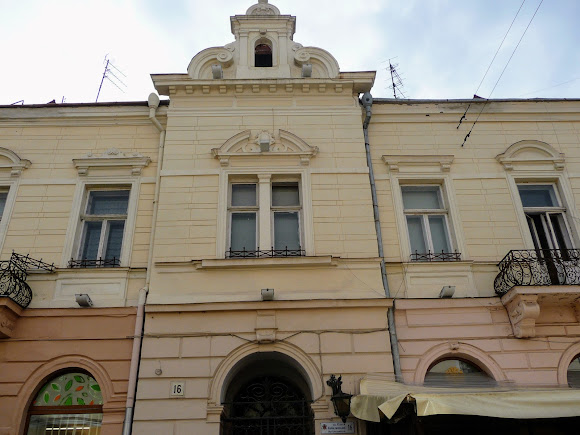 |
| O. Kobylianska St., 16. 1892 |
Street cleaners were hired with a knowledge of foreign languages, so that they could help visitors from abroad find their way.
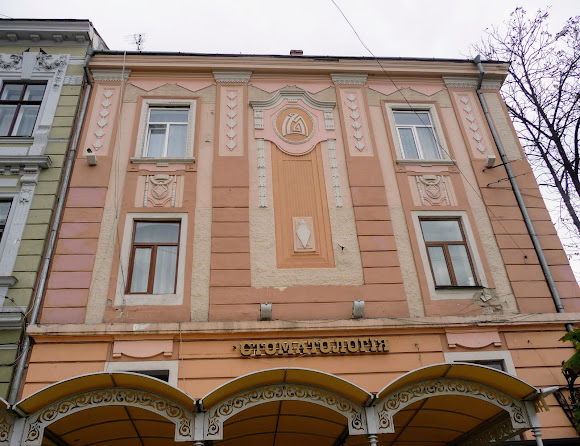 |
| O. Kobylianska St. / Kafedralna St. A dental surgery |
And instead of a broom, bouquets of red roses were used.
 |
| O. Kobylianska St., 31. Early 20th c. |
And tourists always found it interesting and comfortable here.
 |
| O. Kobylianska St., 27. Early 19th c. |
The modern street is decorated with tubs of flowers.
 |
| O. Kobylianska St. The pedestrian zone |
For a quick bite and a taste of Bukovinian and European cuisine, numerous restaurants, creative cafes, patisseries, pubs, bars and pizzerias offer their services.
 |
| O. Kobylianska St., 5. A former tenement house, the Europa restaurant and a sculpture of the messenger goddess Iris |
Naturally, wonderful events take place on a beautiful street, and betrothed couples seal their bond with a stamp at the Palace of Solemn Events, built in 1873.
 |
| O. Kobylianska St., 29. The Palace of Solemn Events |
A traveller will find it interesting to visit the local history museum, with its many departments and rich collection.
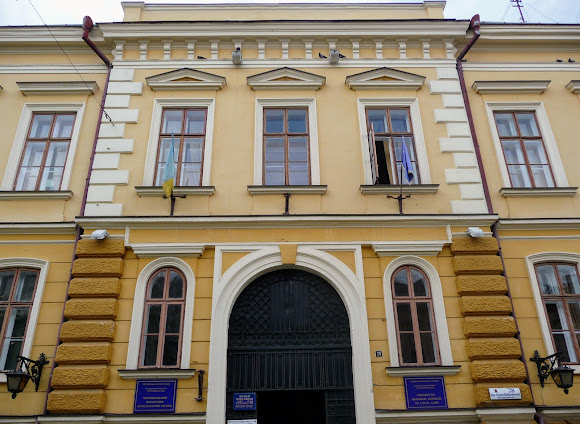 |
| Chernivtsi. O. Kobylianska St., 28. 1878. The local history museum |
The museum was founded in the 1860s and holds more than 80,000 unique items in its collections. After the Second World War it was housed in building No. 28, which back in the period of Austrian rule earned the name "the handsome house".
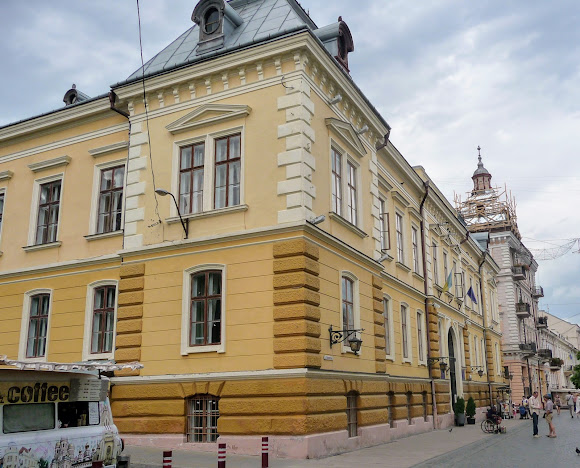 |
| O. Kobylianska St., 28. 1878. The local history museum |
A sculpture of the knight Florian, symbolising a medieval firefighter, is a reminder that building No. 23 was occupied by the fire office.
 |
| O. Kobylianska St., 23. The former fire brigade |
The oldest structure on the Lords' Street houses the health department.
 |
| Kobylianska St., 22. The former Hohenlohe Palace. Second half of the 19th c. The health department |
Another kindergarten on this street occupies building No. 21, which dates to the 19th century.
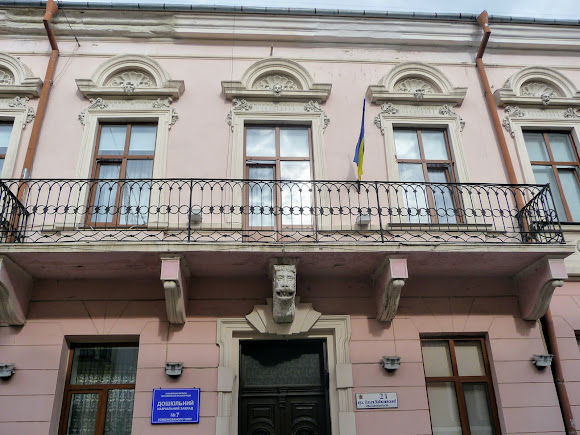 |
| O. Kobylianska St., 21. Pre-school Institution No. 7 |
The very first film in Chernivtsi was shown precisely on the Lords' Street, and it is no coincidence that the building of the former General Visa Agency now houses a cinema.
 |
| O. Kobylianska St., 14. A cinema and the commercial court |
In building No. 10, from the time of its construction in the 19th century, various shops were located — of headwear, musical instruments, confectionery and carpets, haberdashery. The purpose of the building has not changed, and its ground floor was taken up by a jewellery shop.
 |
| O. Kobylianska St., 10. The former Nagler house. Late 19th c. |
House No. 3 has been rebuilt more than once since 1858, but the round facade with columns has remained as it was.
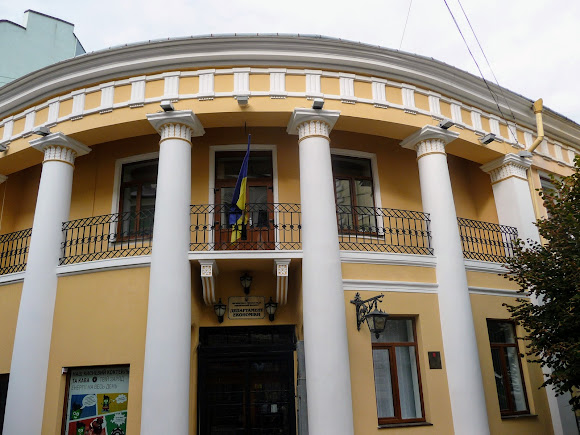 |
| O. Kobylianska St., 3. The former Tesazh house. The former Orient restaurant |
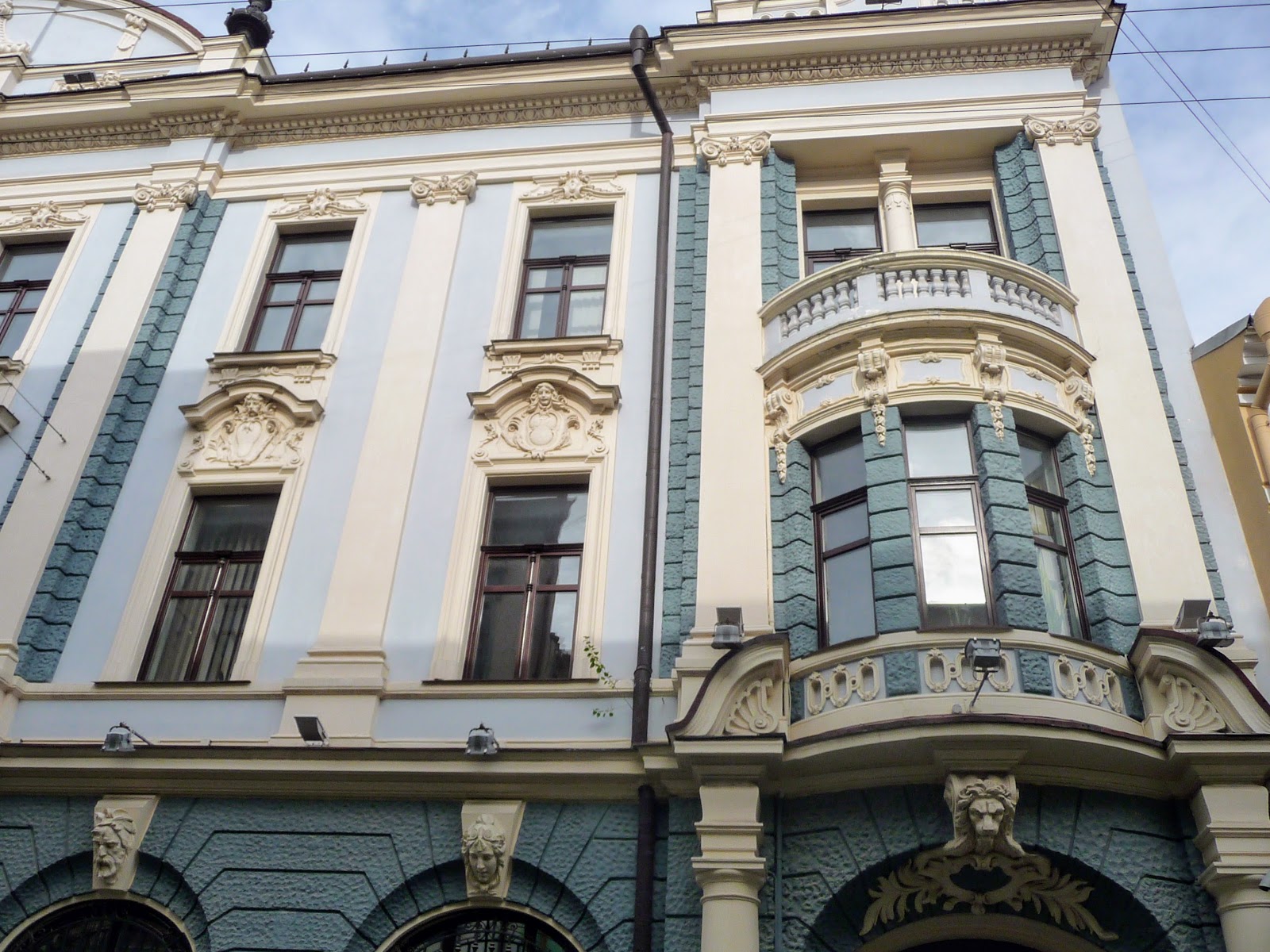
The artistic decoration and the character of building No. 1 have not changed either. Since 1898 the building, adorned with stucco and sculptures, housed banking institutions, and now it accommodates the NBU office for the Chernivtsi region.
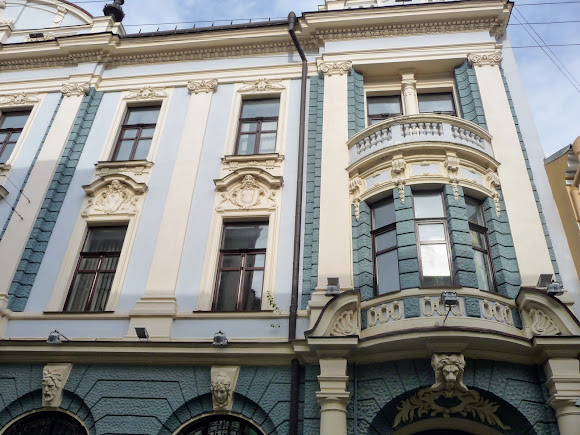 |
| O. Kobylianska St., 1. A bank, the Habsburg cafe, architect von Clausewitz, 1898. The NBU |
The building with a tower on its roof abuts with one corner onto
the Central Square, which I will tell about in the next post.
 |
| O. Kobylianska St., 1. A bank, the Habsburg cafe, architect von Clausewitz, 1898. The NBU |
My unhurried promenade along Olha Kobylianska Street took me about an hour.
Coordinates:
48°17’18"N 25°56’14"E
 |
| Chernivtsi. O. Kobylianska St. The pedestrian zone |




No comments:
Post a Comment
Leave your impression