The very name of the village of Prelesne suggests that something here was charming, unusual and alluring. In a picturesque part of the Sloviansk district of the Donetsk region, a landscape-and-architectural monument of the 19th century has survived, but for over 20 years now it has been turning into ruins.
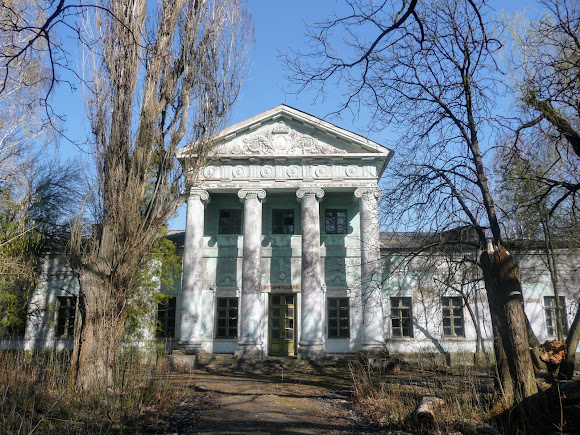 |
| Prelesne, Sloviansk district, Donetsk region. The Bantysh Palace. 1837. |
One cannot call the Bantysh estate ownerless — the grounds are fenced and guarded.
 |
| Prelesne. The Bantysh estate. The main entrance |
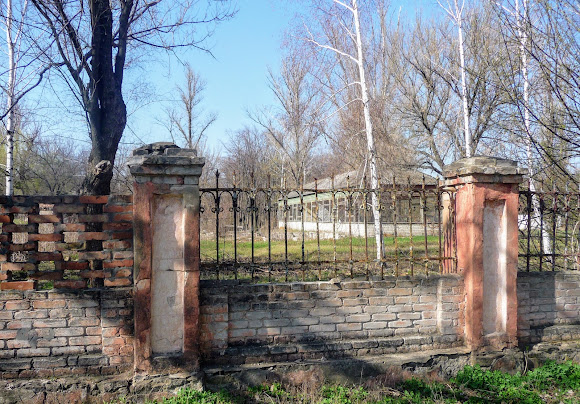 |
| Prelesne. The Bantysh estate. The fence |
In Soviet times there was a Young Pioneer camp here, which belonged to the railway department.
 |
| Prelesne. The Bantysh estate. The outbuildings of the closed Young Pioneer camp |
 |
| A gazebo of the closed Young Pioneer camp |
The All-Union children's communist organisation fell apart, the ideological thrust of raising the rising generation changed, and at the recreation facility where children from all over the vast country used to holiday, locks were hung on the gates.
 |
| Prelesne. The Bantysh estate. The gate of the closed Young Pioneer camp |
In an era of an endless string of economic crises, the bankruptcy of enterprises and the decline of morality, there is no time for historical monuments, spiritual values or children's leisure. Looking over the fence at the former camp cinema, where the first Soviet westerns were shown, I recalled my own Pioneer childhood.
 |
| Prelesne. The Bantysh estate. The cinema of the closed Young Pioneer camp |
The gazebo by the main entrance was not meant for rest alone. This was the station of the camp's duty officers. The gate — post No. 1. It was entrusted to the most responsible Pioneers. They were charged with keeping account of everyone who crossed the camp's boundary. And if someone's parents came to visit a child parted from its family, then the lucky one had to be informed of the parental visit. In a prominent place there was always a notice board announcing forthcoming events, competitions and discos.
 |
| The gazebo and the notice board of the closed Young Pioneer camp |
The children's republic had fallen into desolation, but I still very much wanted to see the architectural pearl of Prelesne — the noble mansion whose last purpose was to serve as a dormitory block for holidaying Pioneers.
 |
| Prelesne. The Bantysh estate |
And if you want something very much, then all the locks miraculously open. Entering the grounds of the estate from the side where the aristocrats used to drive in on horse-drawn carriages, it was impossible not to be captivated by the grandeur of the palace.
 |
| Prelesne. The Bantysh Palace. 1837. |
Nothing is beyond the power of time, and here, a hundred years after the nationalisation and the neglect that followed, much has changed.
 |
| Prelesne. The Bantysh estate. The neglected park |
 |
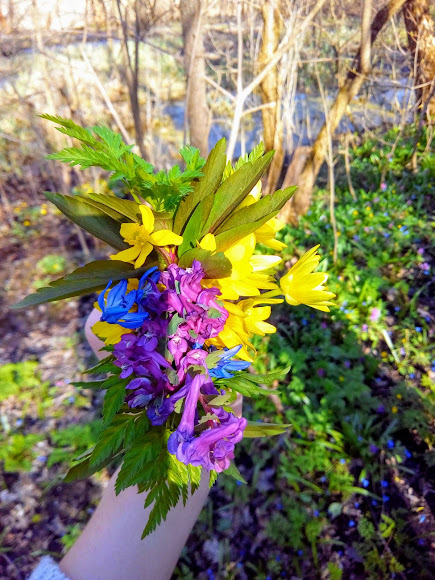
| On the glades in the neglected park, 6 kinds of primrose |
The noble dwelling has all the features of aristocracy.
 |
| The Bantysh Palace. 1837. |
The portico, set back from the central two-storey part, is reinforced by four triumphal columns crowned with an Ionic capital.
They are surrounded by a decorative row of six bas-reliefs of a female figure.
 |
| The bas-reliefs on the facade |
The building's two single-storey wings are encircled by a band of plant ornament.
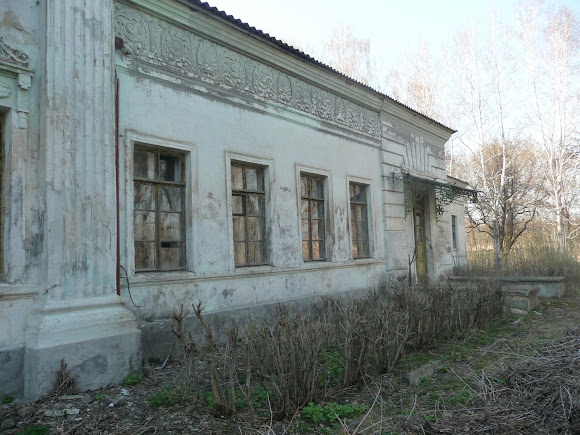 |
| The decorative stucco moulding |
The upper part of the facade and of the rear side is decorated with stucco moulding, symmetrical about the vertical axis. Branches and flowers of wondrous plants entwine an oval that once bore an image of the family coat of arms.
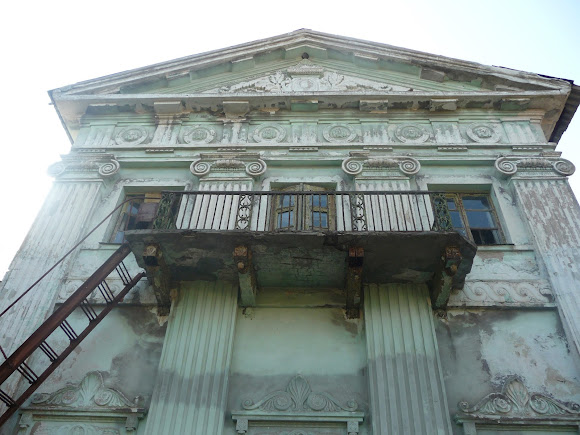 |
| The decor on the building. The balcony and fire escape of the former Young Pioneer camp block |
The founder of the estate is Vasyl Vasylovych Bantysh (1740-1812). In the 18th century Emperor Peter I generously rewarded the Bantyshes, relatives of the Moldavian ruler Cantemir, for their campaigns against Azov. The Bantyshes became owners of fertile lands in Slobozhanshchyna. "Ban" translated from Moldavian means "lord", and Bantysh was a true master on his estate.
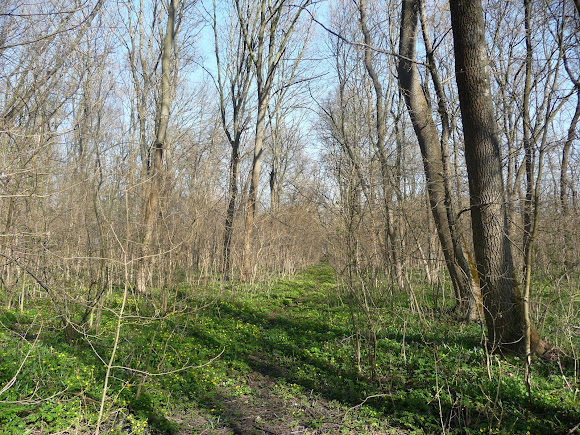 |
| Prelesne. The Bantysh estate |
One of the Bantyshes secured the laying of the railway through the county town of Tor (Sloviansk). Through the efforts of the estate's founder, Vasyl Bantysh, in 1770 a wooden church in the name of Basil the Great was raised in the sloboda — one of the first Ukrainian churches in the Donbas. In 1928 the Bolsheviks burned the shrine down.
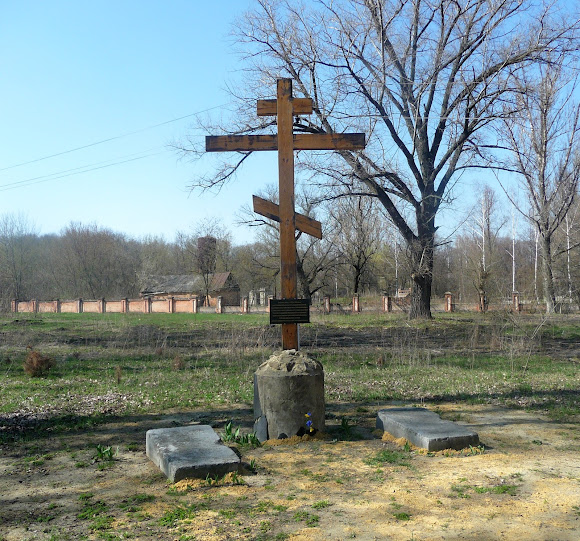 |
| Prelesne. The cross on the site of the church of Basil the Great, burned by the Bolsheviks (1770-1928) |
Legends have preserved the story of how the village got its name. At first it too had an unusual name — Vesele (Merry) — given by the settlement's first residents, whom Bantysh had gathered from various places. The landowner's bride, brought from afar, admiring the landscapes of her betrothed's domains, exclaimed in delight (in Russian): "Prelestno!" (How charming!). So they began to call Vasyl Vasylovych's patrimony, and later the place name became official.
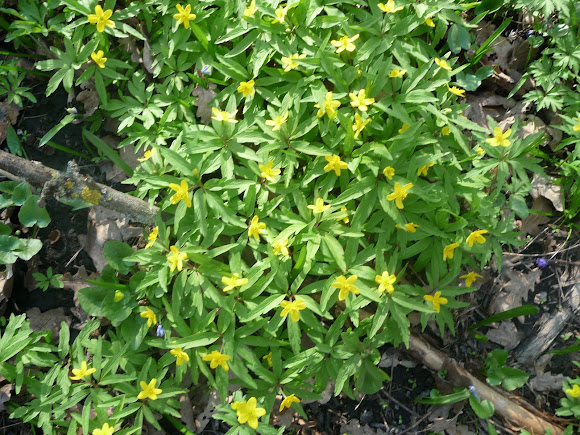 |
| Prelesne. The Bantysh estate |
Several generations of the Bantyshes were masters of the estate.
 |
| Prelesne. The Bantysh estate. The gravestones of the Bantysh landowners |
In 1837 Oleksandr Fedorovych, grandson of the estate's founder, built the palace in the Classicist style.
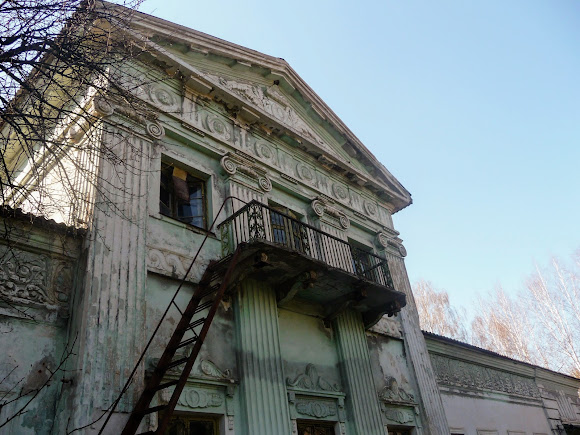 |
| Prelesne. The Bantysh Palace. 1837. |
Around the nobleman's nest a park was laid out. The gardener Kostiantyn Yosypovych Oliinyk worked in it for 50 years. The park, in which 120 kinds of trees and shrubs grew, covered an area of 66 hectares and is now a monument of landscape-gardening art.
 |
| The neglected park — a monument of landscape-gardening art |
To this tireless labourer, at the beginning of the 20th century the master set up a memorial sign in the depths of the park with an inscription of gratitude.
 |
| For 50 years, from 1858 to 1908, the gardener K. Y. Oliinyk worked for Bantysh |
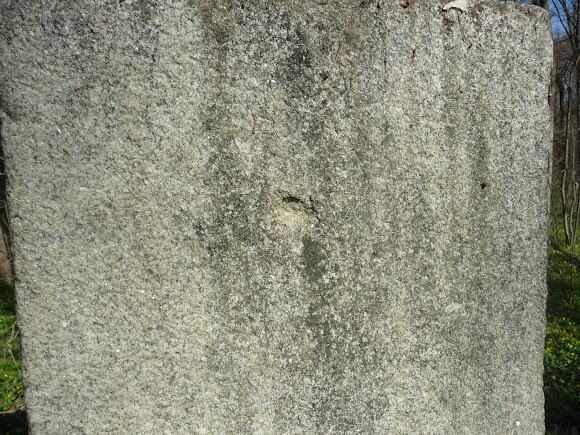 |
| Bullet marks. During the Second World War fierce battles were fought here |
By the manor house nestles a modest annexe, but its portico too is solemnly propped up by four columns.
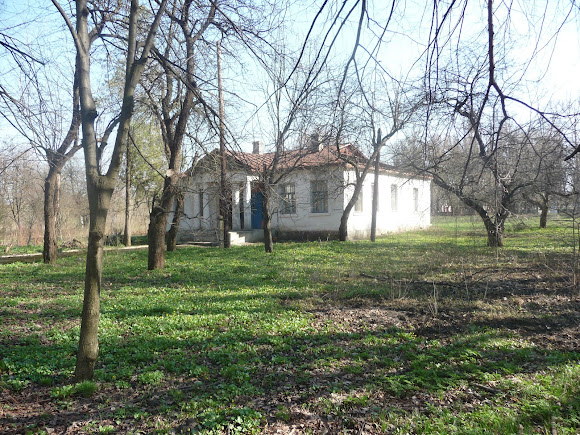 |
| The annexe in which the writer Hryhorii Danylevsky lived |
 |
| The annexe is adorned by four columns |
In it lived the family's tutor, the writer Hryhorii Danylevsky, author of many works, including the historical love novel "Princess Tarakanova".
All palaces have their secrets, and in Prelesne, too, they have not forgotten a tragically romantic love story. The landowner's daughter was in love with her tutor, but her father would not bless a marriage to an impoverished nobleman. Unable to bear the blow, the girl drowned herself in the estate's lake.
Since then the artificial pond with its islands and stone bridge has been called the Lake of Love. A path leads to it, but because of the spring floodwater I could not reach it.
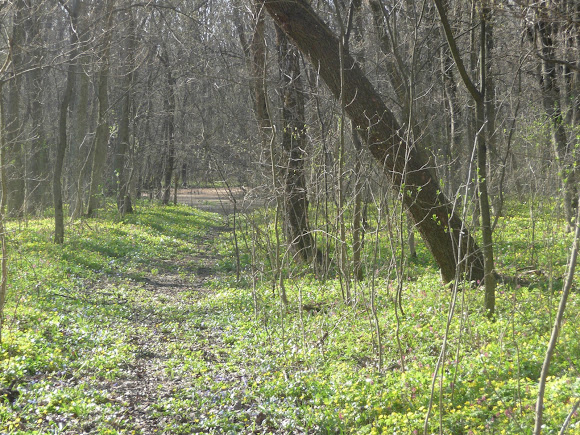 |
| Prelesne. The Bantysh estate. The path to the Lake of Love |
Mute witnesses of the events on the estate are the 200-year-old oaks. Four of them were planted by the palace, according to a noble custom, in honour of sons born.
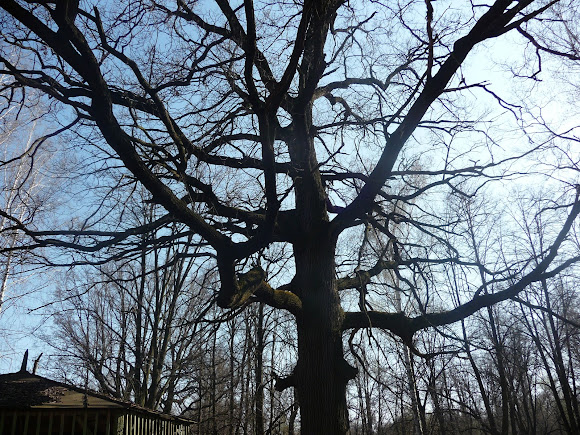 |
| The Bantysh estate. The 200-year-old oaks |
Those who came to power in 1917 wanted to burn down the mansion and had even already set fire to it. The master, already about to leave the ancestral nest, managed to stop them with the words: "Good people, what are you doing? It will still come in useful to you." And so it turned out. The estate came to belong to the Donetsk Railway, and a rest home for the enterprise's workers was set up in the beautiful building. Later it was better given over to children, opening at the estate the "Prelesne" camp for them and building a new brick block.
 |
| A block of the closed Young Pioneer camp |
 |
| A washstand of the closed Young Pioneer camp |
The old block, the former palace, was named the "Historical" one. No doubt interesting quizzes with a historical excursion into the past were held here.
 |
| The "Historical" block of the closed Young Pioneer camp |
This is how the palace looked in 1960, before it was disbanded. Inside there was a dormitory for boys, a sports hall and a "Skilful Hands" club. Photo provided by Hennadii Piatikov, a former pupil of the boarding school.
 |
| Prelesne. The boarding school in the Bantyshes' manor house. 1960. Photo by Hennadii Piatikov |
It is possible that the Bantyshes of Prelesne are relatives of the Bantyshes in Komyshuvakha, where a two-storey landowners' mansion has also survived and likewise needs restoration. Sadly, almost none of these gems of "frozen music" remain in the Donetsk region, and one would like to preserve the rest of the examples of 19th-century architecture.
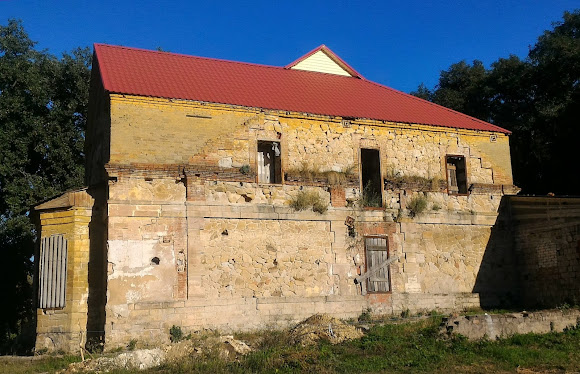 |
| Komyshuvakha. The Bantysh mansion. 19th c. |
Since 1983 a unique museum of folk architecture and life, with exhibits under the open sky, has operated in the village. The residents of Prelesne know and cherish the history of their native land.
 |
| Prelesne. The Museum of Folk Architecture and Life. Open-air exhibits. 19th c. |
All this was told to me by a native of Prelesne, now a Kharkiv resident, Serhii. He happened to be passing by the estate and offered to become my volunteer guide, and I thank him for the wonderful tour.
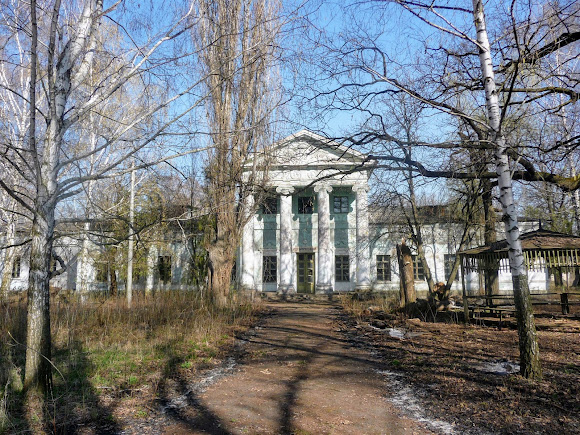 |
| Prelesne. The Bantysh estate |
The Bantysh Palace is located 20 kilometres from Sloviansk and 32 kilometres from Kramatorsk.
Address: the village of Prelesne, Sloviansk district, Donetsk region.
Coordinates:
48°50’14"N 37°17’25"E




No comments:
Post a Comment
Leave your impression