 |
| Mykulychyn. The kirkut |
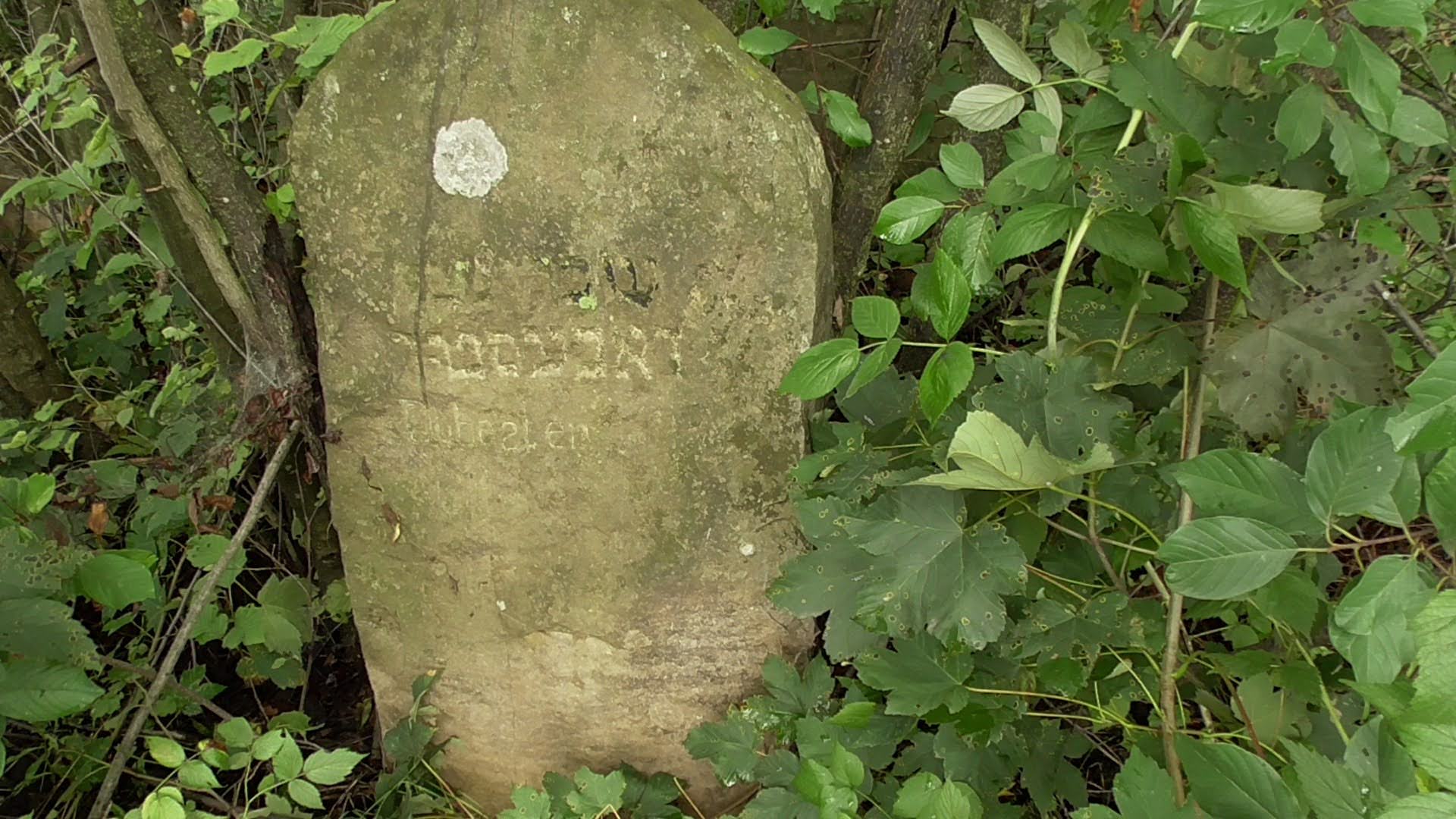
On the side of Velyka Holytsia Street the cemetery stretches for about 20 metres, while the perpendicular side is about 25 metres long. The plot, quadrangular in plan and covering 0.05 hectares, is overgrown with dogwood and other wild thickets. There is no fence around the kirkut; on three sides it is surrounded by private homesteads, and on the fourth runs the street. In all there are around 40 surviving gravestones, but some of the fallen stone monuments are covered with soil, weeds and thorny bushes. Do the many Jewish public organisations, whose members have scattered all over the wide world in search of a better fate, know about this?
On the oldest gravestone the year 1863 is carved, and the last burial is recorded on a slab from 1933. Judging by the dates and the small area, the kirkut was founded in the middle of the 19th century. On the old maps this Jewish God's-field is not marked. Making one's way through the green wilds and the thorny lashes of the blackberry to examine the matzevot is no easy task.

.JPG "Mykulychyn. The kirkut. Matzevot in the undergrowth")

A few more years, and the rampant undergrowth will hide the grave markers completely. For many years the burial ground was tended by Hanna Fedorivna and her husband Mykola, who live next to the cemetery. Hanna Fedorivna's great-grandfather, Fedir Yuriiovych Hundiak, owned parcels of land and was a respected citizen of Mykulychyn; Austrian engineers consulted him during the building of the railway, the tunnels and the bridges. A mountain pasture in the Carpathians is named in his honour, and the Hundiakova polonyna is an attractive tourist spot near Mykulychyn. F. Yu. Hundiak donated plots of land for the Ukrainian and the Jewish cemeteries. Hanna Fedorivna, a former teacher, together with her husband, in tribute to the memory of the dead, always kept the graves in order, sawed down trees, carried away leaves and rubbish, and planted little pines. The people of Mykulychyn remember the members of the Jewish community with respect, and they always lived together without conflict. They were even buried not far from one another. In the years of the Nazi occupation a Ukrainian family managed to save two Jewish boys from death. When they grew up, they came to Mykulychyn and, in gratitude, built a fine school, one much needed by the largest village in Ukraine. Hanna Fedorivna complains that research delegations and private individuals come to the kirkut, take photographs, use a drone for filming and perform memorial rituals.

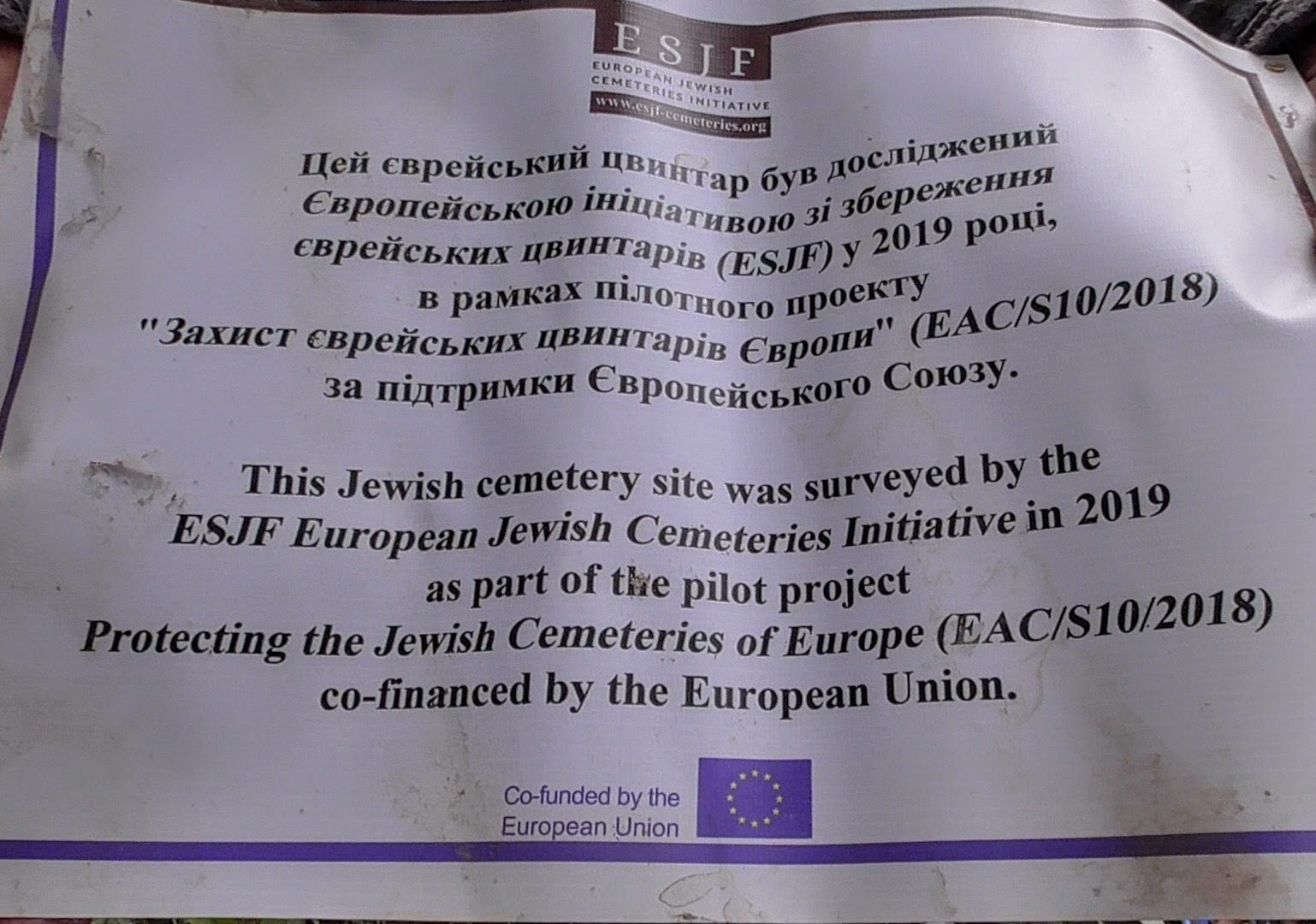
In 2019 this place of eternal rest was visited by representatives of the European Initiative for the Preservation of Jewish Cemeteries, with the support of the European Union, who left a paper record of their visit. The wind tore the document away, but Mykola kept the scrap of paper.
The pensioners tell how they have to be the unwilling watchmen of the kirkut and sometimes drive away unwanted visitors. Once, strangers wanted to steal the memorial stones and perhaps do something else improper with them. For many years the elderly couple carried out this mournful Christian duty, but they are no longer able to keep order in the abandoned cemetery.

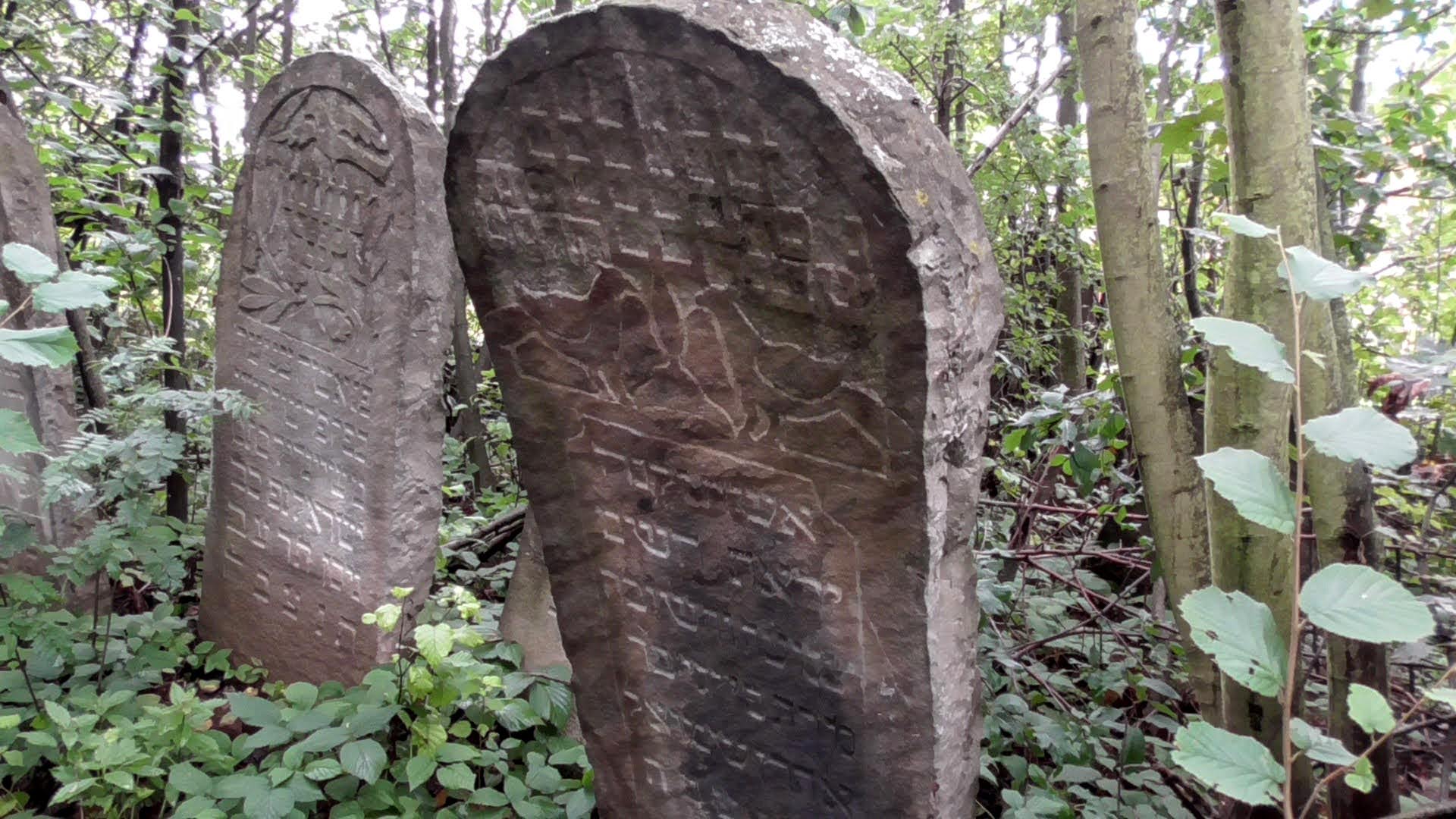

It would be a pious thing to carry out a restoration of the kirkut — to clear the undergrowth, secure the gravestones and put up a fence.
 |
| Mykulychyn. An old post at the edge of the cemetery |
Abroad, Jewish burial grounds are kept in proper condition; tours are led there, and they are studied and cherished. In our country the kirkuts are deprived of attention from the Jewish communities and the local authorities, even though they are regarded as cultural heritage. In recent years the Jewish cemetery in Deliatyn, some 20 kilometres from Mykulychyn, has been put in order. Its grounds have been cleared of bushes and rubbish and a fence has been installed — which could serve as a fine example.
 |
| Deliatyn. The kirkut |
As she saw me off, Hanna Fedorivna told a legend about the street on which the Ukrainian and Jewish cemeteries stand. Once an old church stood here, but a storm carried the shrine off to another village and destroyed the rest of the buildings, felling the trees. The rains washed the ruin into the ravine, and the mountain slope stayed bare for a long time afterwards, for which it earned the name Velyka Holytsia, the Great Bareness.
The persistence and the heartache of Hanna Fedorivna and her husband have not been in vain. In November 2024 the charitable organisation "European Initiative for the Preservation of Jewish Cemeteries" (ESJF) put up a fence around the cemetery. The workers who installed the fence stayed in Hanna Fedorivna's hospitable home. On 25 December 2024 Hanna Fedorivna turned 80. I wish this caring resident of Mykulychyn strong health and good cheer for many years to come.
Cemetery coordinates: 48°24'9"N 24°36'32"E
This story is also available in Ukrainian: Микуличин. Кіркут. Меморіальне місце та єврейська історична спадщина у забутті

No comments:
Post a Comment
Leave your impression