The bus ride took about 40 minutes. As always, I asked my fellow passengers to tell me when my stop came. The settlement stretches a long way and there are two stops. A man slightly the worse for drink told me about this village with sadness in his voice: he once had a local girl here, and he knows every path there. Besides, he is a connoisseur of I. Ya. Franko's work. The memories lulled him to sleep. It was lucky that the young mothers travelling from the district centre, who had been discussing the problems of bringing up little ones the whole way, had heard our conversation and managed to warn me about getting off.
Golden domes showed through the trees. But the sense that the church was close by turned out to be deceptive. I had to go round places that were hard to pass, a field, a shelterbelt. Here one recalls the wisdom of the proverb: «Do not go into the water without knowing the ford». I crossed the railway crossing, where a repair crew was at work, and hurried along the long village street.
A shop, a café, a post office. At the crossroads stands a monument to I. Ya. Franko. In these parts, it seems, memorial signs to the Kameniar (the Stonecutter) have been raised in every village. Schools and streets are named in his honour.


Having crossed the bridge over the small river Vedmezhanka, I saw the abandoned former House of Culture. Beside it stands the pedestal of a monument to Kirov, on which the inscription is still visible. An obelisk with no plaque and no inscriptions, overgrown with thistles. It has to be said that this is the only case in all my travels where I have seen monuments in such a state. The little park around it was neglected too. Once, evidently, this was the cultural centre of the village. Now, in order to take a photograph, I had to overcome obstacles in the form of barriers and stretched wires.


Across the road are the village council and the people's hall.
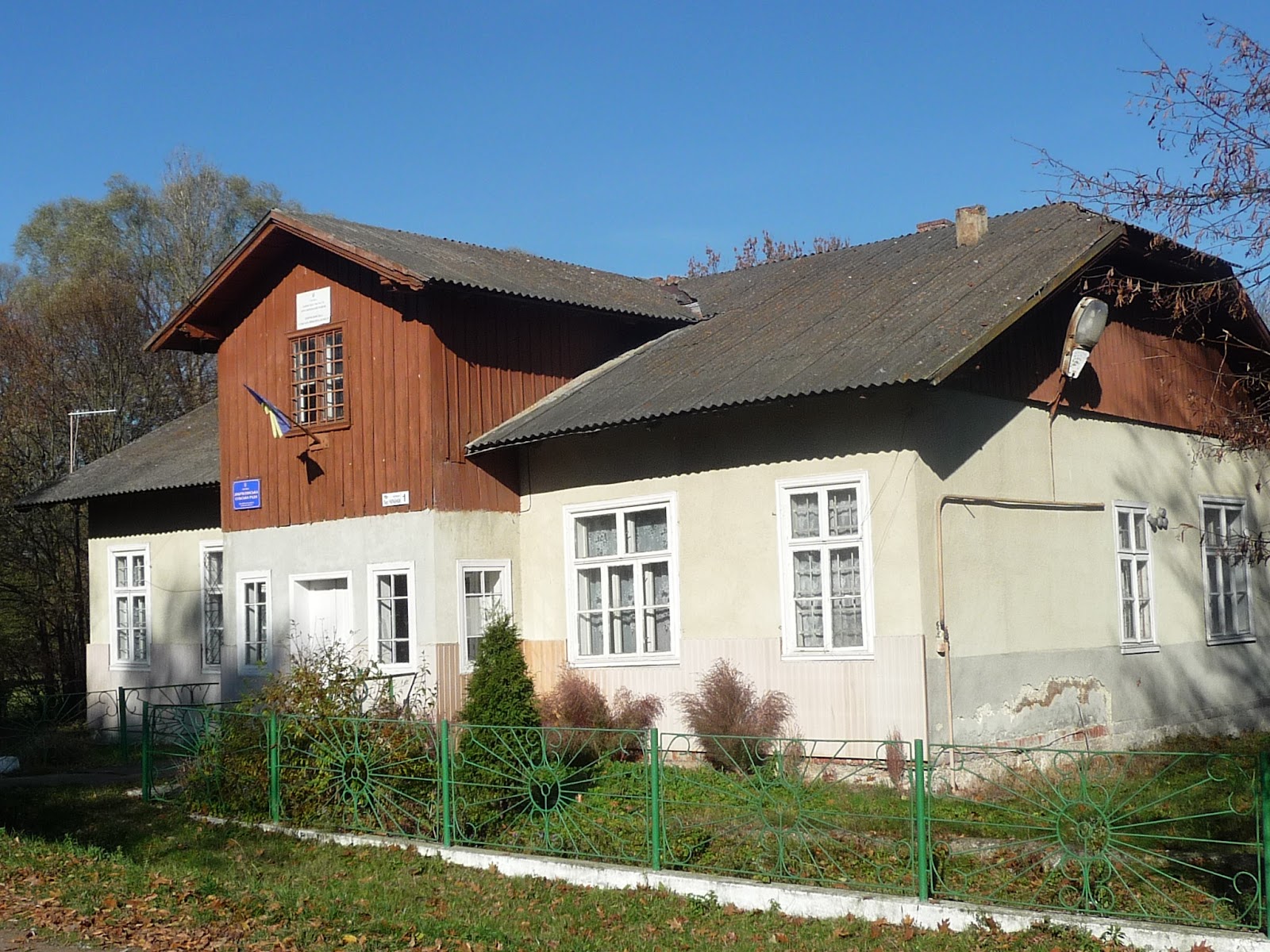

Next I had to cross the railway again and walk along a path across a meadow. I crossed the river Trudnytsia by a little bridge.

The Church of the Protection of the Holy Mother of God stands at the very end of the beautiful Dolishnia Street. And as I drew nearer to the sanctuary, the feeling of grandeur grew. The wooden church, built in 1885, was not closed during the years of the atheist regime.


Repairs with gilding and a fashionable «Euro» refit using plastic have spoiled the authenticity of this historic building. Benefactors and patrons put up money to restore the sanctuary, but the priests and the parish want the place of prayer to shine with gold, and they forget the traditions of wooden folk architecture.


A memorial plaque has been set on the church wall in memory of I. Ya. Franko's stays in the village. The poet was a guest of the priest Chapelskyi many times and was in love with his daughter.

On the church grounds there is a sculpture of the Mother of God.

By the entrance to the church, on the left and on the right, stand a cross on a symbolic Cossack grave and a cross to the fighters for the freedom of Ukraine. A woman who was tidying the grounds explained to me that they are called a «molylo», that is, this is where people pray for the souls of those who died for the Motherland.


The way back was already familiar. I waited for the bus at a stop beside which stands a sculpture of the Mother of God, who meets everyone, sees everyone off and blesses them.


This story is also available in Ukrainian: Добрівляни Дрогобицького району. Чи рятує єроремонт духовну спадщину?

No comments:
Post a Comment
Leave your impression