
For long decades the memorial's decoration was a political symbol of the militancy and imperialism of a militaristic foreign state. The inscriptions and images on the grave structures did not meet the requirements of the Law of Ukraine «On Perpetuating the Victory over Nazism in the Second World War». Individual elements of the totalitarian regime's symbolism were dismantled.
Those buried are to be reinterred at the Holoskivske Cemetery, while the memorial complex is to be studied and also relocated. The central entrance to the military cemetery is located on the side of Pasichna Street. Two pylons are built of red sandstone in the form of banners. On the steles an inscription is rendered in Russian and Ukrainian: «Eternal glory to the heroes who fell in the battles for the honour and victory of our Motherland».

In the centre, on the stairs, stands a vertical column on which an eternal flame was lit from 1958.


On the square-shaped cemetery grounds the gravestones are arranged in six rows. The inscriptions are in Russian.

On three sides arches are built, joined by chains of plants and enclosing the memorial grounds.

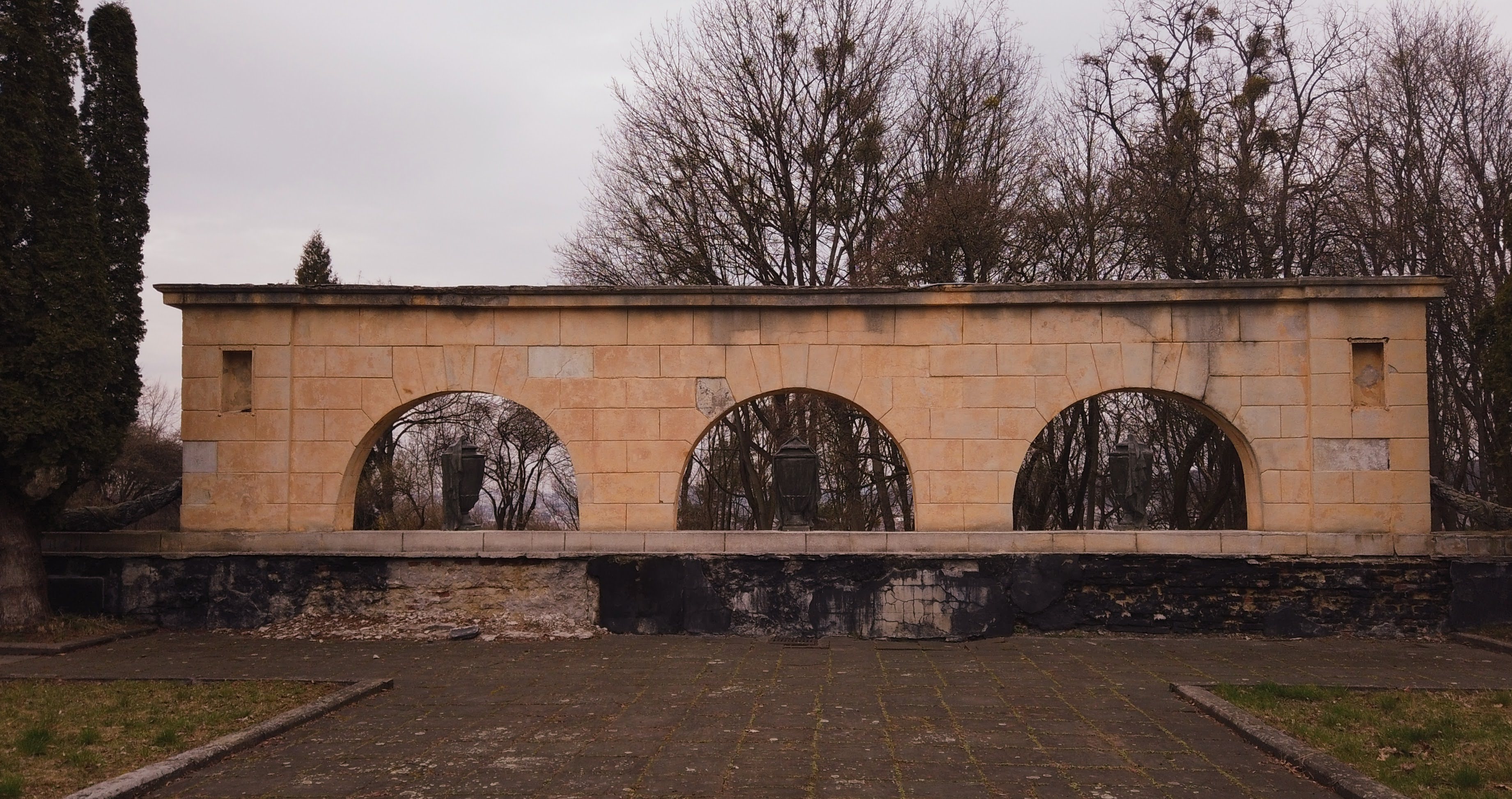
On the gravestones and posts the decoration is in the form of relief stars.


In the eastern part of the cemetery lies the grave of Hero of the Soviet Union Nikolai Kuznetsov. The scout's relatives demanded that his remains be transferred for reburial in his homeland, but the Lviv authorities refused on account of Ukrainian prisoners of war being held on the territory of the Russian Federation.
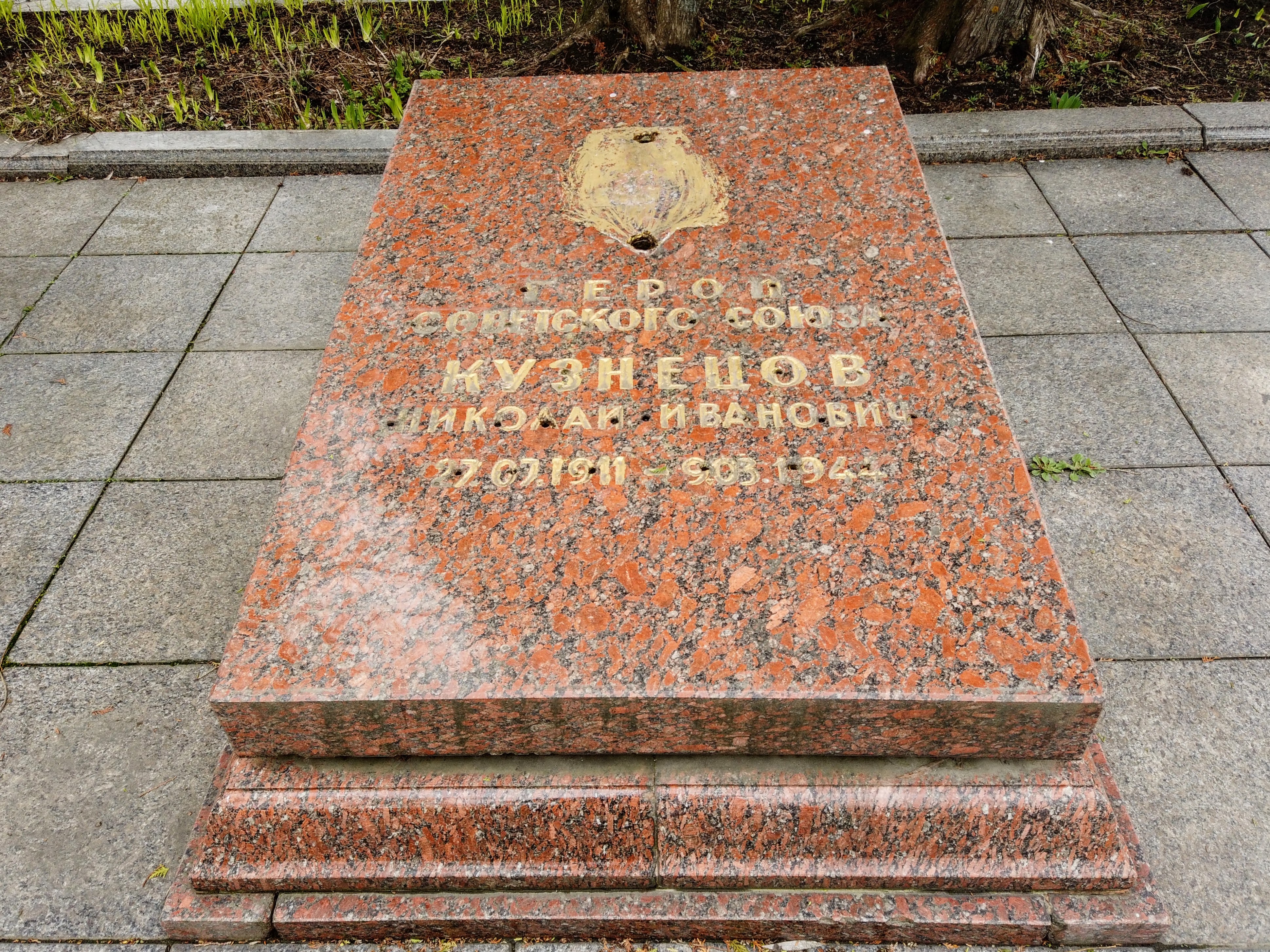
In accordance with the decommunisation law, the sculptural groups were dismantled from the pedestals and moved to museums of the totalitarian regime.
This story is also available in Ukrainian: Львів. Пагорб Слави. Історія і зміни пам'ятки Другої світової війни

No comments:
Post a Comment
Leave your impression