The history of the Starobilsk Holy Convent of "Joy of All Who Sorrow" is an example of the unbreakable strength of faith, a testimony to the love and virtue of its founders and inhabitants, of those who "conferred not with flesh and blood".
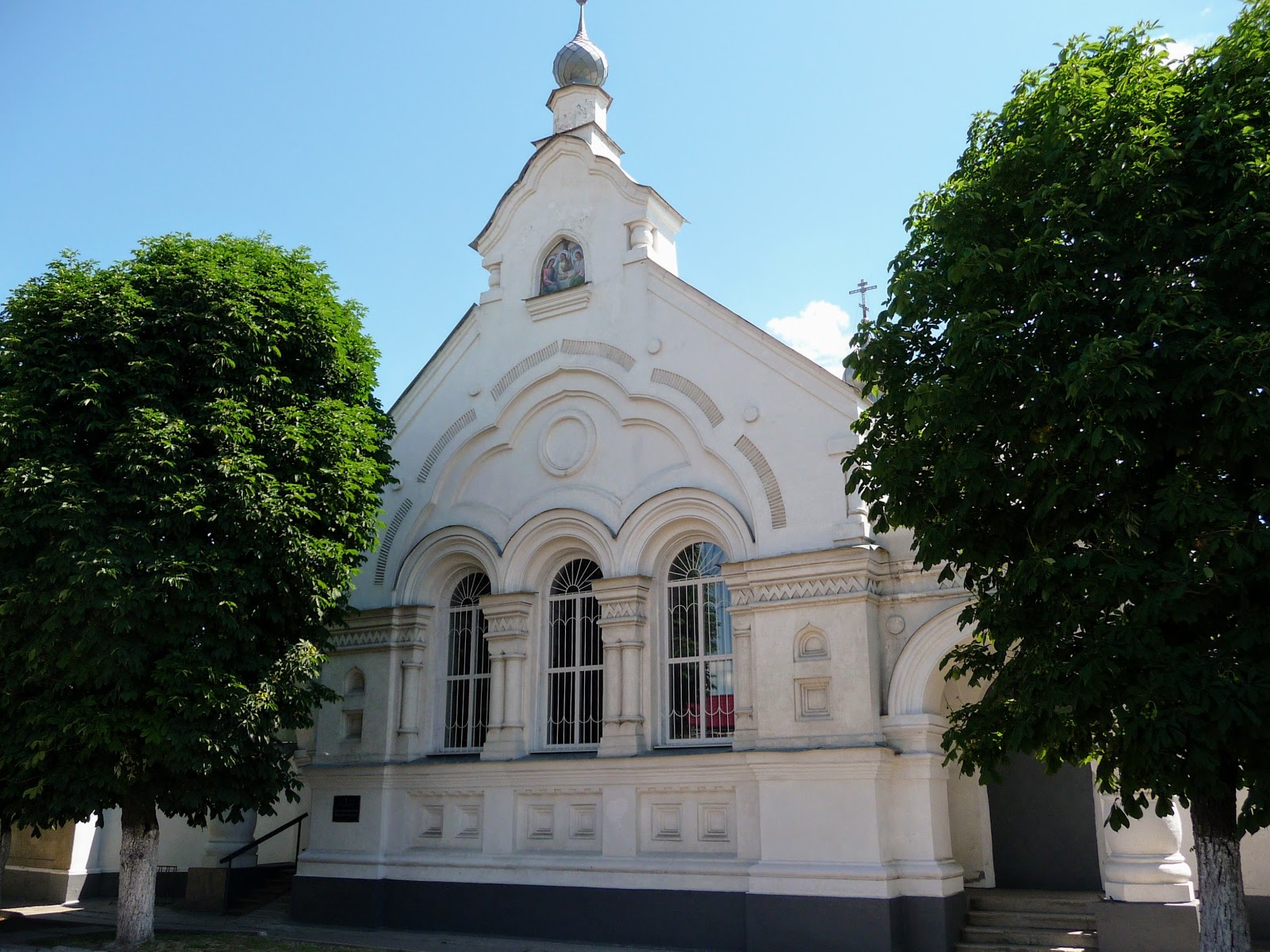 |
| Starobilsk. Luhansk region. Convent of "Joy of All Who Sorrow" |
Starobilsk is a district centre of the Luhansk region, founded by Cossacks from the Poltava region in the 17th century on the picturesque bank of the Aidar.
In 1849 a selfless woman, whose husband, Colonel Bulych, had died of his wounds in the Russo-Turkish war, sold her property and opened a shelter for poor widows. The times were hard, and the shelter filled up with orphaned children and the children of fallen soldiers. Before long only orphan girls were being raised in the shelter, and Anna Ivanivna Bulych not only took them into her full care but also prepared a decent dowry for them. The pupils were taught reading and needlework, and studied the Law of God, church singing and reading. The benefactress raised the children as her own daughters, trying to instil in them high moral values.
As the church was far away, Anna Ivanivna asked the diocesan authorities to open a house of prayer in one of the small halls. The shelter's church was consecrated in honour of the icon of the Mother of God "Joy of All Who Sorrow", which is venerated in almshouses, hospitals, and cemetery and prison chapels.
An exact copy of the miracle-working icon "Joy of All Who Sorrow" from the Okhtyrka Trinity Monastery was painted at the order of A. I. Bulych and placed in the church.
 |
| Starobilsk. Convent of "Joy of All Who Sorrow". The icon of the Mother of God "Joy of All Who Sorrow" |
The children grew more numerous and came of age, and Anna Ivanivna submitted a petition to turn the shelter into a religious community. The permission was approved by the Holy Synod and signed by Emperor Alexander II. A. I. Bulych took monastic vows under the name Angelina.
The little wooden house could not hold all those who wished to turn to God in prayer, and in 1863 the Archbishop consecrated the site for the building of a church. Having received the design, Mother Angelina set about procuring materials and erecting the church. The consecration of the Holy Trinity Church took place in 1870.
 |
| Starobilsk. Convent of "Joy of All Who Sorrow". Holy Trinity Church. 1870 |
The five domes stand for Christ and the four evangelists. The material used was of their own making and the work was done with great skill. The thickness of the mortar joint in the brickwork of the whole structure is the same everywhere — seven millimetres. For lack of funds the construction dragged on until 1898.
 |
| The church "Joy of All Who Sorrow". Brick made at the convent. All the convent buildings were originally of this kind of red brick |
 |
| Starobilsk. Convent of "Joy of All Who Sorrow". Photograph of 1907 |
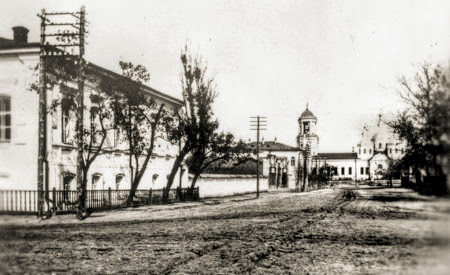 |
| Starobilsk. Convent of "Joy of All Who Sorrow". Photograph of 1911 |
The most famous ascetics of the convent may be called the blessed nun Paraskeva and her disciple the nun Faina, who renounced property and comforts yet regarded themselves as great sinners. Preserving an exalted spirit and possessing the gift of clairvoyance, they often foretold the future. Unafraid to speak the truth to one's face, they exposed injustice and other vices, thereby saving their fellow citizens from misfortune.
They comforted the devout and healed the suffering with prayers. During the First World War the convent's inhabitants cared for soldiers sick with typhus whom the hospitals in Svatove had refused to admit.
 |
| Starobilsk. Convent of "Joy of All Who Sorrow". Photograph of 1907 |
 |
| Starobilsk. Convent of "Joy of All Who Sorrow". Holy Trinity Church. 1870 |
 |
| Starobilsk. Convent of "Joy of All Who Sorrow". Holy Trinity Church. 1870 |
The Convent of "Joy of All Who Sorrow" entered the history of the Second World War as a place of the mass death of the Polish military elite as a result of the deliberate actions of the Kremlin leadership.

Before the war a woman appeared in Starobilsk whom everyone knew as Grand Duchess Xenia, sister of Emperor Nicholas II. Representatives of the clergy came to her, and money transfers arrived from abroad. Her manner of communication and her command of foreign languages left no doubt that she belonged to the highest social station. The Germans, too, recognised in her a royal personage and did not dare refuse her requests. In this way she managed not only to pass parcels from relatives to the prisoners but also to save many from death. At that time Xenia was hiding an officer and two soldiers of the Red Army in her own home.
Who Xenia really was remains a mystery. She died in 1947, and in 1998 her remains were moved to the convent grounds and buried in the same crypt as Mother Faina.
 |
| Starobilsk. Convent of "Joy of All Who Sorrow". The cells |
 |
| Starobilsk. Convent of "Joy of All Who Sorrow". Holy Trinity Church. 1870 |
 |
| Starobilsk. Convent of "Joy of All Who Sorrow" |
 |
| Convent of "Joy of All Who Sorrow". Church of the Icon of the Mother of God "Joy of All Who Sorrow". 1898 |
Coordinates: 49°16’36"N 38°54’0"E

No comments:
Post a Comment
Leave your impression