Lovers of hikes to places with fortification structures need to hurry to see Klevan Castle. This 15th-century artefact is part of the treasury of a hundred castles and fortresses of Ukraine, but its condition is deplorable and hopeless.
 |
| Klevan. The Czartoryski Castle. 15th century |
The little town of Kolyvan has been known since 1113. In those distant times, borders between states ran here, and their strengthening was a state matter of the first importance. In 1446 the Grand Duke of Lithuania Svydryhailo gave these lands to the founder of the magnate family, Mykhailo Czartoryski, a descendant of Prince Ostrozky. Until the First World War, the charter attesting to this event was kept in the castle.
 |
| Klevan. The Czartoryski Castle. 15th century |
The owner of the estate set about erecting a fortress on the Horodyshche promontory, which for four centuries became the ancestral nest of the Czartoryski princes. His son Fedir completed the construction 20 years later.
 |
| The entrance to the castle |
The glory, might and grandeur of the castle are bound up with the Czartoryski name. The stronghold, set on a hill, was surrounded by deep moats that filled with water from the Stubla river.
 |
| The Czartoryski Castle. The religious college |
The stronghold had four wings, was built of brick and reinforced with towers pentagonal in plan, with walls 3.8 metres thick.
 |
| The Czartoryski Castle. The eastern tower |
The towers were placed at opposite ends — by the entrance to the castle and on the river side. A third, of wood, has not survived to our days. The main defensive function was performed by the western bastion; in the eastern one, weapons and gunpowder were kept.
 |
| The ruins of the western tower |
 |
| The ruins of the western tower |
The wooden drawbridge was in time replaced by an arched stone one on massive supports.
 |
| The bridge. The entrance to the castle |
 |
| The bridge. The exit from the castle |
The remote location from the Polish-Lithuanian Commonwealth played its part in the fortress's loss of strategic importance. In 1632 the Czartoryski residence became a Jesuit collegium.
 |
| The entrance to the castle |
Later the loopholes were remade into windows.
 |
| The entrance to the castle |
After the first partition of Poland, the castle became the property of the Austrians and was not used until 1817, when Prince Kostiantyn Czartoryski decided to open a gymnasium in it. As a result of the rebuilding, the fortress lost its eastern wing and acquired two annexes.
 |
| The Czartoryski Castle. A view from the inner courtyard |
 |
| Klevan Castle. The northern wing |
After secret negotiations on the third partition of Poland, the territory on which the castle stood passed to Russia. The tsarist autocracy did not forget the anti-government protests of the active gymnasium students and closed the institution.
 |
| Klevan Castle |
From 1878 to 1915 a religious college was housed in the castle, but the events of the First World War, the October coup and the civil war that followed it once again brought changes to the fortress's fate. From 1918 to 1925 people who had lost their homes during the fighting found shelter in it.
 |
| The Czartoryski Castle. The western wing |
 |
| The Czartoryski Castle. Premises in the western wing |
For 14 years a boarding school was located within the castle walls. In 1939-1953, with a break for the war years, it was occupied by units of the NKVD organs. The Hitlerites used the castle for punitive operations.
 |
| Mediaeval walls with loopholes |
For a time the castle was a rural vocational school, but its last purpose was a medical-prophylactic institution for alcoholics, who were often held in such institutions by force. It is not an isolated case, when historical and architectural monuments are handed over to people with addiction.
 |
| The walls are up to 3 metres wide |
 |
| Klevan. The Czartoryski Castle. A window opening |
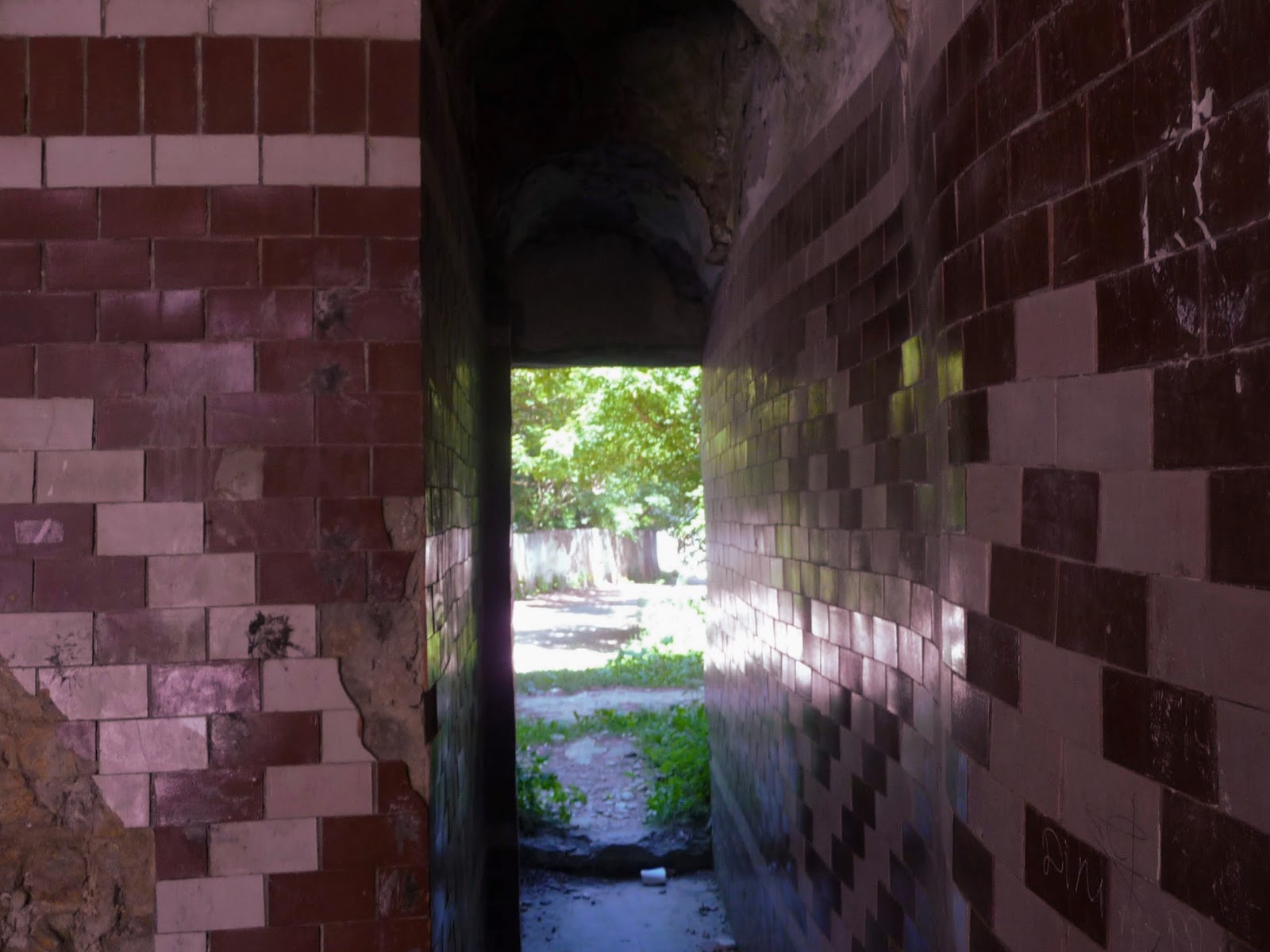
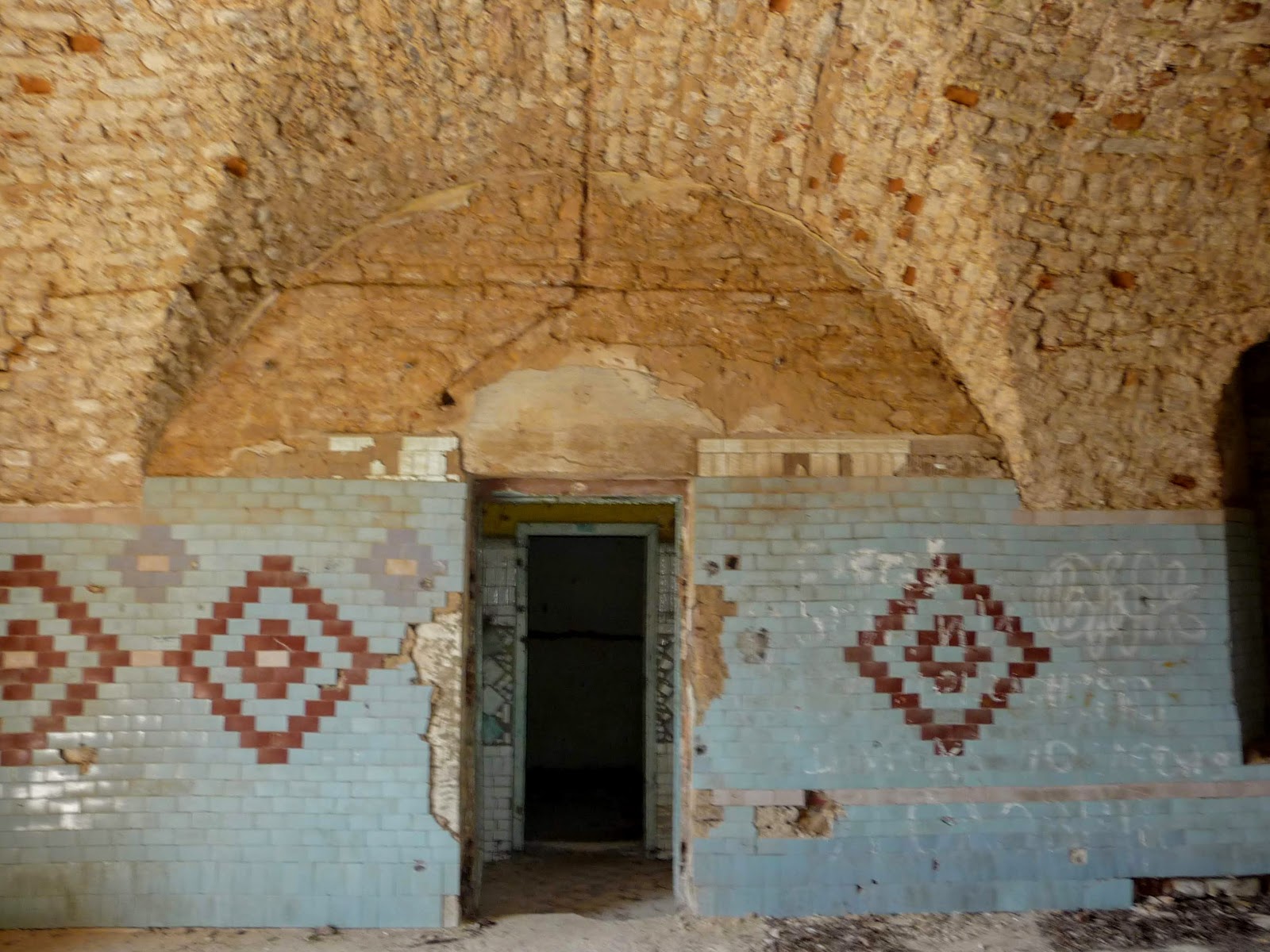
The destructive force of alcoholism has, to a considerable degree, affected both the preservation of the fortress walls and the atmosphere of the Middle Ages. The corridors of the former correctional sobering-up centre are painted in white and green colours.
 |
| The Czartoryski Castle. Premises of the former LTP |
The firmly glued tiles glitter in the half-darkness of the castle passages with all sorts of patterns. The tilers, apparently, competed in the design of intricate ornaments.
 |
| The Czartoryski Castle. Interiors left by the last owners |
 |
| The Czartoryski Castle. Patterns on the mediaeval walls |
In the 1990s the effectiveness of the LTP was reckoned to be nil, and since then the former princely residence has stood empty and is falling into ruin. Local historians and the public have raised the question of preserving the Klevan landmark more than once. Utopian plans to open a hotel here sank into oblivion, and the decision of the Rivne regional administration to hand the citadel over for use by a local enterprise was annulled.
 |
| The Czartoryski Castle. The vault |
Every castle has its legends. The tales have carried down to our days a sad Lave Story of the 15th century, in which the young married couple Oksana and Vasyl were walled up alive in the walls of the stronghold. The prince, who had come to the wedding of his serfs, cast his eye on Oksana, but she refused the lord, for which she bore a fatal punishment together with her beloved. This tale formed the basis of Oleksii Zavorotnyi's play "The Mystery of Klevan Castle".
 |
| The Czartoryski Castle. An information board |
The tales of the hidden riches of the nobles who lived here give treasure-hunters no peace.
 |
| The chasms and ruins of Klevan Castle |
The Czartoryski Castle has many unsolved mysteries and mystical stories, but the guides will not tell of them, and the travel agents will not add the Klevan landmark to the list of popular routes. Travellers passing along the H-22 highway from Lutsk to Rivne can look into it on their own and for free. A warning: in the ruins and the thickets, snakes have bred.
 |
| The Czartoryski Castle. The cobblestones on Zamkova Street |
You can get here from Rivne by the Zdolbuniv-Kovel or Zdolbuniv-Lutsk suburban train to Klevan station, and then by minibus to the south-western part of the settlement, or by bus from the Rivne railway station every 30 minutes to the stop in the centre of Klevan-1.
 |
| Klevan. The signpost on Bohdana Khmelnytskoho Street and the turn to the castle |
The settlement of Klevan is known for a romantic place — the Tunnel of Love, created by nature and human activity.
Address: Klevan settlement, Rivne region, Zamkova Street.
Coordinates: 50°44'31"N 25°57'59"E




No comments:
Post a Comment
Leave your impression