 |
| Lviv. The Museum of the History of Electrification of the Lviv Region |
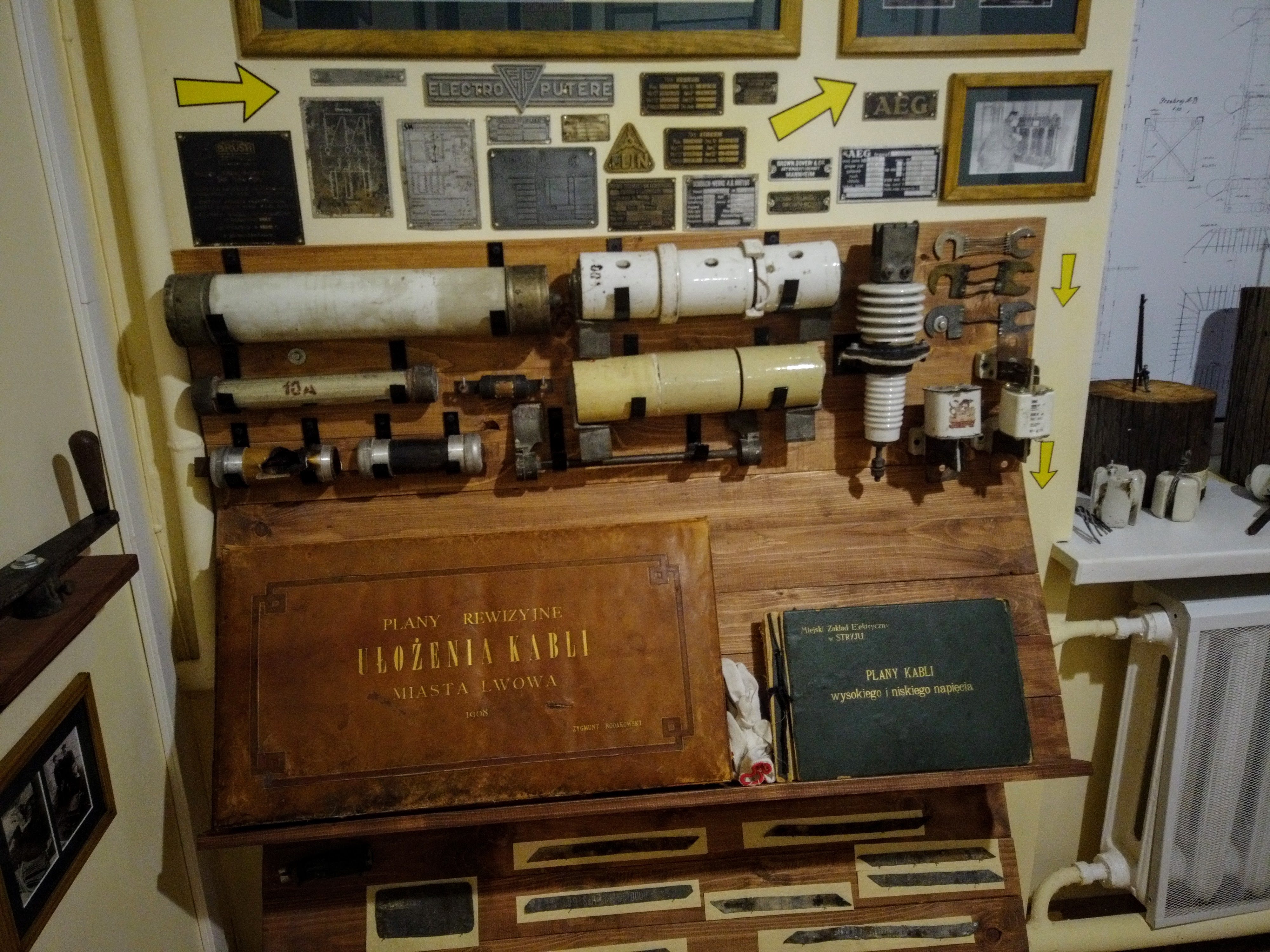
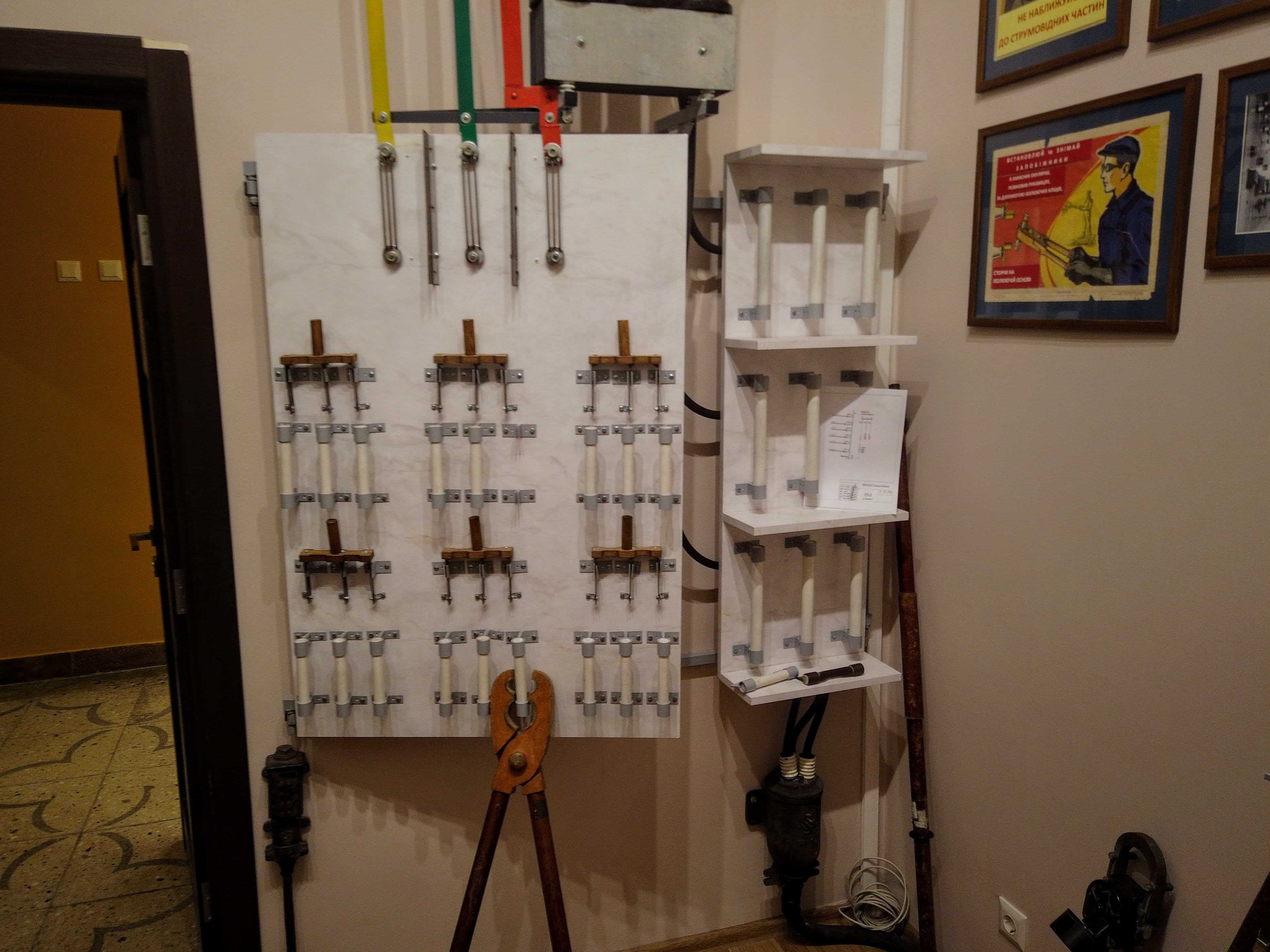
In six halls are displayed old fuses and Polish maps of the Lviv electrical networks, a model of the first Lviv electric street lamps, current clamps, a model of a transformer substation and much other equipment.


 |
| Lviv. Exhibits of the Museum of the History of Electrification of the Lviv Region |
The tours are led by Andrii, a connoisseur of the city's electrical history.
We cannot imagine our life without electricity and electrical appliances. All the discoveries in electrification began in the 19th century. Thomas Edison held to the theory of direct current, which cannot be transmitted over long distances. His opponent Nikola Tesla developed the study of alternating current. In the early 1890s the foundations of transporting energy were laid, and generators, motors and other equipment were built.

 |
| Lviv. Exhibits of the Museum of the History of Electrification of the Lviv Region |
The holding of the Regional Industrial Exhibition in 1894 spurred the electrification of Lviv, an important city of Austria-Hungary. There was no transport link between the railway station and Stryiskyi Park, the site of the exhibition, and the many visitors had no way to get there by the horse-drawn tram of the time. Roman Dzeslevskyi, a professor of the department of electrical engineering at the Lviv Polytechnic, set out to solve the problem and initiated the building of a tram with an electric drive.

 |
| Lviv. A model of the first electrically driven tram |
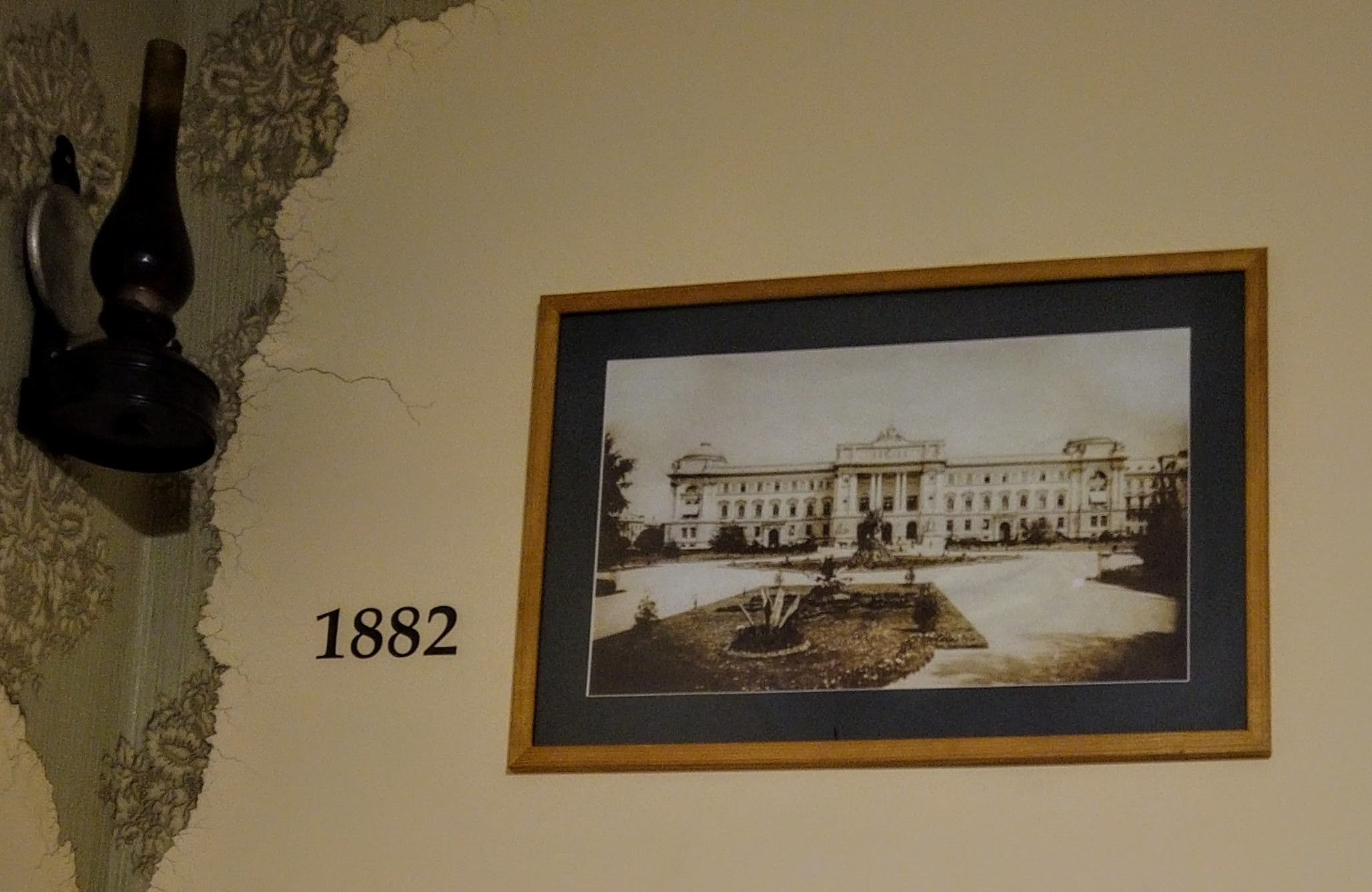
The introduction of the electric tram in Lviv brought about the rapid electrification of the city. From 27 April 1894 regular tram traffic began on the streets of Lviv. Electric current was used to light the City Theatre. From then on the power station supplied current for the tram network and for the lighting of the city. With the arrival of electricity, arc lamps began to be used instead of gas lanterns — lamps in which an electric arc springs up between two carbon rods.

 |
| Lviv. Exhibits of the Museum of the History of Electrification of the Lviv Region |
By 1961 the whole Lviv region had been electrified. The diagram shows the electrical networks and the locations of the electrical substations at various times.
 |
| Lviv. A diagram of the electrical network of the Lviv region |
Before the arrival of electricity, horses helped people mine ore in the pits. The horses walked in a circle, turning a wheel, and through the movement of the animals light was created. In time the horses were replaced by mine carts and battery-powered electric locomotives. A collection of electricity meters is displayed on the stand, the oldest dating from 1905. There are samples of switchboards and insulators that can still be found in the buildings of Lviv. Signs bearing the letter "T" meant that a transformer or a bundle of cables was installed at the site and that one had to take care.
 |
| Lviv. A collection of electricity meters |
A model of the electrical system of Ukraine, with its various kinds of power stations, its substations and a central distribution point, looks like one continuous cobweb.
 |
| Lviv. A model of the electrical network of Ukraine |
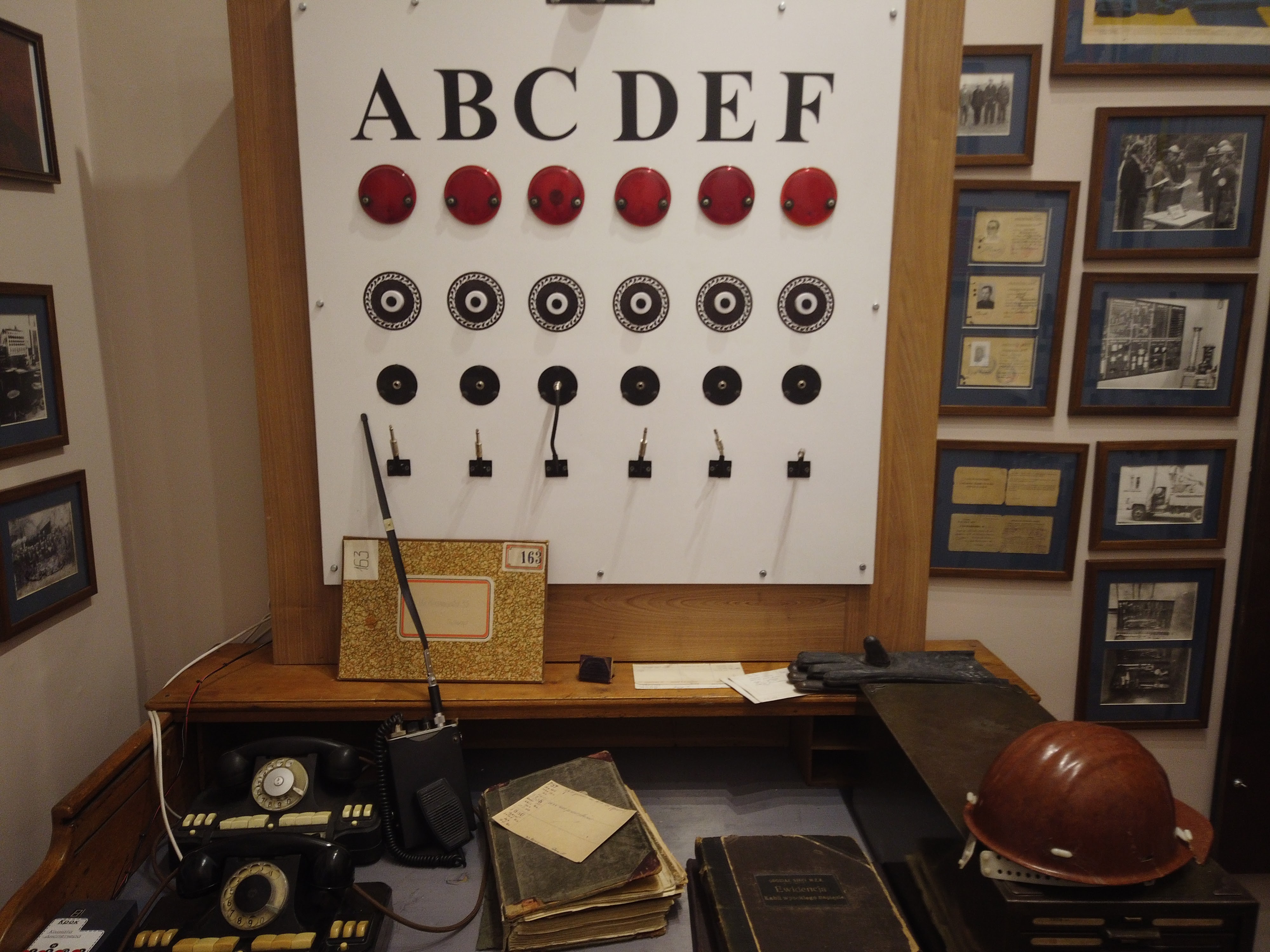
A large photo archive has been gathered, showing energy facilities, the work of the industry's staff and important events in the development of the power supply. A sample control room has been recreated, where calls are taken during breakdowns. Old telephones, logbooks, helmets and rubber dielectric gloves are kept there.

 |
| Lviv. The control room at the energy authority |
The stand illustrates telephone communications, along with a selection of keys to service facilities.
 |
| Lviv. The telephone communications corner |
A hand-cranked washing machine and coal-heated irons let us see the old household appliances that were used without any electrical sockets.
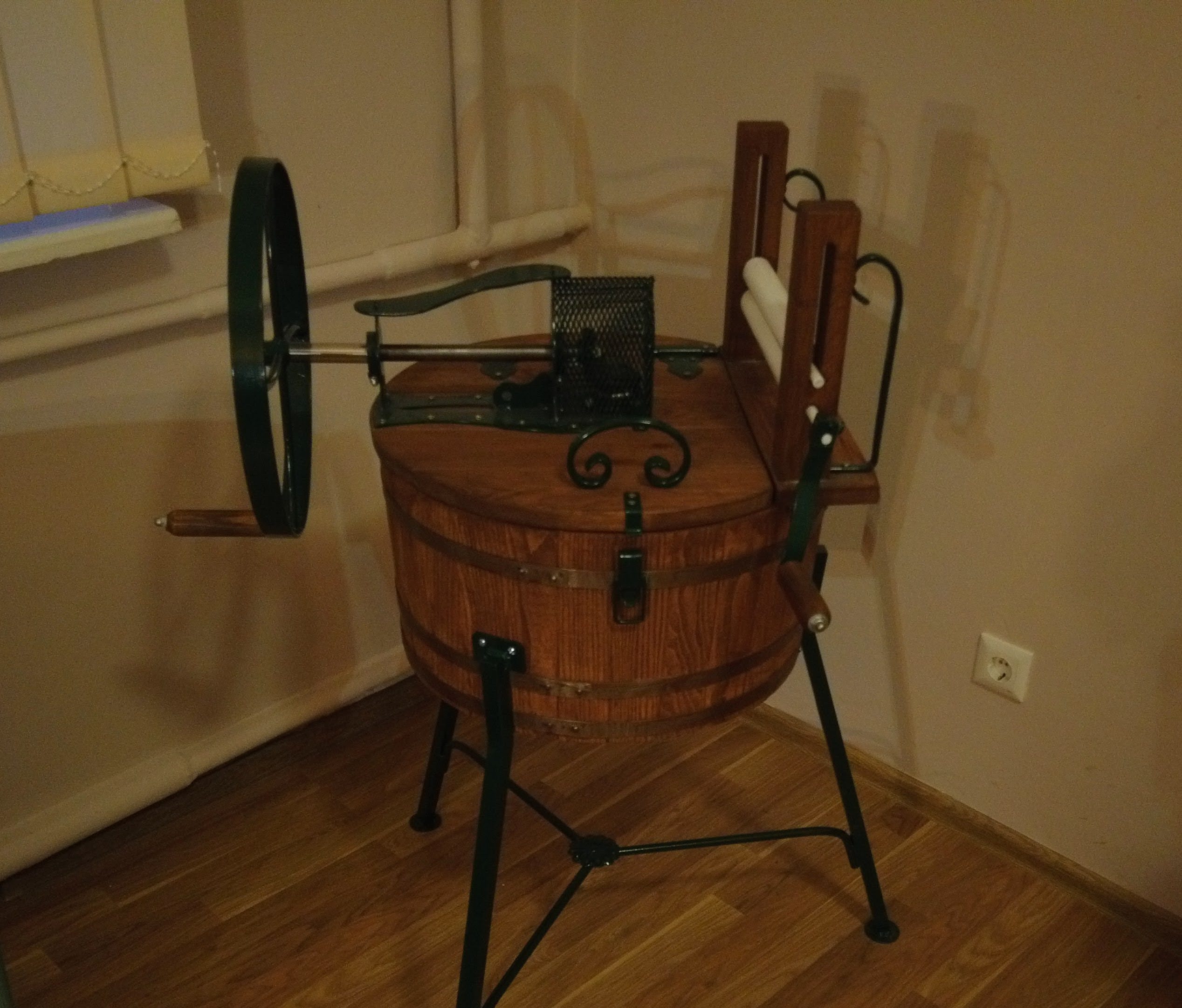 |
| Lviv. A washing machine |
Visitors have the chance to touch the exhibits, examine the visual aids, pick up some electrician's skills and replace a burnt-out transformer with the help of a wooden tool.


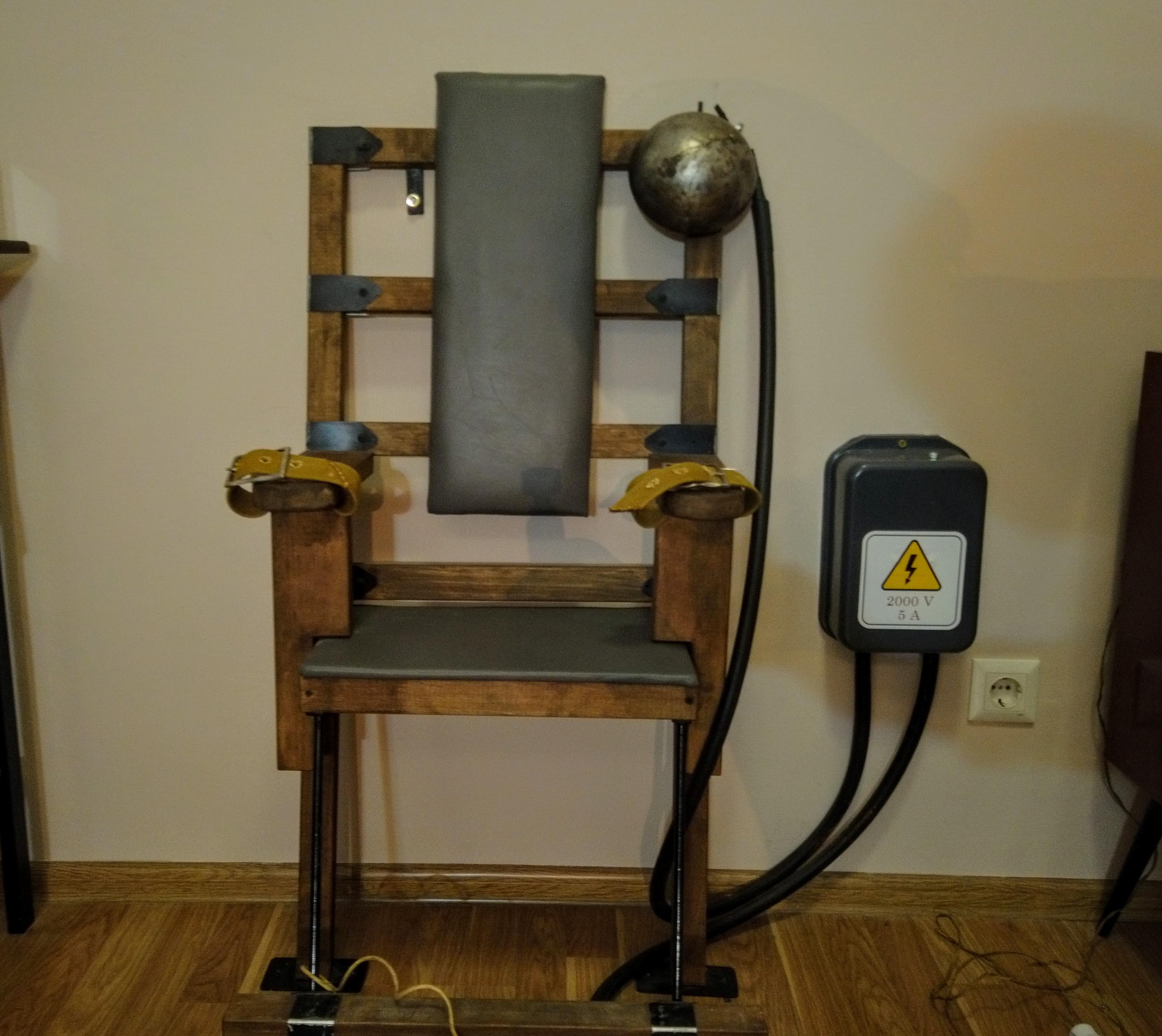 |
| Lviv. Exhibits of the Museum of the History of Electrification of the Lviv Region |
By the entrance to the museum stands an information board covering the history of the electrification of the city and the region.

Museum address: Lviv, 56 Yuriia Mushaka Street, near the "Zalizna Voda" park.
This story is also available in Ukrainian: Львів. Музей історії електрифікації Львівщини. Екскурсія з практичними навичками

No comments:
Post a Comment
Leave your impression