 |
| Vorokhta, Ivano-Frankivsk region. The church of the Nativity of the Most Holy Mother of God |
Services have always been held here, whatever the decrees of the authorities. One of the very few Hutsul churches to have kept its authenticity thanks to professional restoration, it stands on a hill in the south-western part of the town and is clearly visible from the R 24 road.
Churches consecrated in honour of the Nativity of the Most Holy Mother of God are always special, and you meet them less often than those consecrated to other feasts or saints. The 8th (21st) of September is the start of the church new year, an important feast for every Christian — the day the Virgin Mary was born.

As so often happens, it is not easy to determine the year ancient sacred buildings were erected, and historians differ over the origin of the old house of prayer. Sometimes the date of a relocation, extension or addition is taken as a new starting point. By one version the construction is put at 1615; another date is somewhat later – the 18th century. It is believed the church was built in neighbouring Yablunytsia by local craftsmen, and later, as used to happen, the neighbours bought the shrine and carried it home.
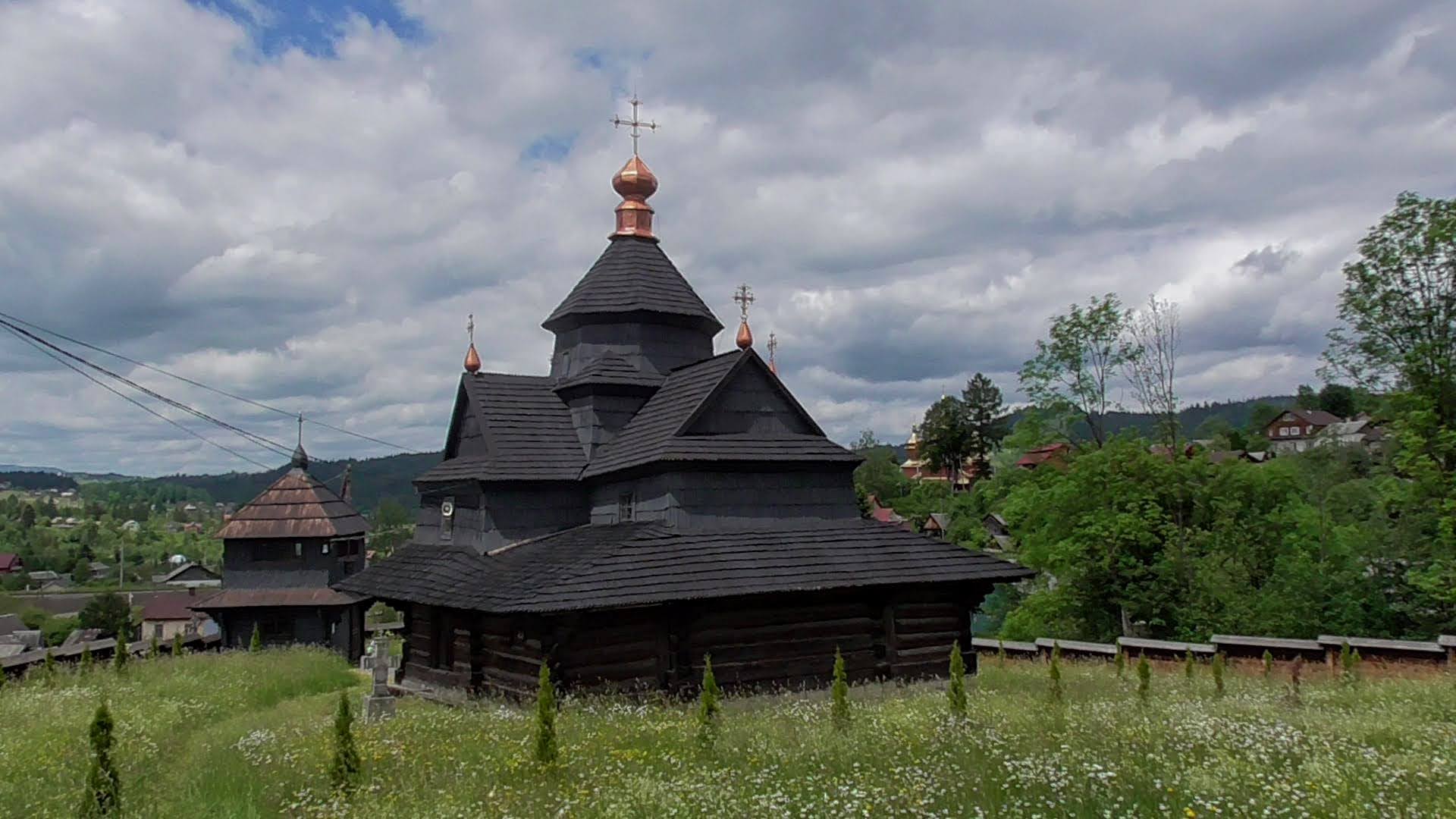


The Nativity church rose beside a cemetery that has levelled out over the centuries, and in spring the churchyard is covered with a motley of daisies, cornflowers, clover and other wildflowers. And it is good that the church grounds have not been paved over with concrete. The church is surrounded by living nature, birdsong, and the picturesque panorama of the surrounding mountains.


A museum has been set up in the two-tiered bell tower, its exhibits keeping the history of the Vorokhta shrine.


The masterly restoration of 1979 preserved this embodiment of Hutsul folk traditions of church building. The church held the status of an architectural monument as far back as Soviet times.


This example of restoring a wooden church while preserving its architectural details and the spirit of the centuries could serve other communities, which have not managed without resorting to metal armour and plastic materials. Such drastic measures not only disfigure the masterpieces of folk architecture — after the newfangled metamorphoses they do not even save the spiritual monuments from the rotting of the wood.


For everything true and genuine, one is drawn as if by a magnet to the church of the Nativity of the Most Holy Mother of God. The church stands at 1 Oleksy Dovbusha Street, 1,400 metres south of the railway station and the bus station.


This story is also available in Ukrainian: Ворохта. Церква Різдва Пресвятої Богородиці. Пам'ятка гуцульської народної архітектури і оберіг карпатського селища

No comments:
Post a Comment
Leave your impression