Lychakiv Cemetery in Lviv is considered one of the oldest in Europe; it is known for its history, for the burials of prominent Ukrainians, and for the monuments on the cemetery grounds.

The word 'necropolis' translates from Greek as 'city of the dead', and Lviv's most famous cemetery is a vast expanse of burials covering more than 40 hectares.


To the right of the central gate lies the field of honorary burials, which occupies part of Field No. 67. Here are buried the Heroes of the Heavenly Hundred and Major General Serhiy Kulchytskyi, a veteran of the Anti-Terrorist Operation (ATO).


The sacred landscape is divided into sectors, and alleys have been laid out among the centuries-old trees.


The first burials date back to 1786, and today there are 300,000 graves and more than 2,000 tombs. For two and a half centuries, representatives of the cultural, scholarly and administrative spheres of the city and of Galicia have been buried here. The names and deeds of those buried come to life in sculptural images. The finest masters wrought mourning bas-reliefs, statues and tombstone structures in stone, while the inscriptions on the tombs are made in Ukrainian, Polish, Armenian, German and Latin.




The most renowned are the graves of Ivan Franko; the composer and educator Anatoliy Kos-Anatolsky; Markiyan Shashkevych, a pioneer of Ukrainian literature; the historian Ivan Krypiakevych; the world-famous singer Solomiya Krushelnytska; the composer and conductor Stanislav Lyudkevych; Volodymyr Ivasyuk, the founder of Ukrainian pop music; the composer and musicologist Myroslav Skoryk; the composer and conductor Mykola Kolessa; the composer and pianist Vasyl Barvinsky; the composer Bohdan Yanivsky; the writer Iryna Vilde; and the composer Ihor Bilozir.
 |
| Lychakiv Cemetery. The grave of Ivan Franko |
 |
| Lychakiv Cemetery. The grave of Solomiya Krushelnytska |
 |
| The grave of the composer and conductor Mykola Kolessa |
 |
| The grave of Markiyan Shashkevych, a pioneer of Ukrainian literature |
 |
| The grave of Volodymyr Ivasyuk, composer and author of Ukrainian hit songs |
 |
| The grave of the composer and musicologist Myroslav Skoryk |
 |
| The grave of the writer Iryna Vilde |
 |
| The grave of the historian Ivan Krypiakevych |
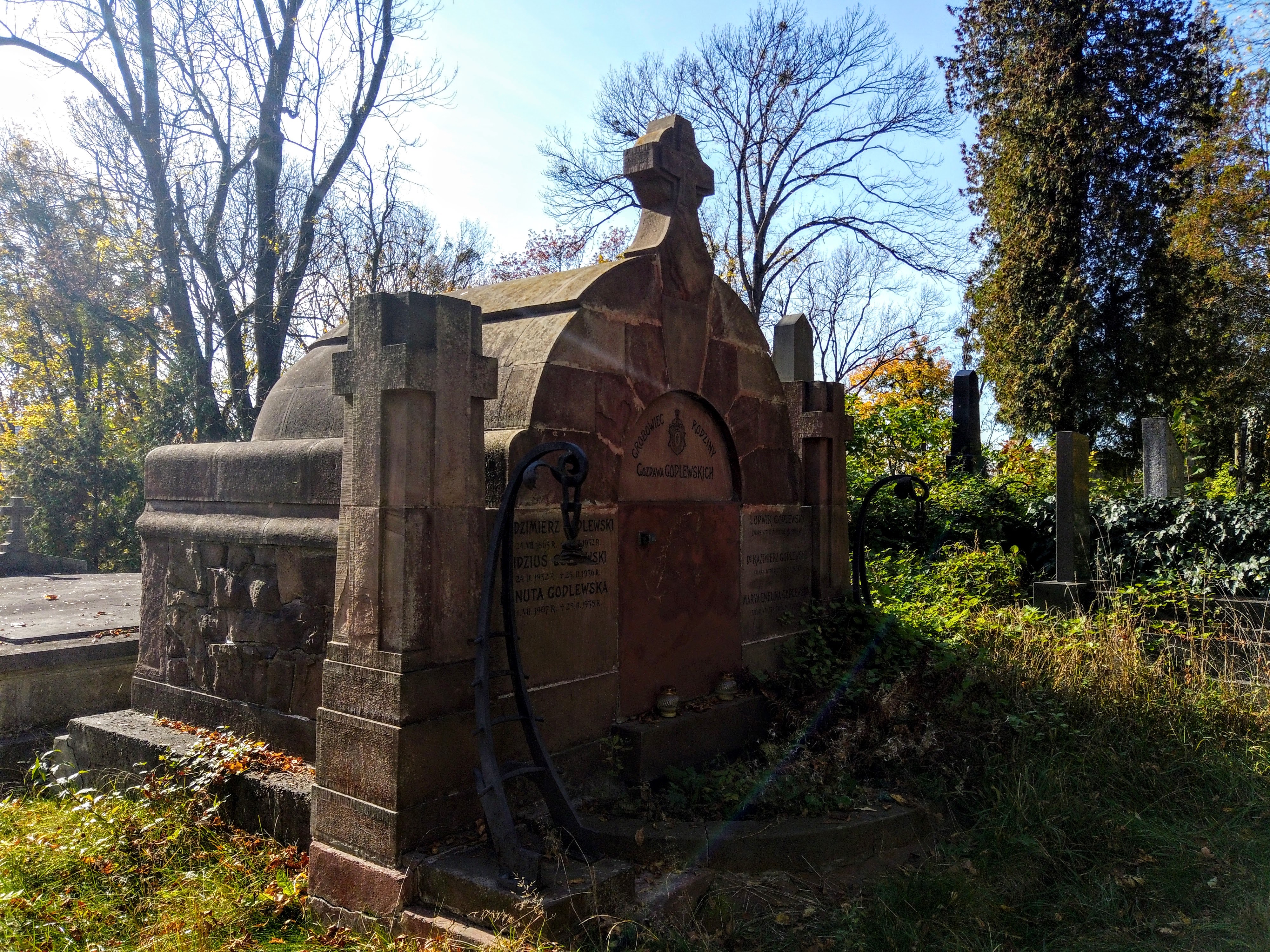
Family crypts and ancient chapels are true monuments of architecture and art.


In 1990, Lychakiv Cemetery was granted the status of a historical and cultural preserve. Each year, thousands of tourists from all regions of Ukraine visit God's Acre at Lychakiv. You can take in the aesthetics of the final refuge of famous people and stroll in silence and tranquillity either on your own or with guides, who offer varied excursion routes on a wide range of themes.


In the south-eastern part of the cemetery there is a newer memorial where the defenders of Ukraine, participants in the Russian-Ukrainian war, are buried. People come with flowers and votive lamps to pay tribute to the heroes, and leave flags and rosaries.


Here is buried the world-famous Ukrainian opera singer Vasyl Slipak, a soloist of the Paris National Opera, who was killed defending the territorial integrity of our country.
 |
| The grave of Vasyl Slipak |
In the eastern part of Lychakiv stands the military memorial «Lviv Eaglets» — a constituent part of the cemetery where Polish soldiers are buried who fell during the Polish-Ukrainian War (1918-1919), in particular in the battles for Lviv against units of the West Ukrainian People's Republic (ZUNR).

 |
| The «Lviv Eaglets» military memorial |
You can reach Lychakiv Cemetery from the railway station by tram No. 1, and from Horodotska Street and the city centre by tram No. 7.
This story is also available in Ukrainian: Личаківський некрополь. Екскурсія самостійно і з гідом. Вибирайте

No comments:
Post a Comment
Leave your impression