
By the gate I came upon a group of people; I thought I would not be the only visitor, but no — these were villagers returning from a church service.

 |
| Chernytsia. The entrance gate to the Stefanus estate |
To the right of the central path, in fairly good condition, stand the dwelling house for the steward or servants and the former cellars with ice pits, where tonnes of vegetables were kept. The estate covers an area of 8 hectares, of which 2 hectares are given over to houses and outbuildings, another 2 are taken up by the park, and 4 hectares by the orchard and vegetable gardens. What remains, and what we can see, are 2 manor houses. The dwelling of Mr Stefanus and his family had 10 rooms, a kitchen, a pantry and toilets with sewerage. The colonnaded terrace served both an aesthetic and a practical purpose: here the family gathered at the table and received guests. The birds chirped just the same, and the scent of the blossoming garden filled the house with a dreamy mood. The porticoes narrowed in steps towards the top and were entwined with vines, which lent the palace a picturesque air. Now wild growth has crept inside the house, and the stoves have been dismantled by treasure hunters. 10 windows faced south-west, towards the park; the rooms were always light and cosy.


 |
| Chernytsia. The Stefanus manor house |
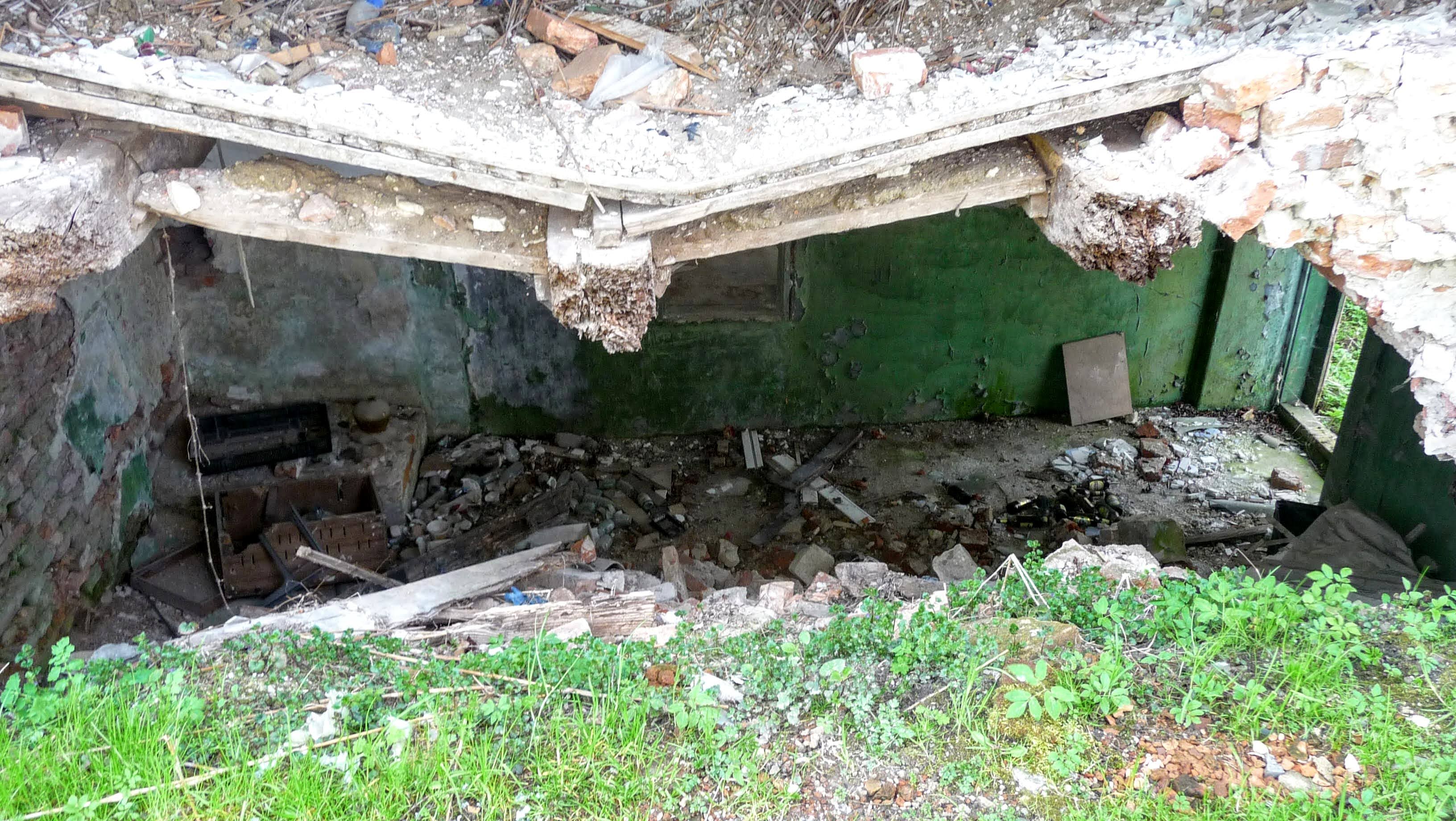
The second house, with its portico and two columns on the porch, is smaller in size. The western façade is single-storey, the eastern one two-storey. The hipped roof is covered with red tiles made at a Kraków factory. The house contained a kitchen, utility rooms, a cellar and a toilet. The houses were built in 1921-1925, so they have already turned 100 years old, but they could have served for much longer yet, if only, if only, if only...




 |
| Chernytsia. The Stefanus manor house |
Historical records testify that in the 17th century there was a defensive castle on the territory of Chernytsia. Wars and fires destroyed the fort, and the last landowner was Witold Stefanus, whom his contemporaries described as an intelligent and decent man, a wise manager of a profitable estate. Stefanus treated his workers with respect and paid their wages honestly; the villagers had plots of land for market gardening and for their homes. But the landlord himself had run up debts and was forced to sell the well-run homestead, with its movable and immovable property. The farmstead was bought by the state and by a Lviv educational institution, which in 1935 established an agricultural lyceum on the estate. After the end of the Second World War the school did not lose its agro-industrial profile, and the agricultural technical college trained agronomists and livestock specialists for the Soviet collective farms. In 1966 the college was turned into an agricultural school for training livestock technicians over the course of a single year. The students learned to breed cows, pigs, horses and rabbits, and carefully maintained order on the grounds. For a long time the estate was a model of careful husbandry of the land, and also a centre of the cultural life of Chernytsia. On the grounds of the school there was a club with a large auditorium and a library, and sports and dance grounds. In 1979 a new reform and a new organisation for the supply of mineral fertilisers took over the buildings and blocks of the manor. The ruinous 1990s could not but leave their destructive mark on the estate. The abandoned farm has been left unattended for more than 30 years now and is being destroyed by time and by unkind people. All the buildings, the land and the park have been leased to the Lviv Academy of Arts, but this has not saved the Chernytsia landmark.

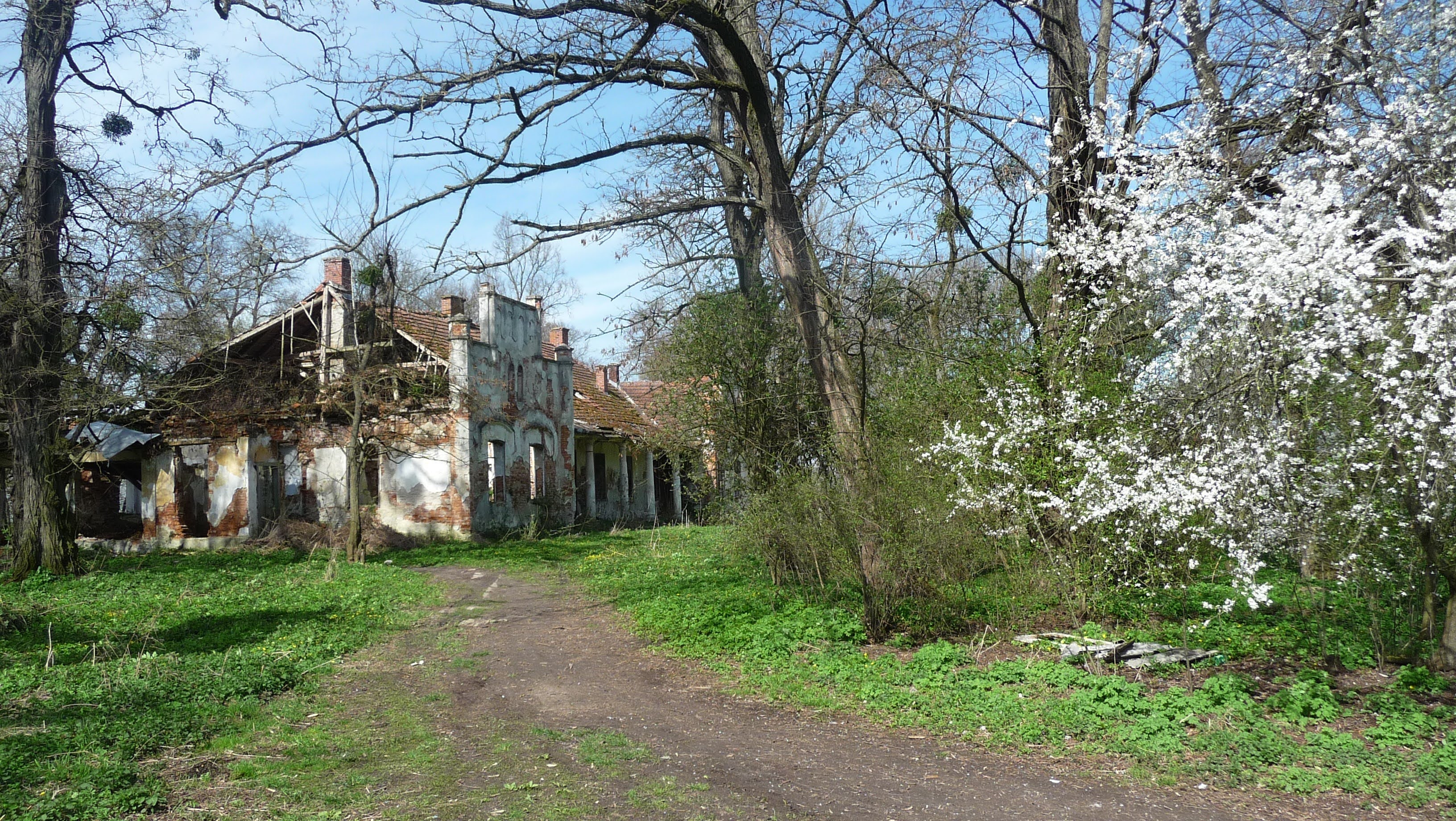 |
| Chernytsia. The estate of Witold Stefanus |
The ponds were once a blue mirror; now they have turned into a swamp. The park, with its saplings brought in from Europe, its avenues and sculptures, its arches and flower stands, has run wild and lost its charm.


 |
| Chernytsia. The grounds of the Stefanus estate |
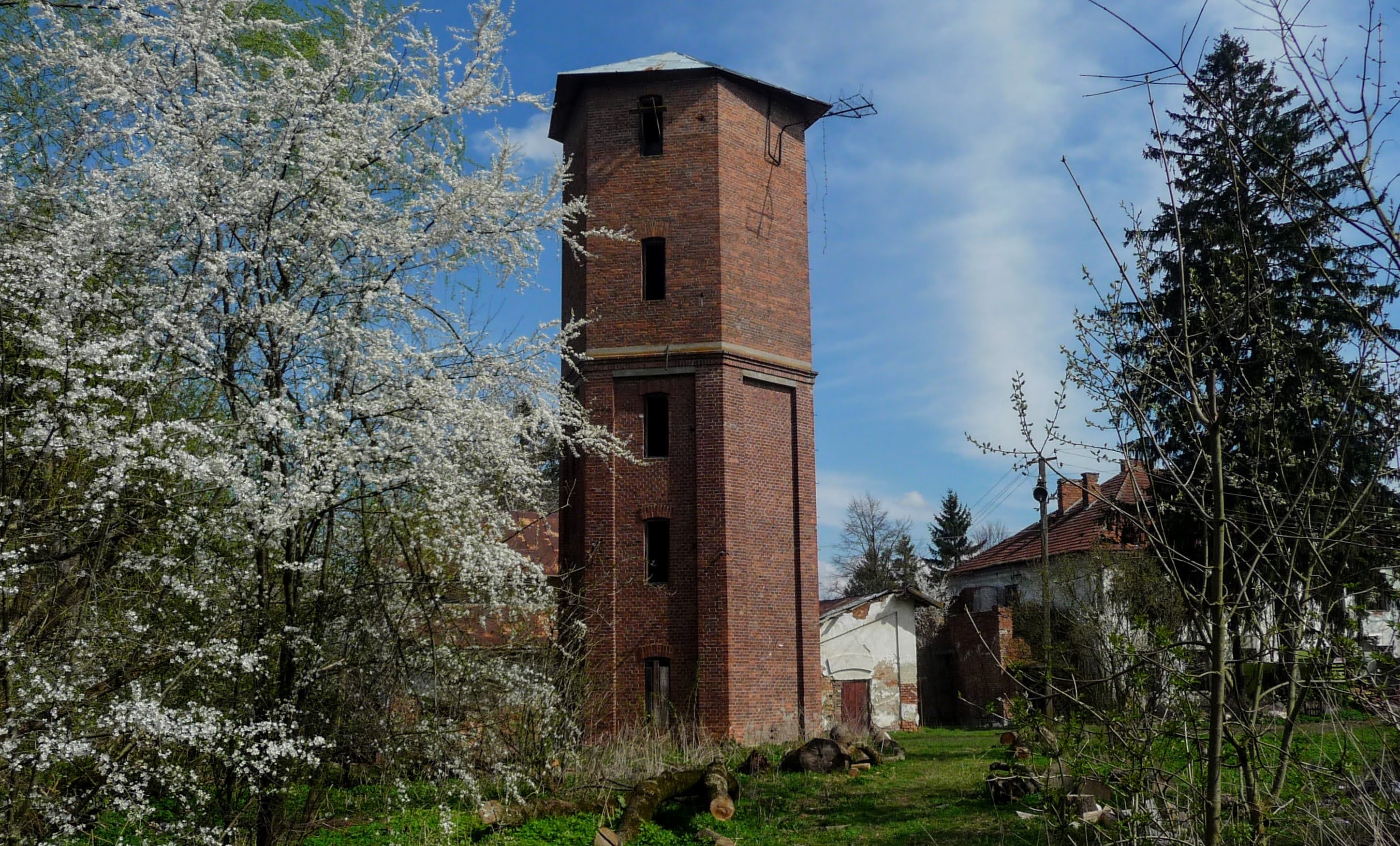
The estate complex was equipped with a plumbing system and a pump for moving water. The five-tier, six-sided water tower rises gracefully above the ruins of former grandeur. This red-brick workhorse can stand comparison with the finest, most prestigious examples of such structures, but it has not earned any respectful treatment. Lovers of "the strong white stuff" have pelted the little water tower with heaps of empty bottles.
 |
| Chernytsia. The water tower on the grounds of the Stefanus estate |
The other breadwinner buildings of the estate felt no care or thrift either. The sawmill, the smithy, the granaries, the stables, the fur farm, the carpentry workshop, the mill, the pigsty, the garage, the storehouses, the cellars, the dairy, the greenhouses, the hotbeds — everything, everything has been turned to ruins.


 |
| Chernytsia. The outbuildings of the Stefanus estate |
These sound structures — on stone foundations, with sturdy brick walls and oak fittings — were destroyed not by outsiders but by local barbarians, home-grown vandals. In the small village of Chernytsia and in neighbouring Pisochne the houses are very fine and the homesteads well kept. No doubt the owners have been abroad more than once and have learned from their western neighbours the finer touches in decorating houses and their garden plots. The skill of the local craftsmen in the building trade is known in every region and abroad. And yet they were unable to save from destruction their chief monument of history and architecture, the cultural heritage of Chernytsia.
 |
| Chernytsia. A sculpture on a private homestead |
The Roman Catholic church of 1921 could not be saved either. The estate and the church appear in the film "A Crime with Many Unknowns", which was shot in Chernytsia in 1993. On the site of the church a memorial sign was erected, bearing an image of the infant Jesus, Mary and Joseph.
 |
| Chernytsia. The memorial sign on the site of the destroyed Roman Catholic church |
In the old Catholic cemetery, a surviving gravestone and the remains of a sculpture of St John of Nepomuk recall the Polish period of Chernytsia.

 |
| Chernytsia. The Polish cemetery |
Witold Stefanus was the founder of the local school, on the upper floor of which the teachers' apartments were located. The façade of the alma mater of all the inhabitants of Chernytsia is adorned with two rare bas-reliefs that urge one to study and to work.


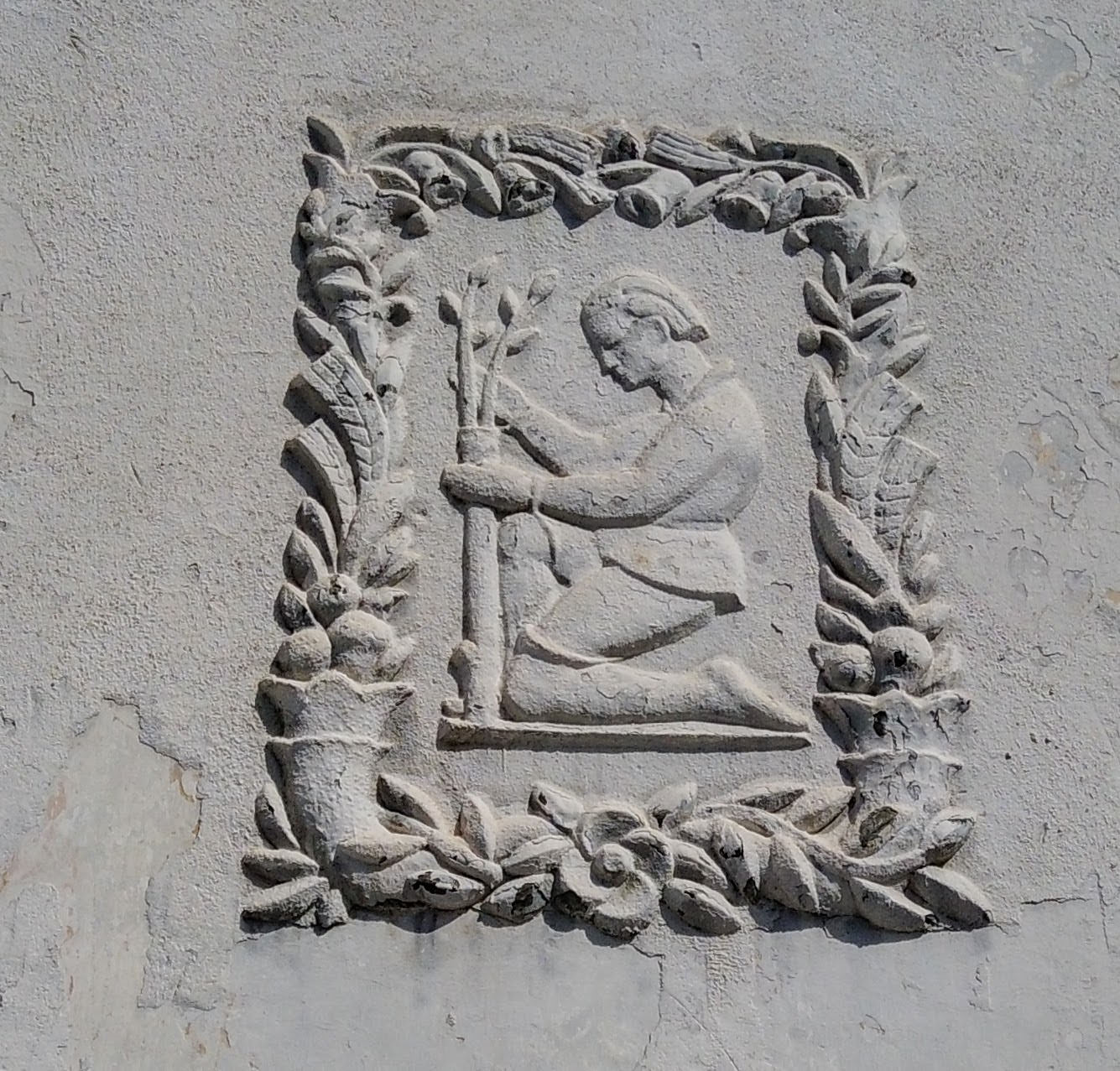 |
| Chernytsia. The school |
The desolate state of the bus stop with its mosaic pictures caught my eye. After all, a bus stop is also a calling card of a village or a town.
 |
| Chernytsia. The bus stop |
The village lies in a picturesque spot near the confluence of the Chernytsia River with the Dniester. The natural landscape — with its botanical reserves, its glades of wild irises and tulips, its oxbow lakes and water meadows — attracts tourists, and the Stefanus estate could add one more interesting site to travellers' routes.


I thank Yaroslava Volodymyrivna Khlopiacha, a teacher at the Chernytsia school, for preserving the history of the village and for the detailed description of the Stefanus estate.
This story is also available in Ukrainian: Черниця. Садиба Стефануса. По панським руїнам

No comments:
Post a Comment
Leave your impression