

I honestly don't know what else could be a calling card for Truskavets, if not the mineral-water pump room. But I still had to reach it from the bus station, about 1,200 metres, now climbing uphill, now going back down.

In the middle of the traffic interchange there is a working fountain. On a hot day the jets of water freshen the air and remind you that this is a town where the water has magical properties.

I always pay attention to the state of monuments. Clearly the war memorial has not fallen into ruin over time, but it needs attention.

Wherever you cast your eye, the whole town is sanatoriums and hotels. Some have been operating since time immemorial — multi-storey buildings where guests from all the regions of the USSR used to holiday.


There are many modern ones, built to original designs.


Quite a few new hotels are being built.


Among them, the few surviving old wooden houses look like museum exhibits.

In the centre you come across old wooden villas. This one was built in 1928 by Raimund Jarosz, the owner of the Truskavets resort. It now houses the M. O. Bilas Art Museum, where 150 works of the artist are on display.

The "Victoria" villa was built in 1843 using half-timbered construction, which is rarely found in Ukraine, and it is an architectural monument.

The "Mozart" villa is a little over a hundred years old — it dates from 1898.

The "Park" hotel is a three-storey wooden building, erected at the end of the 19th century in the Carpathian style with decorative elements of Hutsul wood carving.
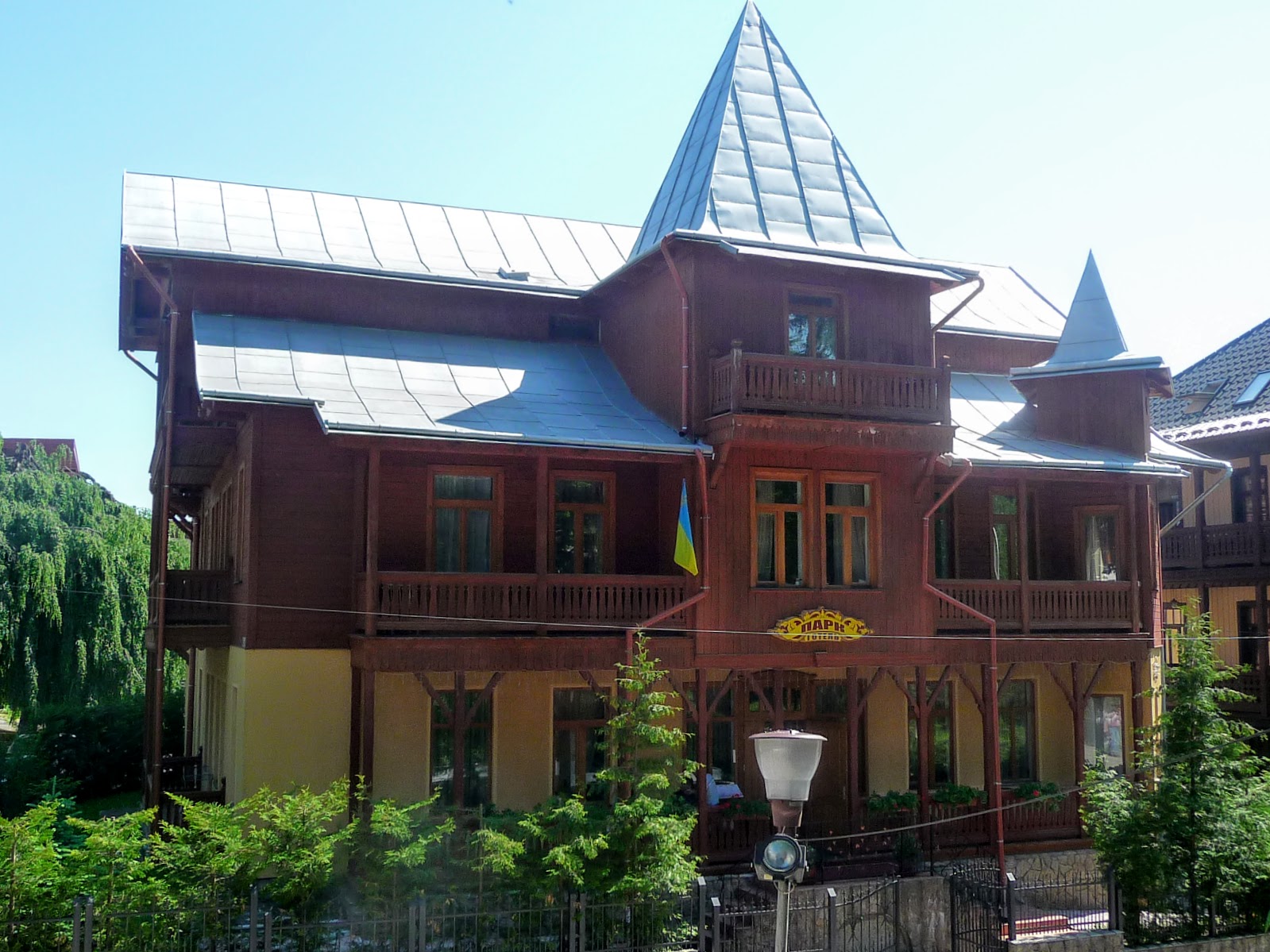
I saw other sanatoriums too, whose buildings are architectural monuments, but entry to them is forbidden, as the signs make clear.

The Palace of Culture, decorated with a mosaic panel depicting dancers and singers, did not look like a place of mass cultural recreation. As everywhere, the spaces of cultural institutions had been taken over by little shops selling Chinese consumer goods. On the square that bears his name, the Kobzar has sat down with his thoughts.

By the Roman Catholic church, Pope John Paul II with a blessing.


All the holidaying folk were strolling on Independence Square, waiting for the pump room to open.

The pump room works to a schedule. Before it opens, holidaymakers gather from all directions. I too tried "Naftusia". The "Horianka" spring, the healing water of which I sampled during the Carpathian Tram trip, seemed to me tastier.

Here the holidaymakers consume mineral waters by the decalitre, revelling in their healing properties. In the intervals there is choral singing by amateurs and professionals of the vocal genre.

Having drunk the famous water, I took a walk in the park and saw the old pump room. You cannot get to it now — it is a water-catchment zone.

An old monument to holidaymakers has survived in the park, set up in those distant times when Truskavets was an all-Union health resort and holidaymakers came to the resort with the whole family on a trade-union voucher. The sculptural composition is that very happy Soviet family. True, the monument, with the passage of events, has a neglected look. The facing of the pedestal has crumbled, and the family is barely visible amid the thickets of trees.

On the square, local artists were exhibiting their canvases. I had seen very similar still lifes in Yalta on the Embankment. Forest landscapes and views of Lviv could be found at other Carpathian resorts.
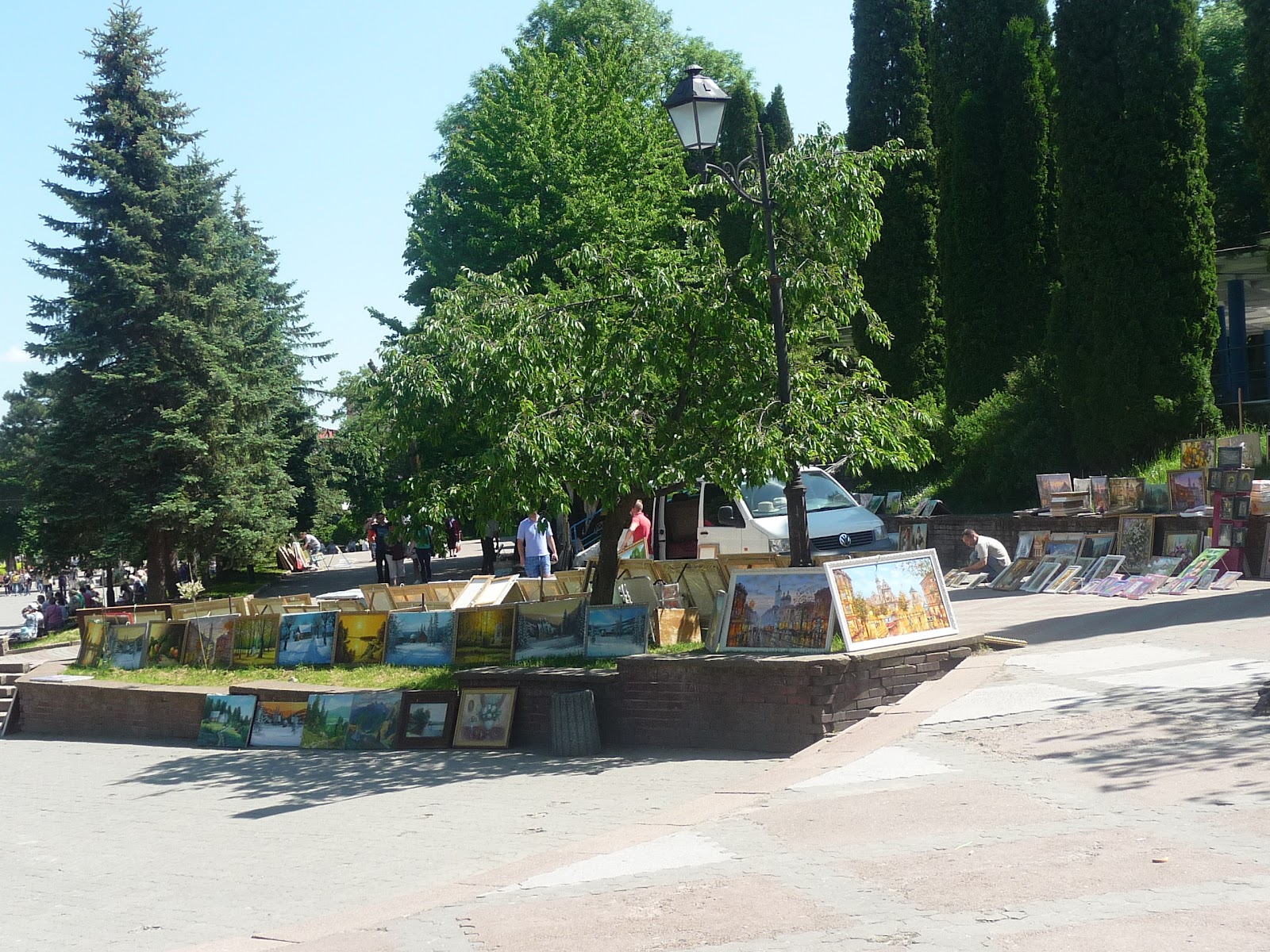
In the recreation area a saxophonist was playing medleys from films very well. He was drowned out by the voices of show business drifting from the numerous restaurants. On the summer stage a mini-miss contest, "Truskavka", was under way. Delighted parents doted on their ten-year-old daughters taking part in the tournament. One little miss had a costume decorated with a picture of a strawberry. It is no coincidence that the name Truskavets comes from the Polish "truskawka", which means "strawberry".

And in the Church of St Nicholas, other children were taking their first communion at the end of the school year, and that too was a great popular celebration.

Near the church there are several sculptures and monuments.


For I. Ya. Franko no more fitting or better place could be found. After all, the Drohobych region is the native land of the Kameniar (the Stonecutter).

On the way back I stepped onto the grounds of the Church of the Protection of the Most Holy Mother of God.

Beside the church a very beautiful area has been laid out with exotic plants, and a viewing platform from which a wonderful view of Truskavets opens up.


The town also has the Orthodox Church of St Elijah.

Everything is so beautiful in Truskavets, but the street clock was showing the wrong time.

Unfortunately, I could not withdraw money from a PrivatBank ATM — there was no cash. And I did not like the enormous number of cars on the streets, trucks among them driving about. On a hot day the air was like that of a big city, not a resort.
The main thing for treatment is the water. But I cannot say that Truskavets, crowded and clogged with cars, appealed to me more than other resorts. These are my impressions, which I share with you.

This story is also available in Ukrainian: Трускавець. Розкішний і елітний курорт в історичній і мальовничій місцевості

No comments:
Post a Comment
Leave your impression