Svaliava is one of the most famous ski and balneological resorts in Ukraine, celebrated for its mineral springs "Poliana Kvasova", "Luzhanska", "Poliana Kupel" and other healing waters, similar in their properties to "Borjomi". To my taste they are tastier than the Caucasian ones, because they are more accessible.
The first mentions of the town are recorded in the 12th century, and its name comes from the word "sil" (salt), which was transported to Europe from these parts. An image of a person using mineral water for bathing has been preserved on the town's coat of arms since 1841.
Coniferous and deciduous forests, ski slopes, mountain peaks, the Zakarpattia national cuisine, interesting tourist trails, a well-developed infrastructure — all of this makes for an excellent holiday.
All manner of guesthouses, hotels and sanatoriums are set in the most wonderful spots of the Svaliava area.
 |
| The "Soniachnyi" health centre |
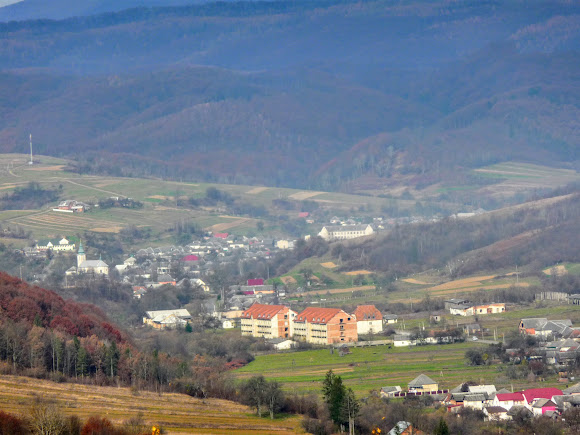
The town itself lies in a valley formed by the Latorytsia and Svaliavka rivers, and lives the life of an administrative centre.
The Latorytsia, like many rivers of Zakarpattia, can turn turbulent and wash away everything in its path. To monitor the water level during floods, gauges with a special scale have been installed. There are fish to be caught here too. A local man resting on the bank told me that his house is right by the river, but that he had never once caught a fish.
 |
| Svaliava. The bridge over the Latorytsia. |
Its centuries-old history, its many peoples and many tongues have shaped the culture of this land and made it as vivid, rich and colourful as an artist's palette.
Svaliava has several churches of various religious denominations.
The oldest working wooden church in Ukraine is
the Orthodox Church of St Michael, built in 1588. This masterpiece of wooden architecture stands on Bystrianska Street.
 |
| The Church of St Michael. An architectural monument. UOC-MP. |
The Roman Catholic Church of the Assumption of the Blessed Virgin Mary dates from 1900 and stands in the town centre.
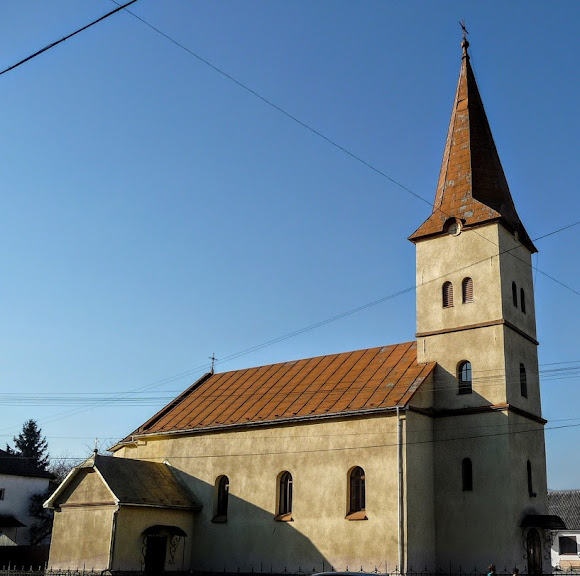 |
| The Roman Catholic Church of the Assumption of the Blessed Virgin Mary. 1900. |
On this same Holovna (Main) Street, in 1822, the Church of the Nativity of the Most Holy Mother of God was built.
 |
| The Church of the Nativity of the Most Holy Mother of God. 1822. UOC-MP. |
At first it was Greek Catholic, until the Bolshevik authorities banned that church in 1946. Now the shrine belongs to the Orthodox faithful.
 |
| The Church of the Nativity of the Most Holy Mother of God. 1822. UOC-MP. |
The Greek Catholics spent 18 years building the most magnificent church in the town; with its crosses it stands 39 metres tall, and half a million bricks went into its construction.
 |
| The Church of the Nativity of the Most Holy Mother of God. 2010. UGCC. |
It was consecrated in 2010 in honour of the Nativity of the Most Holy Mother of God.
 |
| The Church of the Nativity of the Most Holy Mother of God. 1937. UGCC. A former picture gallery. |
The town hall houses the municipal authorities and other state services.
 |
| The town hall. The city council. |
The building was raised in the 19th century, and on it are memorial plaques with reliefs of noted political and cultural figures, natives and residents of the Svaliava area. The tower clock announces the exact time every 15 minutes.
 |
| Svaliava. The town hall. The city council. |
A characteristic detail of Zakarpattia's towns and villages is that they note the date of liberation from the fascist invaders in 1944 on their memorial plaques.
 |
| The House of Culture |
 |
| The House of Culture. A memorial plaque about the town's liberation in 1944. |
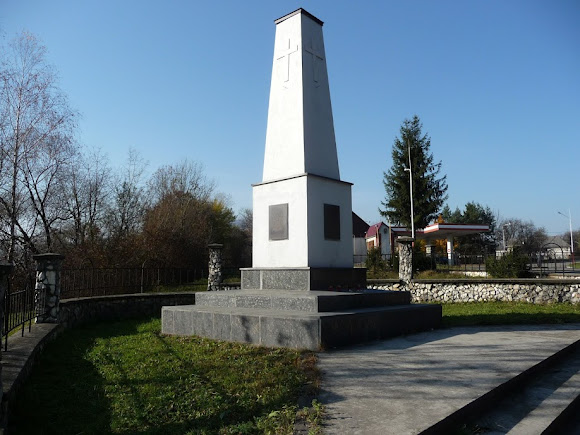
The Second World War military memorial has been restored, and the area around it put in order.
 |
| Svaliava. The Second World War military memorial. |
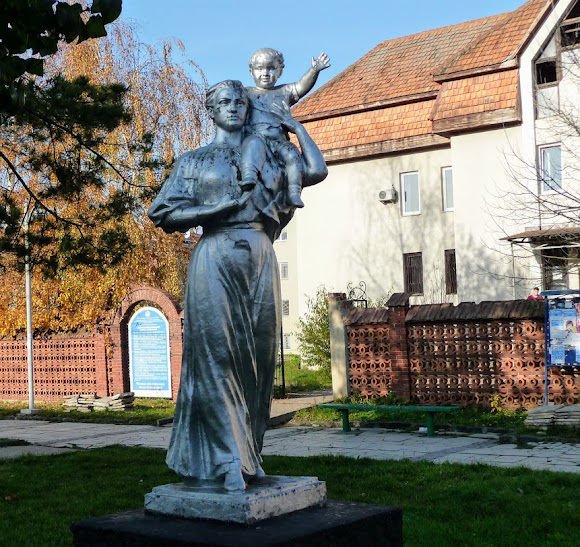
The old sculptural compositions have survived too, because they have not lost their relevance and depict the defender of the Motherland
and a woman with a child, who hope for victory and for his return home.
As a symbol of the history of their people, the townsfolk regard a 500-year-old oak, planted long, long ago by a beautiful girl who was waiting for her beloved to come back from the war.
He had sent her the acorns with words of hope that he would return once the tree had grown. The son grew up, and the oak grew mighty, but the soldier's wife never stopped waiting. The giant tree is a memory of all those who did not come back from the field of battle.
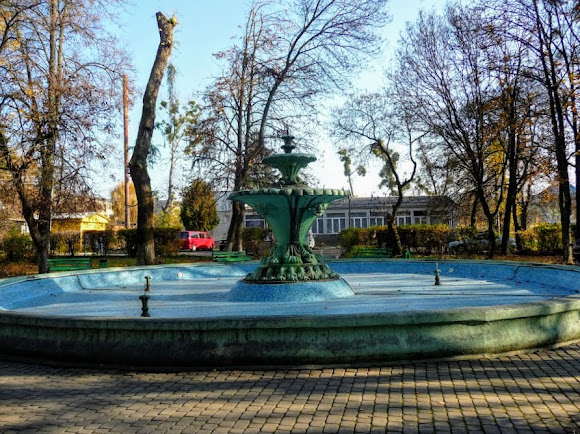
The people of Svaliava love to rest on the benches beneath the splendid crown of this silent witness to all the town's events, and also in the little park with a fountain.
A monument to I. Ya. Franko is a rarity for Zakarpattia.
 |
| The park. The monument to I. Ya. Franko. |
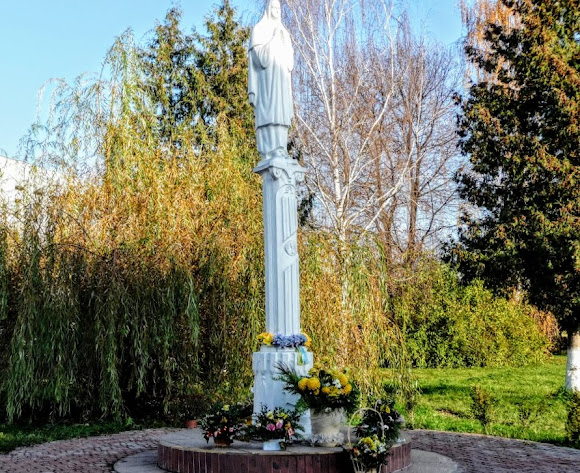
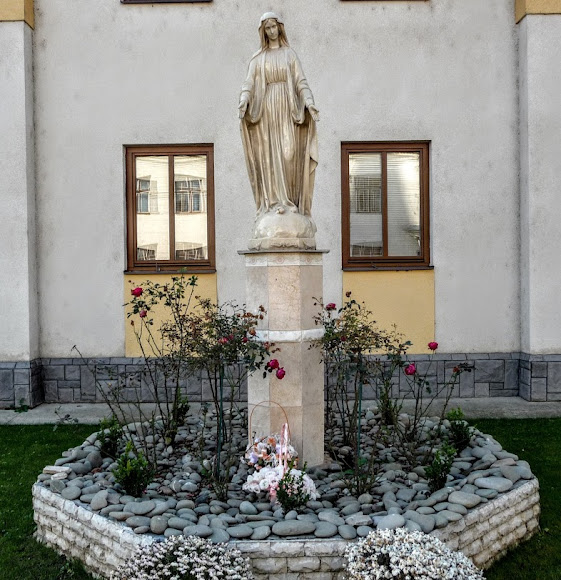
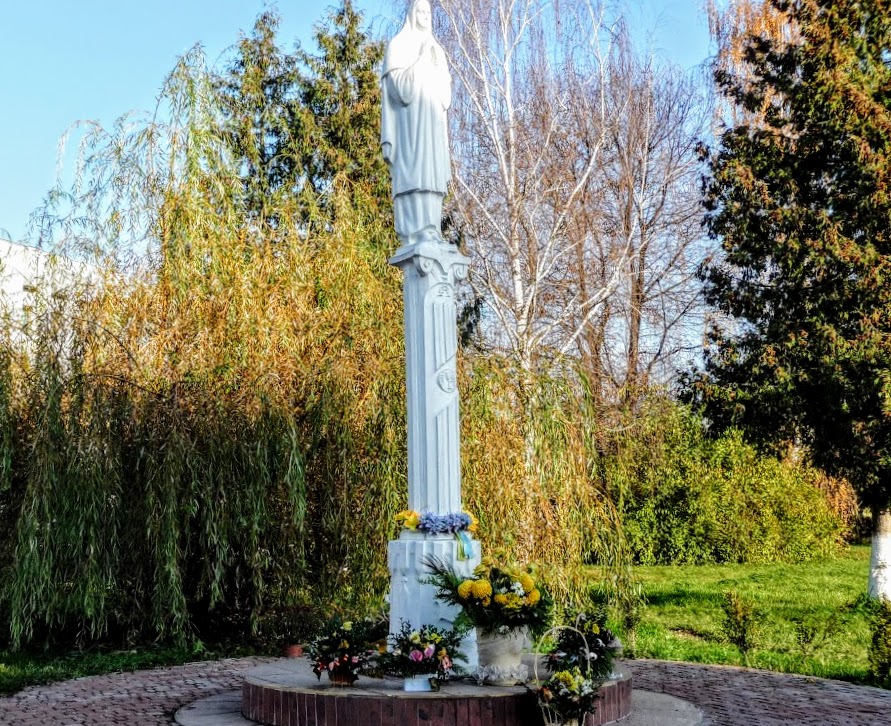
Sculptures of the Mother of God and of the Blessed Virgin Mary meet all who pass with a blessing at various points of the town, at the crossroads.
The memorial park was created on the site of a Soviet concentration camp, where prisoners of various nationalities were held in inhuman conditions.
On the slabs of the Wall of Memory are immortalised the names of 12,000 dead — victims of the Stalinist regime.
On days of remembrance, memorial services and mourning prayers are held in the park, to which many tourists come from Hungary.
You can learn all the interesting local-history details in the history museum.
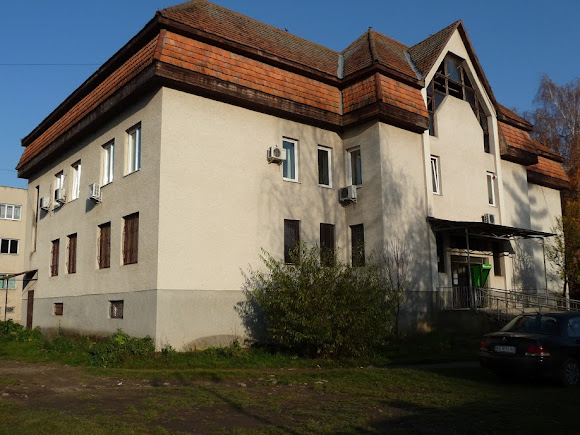 |
| The history museum |
The former department store, with a name typical of resort towns, has splintered into little shops.
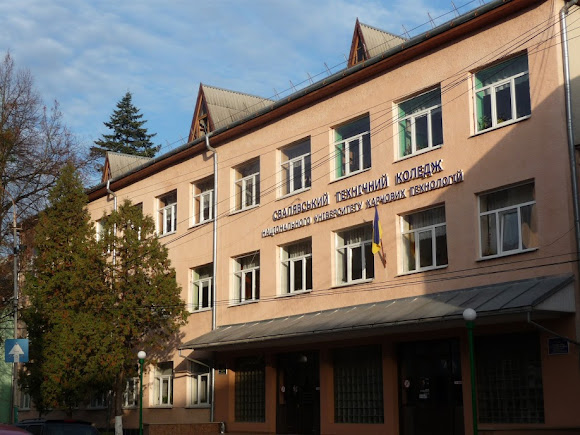
The town's young people can gain a profession at the technical college.
Another characteristic feature of Zakarpattia's settlements is that they put up monuments to national cultural figures and to the founders of schools in the schoolyard.
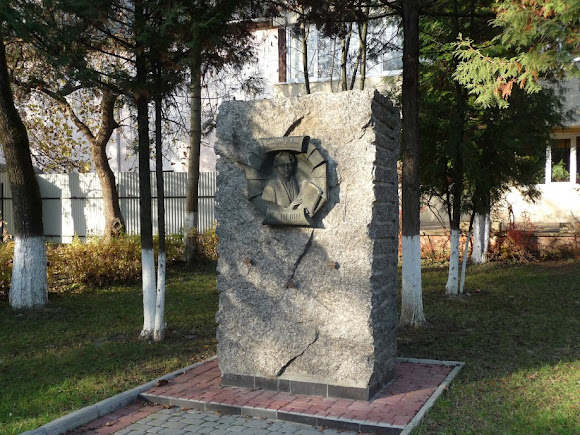 |
| The monument to Yu. I. Huca-Venelin — a Ukrainian and Russian Slavist historian — by School No. 2. |
A bust of Tomas Masaryk, president of Czechoslovakia, of which the Svaliava area was part in the interwar period, can be seen by School No. 1.
 |
| The bust of Tomas Masaryk, the school's founder, by School No. 1. |
I managed to visit this school in an entirely unexpected way. I was in Svaliava on business with a friend. Just before we left, having bought our tickets and while waiting for the bus at the station, it occurred to Olha, a teacher from Kyiv, not to sit idle but to run and see the famous Masaryk school in the remaining 20 minutes.
Without a second thought, we dashed off down an unfamiliar street, with only the vaguest idea of where the school was, asking passers-by along the way.
 |
| Svaliava. School No. 1. |
On the school porch during the break a nurse was watching over the children. Having caught our breath after the run, we asked her permission to go inside. Naturally, the nurse phoned the headmaster about it: "Teachers from Kyiv want to see the school." Olia had a professional interest, but I had ended up here just to keep her company; there was no time to explain that I am not a teacher.
A somewhat bewildered headmaster led us through the school building, telling us about its history. Masaryk was very popular among Ukrainians, since he supported the creation of a stable democratic state. During his rule, burgher schools were opened, including this one in 1923.
We managed to look into the classrooms and visit the school museum.
We liked everything very much. Having thanked the school's management for their kindness and apologised for the sudden visit, we shot back to the bus station like a bullet. Having successfully passed our fitness test, we made the bus with time to spare, since it had been delayed a little, especially for its businesslike and athletic passengers.
While I am talking about the bus station, I have remembered an important detail. Nowhere else have I come across such a purely token fare for pensioners travelling within the district. For example, if a ticket to "Soniachne Zakarpattia" cost 4 hryvnias, then grandmothers travelling to the more distant villages of
Ploske and
Pavlovo paid 20-25 kopiykas.
 |
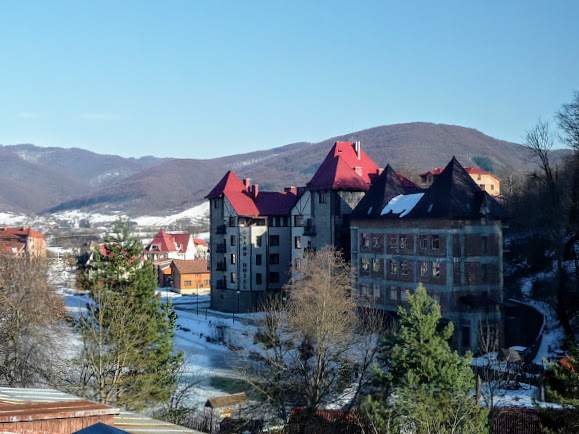
| The Solva Resor hotel-and-treatment complex |
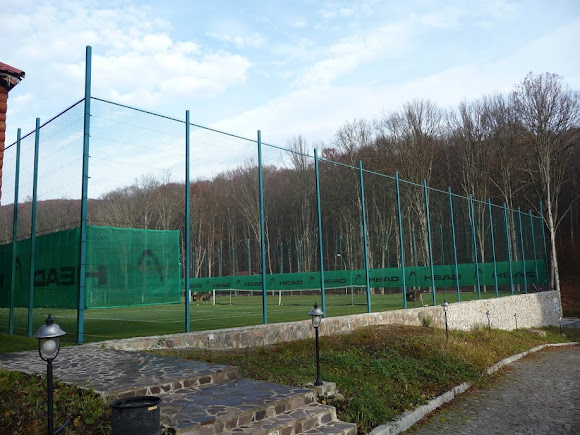
The sanatoriums and guesthouses are 20-30 minutes' drive from the district centre.
In that time you cross the Pynia, a tributary of the Latorytsia, seven times — a river with a winding, stony bed.
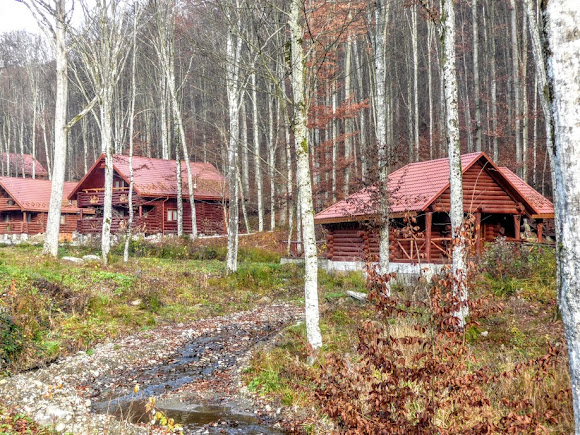
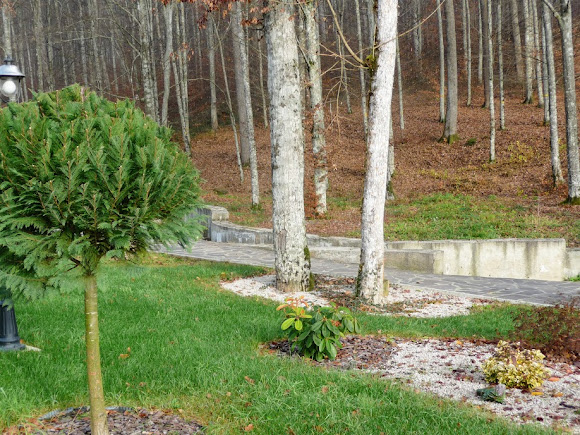
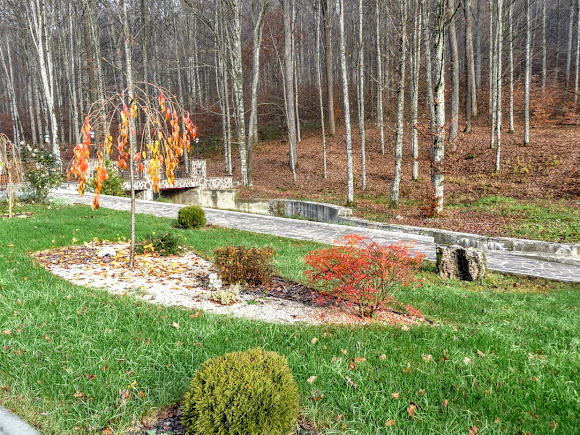
The main sanatorium, the gastroenterology-focused "Soniachne Zakarpattia", has within it several "Soniachnyi" health resorts with treatment facilities.
 |
| The "Soniachne Zakarpattia" sanatorium. |
The resort is not named 'Sunny' for nothing, for these parts have no fewer than 300 sunny days a year.
 |
| The "Soniachne Zakarpattia" resort. The "Soniachnyi" health centre. |
In winter the snow lies in the mountains, and you can ski and sledge.
The beech forest is beautiful at any time of year, and the air is saturated with phytoncides and negative ions.
To climb the mountain is a sheer pleasure.
In March all the forest glades turn blue-violet.
Delicate crocuses push up through the fallen leaves and snow, announcing to the whole resort world that spring inevitably triumphs over the long winter.
And in summer there is an abundance of blueberries and mushrooms.
Holidaying in Zakarpattia, you will never be bored.
You can visit
Sherborn Castle, see the old wooden chapel in the village of
Uklyn, or take a trip to the Holy Saints Cyril and Methodius Monastery.
 |
| The Svaliava Holy Saints Cyril and Methodius Convent. UOC-MP. |
You can reach Svaliava station by the
Kyiv — Uzhhorod train, or by the suburban train
Lviv — Mukachevo.
 |
| Svaliava. The railway station. |
There are also bus connections to various towns.
I liked the Svaliava area very much and it has stayed in my memory, and I share my impressions with you.
















No comments:
Post a Comment
Leave your impression