As you approach the railway station of Berdychiv, the lines of a song come to mind — one banned in Soviet times, by unknown authors, yet beloved of chanson performers: "And the train rode quietly on to Berdychiv". The crossing, in this county town, of railway trunk lines from
Kyiv, Kharkiv, Rivne,
Odesa, and Poland made Berdychiv famous in the musical genre.
 |
| Berdychiv. Railway station |
This district centre of the Zhytomyr region is also called the Volhynian Jerusalem. So what is special about a town that has united Polish, Jewish, Russian and Ukrainian cultures?
 |
| Monument to T. H. Shevchenko beside Shevchenko Park |
Berdychiv lies 180 kilometres from Kyiv and 40 kilometres from the regional centre. The town's name derives from the name of the Horde prince Berdych, who founded a castle here in the 14th century. The fortress was destroyed by enemy raids, and the lands passed to the Tyszkiewicz magnates of the Lithuanian principality. At the end of the 16th century Teodor Tyszkiewicz began the construction of a defensive structure.
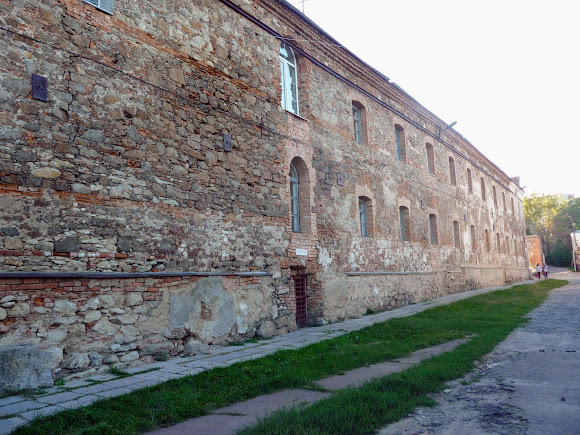 |
| The fortress-monastery of the Order of Discalced Carmelites |
 |
| The fortress-monastery of the Order of Discalced Carmelites. Central entrance |
 |
| The fortress-monastery of the Order of Discalced Carmelites. Fortress wall |
His son, Janusz Tyszkiewicz, continued his father's work and, while a captive during a campaign against the Crimean Tatars, had a prophetic dream of his release thanks to the prayers of the monks. Once freed, the prince handed the castle over to the monastic Order of Discalced Carmelites and initiated the building of the church and monastery.
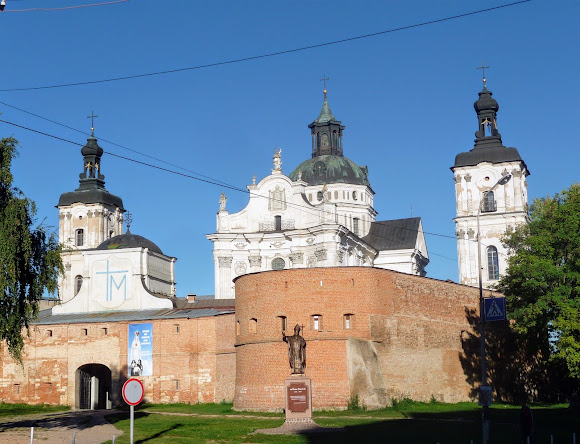 |
| The fortress-monastery of the Order of Discalced Carmelites |
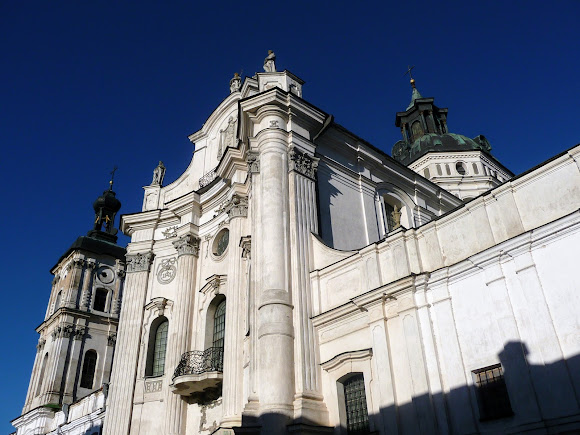 |
| The Church of the Immaculate Conception of the Virgin Mary. 1754. |
Its main shrine, the miracle-working icon of the Mother of God of Berdychiv, became famed for its healing miracles and was carried off to Lviv by the monks during the devastating attacks of the Cossack army led by Bohdan Khmelnytsky.
 |
| The Church of the Immaculate Conception of the Virgin Mary. 1754. Bell tower |
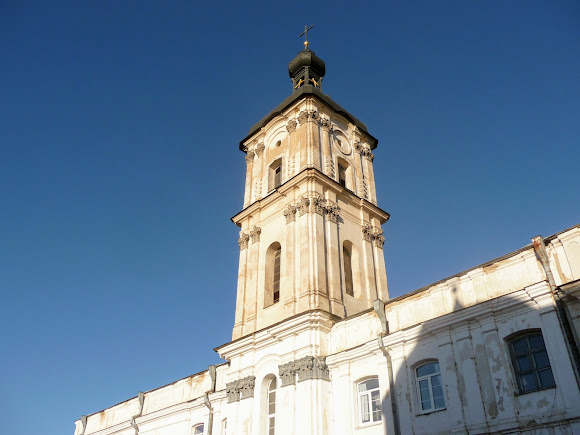 |
| The Church of the Immaculate Conception of the Virgin Mary. 1754. Bell tower |
Long disputes between Muscovy and the Polish-Lithuanian Commonwealth, and lawsuits among the descendants of the Tyszkiewiczes, contributed to the castle's decay.
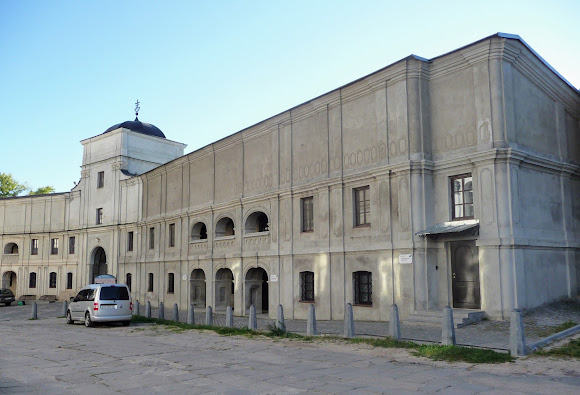 |
| The fortress-monastery of the Discalced Carmelites |
In the mid-18th century, well-known architects led the reconstruction of the fort and the building of the church.
 |
| The Church of the Immaculate Conception of the Virgin Mary. 1754. |
 |
| The Church of the Immaculate Conception of the Virgin Mary. 1754. |
The castle, surrounded by a mighty wall with bastions and loopholes and armed with cannon, became a strong outpost, while the monastery — having its own printing house, school and library — became not only a religious centre but also played a great role in the development of culture and education.
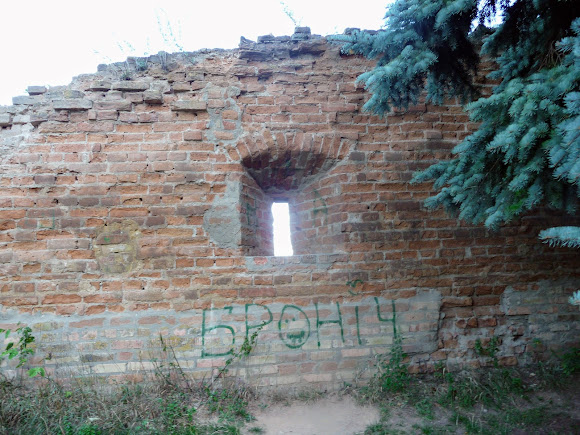 |
| Fortress wall with loopholes |
 |
| Fortress wall with loopholes |
 |
| The Church of the Immaculate Conception of Mary |
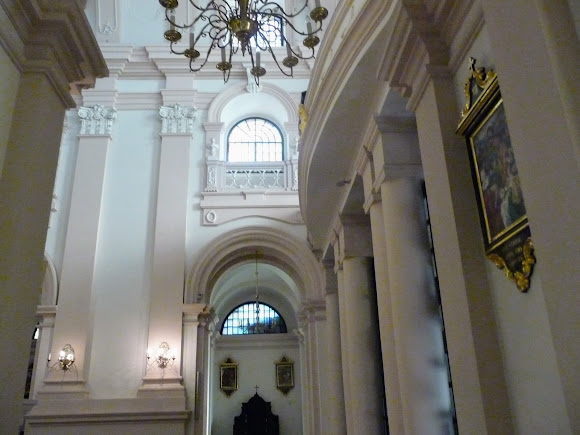 |
| The Church of the Immaculate Conception of Mary |
 |
| The Church of the Immaculate Conception of Mary |
Today the holy cloister has not lost its enlightening purpose.
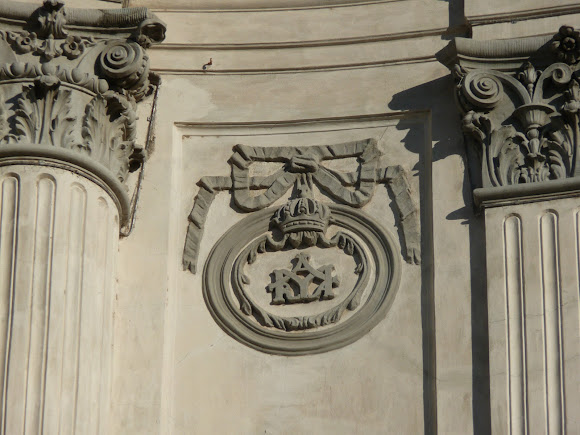 |
| The Church of the Immaculate Conception of Mary |
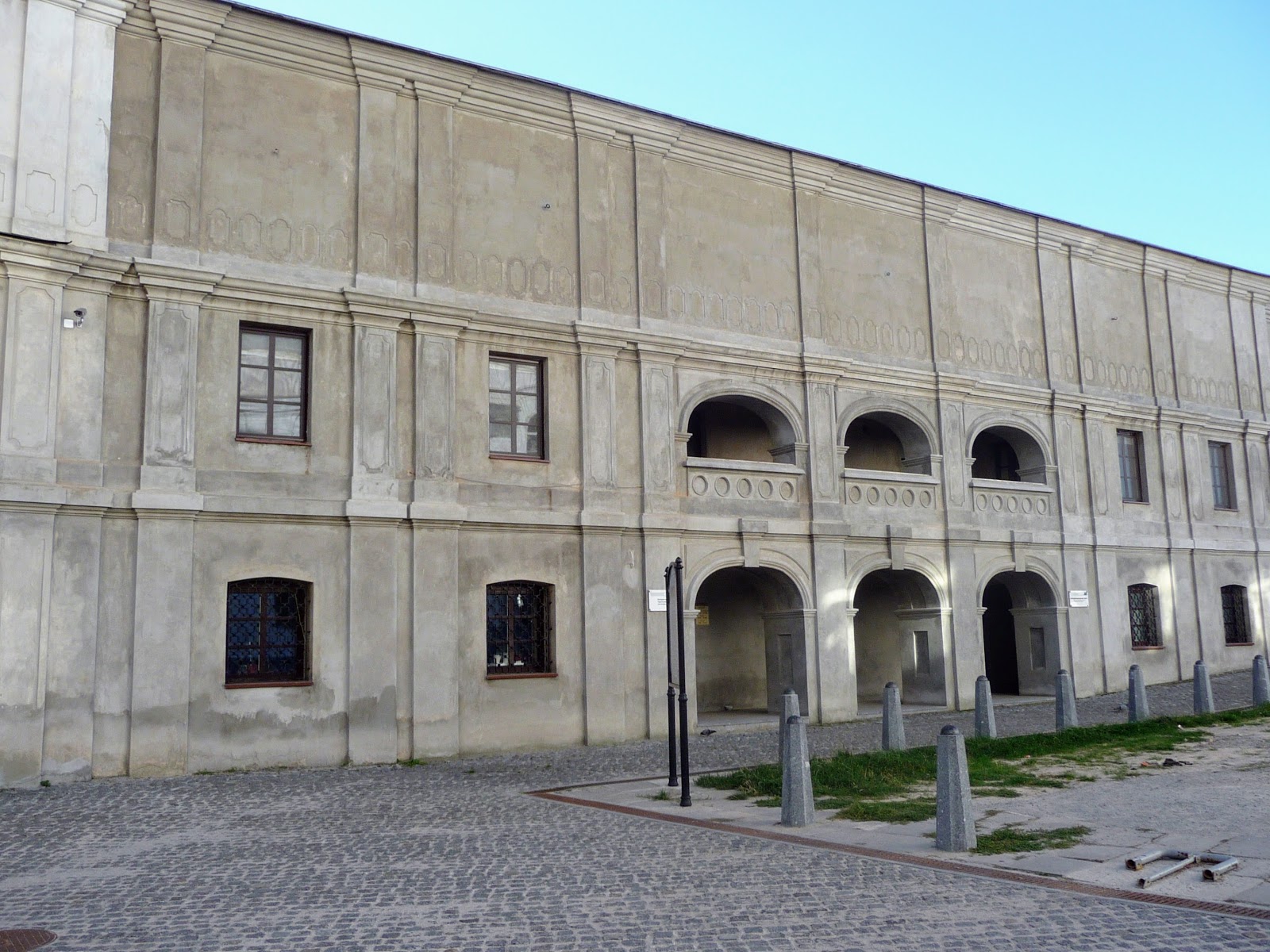
In the former monastic cells, a children's art school has been opened for young talents. In one of the wings, the former priests' house, the town history museum has been housed, where unique exhibits are kept.
 |
| The town history museum |
Within the monastery walls, beside the main entrance, is the museum of the classic English writer of Polish descent Joseph Conrad, a native of Berdychiv.
 |
| Fortress wall. The Joseph Conrad Museum |
 |
| Fortress wall. The Joseph Conrad Museum |
In 1997 a copy of the icon of the Mother of God of Berdychiv was consecrated and crowned by Pope John Paul II.
 |
| The Church of the Immaculate Conception of the Virgin Mary |
 |
| The Church of the Immaculate Conception of the Virgin Mary |
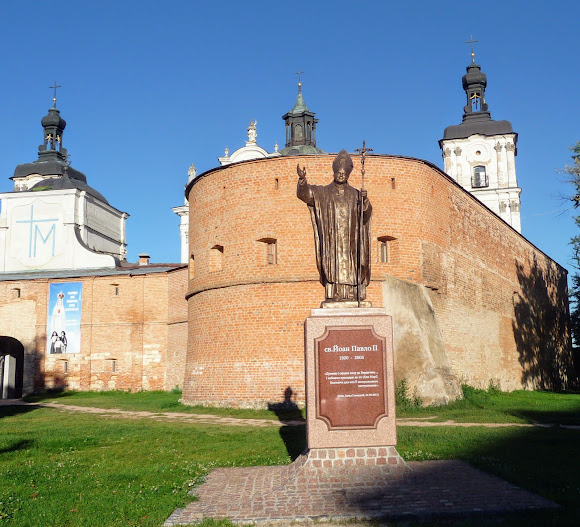 |
| Monument to Pope John Paul II |
Berdychiv's advantageous geographical position made it possible, in the 18th-19th centuries, to hold ten fairs a year, to which the wealthy would flock. Not every capital could boast such a trade turnover. Smuggling and unpaid duties brought in capital worth millions. The Jewish community owned sewing, manufacturing and leather enterprises and banking establishments.
 |
| The Berdychiv clothing factory |
At the beginning of the 19th century Berdychiv overtook Kyiv in financial turnover. During the Second World War the Jewish population of Berdychiv — in one of the first cities of the USSR — was completely exterminated by the Nazis. Local residents managed to save and hide about ten children.
 |
| Monument on the fortress grounds to 960 residents tortured to death by the fascists |
Of the 80 synagogues, three prayer houses remained undestroyed. One of them, the choral synagogue built in 1850, was adapted into a sewing factory. A place of pilgrimage for Hasidim from all over the world is the old kirkut with its 19th-century burials, where, instead of flowers, there are stones, and the tomb of the Hasidic saint Levi Yitzhak of Berdychiv. Many buildings in Berdychiv that could have been synagogues have been rebuilt, yet have kept the colour and the atmosphere of the early 20th century.
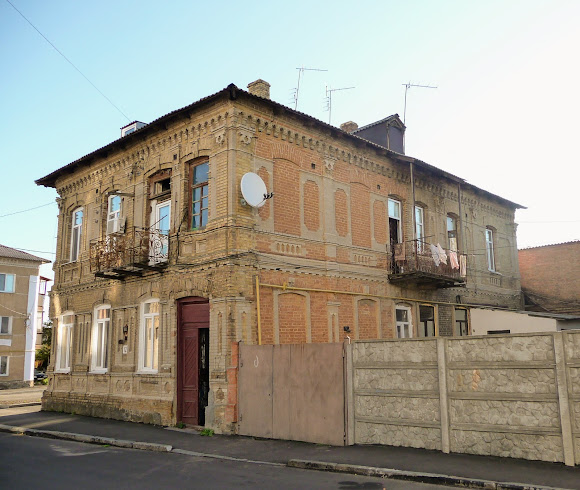 |
| Hetman Mazepa St, 12 |
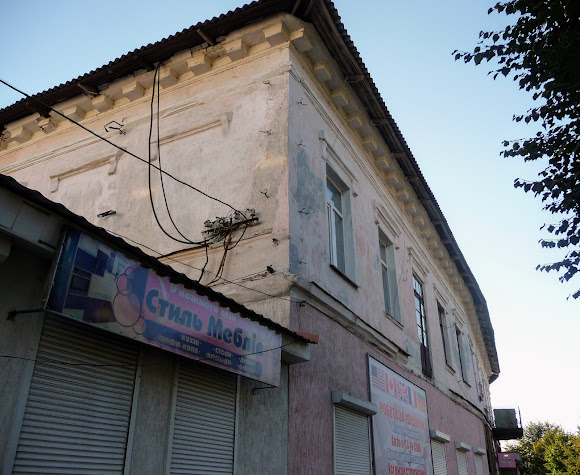 |
| Soborna St, 4. Building with a semicircular wall |
 |
| Medical college |
 |
| Shevchenka St |
 |
| Post office |
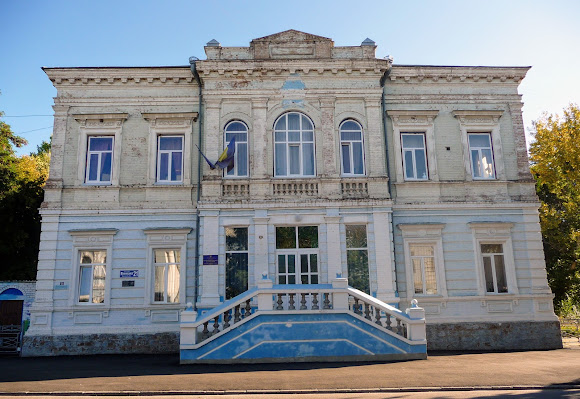 |
| House of Children's Creativity |
Bas-reliefs and other decorative elements can tell us something about the former owners — entrepreneurs, merchants, financiers.
 |
| Yevropeiska St, 19 |
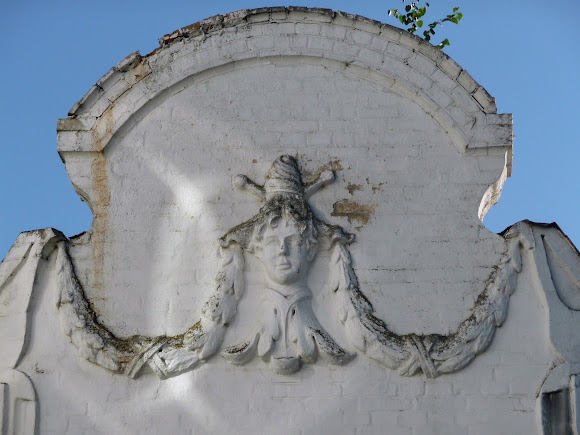 |
| Yevropeiska St, 19 |
 |
| Soborna St, 19 |
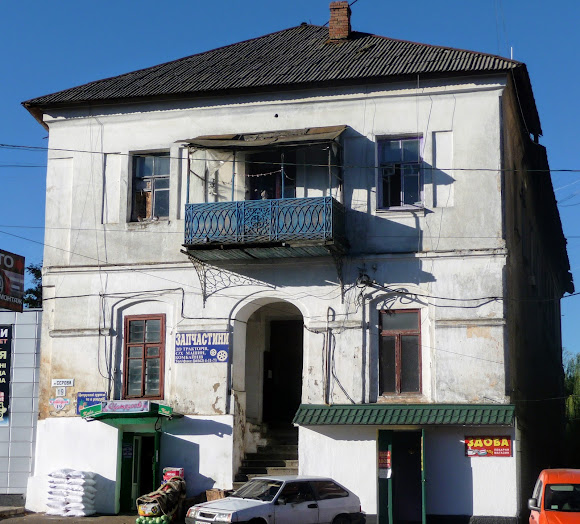 |
| Soborna St, 21 |
 |
| Yevropeiska St, 16 |
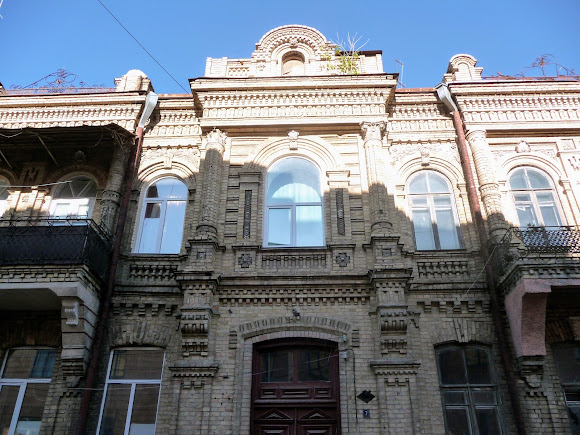 |
| Yevropeiska St, 16 |
 |
| Yevropeiska St, 16 |
 |
| Vinnytska St, 30. 1901. |
From 1793 Berdychiv was part of the Russian Empire. I counted three Orthodox churches in the town. St. Nicholas Cathedral stands in the centre of the town on Yevropeiska Street.
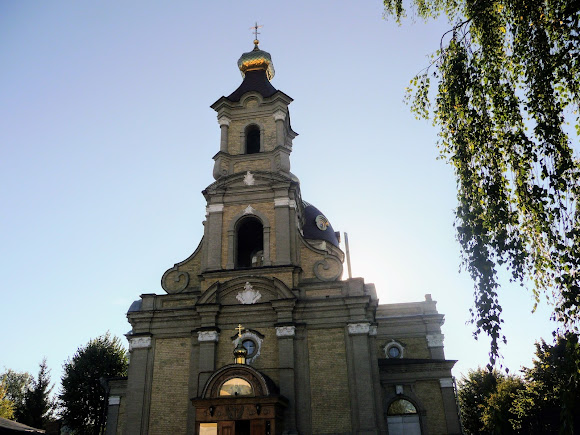 |
| Yevropeiska St. St. Nicholas Cathedral. 1908. |
Berdychiv's main Orthodox shrine was built in 1908 in the Baroque style on the site of a wooden church erected in 1748. In the 1920s-1930s the Renovationists served in it — representatives of the new Soviet schismatic church.
 |
| Yevropeiska St. St. Nicholas Cathedral. 1908. |
A very well-known historical landmark of Berdychiv is St. Barbara's Church, dating from the 18th century.
 |
| Yevropeiska St. St. Barbara's Church. 18th c. |
While a guest of the Radziwill princes, the founders of the church, the Polish composer Frederic Chopin made music on the church organ and other stringed instruments.
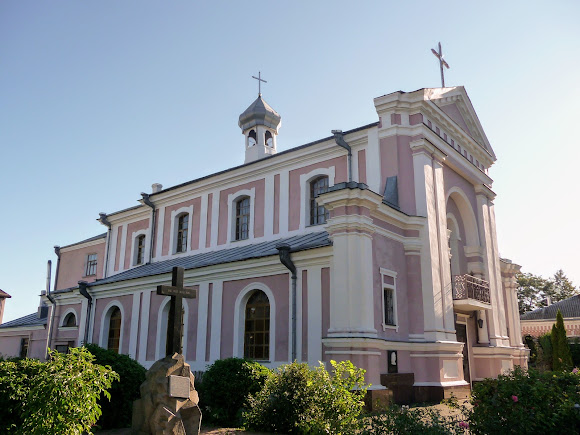 |
| St. Barbara's Church. 18th c. |
It was here, in 1850, that the French classic Honore de Balzac was wed to the beauty Ewelina Hanska. His muse the writer called "the only woman I have loved, love still more than before, and will love until my very death". The aristocrats' epistolary romance lasted 16 years.
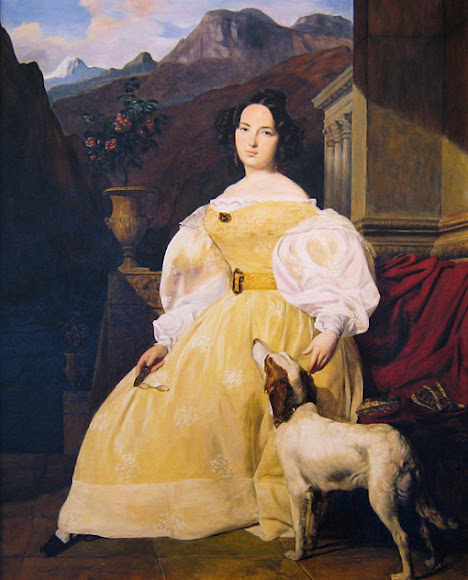 |
| Ewelina Hanska, by the artist Ferdinand Georg Waldmuller (1835) |
 |
| Portrait of Honore de Balzac, painted in 1842 by the artist Louis-Auguste Bisson |
Ewelina, having become Balzac's wife, paid off his debts, gave up her estates, and left her homeland. She devotedly cared for her husband in his old age and illnesses. The "North Star" made every effort to popularise Balzac's novels, which served his worldwide fame.
 |
| St. Barbara's Church. Memorial bas-relief plaque commemorating the wedding of Balzac and Ewelina |
On the site of the former wooden chapel, built in 1756 in honour of the coronation of the icon of the Mother of God of Berdychiv, a grotto has been erected with the holy image of the Queen of Heaven.
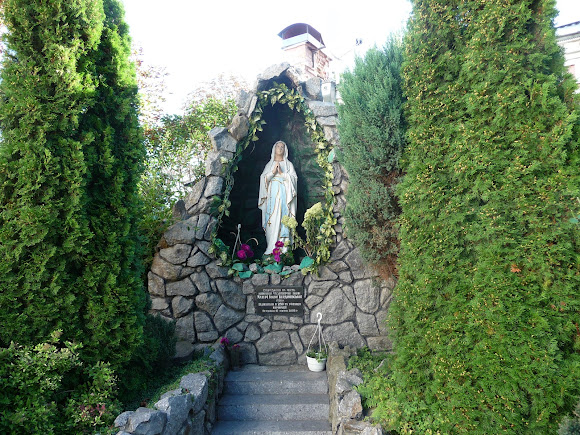 |
| St. Barbara's Church. Grotto. The Grotto of the Mother of God of Berdychiv, built in 1756, restored in 2006. |
On the church grounds, in 2013, the Monastery of the Order of the Little Sisters of the Immaculate Heart of Mary was opened. Pilgrims may stay in this building.
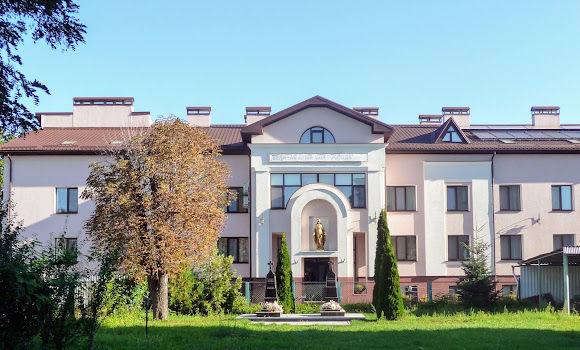 |
| The Monastery of the Order of the Little Sisters of the Immaculate Heart of Mary. 2013. |
There is a four-star hotel, the "DejaVu", in the town, and several cafes in the centre.
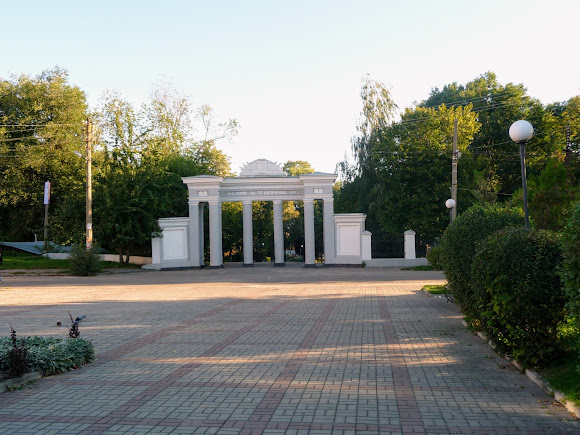 |
| Shevchenko Park |
To see these and other landmarks, to feel the atmosphere of this town of four cultures, you can come by a suburban train from
Kyiv in three hours. A bus from Zhytomyr will get you there in 40 minutes.
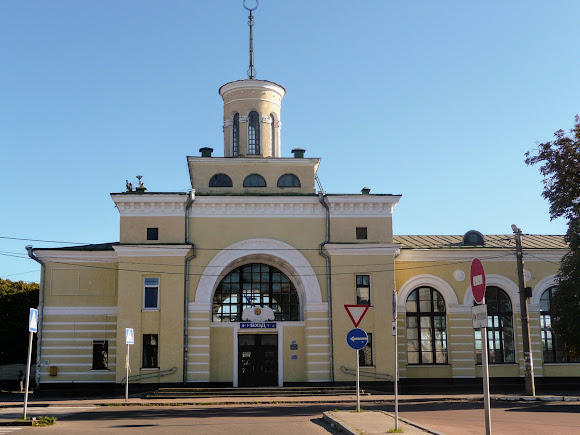 |
| Berdychiv. Railway station and bus station |




No comments:
Post a Comment
Leave your impression