I had long wanted to see old Dolyna. The town's thousand-year history begins from this spot, where the salt springs were already being used in the 10th century. Today it is a quiet, green district of the town, and it was its notable sights that I set off to get to know.
The main enterprise was the saltworks, now turned into ruins, though it is a monument of industrial architecture. This is what it looked like at the beginning of the 20th century; how it looks now I will see at the end of my journey.

At the start of the tour, the first stop is by the Cathedral of the Dormition of the Mother of God.

The Orthodox church was built in 2001 on a rise; it is visible from afar, but the entrance to the grounds was closed.


I came in from the side of a small park, climbing the steps that lead up to the war memorial.
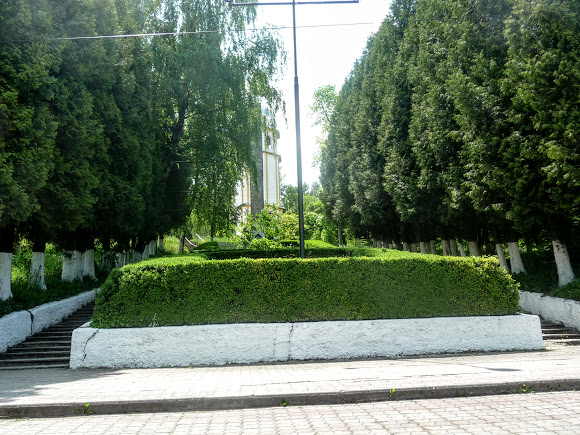

On the steep cliff, at one narrow place, there was no fence, and that was enough to get onto the church courtyard. I went back down the same way and walked on along Mickiewicz Street — quiet and green — which divides this district into two parts.
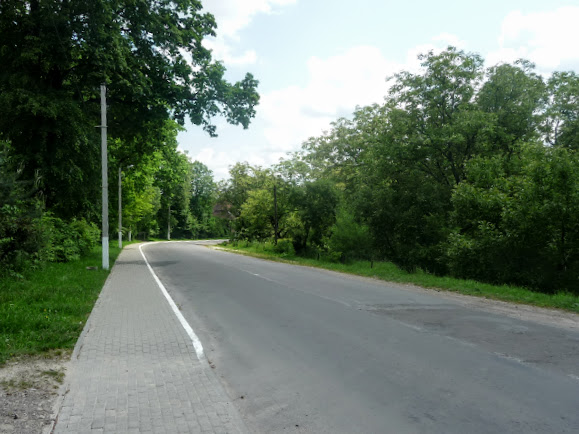
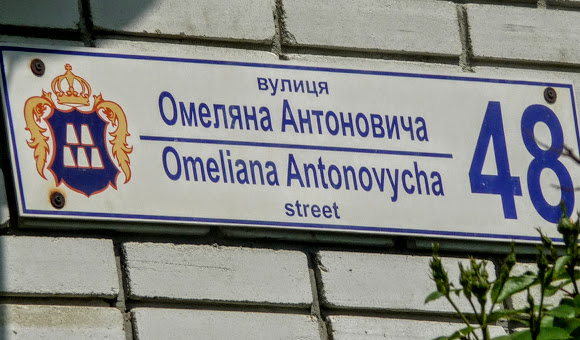
That I was walking along Mickiewicz Street I began to doubt when I suddenly saw a plaque on a house indicating that it was Antonovych Street. A resident of house No. 48, in answer to my puzzled question about which name was correct, could explain nothing comprehensible. There is no Antonovych Street on the map. The Polish poet ought not to have fallen under the law on renaming. The riddle remained unsolved. But I very much liked that the plaque bore the coat of arms of Dolyna, with the source of its origin — pieces of salt.
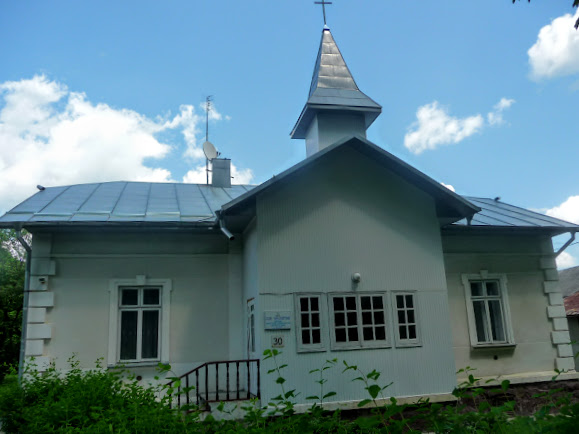
Old town — old buildings. Many large trees, through which it was impossible to make out the buildings. In a quiet, deserted spot stands the tuberculosis dispensary, white as white, as everything medical is.

A residential building — an architectural monument. To preserve its authenticity, the wooden central part has not undergone radical repair changes.

This mansion of the early 20th century, an architectural monument of local significance, has been taken over by the faithful of a Christian community.
A building that formerly belonged to a military unit now houses the Dolyna District Court.

The military enlistment office is painted in green camouflage colour and hidden behind trees — a wooden building erected in 1920, an architectural monument.

In my notes I try to mention the people I met who helped me in some way — gave me a lift or pointed something out. As I was taking photographs, a passer-by asked what I was interested in. He is a local, born here, and knows every corner; he can tell you much about his native town.
I asked whether he had served in the army, whether he had been called up at this enlistment office. Yes, he was called up here, and served two years of combat in Afghanistan. He knows what war is, not by hearsay. Getting ahead of myself, I will at once fulfil the request of this former internationalist soldier. He asked me several times to be sure to write that the people of Dolyna and of all Western Ukraine are peaceful folk, that no one wants war and everyone wishes for the soonest possible peace on the land of the Donbas. And he, as an Afghan veteran who walked the hard road of that war no one needed, knows how people die and remembers his comrades-in-arms.
The local man did not abandon me after that, but walked a little to the side, showing me where to cross the road. He apologised at once, because he had drunk some beer — it was very hot, after all — and had not known he would have to be a guide.
Dolyna is a town with places of worship of various religious denominations. The Roman Catholic Church of the Nativity of the Virgin Mary was built in 1839; it was raised in three years, but with violations of the building rules. The foundation was laid of river stone without binding materials. There was no waterproofing between the walls and the foundation. This caused rapid deterioration, and the church had to be reinforced in various ways, and the bells taken down from the tower.
The building did not suffer during the world wars. But the workers' authorities placed a warehouse in the building, and later a sports school. In the 1990s the half-ruined shrine was given to the Catholics. Work on landscaping the grounds is under way.
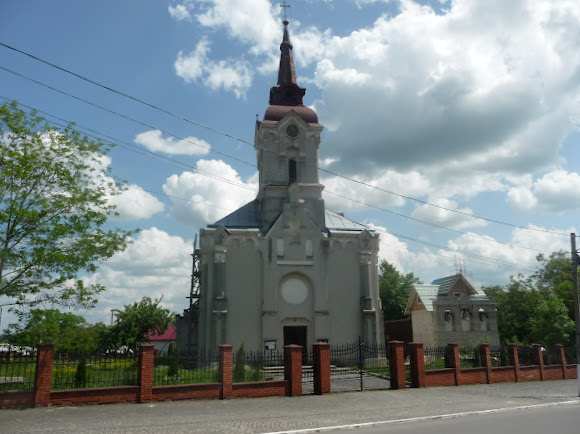

The tower clocks, which I so love, showed the wrong time, alas.


Another architectural monument is the town library, with a wooden facade.

By this building fine photographs of newlyweds come out, because the registry office is located here.

I asked my companion how many times he had registered a marriage at this establishment. It turned out that he had managed never to register even once.
The music school, with memorial plaques to notable figures.

In memory of the fallen soldiers — a memorial with flowers and wreaths.

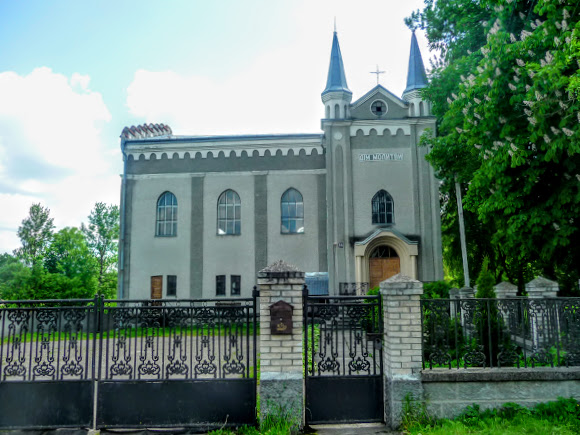
The synagogue was built in 1897-1932 to replace a wooden one. It was adorned with decorative elements and had original interiors. There has been no Jewish community in Dolyna since the Second World War. This architectural monument of the early 20th century was repaired and kept from falling into ruin, as happened in other towns, by the Christian faithful. It is now a house of prayer.
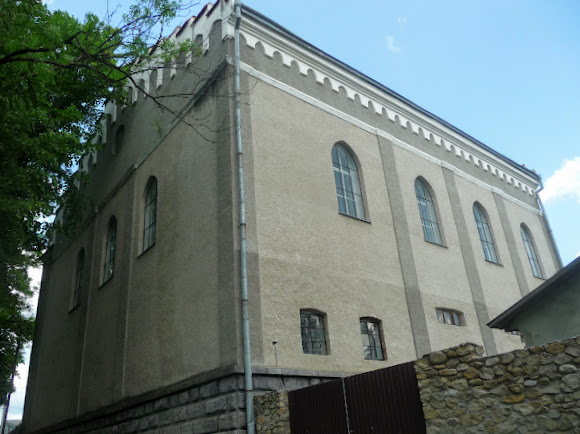
Behind the synagogue is a memorial stone in honour of the victims of fascism. On this spot residents of Dolyna were shot during the Second World War.

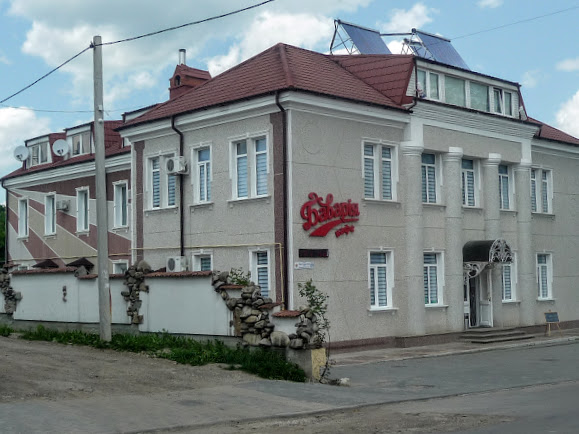
In this district there are shops and cafes with foreign names: 'Europa', 'Bavaria'.
The Church of the Nativity of the Most Holy Mother of God was built in 1904 of bricks from the Dolyna brick factory. The funds for the construction were collected by the workers of the saltworks. The church was consecrated by Metropolitan Andrey Sheptytsky, in whose honour a memorial plaque has been set up. The shrine is an architectural monument.
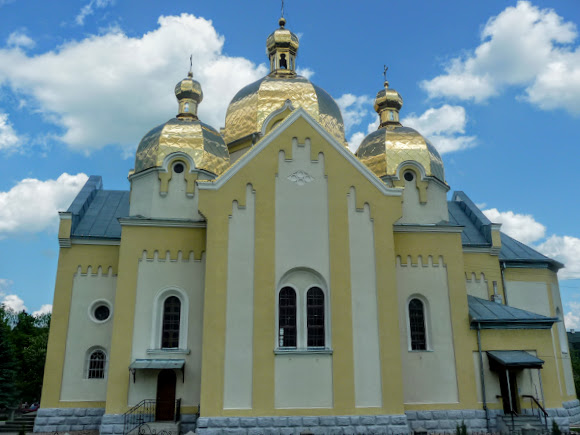
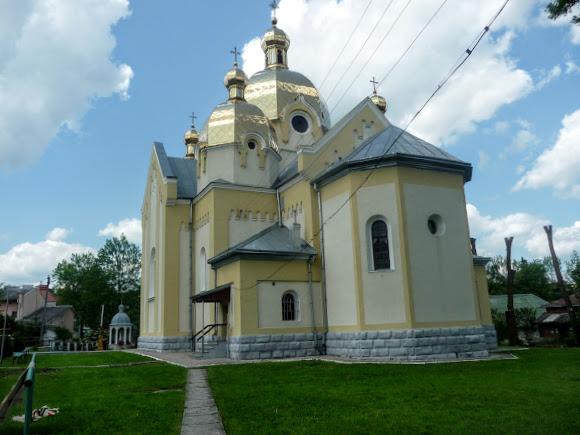
An old wooden bell tower from the previous church has survived.

On the grounds stands a monument to Myroslav Lubachivsky — the Major Archbishop, a native of Dolyna, who celebrated the Divine Liturgy in the church.

To the saltworks we walked another 300 metres or so. We crossed the small river Sivka, which has its very source here and flows into the turbulent Dnister.
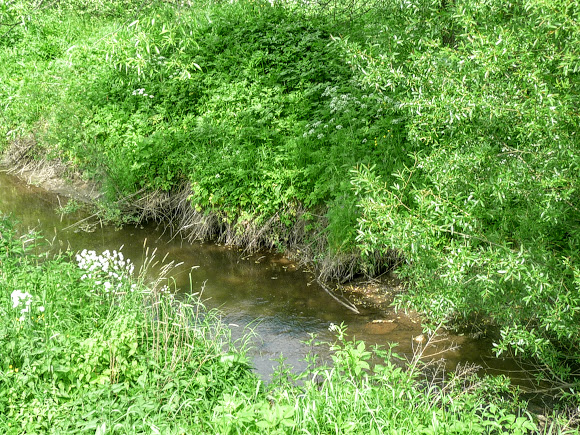
Some of the residential buildings for the enterprise's former workers, which are part of the architectural monument complex, are still inhabited today.


Storks have taken over the chimneys, which can often be seen.
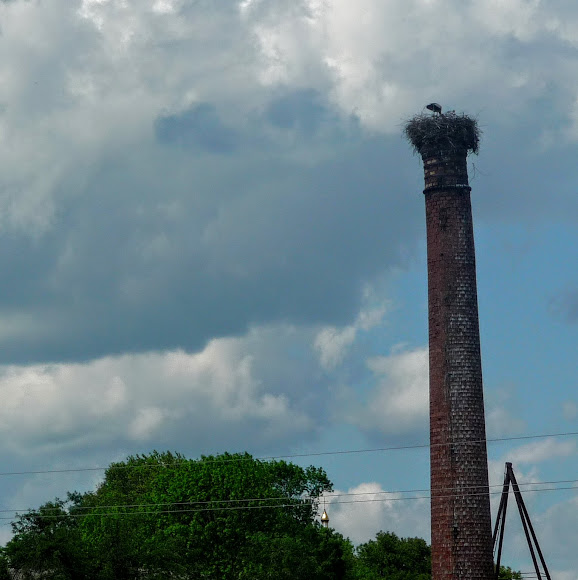
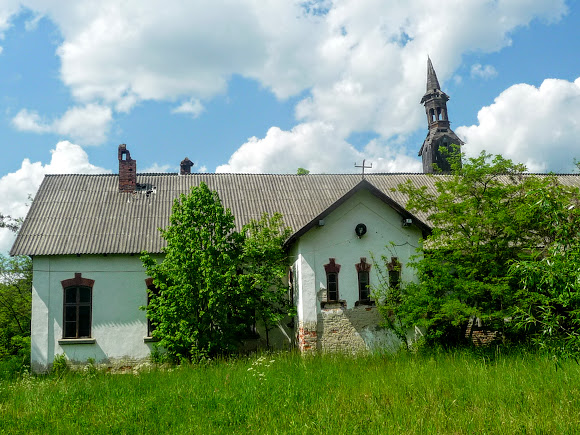
The salt factory itself, in times past the largest in Halychyna, is in a very sorry state.
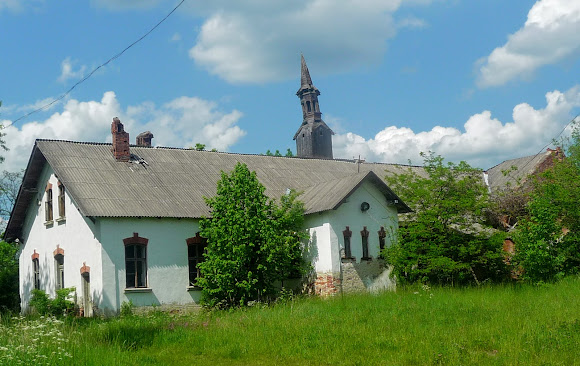
'Salina', as it has been called since time immemorial, suffered from a fire at the end of the 19th century. It was quickly rebuilt, and comprised: the salt-boiling house, the production building, warehouses, and service and utility buildings. The walls are laid of red brick.


The complex, soundly built by foreign craftsmen more than 100 years ago, could have served for a long time yet. It is a pity that no use was found for such a unique structure.


All around, everything has grown over with nettles — ruin and sadness on the site of the town-forming enterprise from which Dolyna began. Only the image of five pieces of salt on the town's coat of arms will be a reminder of the origins of this beautiful town.
My companion wanted to continue the route further, with a viewing of the notable sights of the old town, but I was already tired, for since the morning I had been in Bolekhiv at the Jewish cemetery and by the ancient wooden church. In all it came to about 14 km that day, and the heat was 30 degrees.
Seeing me off, the hospitable resident of Dolyna asked a woman travelling with me on the bus to be sure to tell me when my stop came.
Thank you for the interesting tour; on my own I would have felt less confident in an unfamiliar town. I share with you my most varied impressions — both pleasant and sad.
The main enterprise was the saltworks, now turned into ruins, though it is a monument of industrial architecture. This is what it looked like at the beginning of the 20th century; how it looks now I will see at the end of my journey.

At the start of the tour, the first stop is by the Cathedral of the Dormition of the Mother of God.

The Orthodox church was built in 2001 on a rise; it is visible from afar, but the entrance to the grounds was closed.


I came in from the side of a small park, climbing the steps that lead up to the war memorial.


On the steep cliff, at one narrow place, there was no fence, and that was enough to get onto the church courtyard. I went back down the same way and walked on along Mickiewicz Street — quiet and green — which divides this district into two parts.

That I was walking along Mickiewicz Street I began to doubt when I suddenly saw a plaque on a house indicating that it was Antonovych Street. A resident of house No. 48, in answer to my puzzled question about which name was correct, could explain nothing comprehensible. There is no Antonovych Street on the map. The Polish poet ought not to have fallen under the law on renaming. The riddle remained unsolved. But I very much liked that the plaque bore the coat of arms of Dolyna, with the source of its origin — pieces of salt.

Old town — old buildings. Many large trees, through which it was impossible to make out the buildings. In a quiet, deserted spot stands the tuberculosis dispensary, white as white, as everything medical is.

A residential building — an architectural monument. To preserve its authenticity, the wooden central part has not undergone radical repair changes.

This mansion of the early 20th century, an architectural monument of local significance, has been taken over by the faithful of a Christian community.

A building that formerly belonged to a military unit now houses the Dolyna District Court.

The military enlistment office is painted in green camouflage colour and hidden behind trees — a wooden building erected in 1920, an architectural monument.

In my notes I try to mention the people I met who helped me in some way — gave me a lift or pointed something out. As I was taking photographs, a passer-by asked what I was interested in. He is a local, born here, and knows every corner; he can tell you much about his native town.
I asked whether he had served in the army, whether he had been called up at this enlistment office. Yes, he was called up here, and served two years of combat in Afghanistan. He knows what war is, not by hearsay. Getting ahead of myself, I will at once fulfil the request of this former internationalist soldier. He asked me several times to be sure to write that the people of Dolyna and of all Western Ukraine are peaceful folk, that no one wants war and everyone wishes for the soonest possible peace on the land of the Donbas. And he, as an Afghan veteran who walked the hard road of that war no one needed, knows how people die and remembers his comrades-in-arms.
The local man did not abandon me after that, but walked a little to the side, showing me where to cross the road. He apologised at once, because he had drunk some beer — it was very hot, after all — and had not known he would have to be a guide.
Dolyna is a town with places of worship of various religious denominations. The Roman Catholic Church of the Nativity of the Virgin Mary was built in 1839; it was raised in three years, but with violations of the building rules. The foundation was laid of river stone without binding materials. There was no waterproofing between the walls and the foundation. This caused rapid deterioration, and the church had to be reinforced in various ways, and the bells taken down from the tower.
The building did not suffer during the world wars. But the workers' authorities placed a warehouse in the building, and later a sports school. In the 1990s the half-ruined shrine was given to the Catholics. Work on landscaping the grounds is under way.


The tower clocks, which I so love, showed the wrong time, alas.


Another architectural monument is the town library, with a wooden facade.

By this building fine photographs of newlyweds come out, because the registry office is located here.

I asked my companion how many times he had registered a marriage at this establishment. It turned out that he had managed never to register even once.
The music school, with memorial plaques to notable figures.

In memory of the fallen soldiers — a memorial with flowers and wreaths.

The synagogue was built in 1897-1932 to replace a wooden one. It was adorned with decorative elements and had original interiors. There has been no Jewish community in Dolyna since the Second World War. This architectural monument of the early 20th century was repaired and kept from falling into ruin, as happened in other towns, by the Christian faithful. It is now a house of prayer.


Behind the synagogue is a memorial stone in honour of the victims of fascism. On this spot residents of Dolyna were shot during the Second World War.

In this district there are shops and cafes with foreign names: 'Europa', 'Bavaria'.

The Church of the Nativity of the Most Holy Mother of God was built in 1904 of bricks from the Dolyna brick factory. The funds for the construction were collected by the workers of the saltworks. The church was consecrated by Metropolitan Andrey Sheptytsky, in whose honour a memorial plaque has been set up. The shrine is an architectural monument.


An old wooden bell tower from the previous church has survived.

On the grounds stands a monument to Myroslav Lubachivsky — the Major Archbishop, a native of Dolyna, who celebrated the Divine Liturgy in the church.

To the saltworks we walked another 300 metres or so. We crossed the small river Sivka, which has its very source here and flows into the turbulent Dnister.

Some of the residential buildings for the enterprise's former workers, which are part of the architectural monument complex, are still inhabited today.


Storks have taken over the chimneys, which can often be seen.

The salt factory itself, in times past the largest in Halychyna, is in a very sorry state.

'Salina', as it has been called since time immemorial, suffered from a fire at the end of the 19th century. It was quickly rebuilt, and comprised: the salt-boiling house, the production building, warehouses, and service and utility buildings. The walls are laid of red brick.


The complex, soundly built by foreign craftsmen more than 100 years ago, could have served for a long time yet. It is a pity that no use was found for such a unique structure.


All around, everything has grown over with nettles — ruin and sadness on the site of the town-forming enterprise from which Dolyna began. Only the image of five pieces of salt on the town's coat of arms will be a reminder of the origins of this beautiful town.

My companion wanted to continue the route further, with a viewing of the notable sights of the old town, but I was already tired, for since the morning I had been in Bolekhiv at the Jewish cemetery and by the ancient wooden church. In all it came to about 14 km that day, and the heat was 30 degrees.
Seeing me off, the hospitable resident of Dolyna asked a woman travelling with me on the bus to be sure to tell me when my stop came.
Thank you for the interesting tour; on my own I would have felt less confident in an unfamiliar town. I share with you my most varied impressions — both pleasant and sad.
This story is also available in Ukrainian: Долина. Корінням – стародавня, серцем – молода

No comments:
Post a Comment
Leave your impression