Getting to know
Chernihiv should begin with the Dytynets — its cradle, which gave rise to the development of the capital city of the Chernihiv-Siverian principality.
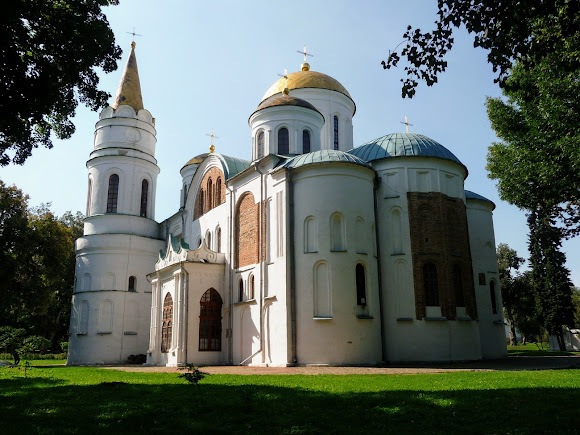 |
| Chernihiv. The Dytynets. The Transfiguration Cathedral. 1036. |
On a high hill on the bank of the Desna, in the 7th century, a fortified settlement arose with an earthen rampart and a deep moat — in essence a kremlin. On this territory, protected from the enemy, rich houses of the feudal lords, princely courts and churches were built. Since 1964 all the surviving historical monuments have been part of the National Architectural and Historical Reserve "Ancient Chernihiv".
 |
| Chernihiv. The Dytynets. The Collegium |
The main church of the ancient principality, the Transfiguration Cathedral, was founded in the years 1030-1036 by Prince Mstyslav the Brave, son of Volodymyr the Great, after his campaign against Red Rus (Halychyna).
 |
| Chernihiv. The Dytynets. The Transfiguration Cathedral. 1036. |
The enemy invasion of the Mongol-Tatar horde in 1276 plundered the shrine and destroyed the tombs of the princes. The fire of 1756 destroyed the frescoes and the decoration of the church. Later a tower was built up in place of the burnt-down baptistery, symmetrical to the ancient one. After the reconstruction, spires appeared on the towers, which disrupted the pristine appearance of the shrine.
 |
| Chernihiv. The Dytynets. The Transfiguration Cathedral. 1036. |
In 1818 the walls were painted with new frescoes. Historians suppose that the cathedral and St Sophia of Kyiv were built by the same masters, yet the design was unique and repeated none of the ancient churches. The height of the cathedral is 30 metres (a 9-storey building), its width 22 metres, and the thickness of the walls, decorated with concealed brickwork, is 1.4 metres. For 9 centuries the building fulfilled its purpose and was a church for believers. In 1926 the Soviet authorities closed the cathedral and placed a fats-and-oils sales enterprise inside it. In 1942, during the Nazi occupation, services resumed, and the church operated until 1961, when the Khrushchev Thaw opened a museum in it.
 |
| Chernihiv. The Dytynets. The Transfiguration Cathedral. 1036. |
In 1120-1123 Prince David Sviatoslavovych built the Sts Boris and Gleb Cathedral as a tomb for his line, as the niches in the walls testify.
 |
| Chernihiv. The Dytynets. The Sts Boris and Gleb Cathedral. 1123. |
Scholars have established that it stands on the site of an even more ancient stone structure. The shrine has endured much destruction over its history. Time has preserved neither the interior decoration nor the frescoes. Recreating the church in various styles, architects gave it features of a Dominican cathedral and baroque adornments. In the 1950s the church was reconstructed according to ancient schemes and acquired as close to its original appearance as possible. An archaeological museum has been opened in it, and concerts of sacred music are held. A very famous exhibit of the museum is the golden royal doors, weighing 56 kilograms, made by order of Hetman Ivan Mazepa at the beginning of the 18th century.
 |
| Chernihiv. The Dytynets. The Sts Boris and Gleb Cathedral. 1123. |
The Sts Boris and Gleb Cathedral was the main church of a monastery, which included the Archbishop's House.
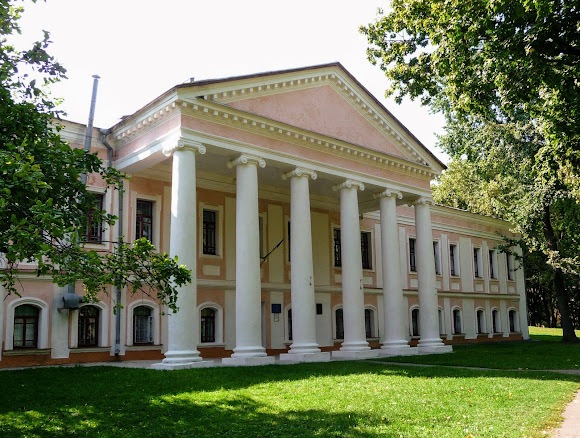 |
| Chernihiv. The Dytynets. The Archbishop's House. 1780. The regional archive |
Now the archive of the Chernihiv region is housed in this building of 1780, which has the status of an architectural monument.
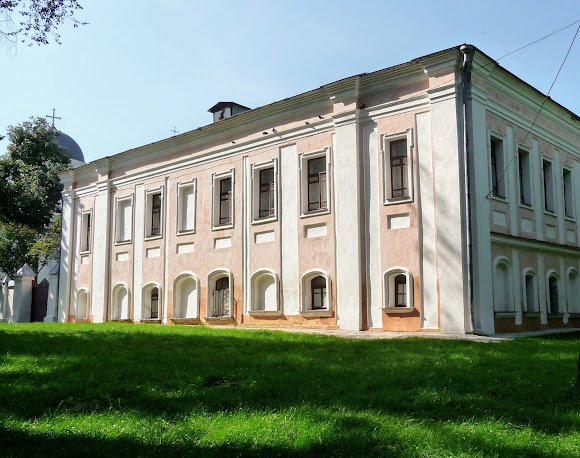 |
| Chernihiv. The Dytynets. The Archbishop's House. 1780. The regional archive |
For many centuries the castle repelled enemy attacks and was ravaged by Crimean-Tatar, Lithuanian and Polish raids. In the 17th century the fortress became the administrative centre of the Chernihiv regiment. The regimental chancellery was built in the 1690s by Colonel Ya. K. Lyzohub.
 |
| Chernihiv. The Dytynets. The former regimental chancellery. The former house of Colonel Ya. K. Lyzohub. 1690. |
This brick building in the Ukrainian baroque style belonged from 1698 to Hetman Ivan Mazepa, where he met with his beloved Motria Kochubei. For over a hundred years the premises were occupied by the archive, and in Soviet times by a model-makers' club. Now this historical monument belongs to the historical museum.
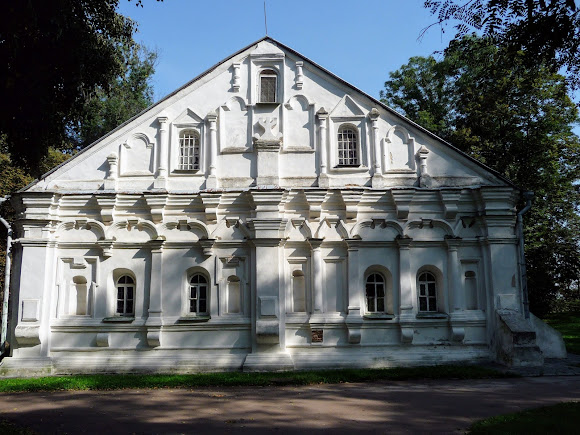 |
| Chernihiv. The Dytynets. The former regimental chancellery. The former house of Colonel Ya. K. Lyzohub. 1690. |
On the edge of the rampart of the former fortress stands the Chernihiv Collegium, a higher religious educational institution whose pupils were children of all social estates, and whose teachers gave lectures composed on the basis of their own scholarly research.
 |
| Chernihiv. The Dytynets. The Collegium |
The building, in the Ukrainian baroque style, changed its external appearance more than once as a result of additional annexes and restorations.
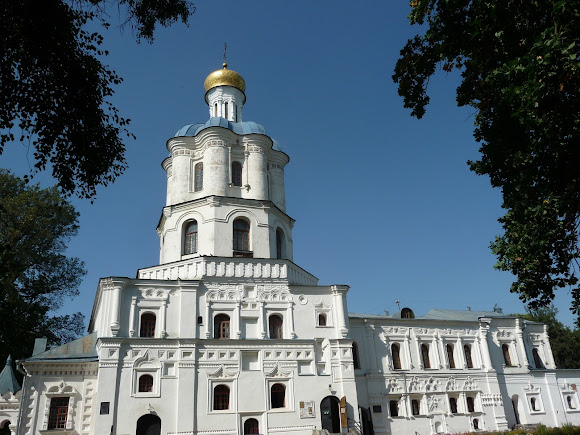 |
| Chernihiv. The Dytynets. The Collegium |
The Tarnavsky Historical Museum, with holdings of 160 thousand items, is in the building of a former boys' gymnasium, built by Governor Kurakin in 1804, which gave it its name — the Governor's House.
 |
| Chernihiv. The Dytynets. The former Governor's House. 1804. The Tarnavsky Historical Museum |
Another 19th-century building is occupied by a sports school.
 |
| Chernihiv. The Dytynets. The sports school |
At the end of the 19th century the defensive system was cleared, and on the site of the Dytynets a park was laid out, in which several monuments to famous figures have been erected.
 |
| Chernihiv. The Dytynets. The Kotsiubynsky Park |
In honour of O. S. Pushkin's stay in Chernihiv in 1820, a monument to him was unveiled in 1900.
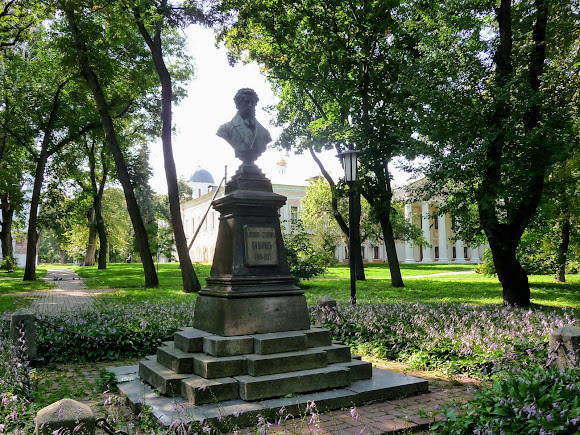 |
| Chernihiv. The Dytynets. The park. The monument to O. S. Pushkin. 1900. |
On the night before New Year at the end of 2017, vandals stole the bronze bust, but to the credit of the law-enforcement officers, the bust was found and returned to its pedestal.
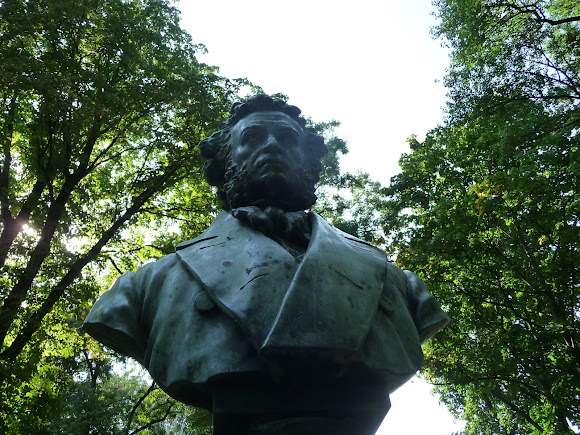 |
| Chernihiv. The Dytynets. The park. The monument to O. S. Pushkin. 1900. |
On the site of the fortress, the young T. H. Shevchenko rests in the shade of age-old trees, and those who wish can sit down beside him on the bench.
 |
| Chernihiv. The Dytynets. The park. The monument to T. H. Shevchenko. 1992. |
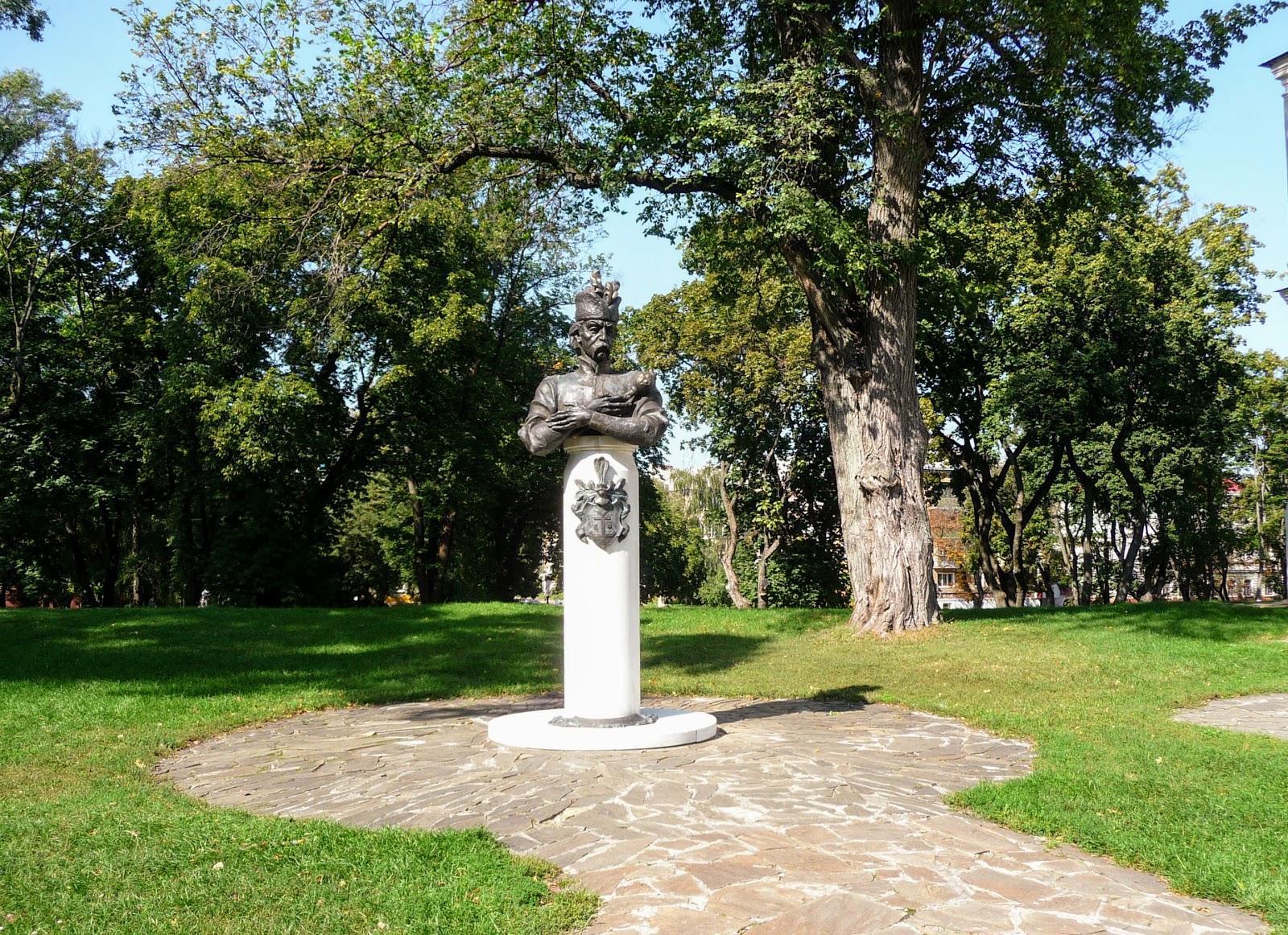
Ivan Mazepa is immortalised in bronze by the Collegium, built by order of the hetman.
 |
| Chernihiv. The Dytynets. The park. The monument to Hetman Ivan Mazepa. 2009. |
Between the two cathedrals stands a sculptural image of Prince Ihor Olhovych of Chernihiv, who went down in history as a victim of the internecine wars for the Kyiv throne.
 |
| Chernihiv. The Dytynets. The park. The monument to Prince Ihor Olhovych of Chernihiv. 2012. |
The defensive significance of the Chernihiv Rampart is recalled by twelve old cannons, which have stood in the fortress since the 17th-18th centuries and have never once fired.
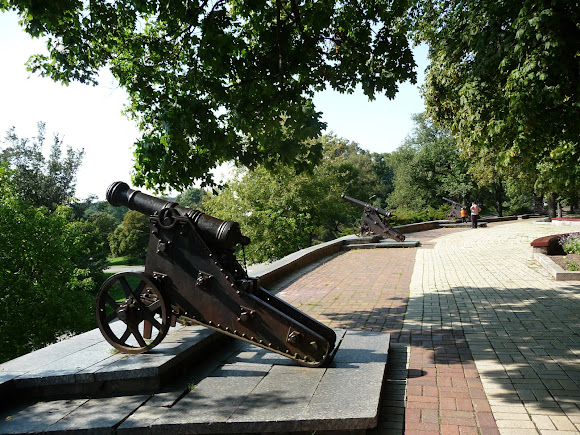 |
| Chernihiv. The Dytynets. The park. The old cannons |
The Dytynets is the historic core of Chernihiv, a spiritual and religious centre with the greatest number of monuments. From here a wonderful view opens onto the Desna, with its wooded expanses and the
Yelets Dormition Monastery, to which the distance is about a kilometre and 15 minutes on foot.
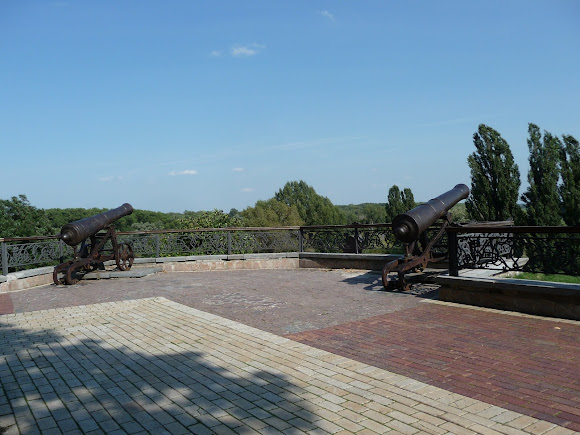 |
| Chernihiv. The Dytynets. The park. The old cannons. The viewing platform |
The address of the Dytynets: Chernihiv, 1 Preobrazhenska Street.
Coordinates:
51°29’20"N 31°18’27"E




No comments:
Post a Comment
Leave your impression