Baturyn is a town in Chernihiv region, a former Cossack capital and the residence of the hetmans.
 |
| Baturyn. The palace of Count Kyrylo Rozumovsky, 1799-1803 |
My acquaintance with this town, reborn from the ashes, I began with the Church of the Intercession, built in 2008 on the site of its predecessors. In the wooden 16th-century building, burned during the Baturyn tragedy, Hetman Ivan Mazepa made his confession. The next church, of 1789, was destroyed by the Bolsheviks in 1936.
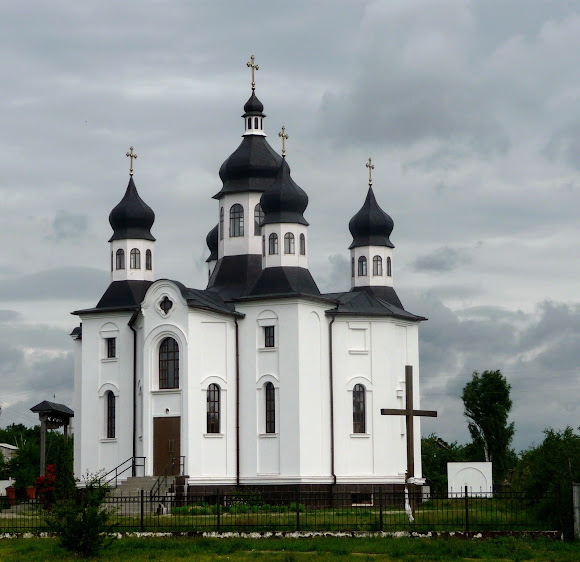 |
| The Church of the Intercession |
To immerse myself in the history of the Cossacks of the Left Bank, I set off to the citadel along the town's main street, the only one in Ukraine named in honour of Viktor Yushchenko.
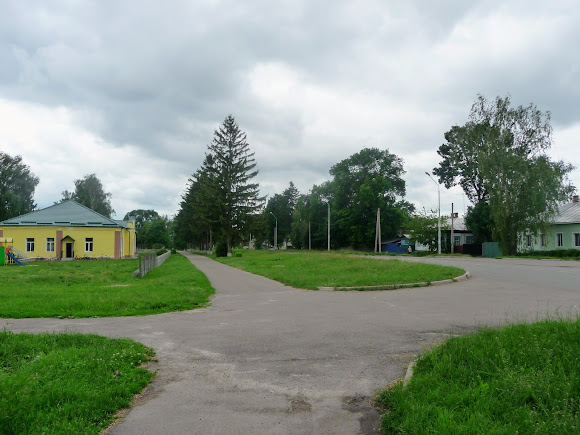 |
| Baturyn. Viktor Yushchenko Street |
Thanks to the guarantor's initiative, the restoration of the historic site began, and Baturyn, with a population of about three thousand, had its town status returned to it, for before that nothing recalled the former Cossack feats.
 |
| Hetmanska Street. A residential house |
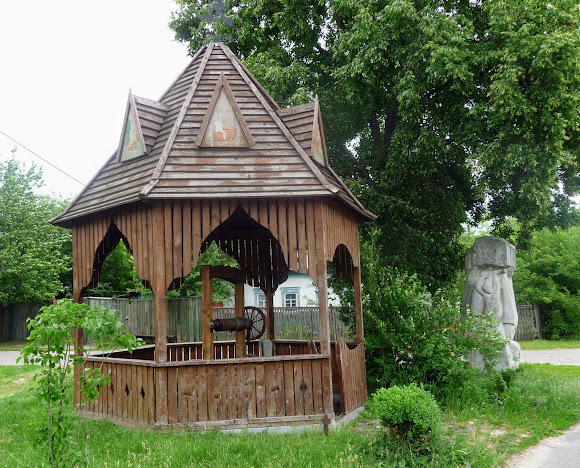 |
| Hetmanska Street. A well |
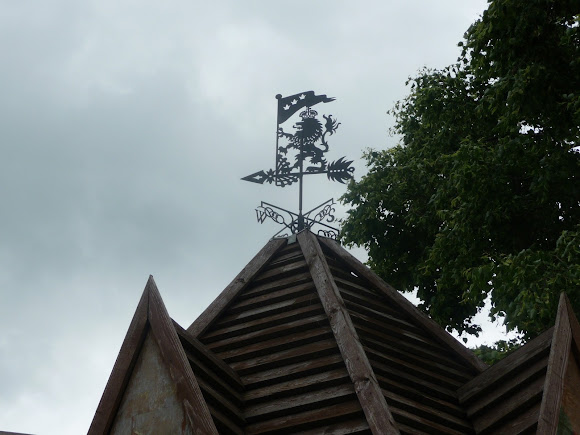 |
| Hetmanska Street. A well |
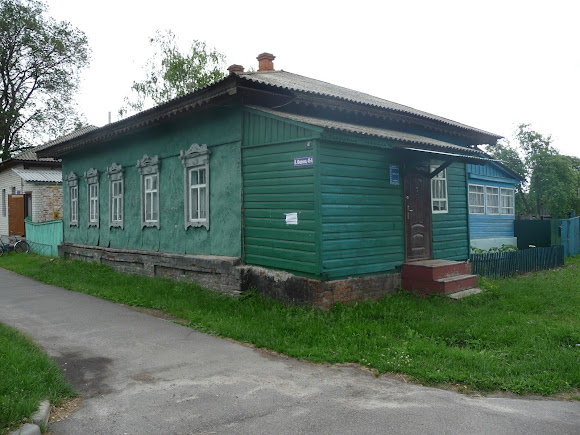
There are quite a few wooden houses with shutters in the town.
 |
| Viktor Yushchenko Street. A residential house |
 |
| Viktor Yushchenko Street. A residential house and a shop |
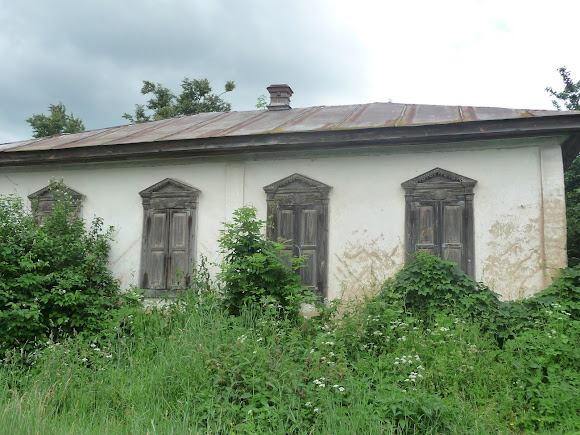 |
| Kooperatyvna Street. A residential house |
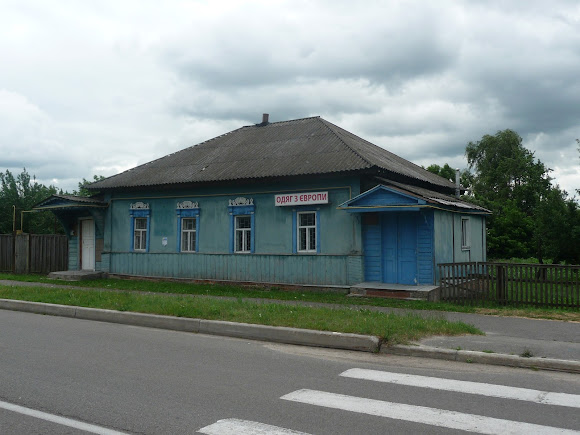 |
| Viktor Yushchenko Street. A residential house and the 'Clothes from Europe' shop |
 |
| 1st Viktor Yushchenko Lane. A residential house |
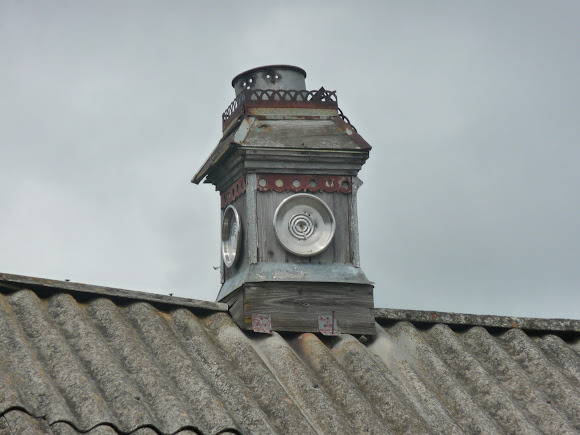
The descendants of the glorious Cossacks adorn their homes in various ways and remember their origins.
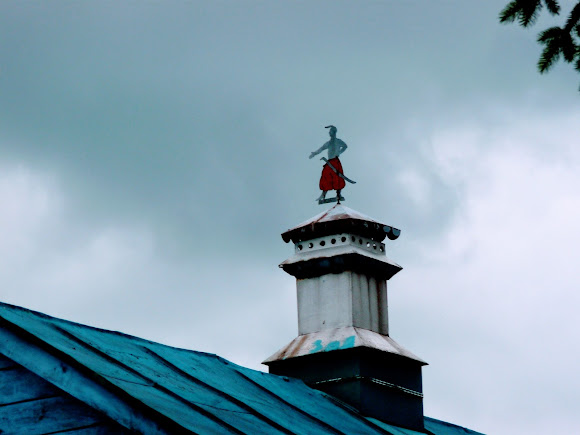 |
| Kooperatyvna Street. A residential house |
 |
| Mnohohrishnoho Street. A residential house |
 |
| Mnohohrishnoho Street. A residential house |
 |
| Mnohohrishnoho Street. A residential house |
And the horses have been replaced by bicycles.
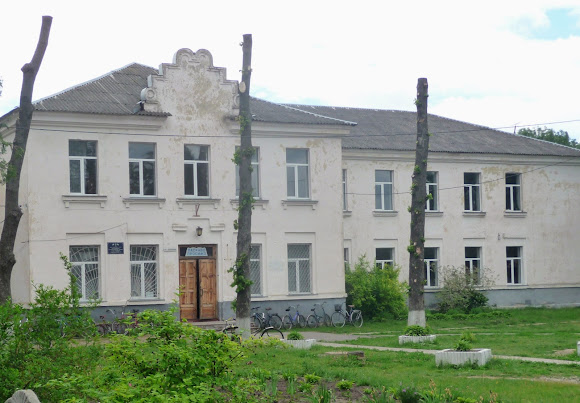 |
| The school. In the schoolyard — bikes |
 |
| A bicycle stand by the town administration |
All the best for the children. The kindergarten is housed in a historic building — the former two-class school.
 |
| The kindergarten on Viktor Yushchenko Street. By the entrance — bicycles |
From the remains of the earthen fortifications in the 'Citadel' tract, historians have established that a hill-fort existed on the bank of the Seim River more than 900 years ago.
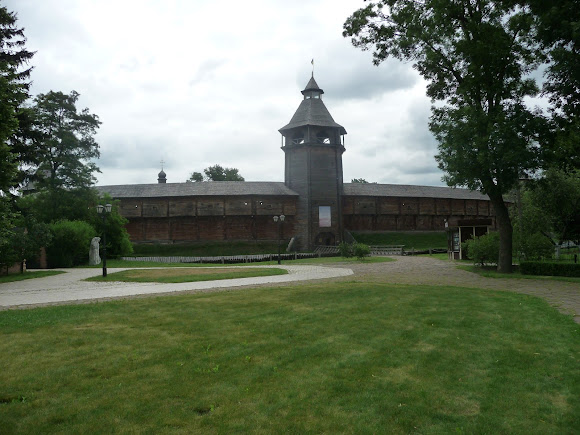 |
| Baturyn. The fortress |
In 1625 a fortress was laid down, which was rebuilt and strengthened with bastions and towers of oak log frames packed with clay. The area of the stockade was more than 24 hectares.
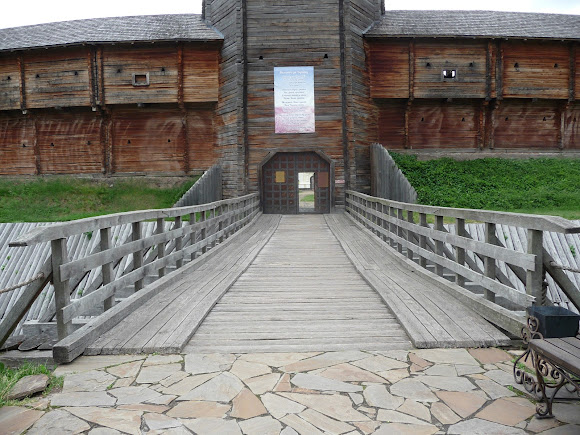 |
| The citadel of the Baturyn fortress. The bridge over the moat |
In 1654 Baturyn received Magdeburg rights. Soon agreements were signed with the tsarist government. In 1669, under Hetman Demian Mnohohrishny, Baturyn became the hetman's residence, where receptions for ambassadors and high-ranking guests were held.
 |
The citadel. The main tower. Wooden, with a gateway, hexagonal, four-tiered, with an upper fighting tier
|
Ivan Mazepa ruled for 21 years, and during that time Baturyn became a centre of spirituality and culture, and churches were built.
 |
| The wooden castle Church of the Ascension |
Ivan Mazepa took part in two campaigns against Azov together with Peter I, was decorated, enjoyed the young monarch's trust and gave him advice. In 1706 many European countries were subdued by the Swedes and became allies of Charles XII, leaving Muscovy with foreign-policy problems.
 |
| The northern tower. Wooden, 'blind', hexagonal, three-tiered, with an upper gallery tier. Height — 15.5 m |
In 1708 Peter I called on the Cossacks to join him near Starodub, but Mazepa went over to the king's side, hoping to grant Little Russia its independence.
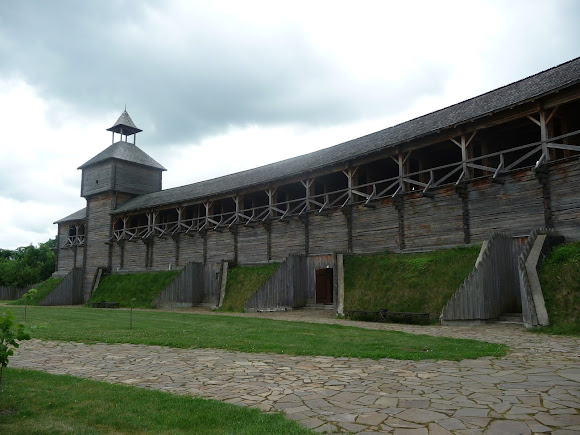 |
| The fortress and the southern tower. Wooden, four-walled, three-tiered, with an upper fighting tier. Height — 17.8 m |
The year 1708 became fateful for the hetman capital. Peter I did not forgive his former comrade's secret conspiracy with the enemy of the Russian Empire, and a Muscovite army under the command of Menshikov was thrown against Baturyn.
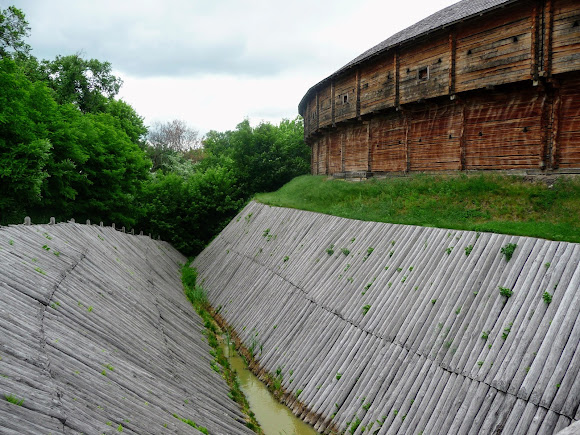 |
| The moat has been recreated according to the data of archaeological expertise, which determined its location and dimensions |
The attempts to take the fortress by storm were unsuccessful.
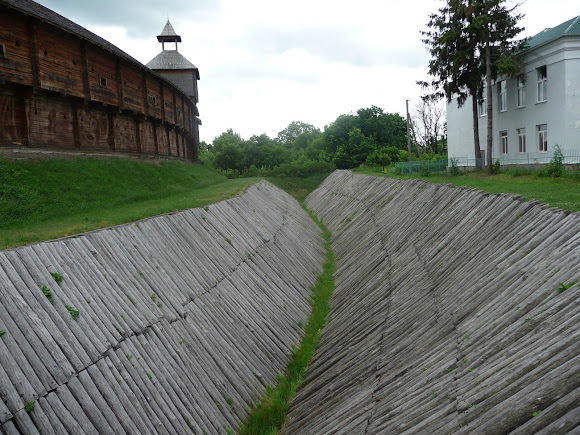 |
| The fortress. The moat. It separates the territory of the citadel from the town. Depth 7.4 m |
The bridges were smashed, the moats filled with the dead, and the Cossacks bravely defended the fort.
 |
| The fortress. The southern tower |
The prince was forced to retreat, but the betrayal of the Pryluky colonel Nis, who told of the secret passages, aided the sudden nocturnal invasion of the citadel by the tsarist army. Having seized the artillery, the treasury and the banners, Menshikov barbarically burned the town.
 |
| The defensive wall. Wooden, three-tiered, of beams in the form of cages. On the southern and northern sides it is reinforced with towers containing utility rooms |
Anticipating possible resistance, the prince ordered that neither the old nor the children be spared.
 |
| The defensive wall and the main tower, 29 m high |
By various historians' estimates, the number of victims could have been from 15 to 21 thousand.
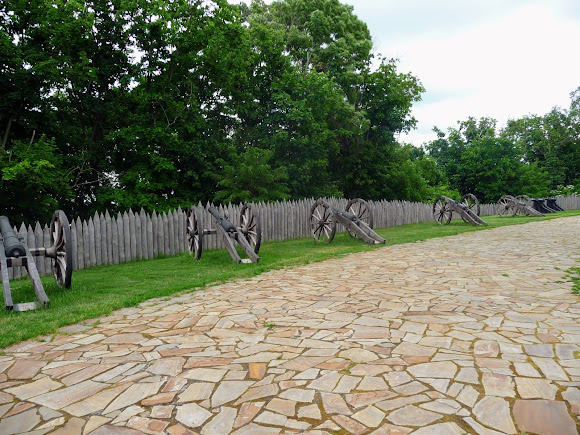 |
| The fortress. Cossack artillery |
 |
| The fortress. A cannon |
 |
| The fortress. A cannon |
In those two tragic days, new bestial tortures were devised and applied.
 |
| Four-fluke anchors of the 18th-19th c. A two-fluke anchor of the 18th c., for a brigantine |
The corpses of the Cossacks were tied to boards and set adrift down the Seim, announcing the death of Baturyn and the destruction of the idea of independence from Moscow.
 |
| The Seim River |
There were several attempts to reconstruct the citadel.
 |
| The viewing platform. The Seim River |
Baturyn and its revival for the 300th anniversary of the Baturyn tragedy became a favourite project for Yushchenko.
 |
| The fortress. The millstones of the water mills |
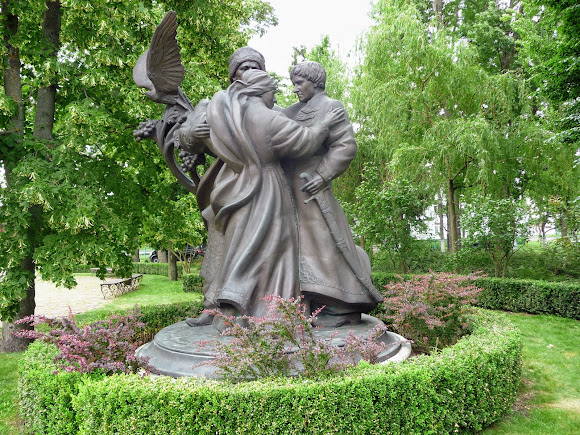 |
| The sculptural composition 'Mother. Sons — My Falcons'. Authors — M. Mazur and B. Mazur |
The forces and finances of the largest oligarchs were enlisted, regardless of political preferences.
 |
| The treasury with a cellar. Purpose — the storage of valuables |
The restoration was carried out by specialists at a high professional level.
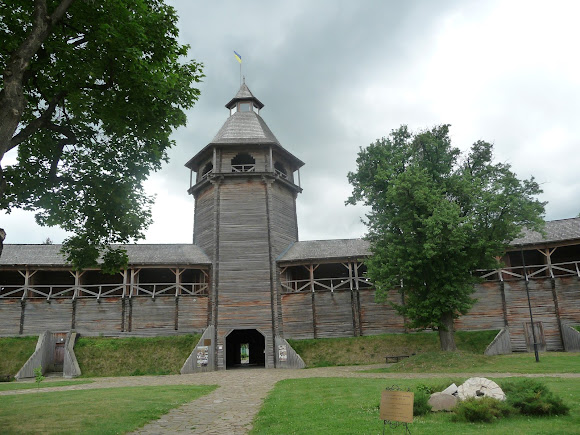 |
| The 'Hetman Capital' National Historical and Cultural Reserve |
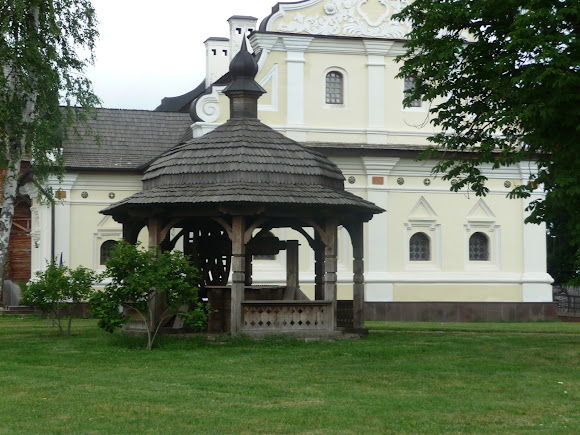 |
| The well. Depth 29 m, the same as the height of the main tower |
Lviv masters built the castle Church of the Resurrection of the Lord in the likeness of 17th-century Orthodox churches and donated ancient icons. In the crypt the remains of the victims of the 1708 tragedy were reburied.
 |
| The castle Church of the Ascension of the Lord |
In the Hetman's House the interior recalls, down to the smallest detail, the era when Demian Mnohohrishny and Ivan Samoilovych stayed in it.
 |
| The Hetman's House. The 'Hetman Capital' National Historical and Cultural Reserve |
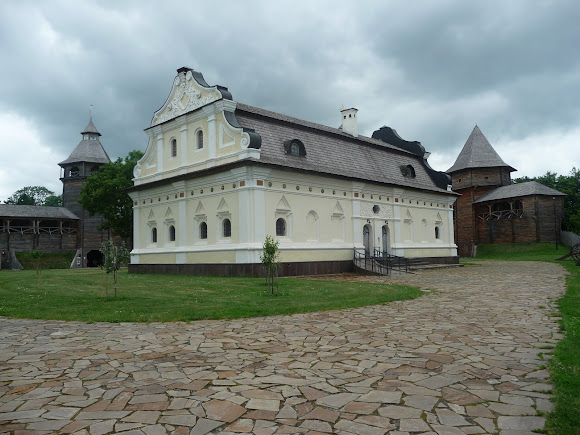 |
| The Hetman's House with a decorated pediment |
 |
| The hetman's residence and the dwelling house of the Cossack officers |
The Baturyn citadel has been rebuilt as fully as possible, and its appearance has been brought close to the original.
 |
| The sculptural composition 'A Prayer for Ukraine'. Authors — M. Mazur and B. Mazur |
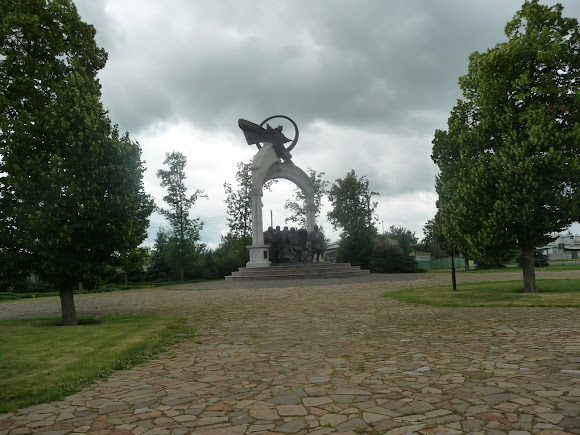 |
| The sculptural composition 'A Prayer for Ukraine'. The hetmans Demian Mnohohrishny, Ivan Samoilovych, Ivan Mazepa, Pylyp Orlyk, Kyrylo Rozumovsky |
The opening took place in 2009.
 |
| A memorial sign to the victims of the Baturyn tragedy |
Now the flow of tourists from the political beau monde has diminished.
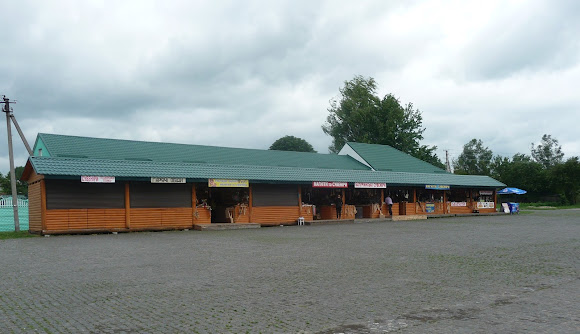 |
| Baturyn. Souvenir shops |
The museum of archaeology has gathered a collection of weapons and adornments from the times of the hetmanate.
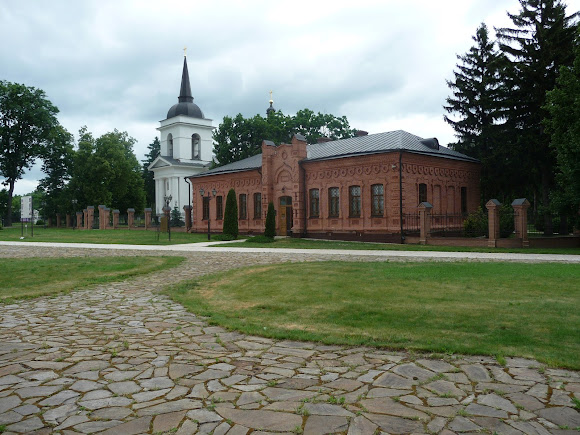 |
| The museum of archaeology |
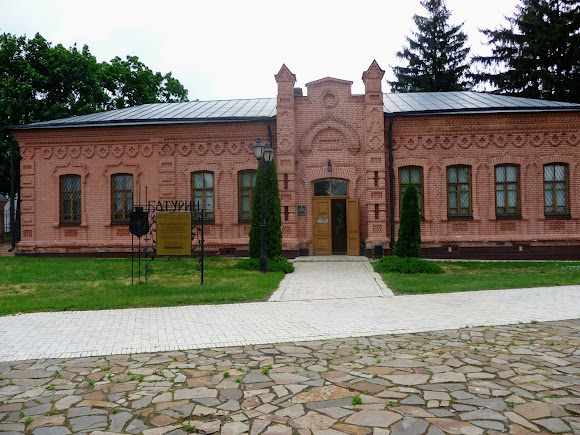 |
| The museum of archaeology. An architectural monument. 1904. A former parish school |
The Holy Resurrection Church was built in 1799-1803 with Rozumovsky's funds, in place of the castle church burned in 1708.
 |
| The Holy Ascension Church. 1799-1803 |
In 1803 the shrine became the count's mausoleum.
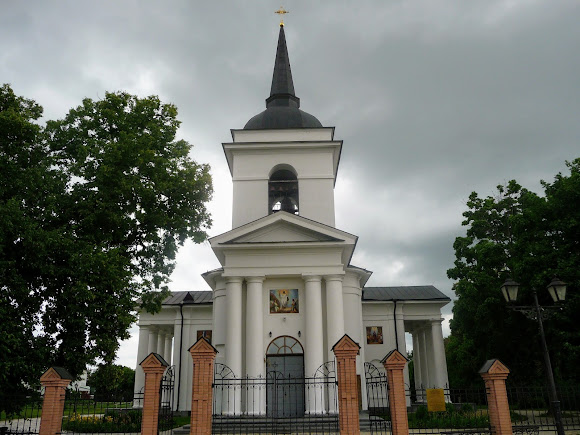 |
| The Holy Ascension Church. 1799-1803 |
 |
| The Holy Ascension Church. 1799-1803. An architectural monument |
The 'Hetman Capital' National Historical and Cultural Reserve includes Kochubei Park and the museum 'The House of the General Judge of Left-Bank Ukraine'.
 |
| Kochubei Park. A monument of landscape gardening art |
 |
| Kochubei Park. A stadium with stands |
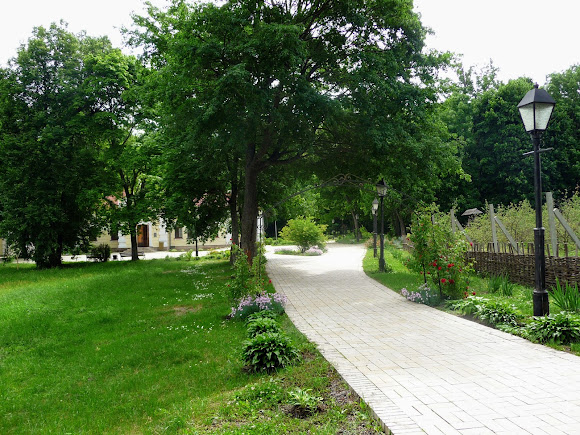 |
| Kochubei Park. The avenue to the museum |
The only building to survive the Menshikov pogroms was built at the end of the 17th century and in 1700 became the property of the General Judge Vasyl Kochubei.
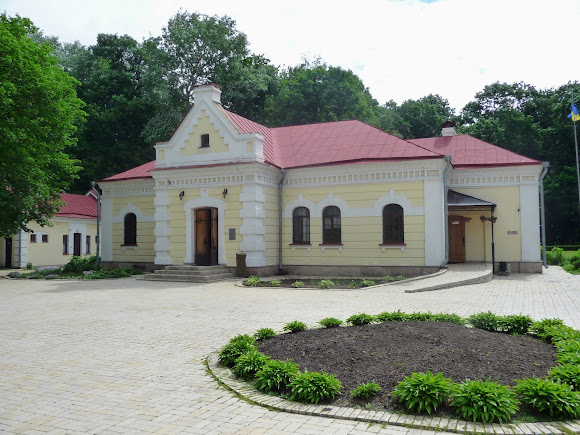 |
| The museum 'The House of the General Judge of Left-Bank Ukraine'. 1672 |
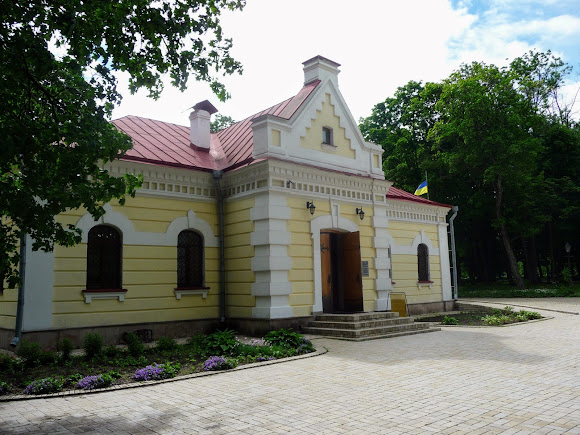 |
| The museum 'The House of the General Judge of Left-Bank Ukraine'. 1672 |
His 16-year-old daughter Motria was in love with her godfather, the 65-year-old Ivan Mazepa, whom her parents refused to let her marry, and they harboured a grudge against him.
 |
| The museum 'The House of the General Judge of Left-Bank Ukraine'. A painting depicting Motria Kochubei and Ivan Mazepa |
After Kochubei's report to Peter I about the hetman's secret negotiations with Charles XII, the informers were handed over to Mazepa, and the judge was executed.
 |
| The museum 'The House of the General Judge of Left-Bank Ukraine'. Interiors |
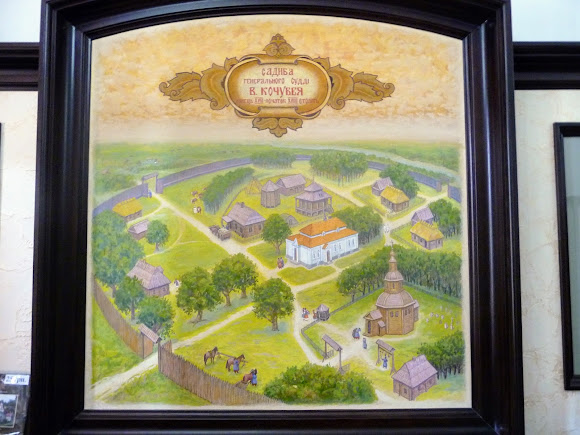 |
| The museum 'The House of the General Judge of Left-Bank Ukraine'. The plan of the estate |
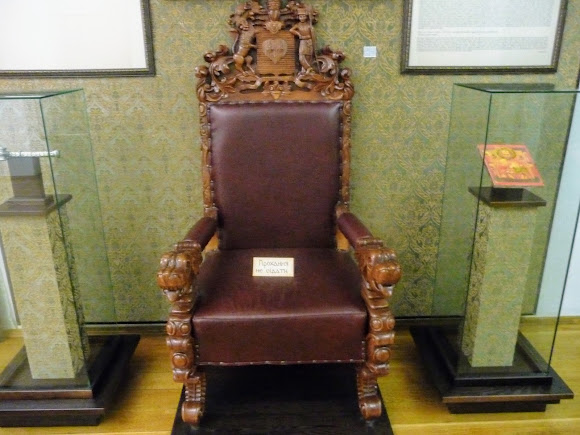 |
| The museum 'The House of the General Judge of Left-Bank Ukraine'. The judge's chair |
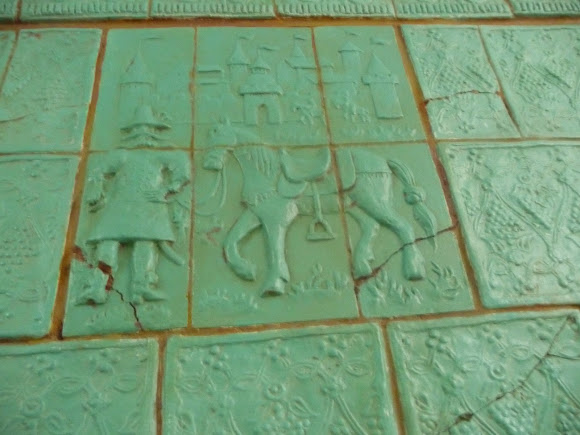 |
| The museum 'The House of the General Judge of Left-Bank Ukraine'. Tiles on the fireplace |
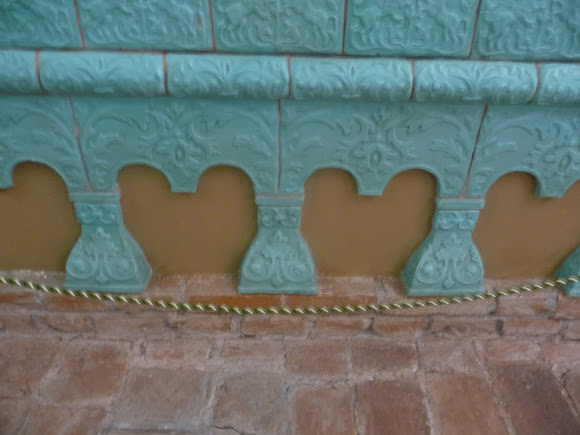 |
| The museum 'The House of the General Judge of Left-Bank Ukraine'. Tiles on the fireplace |
This tragic love story and the history of the hetmanate are told by the exhibits in four halls. Thanks to the collector Lozinsky, the exhibition preserves an icon of the Mother of God, once presented by Mazepa to a church in the town of Zhovkva.
 |
| The museum 'The House of the General Judge of Left-Bank Ukraine'. The icon of the Mother of God |
In the basement, a pre-trial detention cell has been recreated, with wax figures of a prisoner and an interrogating scribe.
 |
| The museum 'The House of the General Judge of Left-Bank Ukraine'. The prisoner's cell |
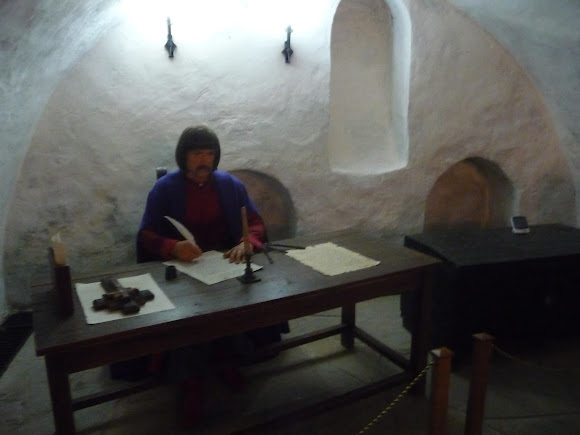 |
| The museum 'The House of the General Judge of Left-Bank Ukraine'. The scribe's room |
In these dungeons were held the koshovy otaman Ivan Sirko and the colonel Semen Palii. Among the Cossacks a judicial and penal system had been formed. In the VIP casemates there is an exhibition of instruments of torture.
 |
| The museum 'The House of the General Judge of Left-Bank Ukraine'. The pre-trial investigation cell |
 |
| The museum. The pre-trial investigation cell. A little window in the wall |
Kochubei Park, covering almost 10 hectares, was laid out at the end of the 17th century, and in it there survive centuries-old oaks under which, according to legend, Motria Kochubei used to meet Mazepa.
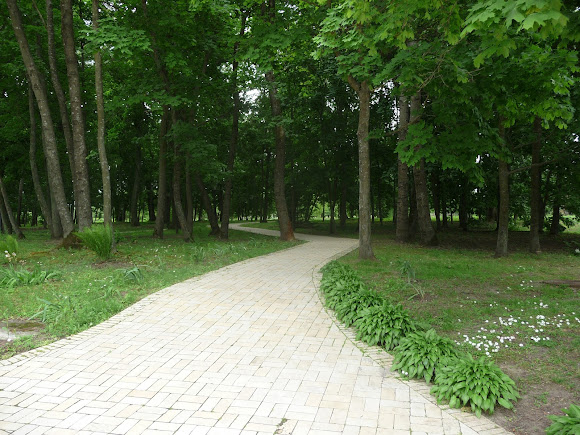 |
| Kochubei Park. Centuries-old oaks |
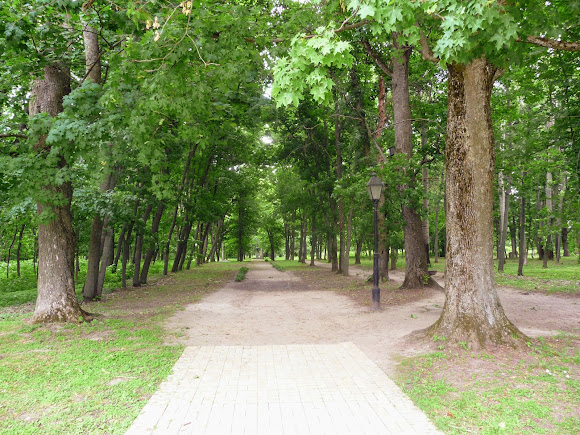 |
| Kochubei Park. Centuries-old oaks — witnesses to tragic and romantic events |
There are several monuments in the park.
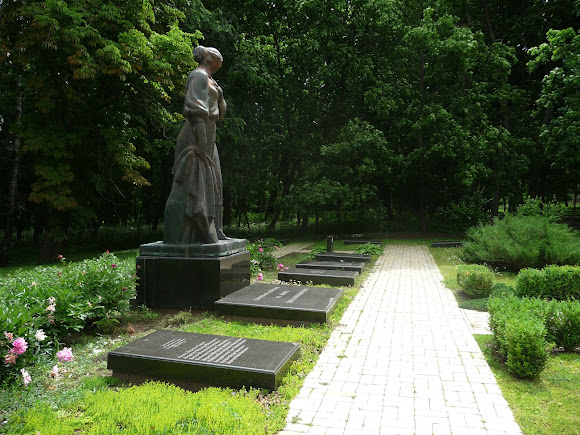 |
| Kochubei Park. The Second World War memorial |
 |
| Kochubei Park. A monument to P. I. Prokopovych — the famous apiarist and beekeeper |
There is an exhibition of beehives, dedicated to the famous beekeeper Prokopovych, a native of these parts.
 |
| Kochubei Park. An apiary |
When Baturyn was briefly returned its status as the hetman capital, the last Ukrainian hetman, Kyrylo Rozumovsky, who possessed a diplomatic talent, built a magnificent palace in 1799-1803.
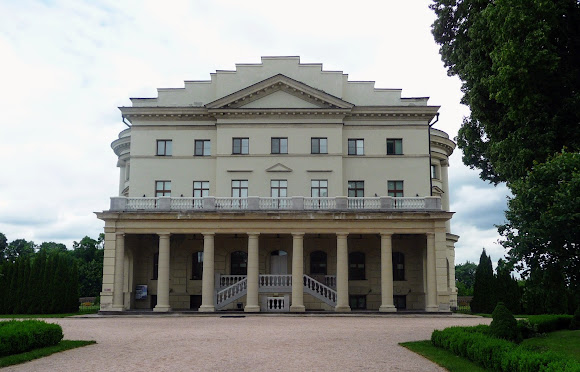 |
| The palace of Count Rozumovsky. 1799-1803 |
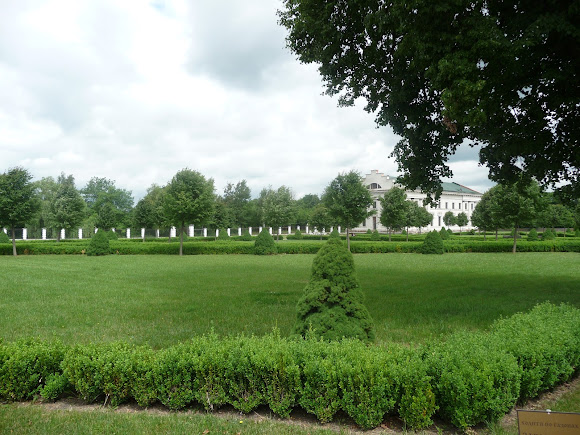 |
| The estate of Count Rozumovsky. 1799-1803 |
The count's estate was to become the hetman's residence, but Rozumovsky died in the last year of construction, and the palace never served as a headquarters, falling into ruin through time and fires.
 |
| The estate of Count Rozumovsky. 1799-1803 |
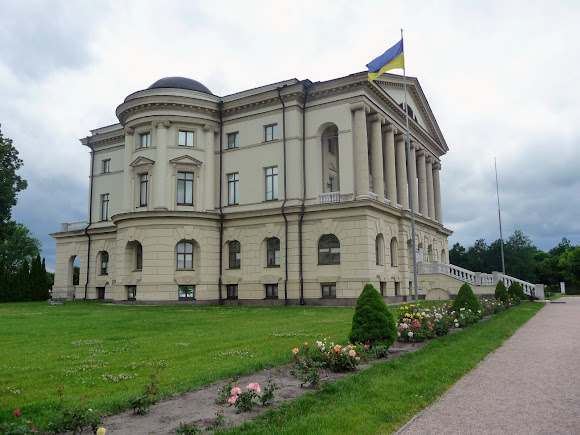 |
| The palace of Count Rozumovsky. 1799-1803 |
The brilliant restoration of this architectural monument was carried out, after two centuries of oblivion, in 2003-2009 under the aegis of the third President of Ukraine, who became a hetman a day before his inauguration, even though he had been struck off the Cossack register for unpaid dues.
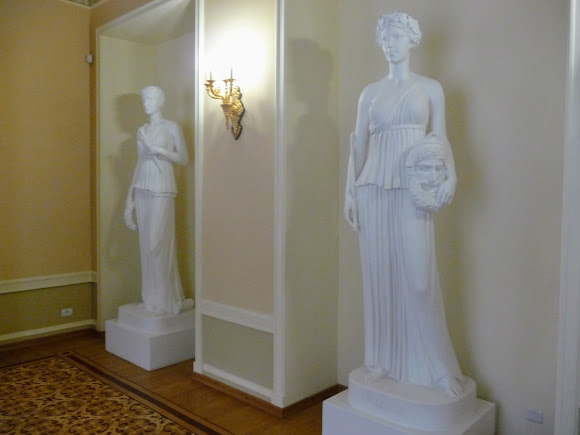 |
| The palace of Count Rozumovsky. 1799-1803 |
 |
| The palace of Count Rozumovsky. 1799-1803. The staircase |
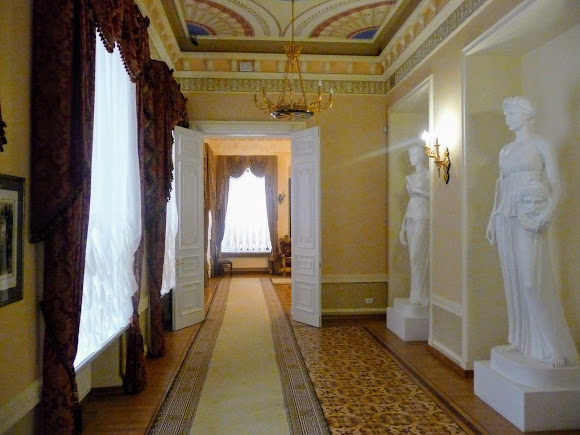 |
| The palace of Count Rozumovsky. 1799-1803. 55 rooms |
The project became a landmark for many patrons and businessmen.
 |
| The fortepiano. Rozumovsky loved the music of Mozart and Beethoven. Ludwig dedicated three works to him. Music by 17th-18th-century composers, performed by professional musicians, often sounds in the museum |
Exhibits from the collections of the Lviv Art Gallery were transferred to the legendary castle with its 55 rooms.
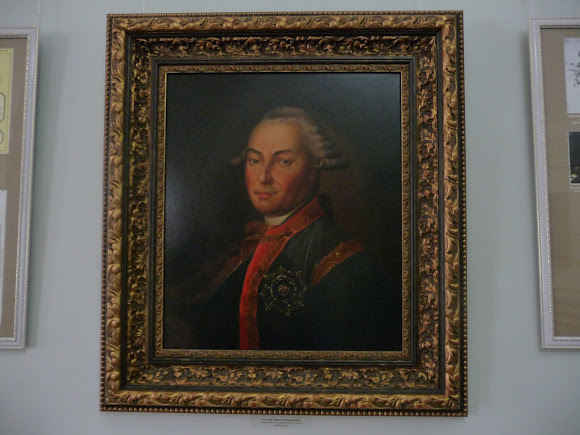 |
| The palace of Count Rozumovsky. A portrait of the count |
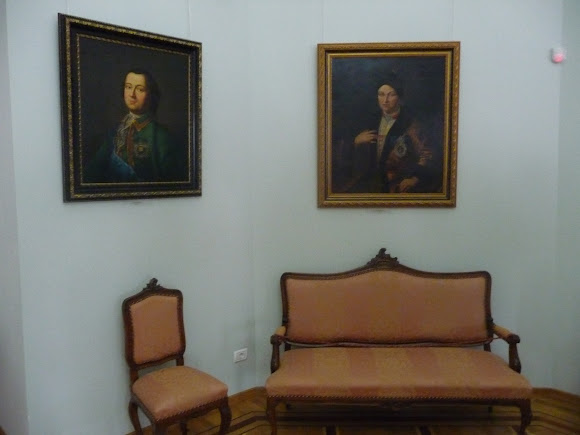 |
| The palace of Count Rozumovsky. Paintings and interiors |
 |
| The palace of Count Rozumovsky. A table |
 |
| The palace of Count Rozumovsky. An armchair |
 |
| The palace of Count Rozumovsky |
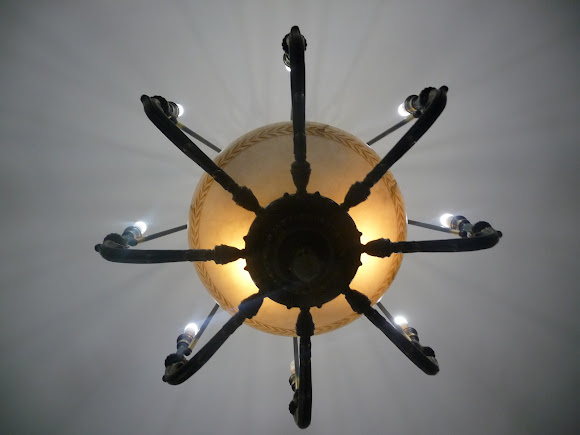 |
| The palace of Count Rozumovsky |
The dominant feature of the exhibition dedicated to the hetmans is Rozumovsky's sabre — a gift to the museum from the count's descendants.
 |
| The palace of Count Rozumovsky. The sabre of the last hetman of the Hetman Capital |
 |
| The palace of Count Rozumovsky. The hetman's sabre |
The 'Antique' hall is decorated with scenes from ancient Greek mythology and is intended for banquets.
 |
| The palace of Count Rozumovsky. Chandeliers weighing over 500 kg |
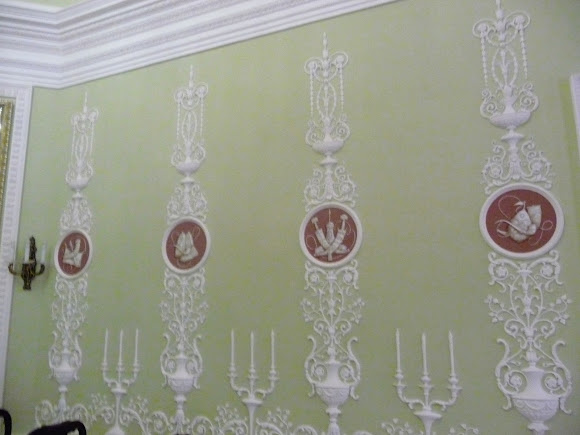 |
| The palace of Count Rozumovsky. Exquisite decor |
 |
| The palace of Count Rozumovsky |
 |
| The palace of Count Rozumovsky. Portraits of the hetmans |
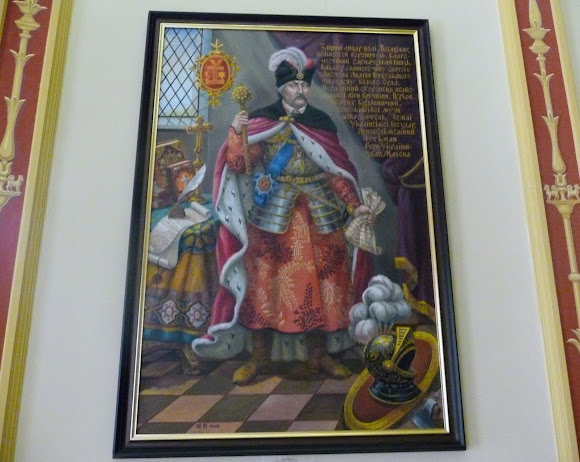 |
| The palace of Count Rozumovsky. Portraits of the hetmans |
 |
| The palace of Count Rozumovsky. The banqueting hall |
A large collection of icons and paintings is preserved.
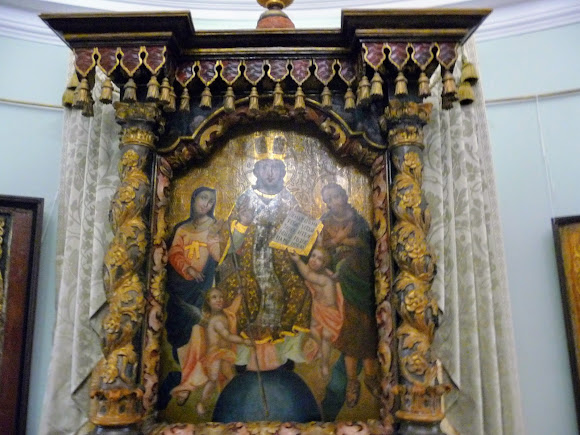 |
| The palace of Count Rozumovsky. Icons of the 18th-19th c. |
 |
| Icons of the 18th-19th c. The relics of St Barbara |
The palace-and-park ensemble can be considered the pearl of the National Historical and Cultural Reserve.
 |
| The palace of Count Rozumovsky. Portraits of the hetmans |
 |
| The palace of Count Rozumovsky. Portraits and interiors |
 |
| The palace of Count Rozumovsky |
Baturyn is 150 kilometres from Chernihiv.
 |
| The estate of Count Rozumovsky |
 |
| The estate of Count Rozumovsky. The 'Hetman Capital' National Historical and Cultural Reserve |
I got there in 30 minutes by bus from
Konotop, whose residents were the ones who advised me to visit the nearby Cossack capital, for which I am grateful to them. In Baturyn there is a hotel in the same building as the historical and cultural centre and the museum of Miklouho-Maclay, whose roots are in the Chernihiv region.
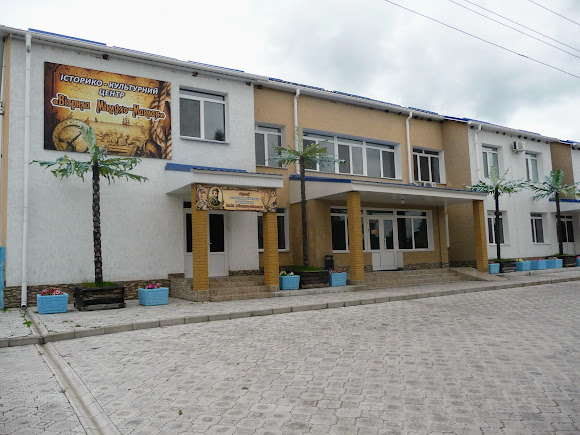 |
| The Miklouho-Maclay historical and cultural centre and the hotel |
The town does have a bus station, but the sponsors have not yet got round to restoring it. I travelled back from a stop located on the
Kyiv — Moscow highway.
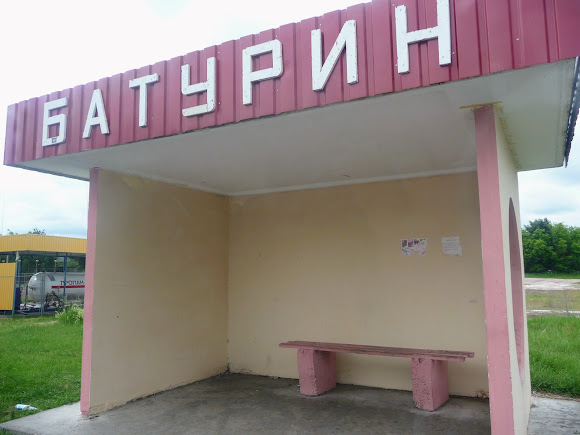 |
| Baturyn. A bus stop on the 'Kyiv — Moscow' highway |




No comments:
Post a Comment
Leave your impression