The first museum of folk architecture and everyday life in Ukraine was opened in Uzhhorod in 1970. On an area of 5.5 hectares you can, in two hours, see Zakarpattia in miniature, with the homesteads of the Lemkos, Boykos, Hutsuls, Hungarians and Romanians. The skansen lies behind the defensive wall of the medieval castle.
 |
| Uzhhorod. The Museum of Folk Architecture and Life. The tavern |
Among the residential and farm buildings gathered from across the region, the architectural centrepiece is the Church of St Michael the Archangel, built in 1777, from the village of Shelestiv in Mukachevo district; but before it came to the museum it had long stood neglected in
Mukachevo. Now the church, built without a single iron nail, has been restored, and services are held in it. A similar working church in the Lemko style has been raised in
Svaliava at Bystryi.
 |
| The Church of St Michael. 1777. |
In the churchyard hang bells from the village of Mali Heivtsi, cast from the people's donations by the master Egri Ferenc.
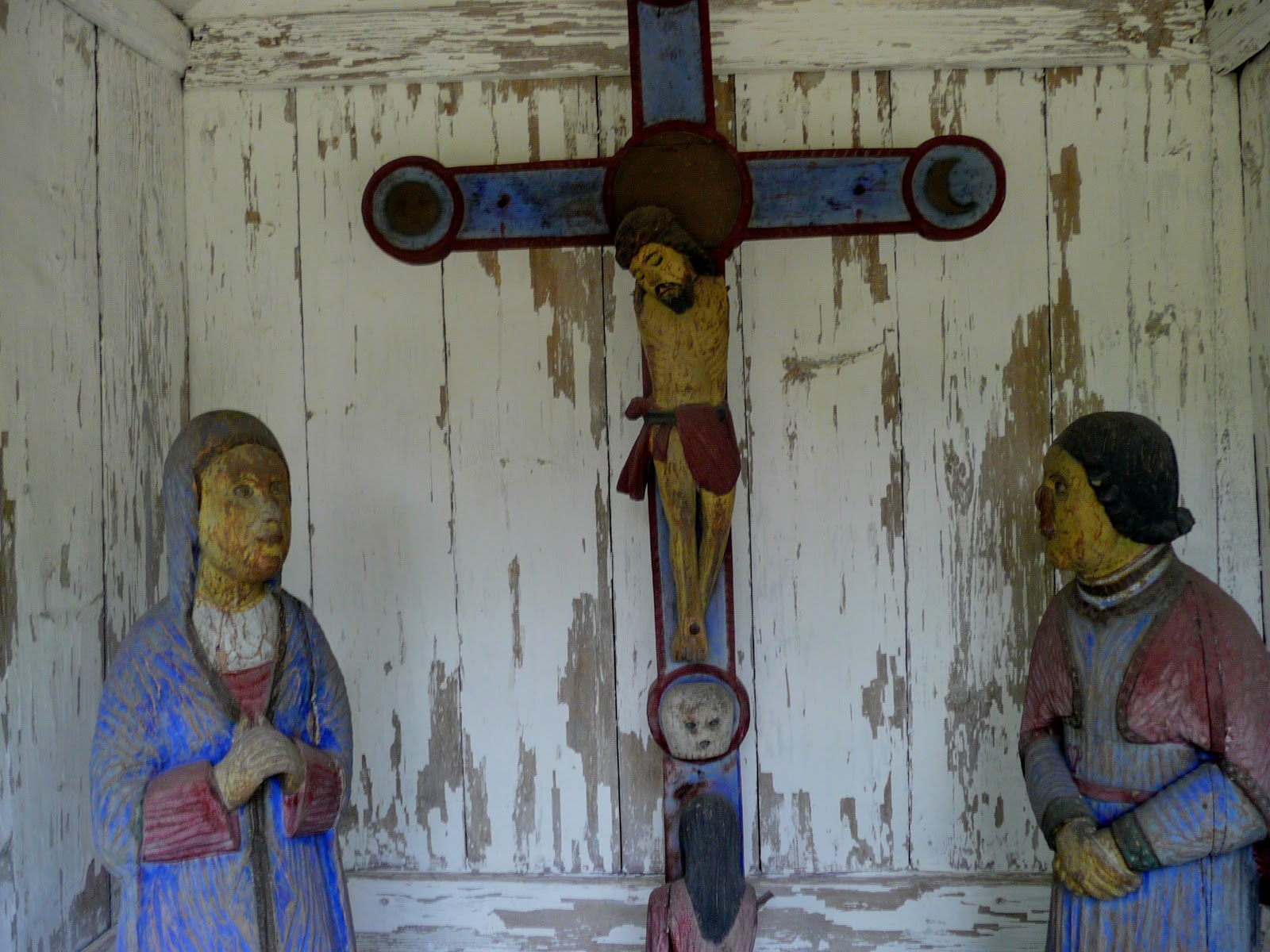
The chapel from the village of Novoselytsia, Mizhhiria district, dates from the first half of the 19th century. The shrine is made of four-sided beams and roofed with shingles. Inside the prayer house stand wooden sculptures with a crucifix, made by a folk craftsman.
The Velykyi Bereznyi district supplied wooden dwellings to Ukraine's museums three times. In the village of Husnyi, in the 19th century, they built long houses with high roofs. A single structure of spruce logs held the living quarters, a barn, a storeroom and a stable.
In the yard they dug a pit for storing potatoes, lined it with stone and covered it with a gabled roof.
 |
| Rupa. Husnyi village, Velykyi Bereznyi district |
In the 18th century a house with an adobe stove belonged to a poor Hutsul from the village of Yasinia, Rakhiv district.
In the same district, in the village of Stebnyi, a well-off owner had a grazhda homestead resembling a fortification. Within the enclosed yard there is a three-room dwelling, farm buildings, a byre and storerooms for keeping firewood and the harvest.
The indigenous Hungarian population in the village of Vyshkiv, Khust district, had houses on a stone foundation with four-sloped roofs. The owners decorated their wooden doors with carved symbols of the sun. The display features woven national costume, embroidered coverlets and bed linen, tableware and everyday objects.
The Romanian type of dwelling of the early 20th century is represented by a house from the village of Serednie Vodiane, Rakhiv district. The oak building was raised on a stone foundation.
The Khust district parted with a house from the village of Steblivka, of the early 19th century.
From the 18th century there survives a house of wooden planks from the village of Orikhovytsia, Uzhhorod district.
A house from the hamlet of Dovhyi, Irshava district, has been whitewashed the colour of sky blue.
On the narrow strips of mountainous terrain in the village of Rekity, Mizhhiria district, there was no room to build large houses. Elongated in shape, with a thatched roof — such were the Boyko houses of the 19th century.
In Zakarpattia, at the turn of the 19th and 20th centuries, water mills were built consisting of two halves — one for the living quarters, the other for the mechanism.
 |
| Water mill, Kolochava village |
The displays of the village homesteads are arranged to match their real appearance. Vegetables grow in the gardens, rabbits and hens live in the sheds, and bees in the hives.
 |
| Smithy. Dubove village, Tiachiv district |
A school from the village of
Synevyrska Poliana of the Mizhhiria district is an example of folk wooden architecture of the 19th century. Inside, lodging was set aside for the teacher, who was often the only one at a village school.
That same district, in 1975, supplied the museum with another establishment — a tavern, bar and coffee house of the 19th century, where in the evenings people gathered to sample strong drinks and rest after the working day. Part of the tavern's premises is taken up by an exhibition of the agricultural tools of Zakarpattia's labourers.
The museum stands in the historic centre of Uzhhorod at 33 Kapitulna Street. Opening hours: 09:00-17:00, closed on Tuesday.
 |
| House, 18th c. Tybava village, Svaliava district |
The exhibition attendants are friendly and attentive, and gladly tell you about the features of the wooden exhibits.
 |
| Uzhhorod. The Museum of Folk Architecture and Life. The street of a Zakarpattian village |
Coordinates: 48°37'12 "N 22°18'24"E




No comments:
Post a Comment
Leave your impression