 |
| The Samara River near the village of Dmytrivka, Dnipropetrovsk region |
According to local residents of the older generation, the Samara was a full-flowing river, its width varying between 50 and 70 metres. In recent years it has been growing shallow, becoming overgrown with silt and litter-choked reeds.

This fast-growing representative of the flora has closed off all approaches to the blue ribbon that is retreating literally before one's eyes, and soon the banks will close together in an impassable reed jungle.

The streams and springs that feed the Samara are growing shallow or drying up altogether. The stems of the plants rot and form a layer of silt that draws in the life-giving springs.

 |
| The Vovcha River, a tributary of the Samara |
A sharp, unpleasant smell of decay lingers near the water artery. The left tributary of the mighty Dnipro resembles a small, dirty streamlet.
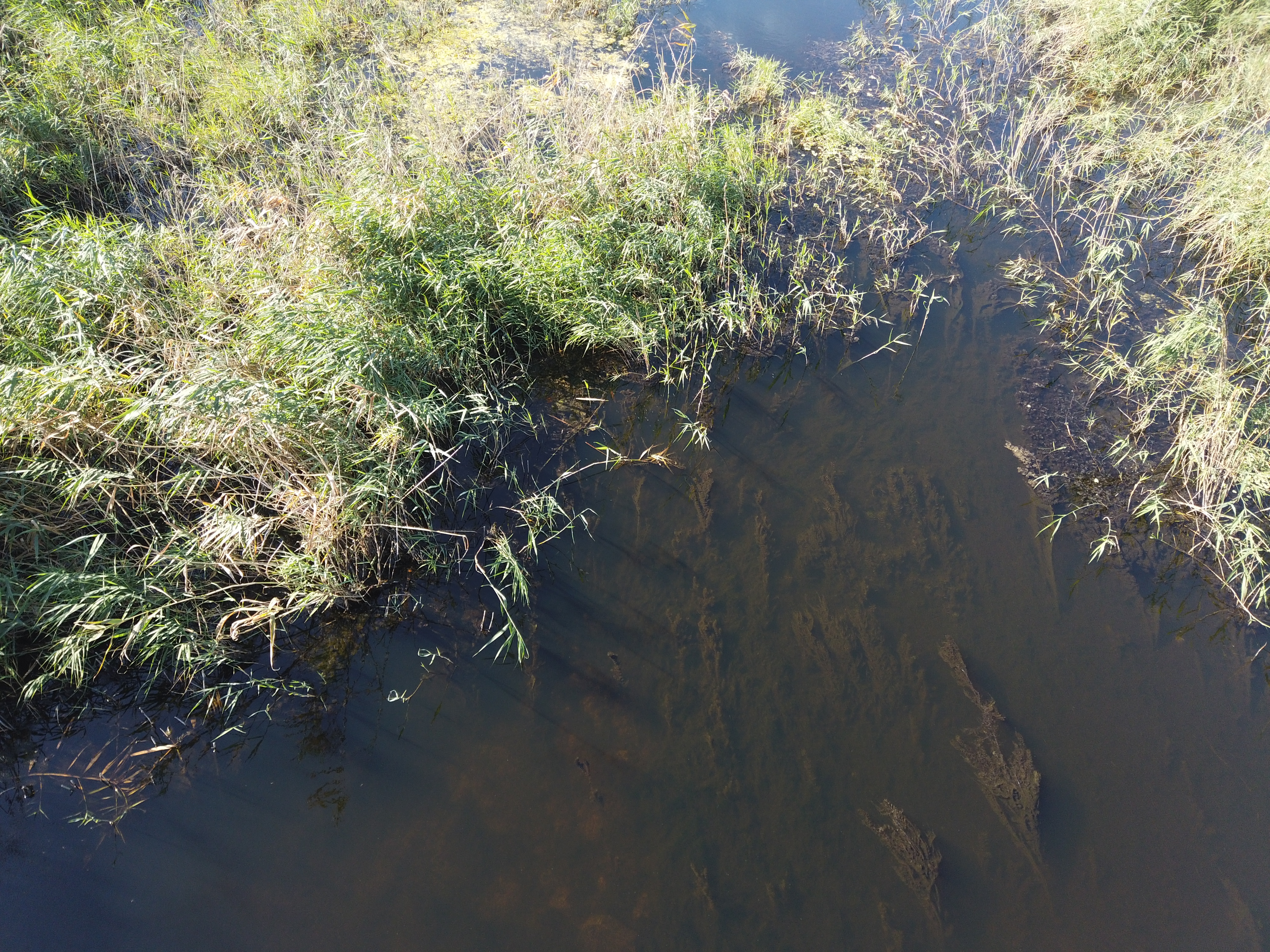
In places there is practically no current; the standing water warms up to 40 degrees. The rotting plants release hydrogen sulphide — a gas deadly to river fauna. The river fish have found themselves under threat of extinction — rudd, bream, pike, catfish, crucian carp, roach, and other useful inhabitants of the water bodies.


In the reed thickets, mosquitoes, midges, and disease-causing bacteria multiply. The Samara is polluted with petroleum products and harmful substances, and the water quality does not meet the norms for water bodies of cultural-domestic and fishery use. The discharge of underground mine waters from the coal enterprises of the Donetsk and Dnipropetrovsk regions has led to a high mineralisation of the water flow.

Numerous ponds and reservoirs have been created in the Samara's bed, and the weirs and unauthorised dams do the river the greatest harm. Through the hot summer the current in the dams dries up, and the river turns into a chain of vanishing water bodies and a marshy lowland.
Restoring the river's vital function is difficult, but it is necessary at least to remove the dams, so that the current is restored and the bed is filled with the most precious source of life.

The hydronym gave its name to the Samara St. Nicholas Hermitage Monastery,founded in the 17th century near Novomoskovsk.
This story is also available in Ukrainian: Річка Самара. Хто і що завдає шкоди притоці Дніпра?

No comments:
Post a Comment
Leave your impression