Deliatyn. The Gates of the Carpathians. The Very Best
Deliatyn in the Ivano-Frankivsk region is exactly the kind of place where travellers are ready to spend their precious tourist time usefully and with the utmost pleasure. The settlement stretches about 12 kilometres from north to south.
Deliatyn, Ivano-Frankivsk region. The Liubizhnia river
It is separated from the district centre of Nadvirna by 10 kilometres — the same distance as to the Carpathian mecca of Yaremche.
Deliatyn. Flags on the hill
The fantastic beauty of the Carpathian National Nature Park is but a stone's throw away, and the popular resorts of Mykulychyn, Vorokhta and Yablunytsia with Bukovel are not over the hills but right on the doorstep, for the Nadvirna district is one continuous agglomeration of Carpathian health resorts.
Deliatyn. The Prut river
The N 09 motorway of national significance passes through the settlement, aiding the socio-economic and territorial connection of Deliatyn with the neighbouring towns and villages.
Deliatyn. The N 09 motorway
There is a railway station where passenger and suburban trains stop. Deliatyn was once a town with a town hall, and its first documentary mention dates to 1400.
Through the southern half of the settlement flows the wilful Prut; in places this Carpathian blue artery grows shallow and bares its stony bed, and here and there it spills out across the meadows.
Deliatyn. The Prut river
Looking at the colourful landscapes from the heights of the peaks that shield Deliatyn from the cold winds, you can make out winding little streets with Hutsul dwellings framed by gardens and flower beds, among which rise the churches of various denominations.
Deliatyn. The Church of St John the Theologian
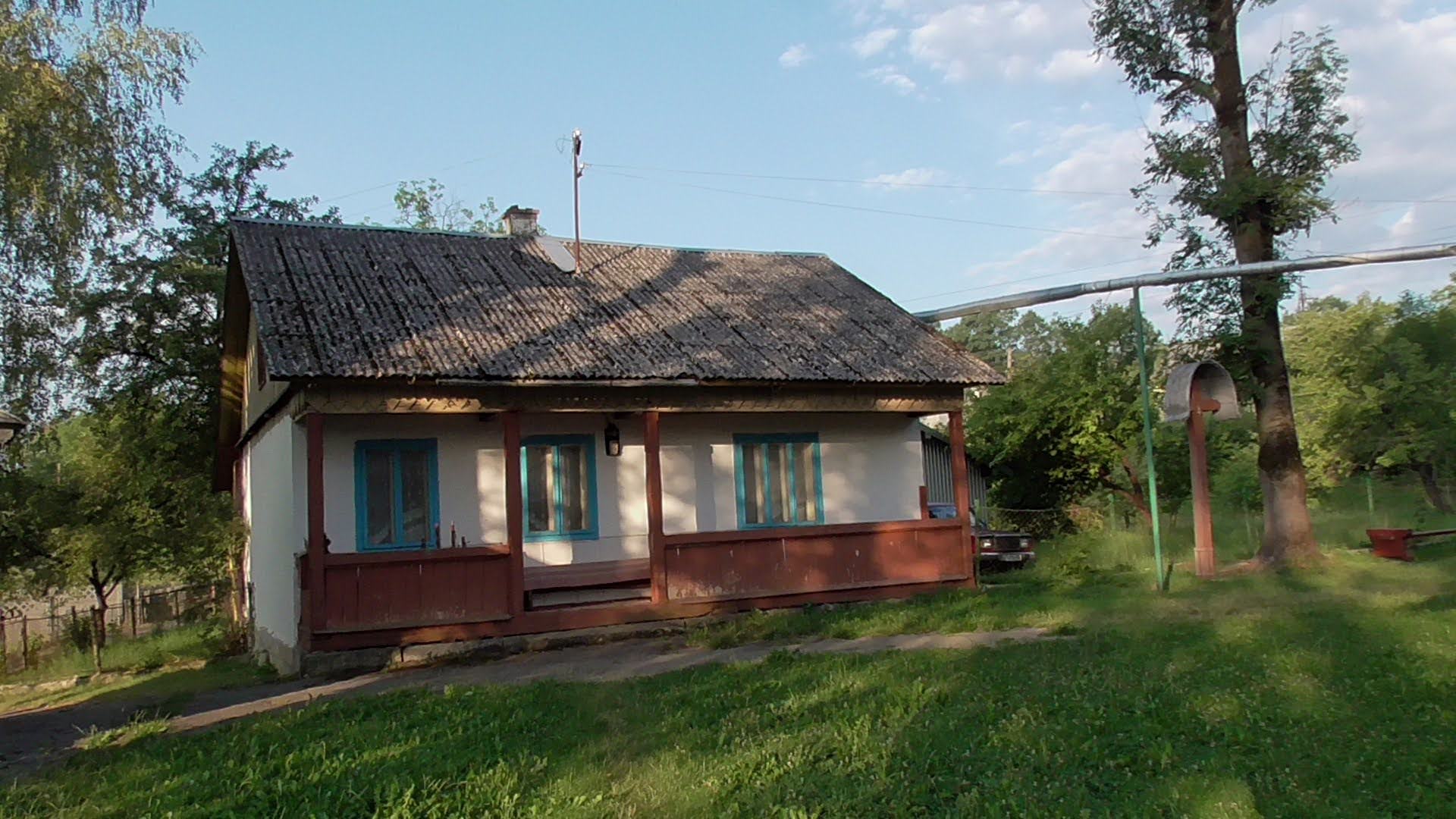
Deliatyn. Residential houses
The central street bears a rather uncommon name — in honour of the date of the adoption of the Declaration of Sovereignty of Ukraine on 16 July 1990. On this street stand the settlement council, the school, the People's Hall, shops, a pharmacy, the bus station, the stadium and residential houses.
Deliatyn. The centre of the settlement
Deliatyn. A residential house
Deliatyn. The school
Deliatyn. A residential house
Deliatyn. 16 July Street
Deliatyn. 16 July Street
Deliatyn. The former shop of the woodworking enterprise
Deliatyn. The People's Hall
The Church of St Francis was built in honour of the visit of Crown Prince Franz Joseph in 1851. According to legend, the statesman gilded the corners of the church with ducats and planted four trees brought from Vienna. This red-brick religious building, with a spire-tower 30 metres high, was built in the Romano-Gothic style. In Soviet times the church was turned into a timber warehouse, but it was saved thanks to the ethnographer and local historian M. M. Klapchuk, who opened a museum inside it. The Church of St Francis gained the protected status of an architectural monument of local significance, and in the years of independence the place of worship was returned to the faithful; after repairs, services resumed in the Ukrainian language.
Deliatyn. The Church of St Francis
The pines planted by the crown prince could not be preserved to our days; a few years ago the last pine died. New specimens have been planted in their place.
Deliatyn. Young saplings by the Church of St Francis
A memorial plaque in honour of M. M. Klapchuk, the creator of the history of the Deliatyn region, is mounted on the façade of the local school.
Deliatyn. Memorial plaque in honour of M. M. Klapchuk
Protected status of national significance is held by the Church of the Nativity of the Blessed Virgin Mary of 1620 — by other sources 1785, when it was moved from a forest tract. The ensemble is completed by the two-tier bell tower built in 1785, which has kept its authenticity for almost 250 years. This Hutsul wooden church has survived numerous repairs and rebuildings, which ended with the traditional covering in sheet metal and the installation of plastic windows.
Deliatyn. The Church of the Nativity of the Blessed Virgin Mary
In various parts of Deliatyn new brick churches are also being raised, more spacious and grander, while chapels and sculptures of the Mother of God can be seen on every street.
Deliatyn. The new church on 16 July Street
Deliatyn. The Church of the Holy Apostles Peter and Paul
Deliatyn. A chapel
A special place among the notable sights is held by the local history museum, housed in a villa that belonged to Mykola Lahodynskyi, a deputy of the Vienna parliament and the Galician diet. In the mansion, built in the Zakopane style, everyday and cultural objects, national dress, icons, paintings and photographic documents are on display. A separate room is devoted to the writer Marko Cheremshyna, who lived and worked in this house.
Deliatyn. The local history museum
Deliatyn. Museum exhibits
The national awakeners are immortalised in stone — a bust of Ivan Franko and a sculpture of a pensive Taras Shevchenko stand in a cosy little square.
Deliatyn. The bust of I. Ya. Franko
Deliatyn. The monument to T. H. Shevchenko
A statue of a deer adorns the children's playground in the green zone. Such park sculptures have survived in very small numbers, and they deserve a more attentive attitude.
Deliatyn. The deer sculpture
A telling example of respect and reverence for preserving cultural and historical heritage is the reconstruction of the Jewish cemetery in the north-western part of the settlement. Of the roughly 500 surviving matzevot, the oldest gravestone dates to 1893. Only a few years ago this neglected necropolis was a place of rubbish-dumping and vandalism. Benefactors put the resting place of Deliatyn's former Jewish citizens in order, cut down the wild undergrowth and put up a fence.
Deliatyn. The kirkut
It is worth visiting Deliatyn's natural landmarks.
Deliatyn. The Liubizhnianskyi Huk waterfall on the Liubizhnia river
Deliatyn. The 'Klyvskyi' nature reserve of national significance
Deliatyn. The 'Morske Oko' lake with its floating islet




No comments:
Post a Comment
Leave your impression