I had heard many times about Petrykivka painting, but I had never happened to see the decorative folk drawing, neither at exhibitions of applied art nor in souvenir shops.
So, when I was travelling from
Dnipro to
Kytaihorod via Petrykivka, I decided that on the way back I would definitely stop off in the famous village and learn something about the Ukrainian brand of folk art.
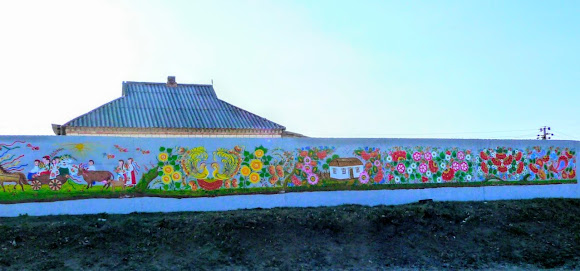
Driving along the R-52 highway, it is impossible not to notice a fence painted with bright colours.
 |
| A painted fence on the R-52 highway |
The grey concrete fence, 120 m long, has been transformed into a picturesque painting with scenes of village life, flowers, berries and birds, thanks to talented professional masters and the pupils of the Petrykivka Art School and specialised vocational school No. 79.
 |
| A painted fence on the R-52 highway |
Having adorned the roadway, the people of Petrykivka declared that it is right here, in the very centre of Ukraine, that a rare kind of art has been preserved — decorative-ornamental painting.
 |
| The "Petrykivka" Centre of Folk Art |
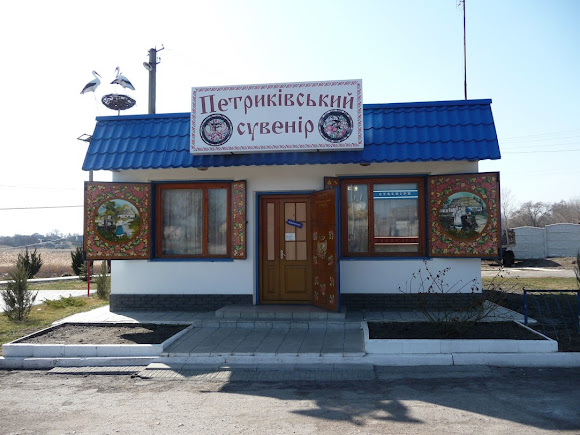
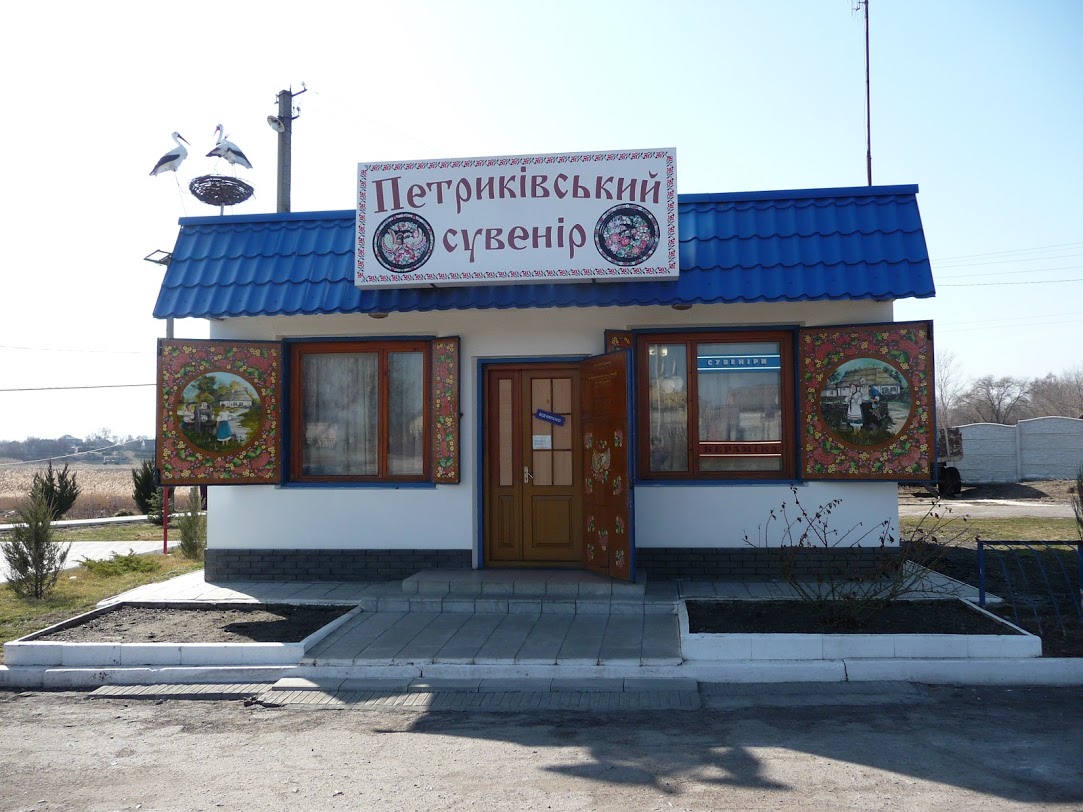
At my request, the driver stopped the bus by the little "Petrykivka Souvenir" shop, with which my acquaintance with Petrykivka and its marvel began. In the display windows, the ceramic and wooden articles with colourful drawings simply astonished the imagination, but the gloomy shop assistant would not let me photograph them.
 |
| Petrykivka. The "Petrykivka Souvenir" shop |
If it's not allowed, then it's not allowed, and I continued my excursion around the district centre.
 |
| Petrykivka. A park |
Petrykivka was founded by Zaporozhian Cossacks when, in 1772, they moved the winter camp of the Kish Otaman Petro Kalnyshevsky to the bank of the Chaplynka River, a tributary of the Oril.
 |
| Petrykivka. The Chaplynka River — a tributary of the Oril |
It is known that the last Kish Otaman of the Zaporozhian Sich built churches.
 |
| The monument to Petro Kalnyshevsky on the street named in his honour |
The Church of St George, erected on his initiative, has not survived, while another Cossack church, the Church of the Nativity of the Most Holy Mother of God, an architectural monument of national significance, is turning into ruins. The otaman was immortalised with a monument by the highway, but it is impossible to approach it, since drivers have a habit of parking right up against the pedestal.
 |
| The monument to Petro Kalnyshevsky by the highway |
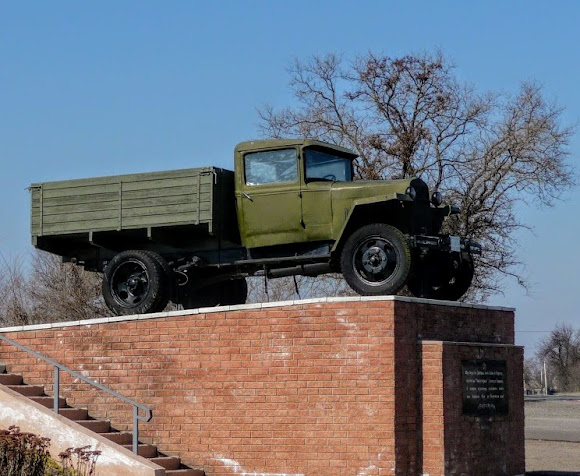
Another monument at a fork in the roads is dedicated to the military drivers who died during World War II.
 |
| Petrykivka. The monument to the military drivers |
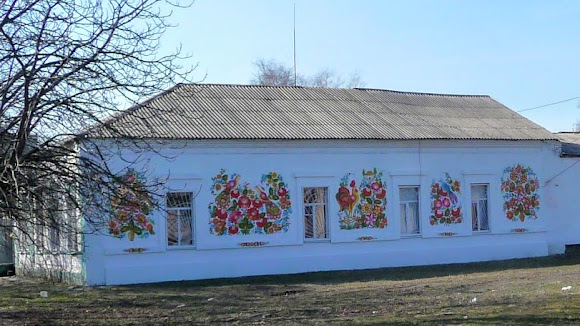
That the population of this urban-type settlement possesses a remarkable talent is visible to the naked eye.
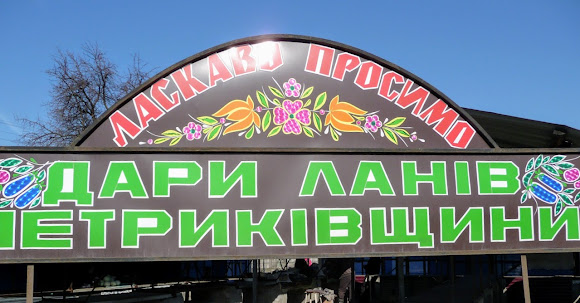
Many houses are painted with bright flowers and patterns.
 |
| Petrykivka. Buildings decorated with Petrykivka painting |
One would think it a standard kiosk or fence, of the kind found everywhere and in no way remarkable.
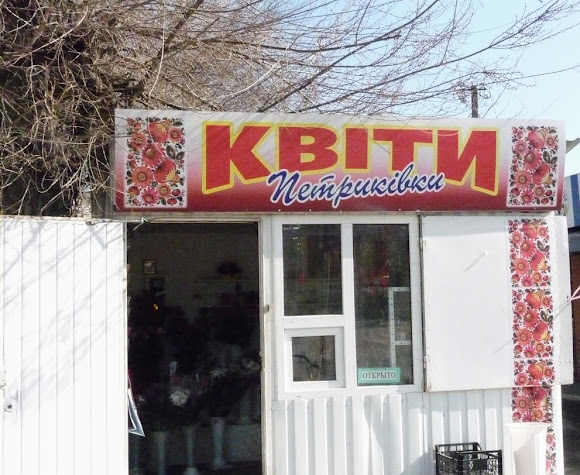 |
| Petrykivka. A kiosk decorated with Petrykivka painting |
But not in Petrykivka.
 |
| Petrykivka. A fence decorated with Petrykivka painting |
Here the residents, of whom there are only about 5 thousand, have their own non-trivial way of sensing the world.
 |
| A gazebo decorated with Petrykivka painting |
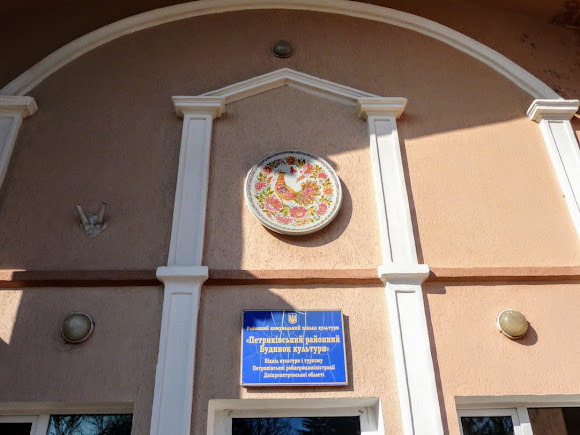
On the building of the district administration, hollyhocks have bloomed in a tender pink colour.
 |
| The building of the district state administration, decorated with Petrykivka painting |
To one of the most famous artists of ornamental painting, F. S. Panko, a memorial plaque has been placed on the facade of the executive committee.
 |
| The building of the settlement state administration, decorated with Petrykivka painting |
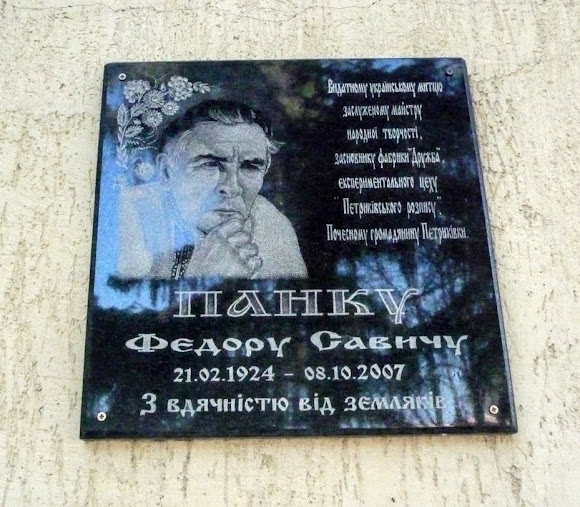 |
| The building of the settlement state administration. The memorial plaque to F. S. Panko |
At the "Petrykivka" Centre of Folk Art about 40 professionals of decorative painting work, 25 of whom are members of the Union of Artists of Ukraine, but I managed to get acquainted with only one of them.
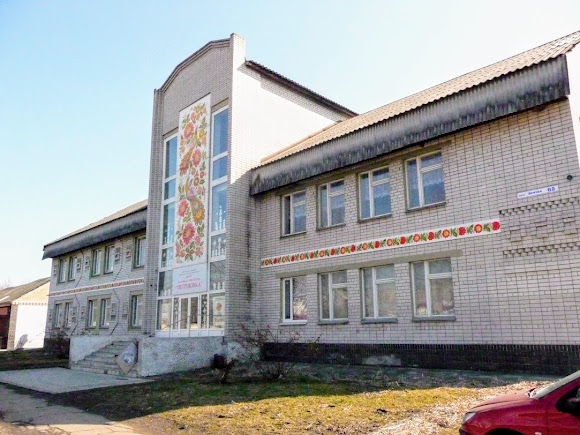 |
| Petrykivka. The "Petrykivka" Centre of Folk Art |
9 March is the day after the holiday, and the women workers of the centre had an extra day off. But Mykola Vasyliovych Deka was working alone in the workshop, because his hands are not used to resting for several days in a row.
 |
| The "Petrykivka" Centre of Folk Art. M. V. Deka — an artist of Petrykivka painting |
The master's 2 sons, 2 daughters and grandson are also artists. There are quite a few such dynasties in Petrykivka, where the craft and the beloved occupation pass from generation to generation.
 |
| The "Petrykivka" Centre of Folk Art. M. V. Deka — an artist of Petrykivka painting |
The origin of the painting cannot be determined, but the clay-daubed cottages in the Cossack villages of the Dnipro region were already being painted back in the 18th century.
In spring, every housewife tried to decorate her dwelling in some special way.
Not only the outer walls were painted, but also the interior inside the premises.
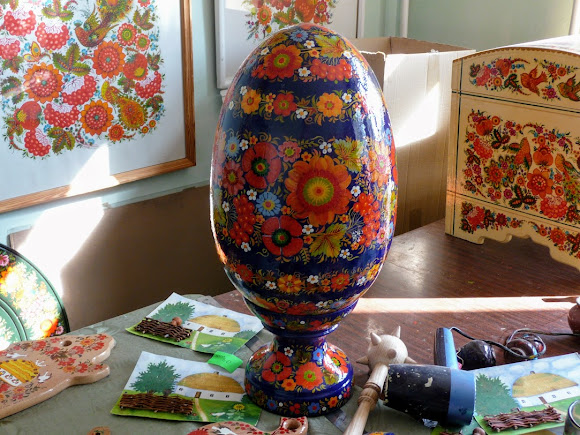
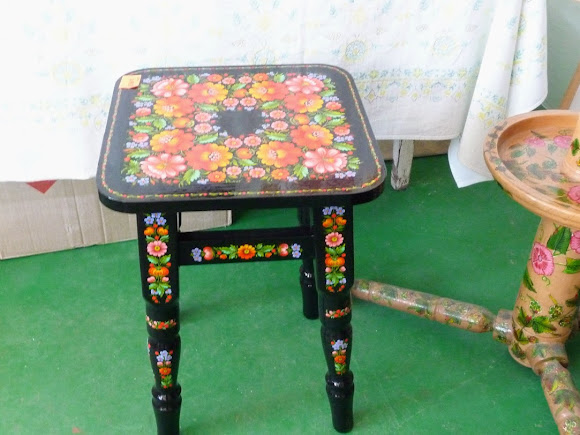
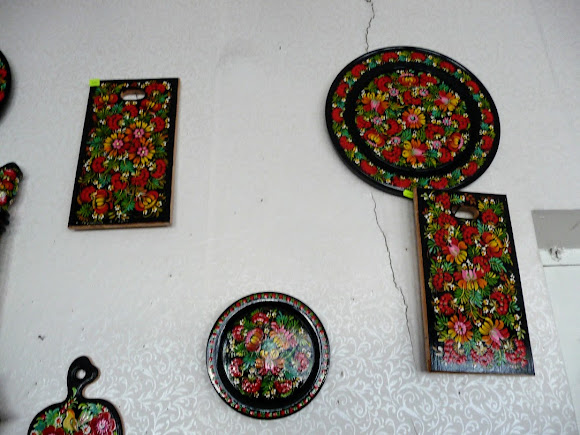
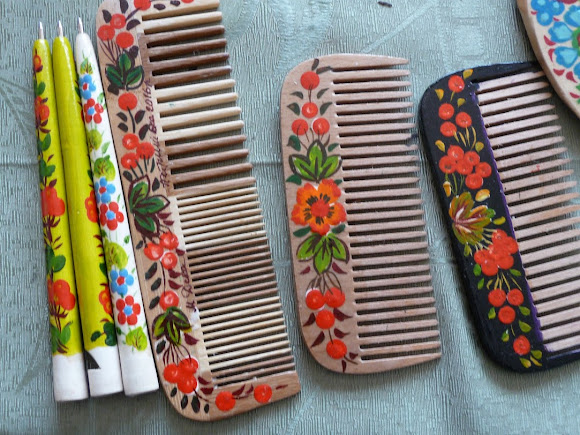
Later, traditions of wall painting took shape, and the design was applied to household objects, wedding chests, dishes, carts, musical instruments.
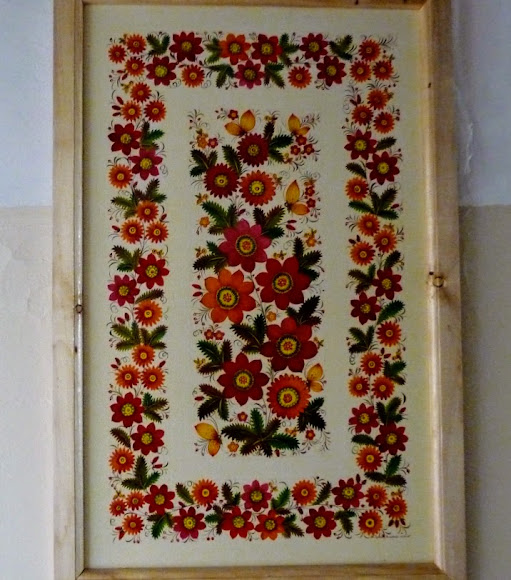
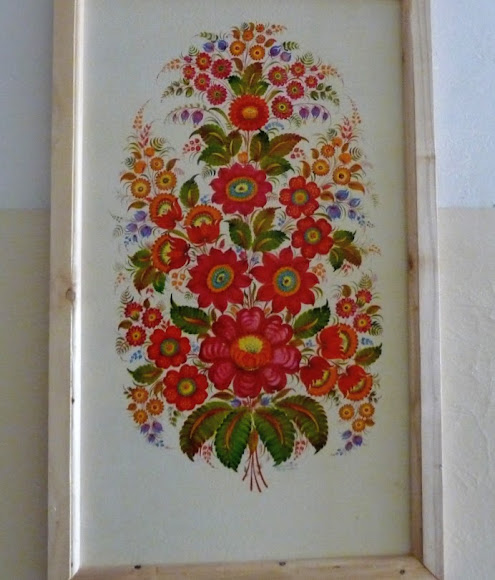
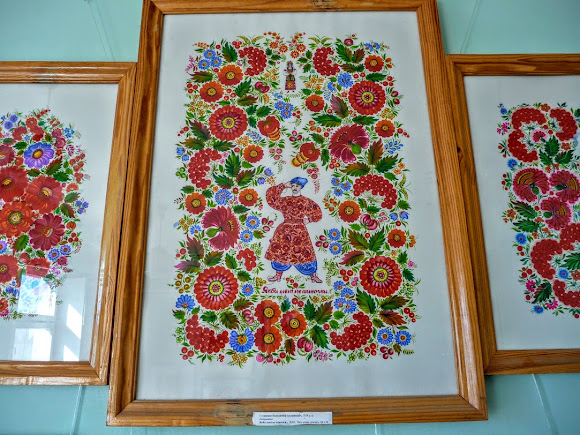
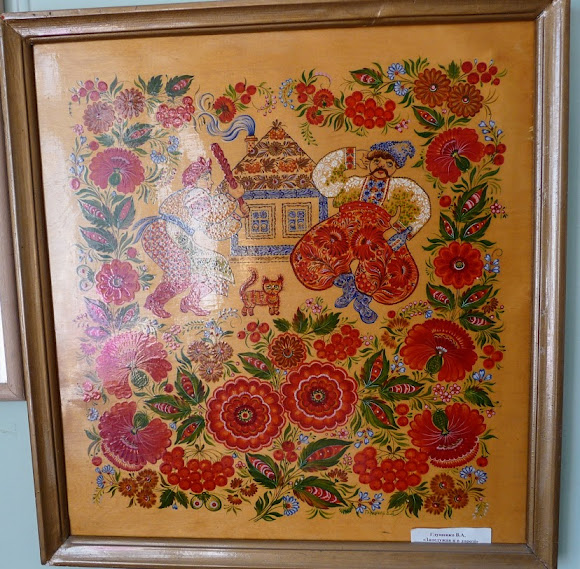
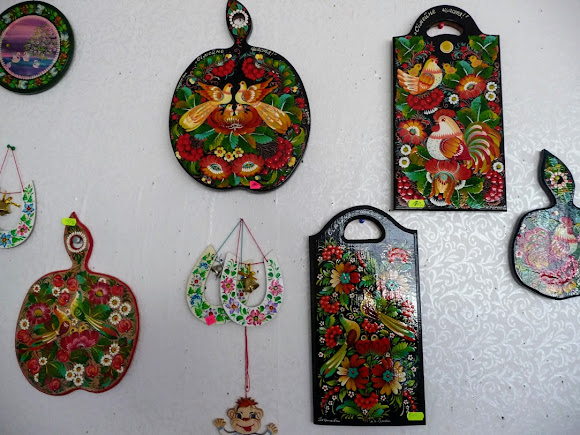
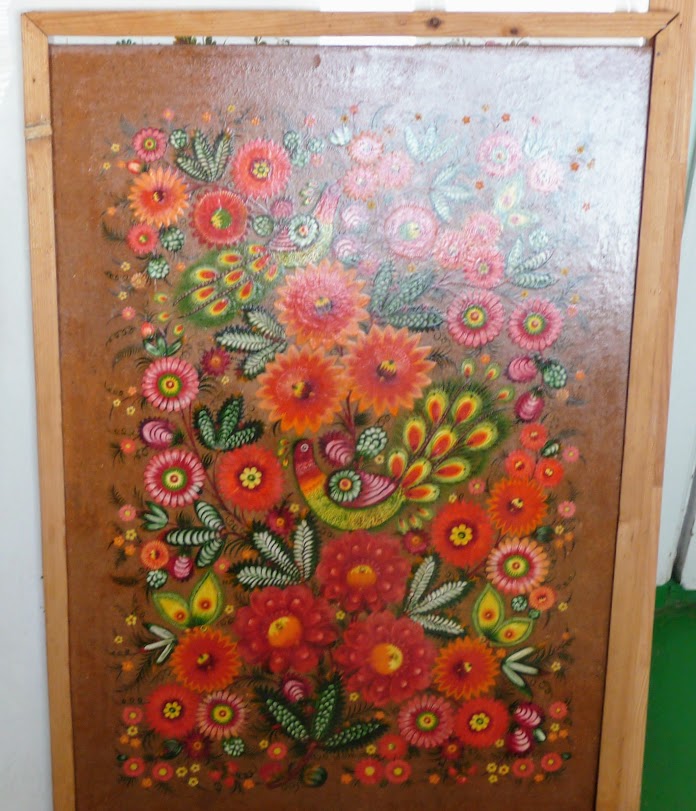
The peculiarity of Petrykivka painting is that the drawings of flowers have an unfolded depiction on the plane.
Each picture is a separate story and a state of the soul.
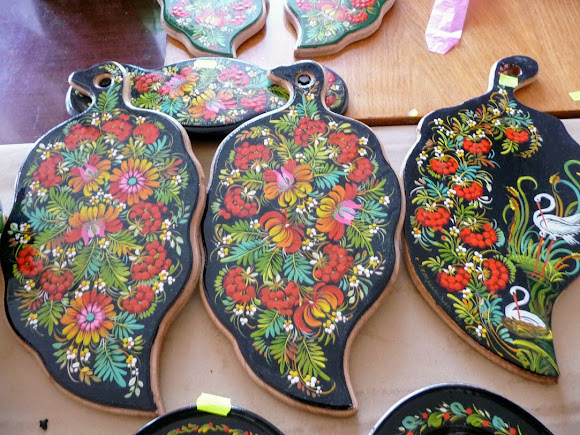
On a green, black and white background, a fantastical riot of colours of unseen beauty blossoms.
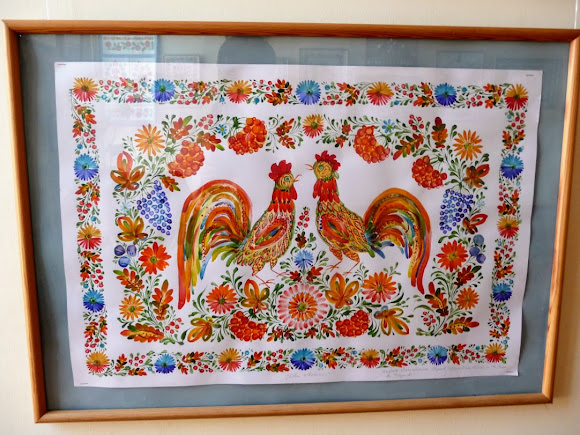
One can make out motifs from the real local vegetation — garden and field flowers, guelder rose, grapes, wild strawberry, sunflower.
Birds are drawn face-on.
Humour, romance and lyricism are often present.
The painting technique differs from other similar ones.
The artists paint "away from themselves", beginning with a thin line and gradually widening it.
The masterpieces of applied art are painted with brushes of cat hair, with little sticks, or simply with the fingers.
The masters of the brush have their own style, while at the same time keeping to the traditions that have been worked out.
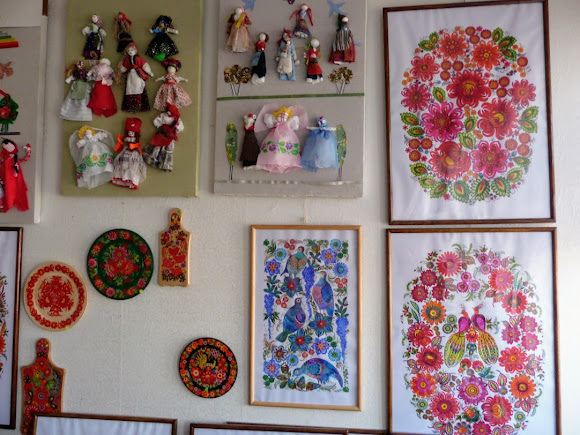
The artists work on paper, fabrics, a wooden base, glass, ceramics and metal, constantly finding something new and exclusive.
After World War II, products with Petrykivka painting were made at the local "Druzhba" factory, which had a staff of about 500 workers.
The range was varied.
The production of souvenirs, plates, vases and kitchen sets was put on a conveyor belt and exported to 20 countries of the world.
Petrykivka painting was used in the textile and printing industries, adorned pavilions at international exhibitions and was a calling card of Ukraine.
It all collapsed in the era of radical metamorphoses.
In the 1990s, forms of ownership changed, tariffs for energy carriers rose, wage arrears grew. The factory's new owners drove the enterprise to bankruptcy.
Expensive lathes and woodworking machines, presses and other equipment were, in a barbaric manner, sawn up for scrap metal.
Now the working conditions for the artists leave much to be desired.
The premises are small and cramped. Finished original works are laid out right on the work tables. The materials, paints and brushes cost a great deal.
Undoubtedly, a creative person needs a more respectful attitude towards themselves on the part of the authorities and society.
It is gladdening that followers of the decorative art are growing up on the Petrykivka land.
 |
| Petrykivka. The Art School |
Talented children learn the basics of drawing and acquire the skills of their future profession at the art school under brilliant teachers.
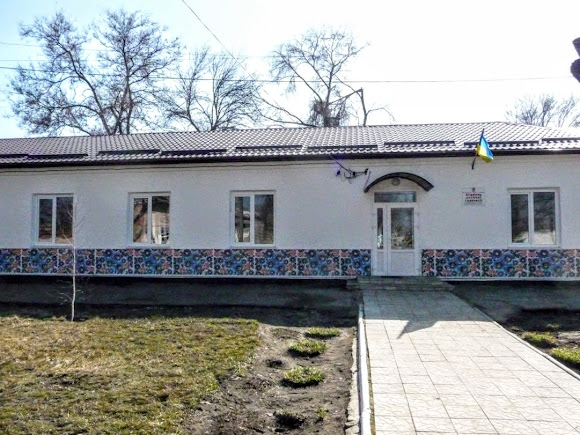 |
| Petrykivka. The Art School |
When you look at the drawings of the beginner craftspeople, you understand that the Masters of Petrykivka have someone to pass their experience on to.
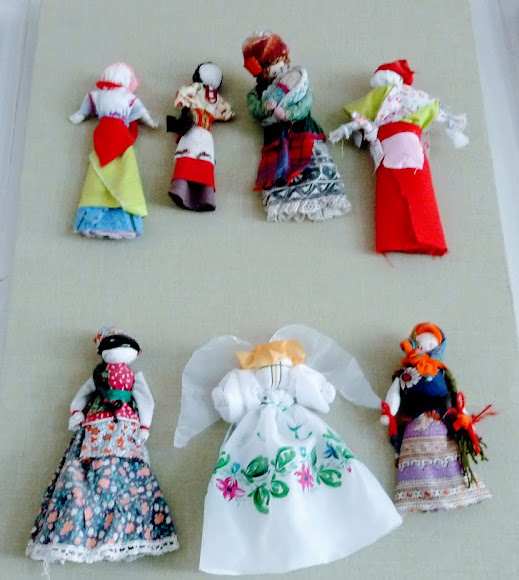
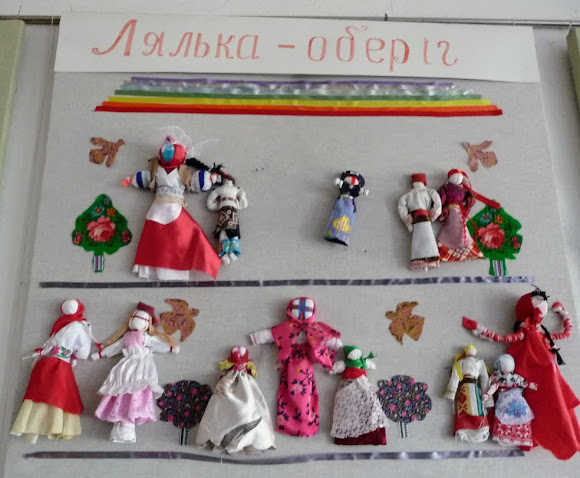
At the centre there is a museum of applied art, where unique examples of the Petrykivka marvel are kept. Here you can buy various articles straight from the hands of the artist.
Many children come on excursions to the centre of folk art, and inexpensive souvenirs are specially made for them.
Petrykivka painting is included in the List of Intangible Masterpieces of the Cultural Heritage of Humanity. It is important that we manage to preserve, first and foremost for ourselves, this spiritual and creative heritage.
You can get to Petrykivka from the bus station of
Dnipro by the Dnipro-Tsarychanka bus to Petrykivka. The buses depart quite often, every 30 minutes.
Coordinates of the "Petrykivka" Centre of Folk Art:
48°42’57"N 34°37’45"E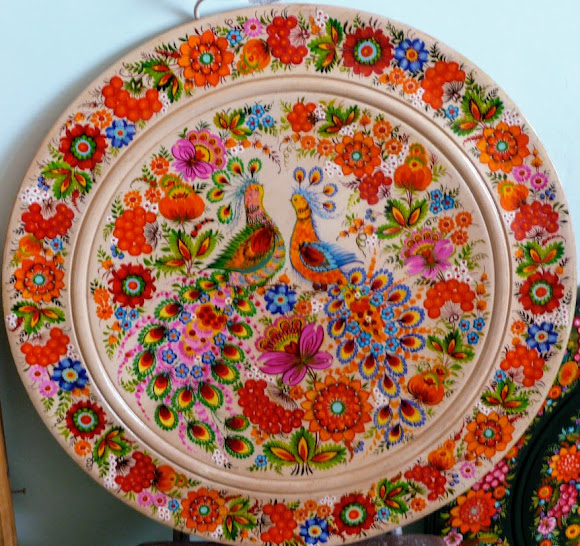


























No comments:
Post a Comment
Leave your impression