The Oleshky Sands. Through Forests, Hills and Dunes
Do you want to escape the bustle of the transient world and be alone with nature? Tired of contemplating the urban grimaces of weary cities and longing for romance, relaxation, inspiration? This way, please!
The "Oleshky Sands" National Nature Park
For this there is no need to cover huge distances and spend considerable sums on flights. The largest desert in Europe lies practically at its centre.
The 30 kilometres from Kherson and 15 kilometres from the district centre of Oleshky are covered by road and rail transport in 30 minutes.
I reached the village of Radensk by car. By the forestry office I had an appointment with a guide from the "Radenske" Nature Protection Research Division of the "Oleshky Sands" National Park.
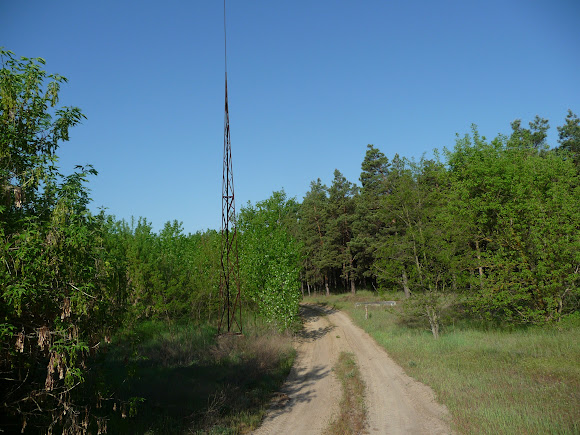
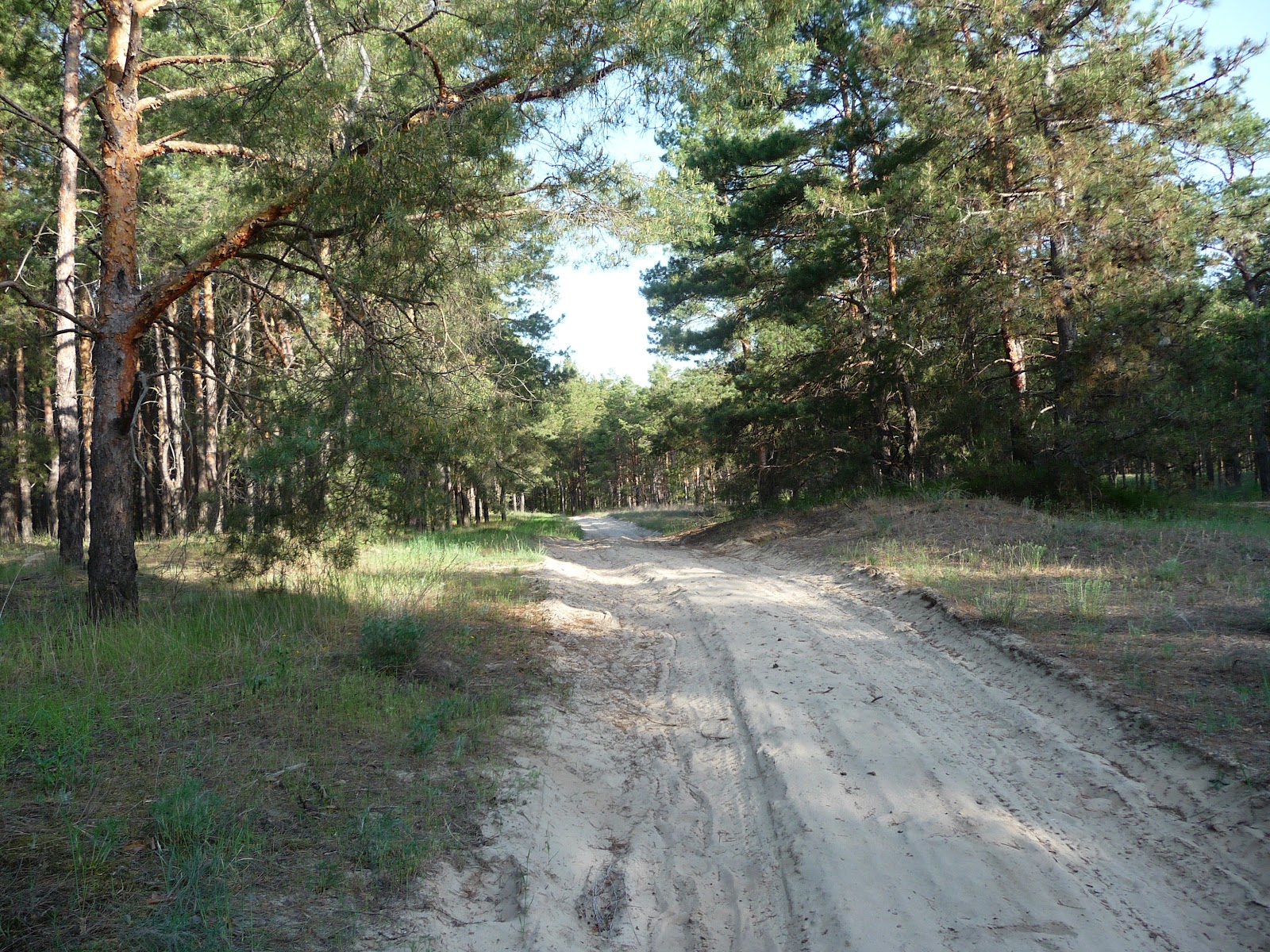
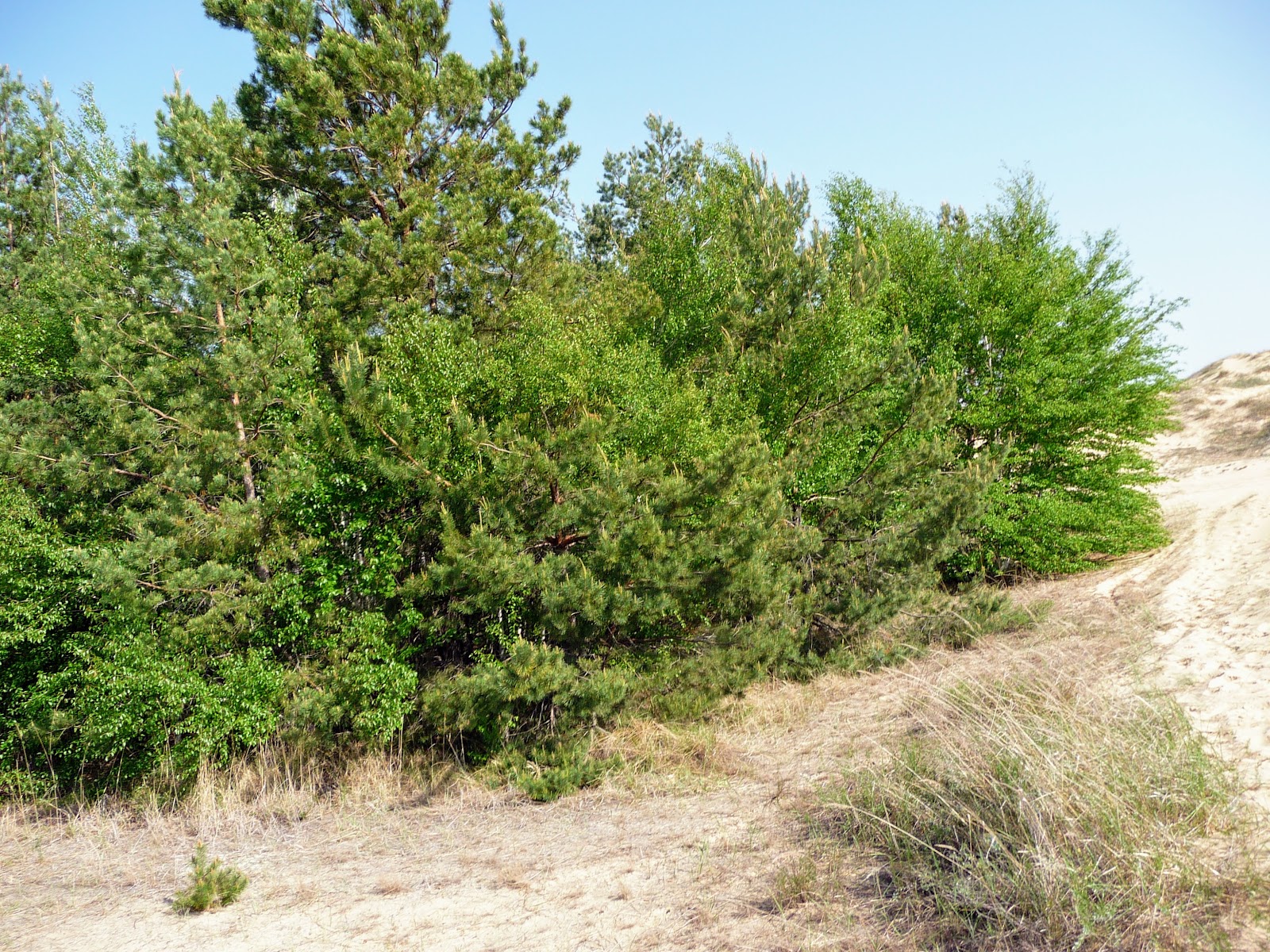
While waiting for Viktoriia and not wasting time, I headed off to stroll through the Oleshky Forest, which protects the surrounding villages from the advance of the sands.
The sandy massif, covering more than 20 thousand hectares, is surrounded by a dense ring of green plantations.
This is what the neighbourhood of the two zones looks like from a bird's-eye view in Google images.
After the poisoned atmosphere of industrial regions, breathing the young leaves and the air saturated with phytoncides is the best means of boosting immunity and strengthening one's health.
Man is a creation of nature, and an unknown force draws us to feel unity with it as with our native home.
Humanity must take care of its native home, and nature cannot be merely a supplier of timber and raw materials.
Unfortunately, the temple of nature is often destroyed by fires that have started through carelessness or as a result of arson.
It turns out that the green adornment of the Earth needs to be protected not from fire but from man. I read somewhere that if trees produced Wi-Fi, there would be no free space left on Earth. Yet we often forget that trees are a source of oxygen.
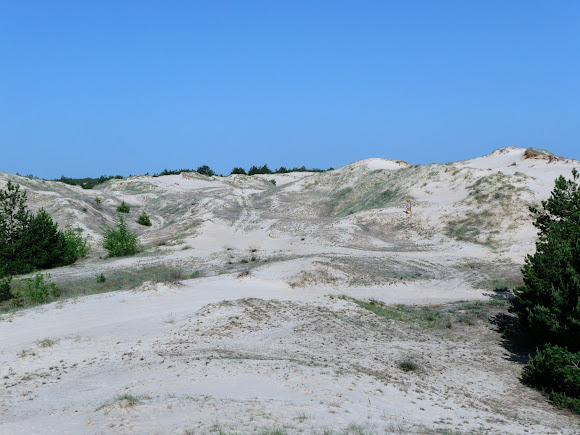
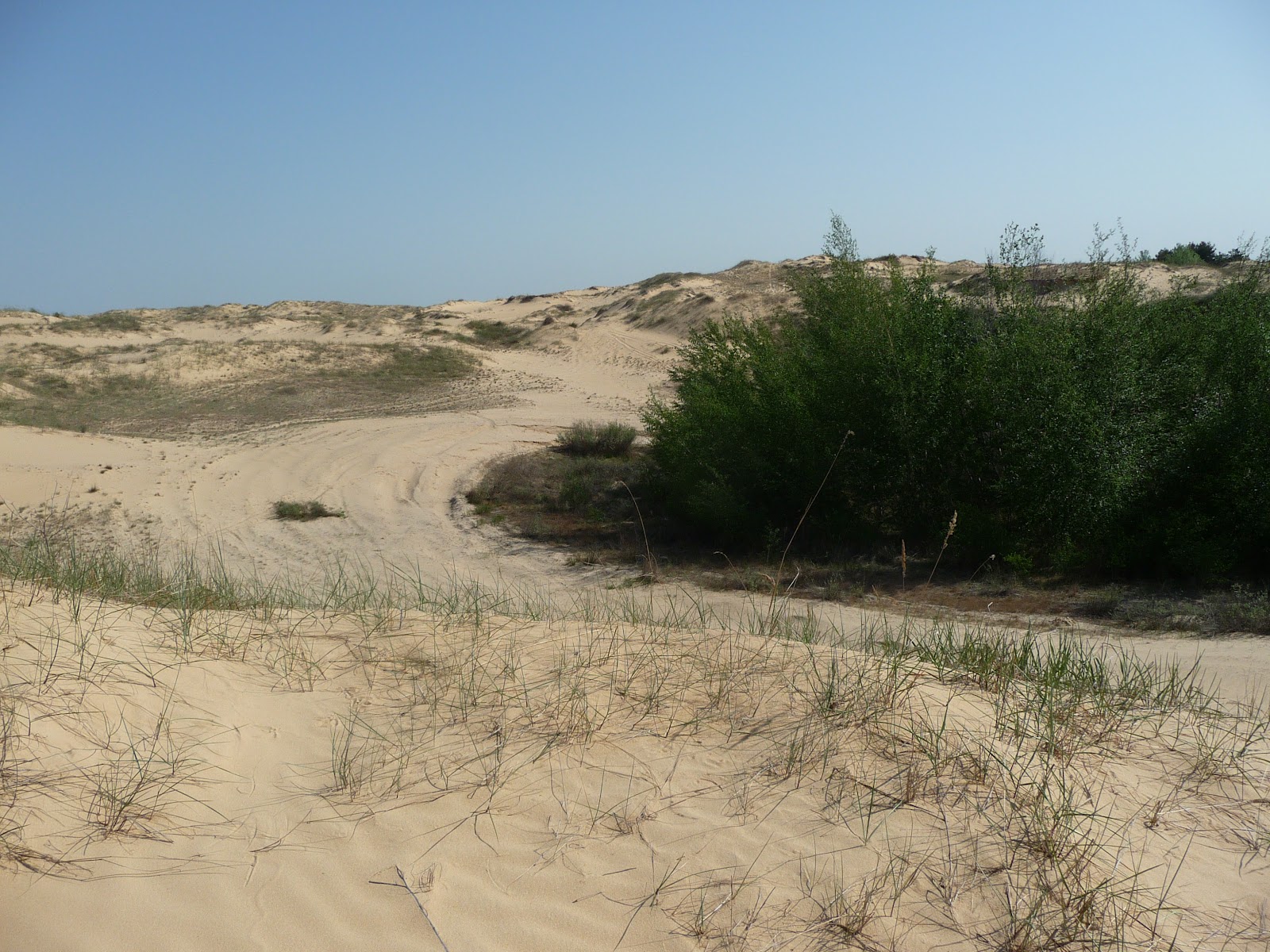
The desert's green necklace of pines, acacias and birches gives way to sandy dunes, a journey through which I continued with my guide Viktoriia, while the instructor Oleksandr gave us a lift by car closer to the unusual landscapes.
The first impression of what I saw was delight and astonishment: am I really in a desert?
One wants to call these vast expanses of sand a desert, but that would be incorrect.
A comparison of the average annual temperature and the amount of precipitation in the Oleshky Sands with those in the Sahara or the Gobi does not allow the Ukrainian registan to be considered a true desert.
It is rather a dry steppe.
But in summer the surface temperature reaches 75 degrees.
By these indicators our sandy expanses do not differ much from the climate of the Kalahari in Southern Africa.
Back in the Ice Age, the bed of the Dnipro shifted as a result of geological changes and the movement of glaciers.
The deposited sands were rich in fertile silt and covered with a blanket of vegetation.
Man's insatiable desire to use the gifts of nature solely for his own benefit led to radical metamorphoses.
In the 18th and 19th centuries sheep farming flourished in these parts.
The founder of the Askania-Nova reserve, Baron Falz-Fein, owned a million-strong herd of this cloven-hoofed ruminant animal.
The bald patch on the floodplain terraces formed thanks to the appetite of the insidious little sheep, and their hooves broke the roots of the plants and thereby destroyed them.
The freed sands, under the influence of the wind, began to move.
In the 19th century, work began to secure the sands by planting forest belts.
The impact of wind and water erosion constantly continues to shape the relief.
The dunes here reach a height of 5 metres, and climbing them is not easy.
You take a step forward but slide back, and you try again, applying some effort.
And you can descend from the dunes quickly, setting off a sand avalanche behind you, or slowly, sinking into the mass of the massif and thereby exploring how loose it is.
The evolution of the sands' relief did not do without the direct intervention of man's thoughtless activity.
In order to make some use of the space, in Soviet times someone had the idea of setting up a range here for training the servicemen of the Warsaw Pact countries in bombing.
No other place was found for the states friendly to the USSR to hone their militaristic skills.
The impact of the many-tonne shells created craters.
Buried shells may still lie beneath the veil of sand, and numerous people with metal detectors have repeatedly been blown up by exploding munitions.
The wind lifts the veil, and the remains of reinforced-concrete targets for bombing with optical and radar sighting are revealed to the gaze.
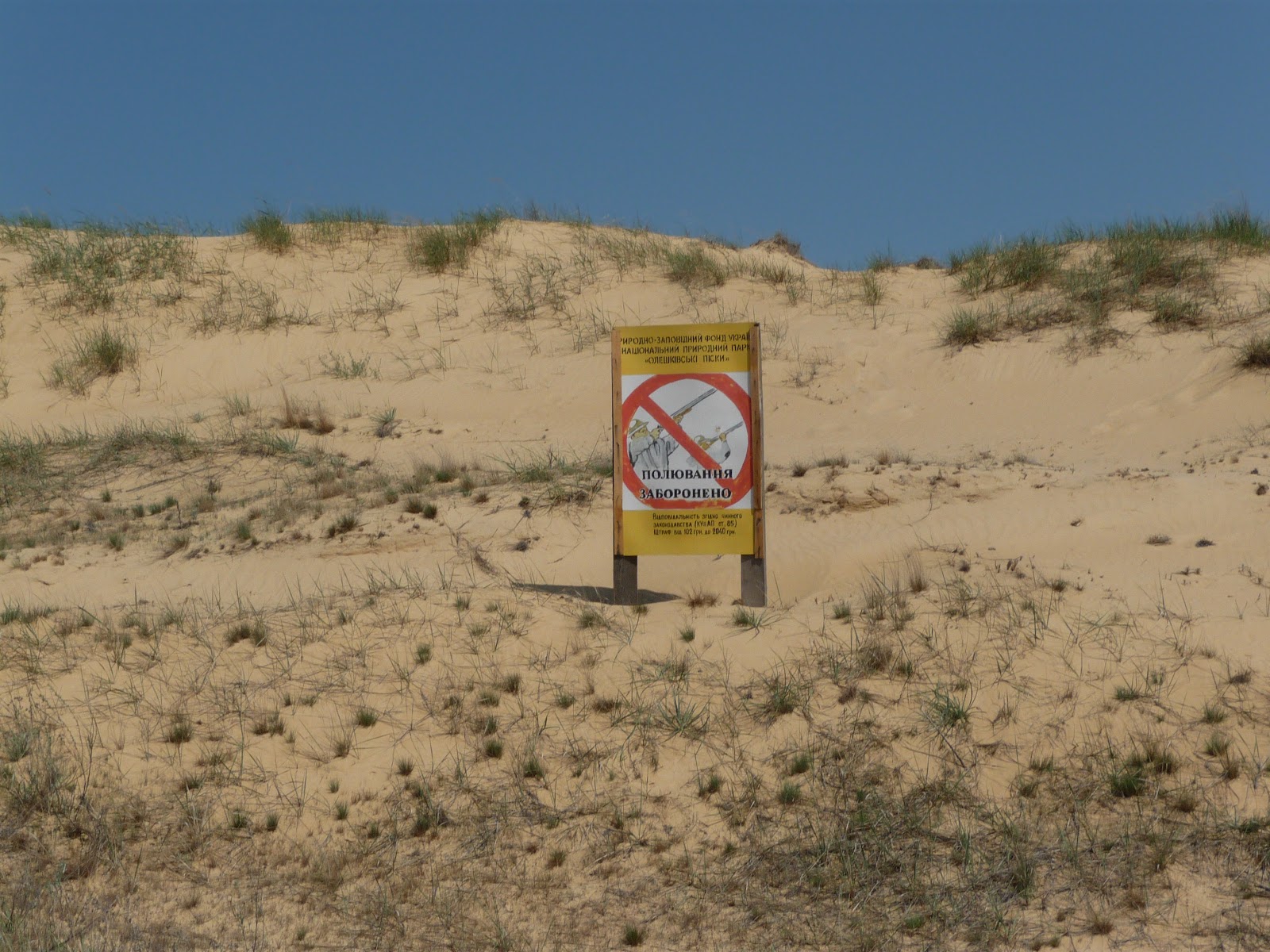
The territory of the former military range became part of the "Oleshky Sands" National Nature Park, created in 2010.
The area of the park is a little over 8 thousand hectares.
The desert has its own particulars of hiking, and they differ from hiking in the mountains.
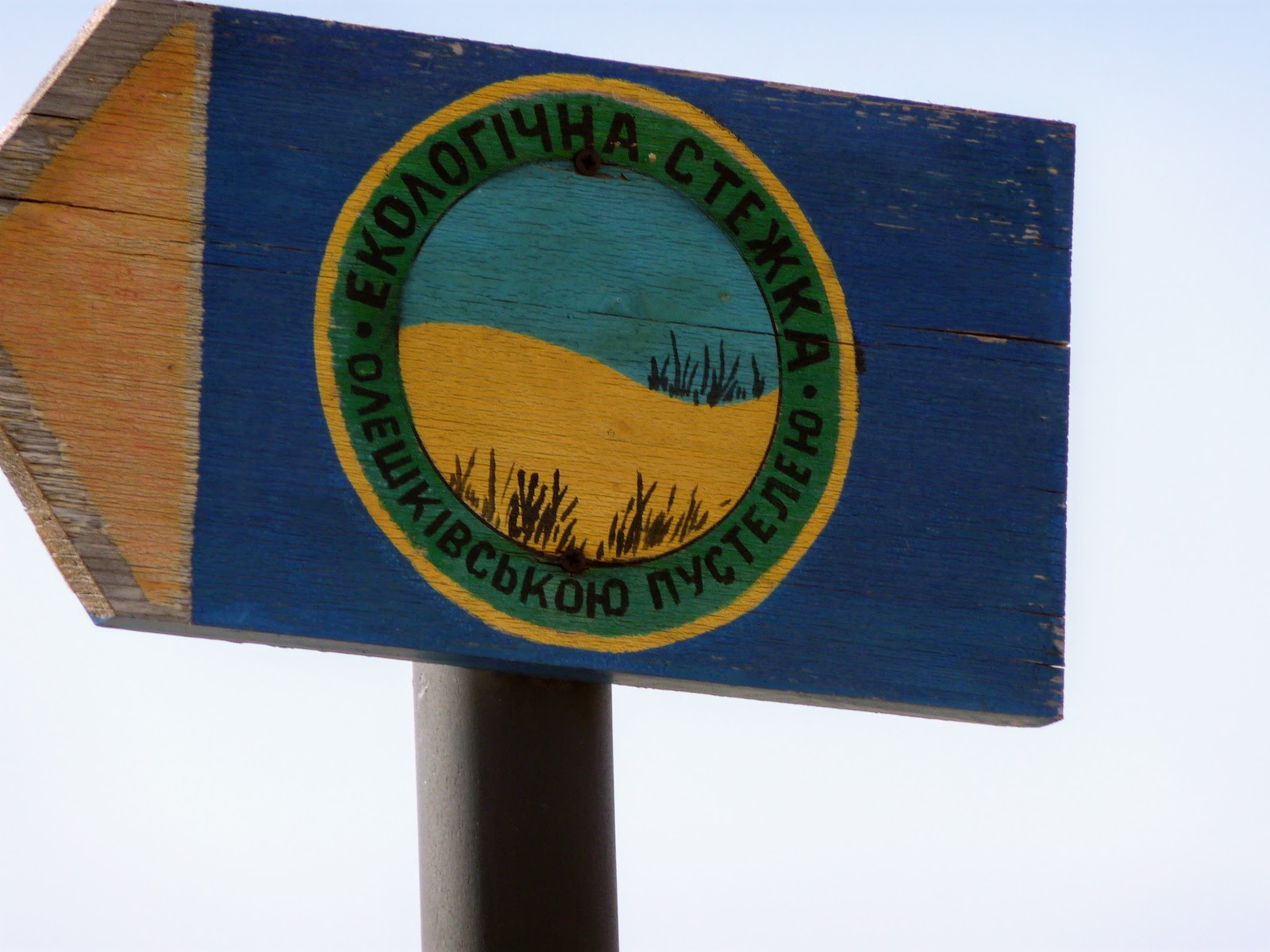
The arrow of a signpost, set up on a rise, shows the location of the next marker.
The dunes and sand hills have the local name kuchuhury — a heap, a hill.
Among them one comes across green oases.
The Scots and Crimean pines and the Dnieper birch have formed places of rest for travellers.
A wild beauty of an apple tree has recently finished blossoming.
A dug well testifies to the shallow occurrence of groundwater, which feeds moisture to these life-saving islands of shelter from the heat.
And a small lake does not dry up completely even in the heat.
It is known that at a depth of 400 m there is an underground lake, which serves to restrain the growth of the desert.
Kind people took care of a place for picnics, putting up a little table and a bench.
And we too set about a small snack. With dried fruit, candied fruit, nuts and oriental sweets we fortified our bodies and moved on.
The cover of the slopes of the sandy hills looks very much like a light sea breeze,
sometimes like a storm.
Real hurricanes occur here too.
Small plants also play a part in restraining the movement of the sands and serve as food for the animals and birds that inhabit the Oleshky Sands.
The most widespread are grey hair-grass, crested wheatgrass, broom, thyme and others.
The flowers of these plants mostly have a yellow tint — the colour of the sun and the sand.
The inhabitants of the National Park are hares, jerboas, the mole-rat, foxes, wolves, roe deer, wild boar, lizards, vipers, ratsnakes, grass snakes, spiders, pheasants and other birds.
Many species are listed in the Red Book of Ukraine.
Traces of the desert's natives are visible everywhere, but in the heat they hide in their burrows.
By midday the air temperature grows scorching, and one could refresh oneself in this picturesque lake among the dunes.
But Oleksandr said that it was right here that a ratsnake had been spotted, and the desire to check the temperature of the water's surface with my hand somehow instantly vanished.
The inner feeling during the hike is like the moment when you swim out into the sea far from the shore but want to swim even further and look at the unknown distances, and also to test yourself and your strength.
You feel free of problems, instructions and dress codes, when it does not matter what your hairstyle is or what your make-up is. Contemplating the beauty of the surrounding nature, you feel yourself a part of it.
Nature, allowing us to enjoy its creation and revealing some of its secrets, reminds us that in the past we were flowers, birds, water, earth.
From the delight one wants to sing and dance, and the desert is precisely the place for unlocking all creative abilities.
Poets, artists, photographers, journalists — come to the desert for inspiration and material for your work.
I thank my guides Oleksandr and Viktoriia for the interesting and educational excursion.
The "Oleshky Sands" National Nature Park. The instructor Viktoriia Yefremova
The "Radenske" Nature Protection Research Division is located in the village of Radensk, Oleshky district, Kherson region. Coordinates: 46°34’5"N 32°54’45"E
Instructors of the "Radenske" Nature Protection Research Division of the "Oleshky Sands" National Park in the costume of the Scythians who inhabited this area
You can get there from Kherson by bus or suburban train to Radenske station. The tourists gather by the "Zolotyi Fazan" hotel, where you can also stay overnight if needed.
Radensk. The "Zolotyi Fazan" hotel
Those wishing to sign up for an excursion need to do so 5-7 days in advance by telephone:
+380 99 972 89 85 — Viktoriia.
















No comments:
Post a Comment
Leave your impression