In the centre of Ukraine, in the Dnipropetrovsk region, in the village of Kytaihorod, three monuments of history and architecture of national significance from the middle of the 18th century have survived to our days unchanged, all at once.
 |
| Kytaihorod. The temple complex, 18th c. |
From Dnipro one needs to travel about 60 kilometres to the north-west. This locality, situated along the bed of the Oril River, in the 17th and 18th centuries lay on the border of the lands of the Hetmanate and the Zaporozhian Host. Speaking of our black soil, along the way I saw only 2 or 3 fields with winter crops; the others remained unploughed after the sunflower harvest.
 |
| Dnipropetrovsk region, Tsarychanka district. An unploughed field |
The village in the Tsarychanka district, with a population of about 2,500 people, is a most ordinary one.
 |
| Kytaihorod. The central street |
As everywhere, there are shops, a club, a war memorial.
 |
| Kytaihorod. The central street. The House of Culture |
 |
| Kytaihorod. The central street. The war memorial |
And the unusual name was formed in the 17th century, when, during enemy invasions, the population hid behind an oak palisade. To signal the danger, they hung out a red Cossack scroll — the kytaika. Hence the name of the town — Kytaihorod.
 |
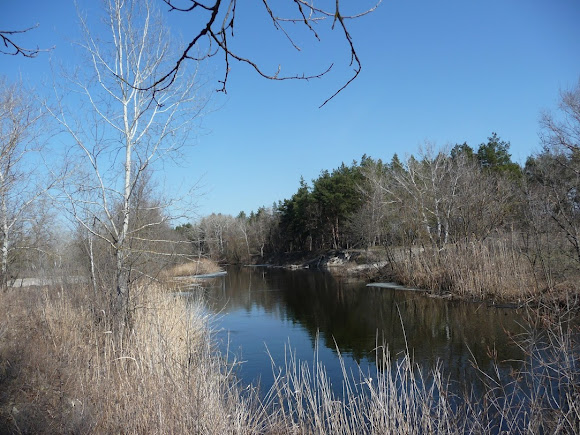
| Kytaihorod. The little wood by the temple complex and the Oril River |
I heard the second version from a local resident, Nina Ivanivna. On Mount Kalytva, 145 metres above sea level, another Cossack camp was located. And when a messenger was sent to the other camp, they would say, "Katai v horod" ("Roll into town"). This expression is still used today.
 |
| Kytaihorod. The little wood by the temple complex and the Oril River |
In the 1730s, to guard against Tatar raids, the 400-kilometre Ukrainian Defensive Line was built, part of which was the Kytaihorod fortification.
The defensive ramparts have survived, steep in places.
One can imagine the original appearance they had 300 years ago.
On the site of the stronghold a garden has now been planted, houses have been built, and the temple complex is located.
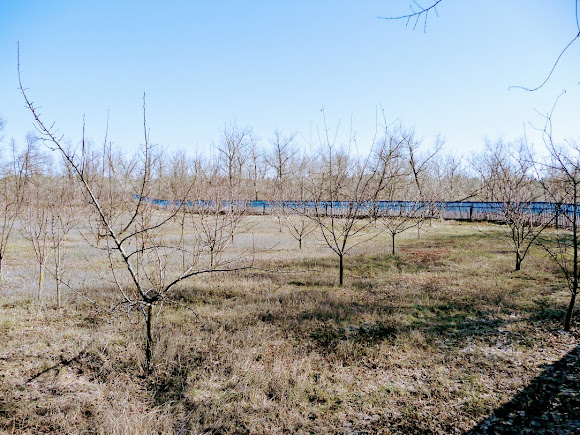 |
| Kytaihorod. The remains of the fortress fortification. A garden |
 |
| Kytaihorod. Muzeina Street on the site of the fortification |
In the 1750s the sotnyk Pavlo Yerofiiovych Semenov proved himself a master of a strong hand, defending his patrimony from encroachments by both enemies and his own Zaporozhian brothers. Archival data confirm his actions to protect the rights of his wards, the homestead dwellers, whose horses were stolen and whose land was taken by neighbours. Probably wishing to lend grandeur and importance to Kytaihorod, and authority to himself, over a few years he built 4 churches at his own expense and that of the people of Kytaihorod.
 |
| Kytaihorod. Muzeina Street. The temple complex |
The building material was brought from Kyiv and Poltava, and local material was also used. The wooden one burned down during military operations, while the stone and plastered ones we see in their pristine form, without rebuilding.
 |
| Kytaihorod. The St Nicholas Church. 1751 |
It is notable that all three shrines are located not far from one another. This characteristic feature is explained by the fact that there were no churches in the neighbouring settlements, and the peasants came here for the service. The St Nicholas Church was built in 1751 in the Baroque style, with the proportions observed.
 |
| Kytaihorod. The St Nicholas Church. 1751 |
The drum is crowned with a small dome. Around the perimeter, the building of unusual shape is decorated with pilasters, and the windows are framed with elegant surrounds.
Despite the fact that in the 1950s—1980s spare parts were stored in the premises, and this did not aid the preservation of the 18th-century wall paintings, they can still be made out on the vaults.
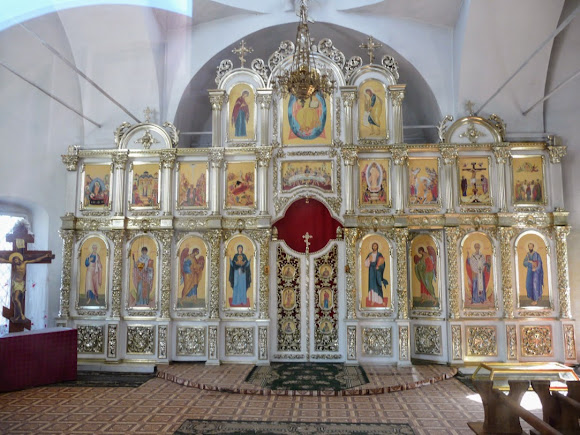 |
| Kytaihorod. The St Nicholas Church. 1751 |
The bell tower was built in 1756 and served the functions of a watchtower.
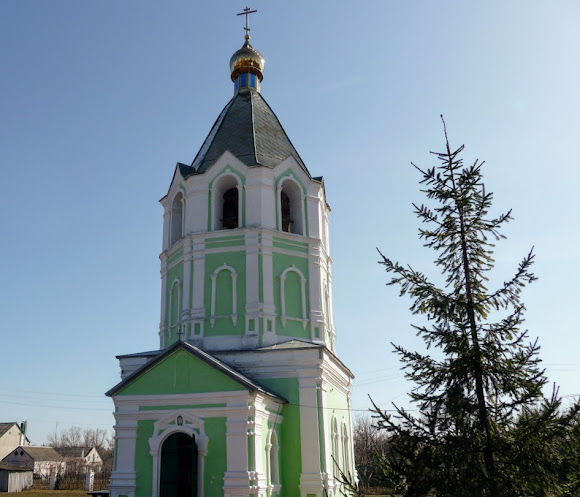 |
| Kytaihorod. The St Barbara church-belltower. 1756 |
In 1796 it was rebuilt, enlarged and consecrated in honour of St Barbara, after which the structure became a church.
 |
| Kytaihorod. The St Barbara Church. 1756 |
But even now it is the bell tower of the temple complex.
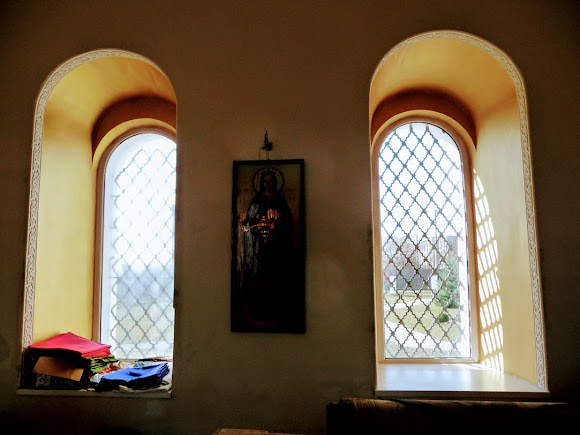 |
| Kytaihorod. The St Barbara church-belltower. 1756 |
Entry is made through a side door.
 |
| Kytaihorod. The St Barbara church-belltower. 1756 |
The structure of the five-domed Dormition Church dates from 1756, and in the opinion of specialists its original design is very rare and practically the only one of its kind in eastern and southern Ukraine.
 |
| Kytaihorod. The Dormition Church. 1756 |
When churches were being closed everywhere, a school museum was placed in it.
Now the exhibits are in the Tsarychanka local history museum, while the street has kept the name Muzeina.
In the 1980s the revival of the churches and their restoration began.
 |
| Kytaihorod. The Dormition Church. 1756 |
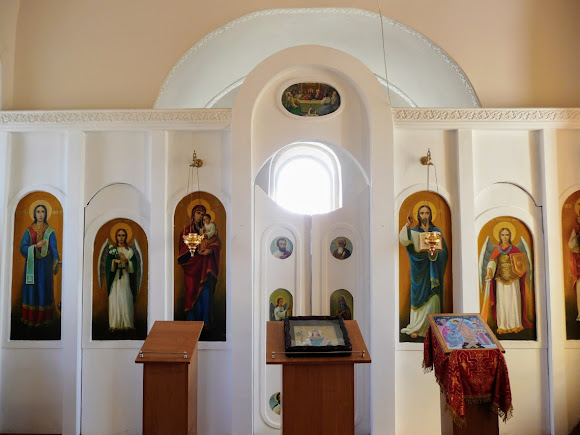
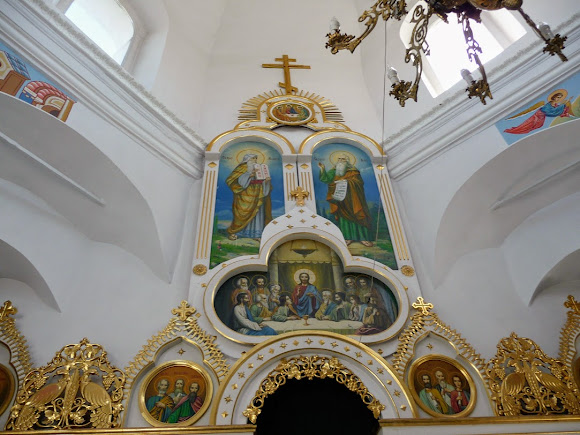
Benefactors donated an iconostasis, chandeliers and other church furnishings.
 |
| Kytaihorod. The Dormition Church. 1756 |
The wall paintings were done by the artist from Dnipro, Illia Dmytrovych Zahreba.
For 15 years the rector of the Dormition Church has been Father Serhii, who graduated from the Kyiv Theological Academy.
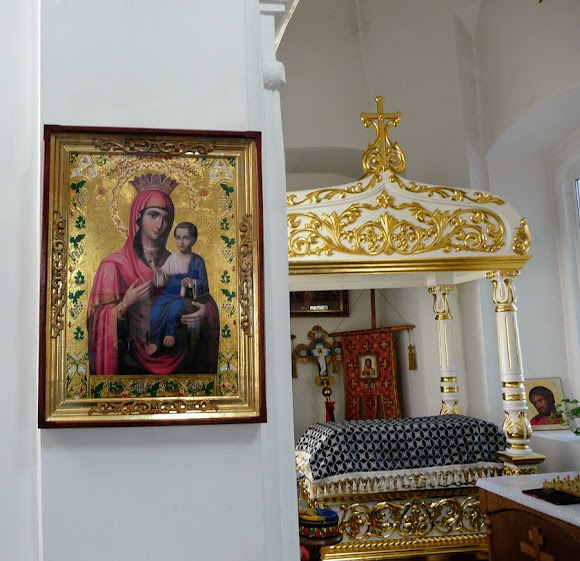 |
| The "Iverska" Icon of the Mother of God |
 |
| The "Semystrilna" Icon of the Mother of God |
 |
| The "Ostrobramska" Icon of the Mother of God |
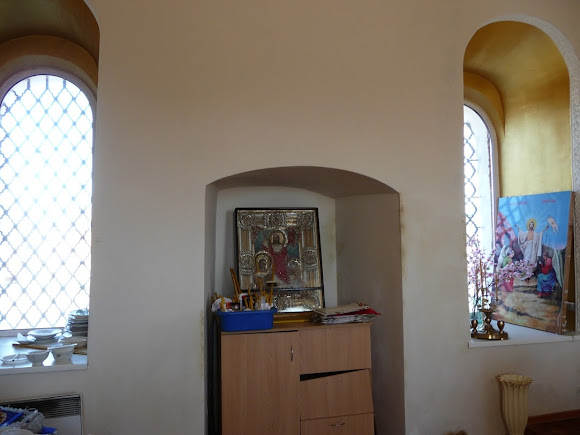
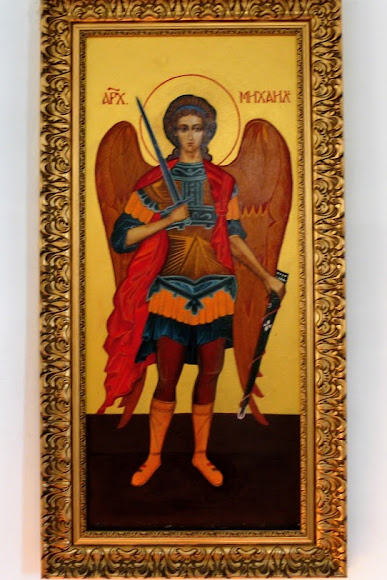
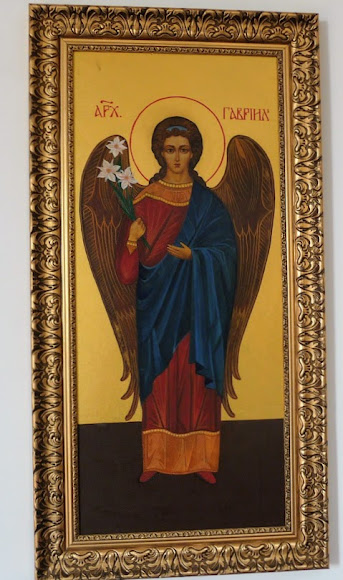
Matushka Olena restored the icons of St Nicholas, the Dormition of the Most Holy Mother of God, and the Archangels Michael and Gabriel.
The matushka is the precentor of the church choir, which takes part in festivals of sacred singing.
The image of the Oril Mother of God "The Leaping of the Infant" has miraculous properties and is greatly revered in the parish.
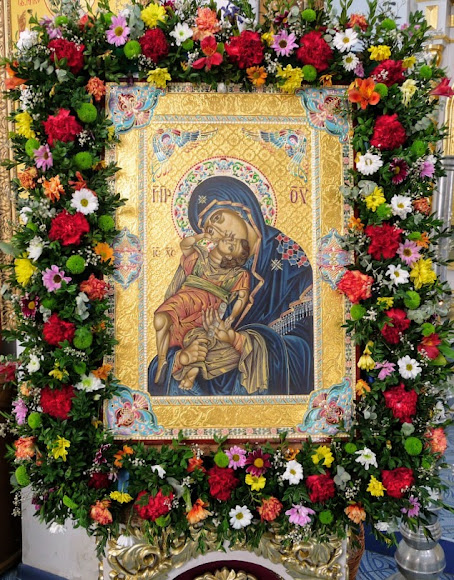 |
| The image of the Oril Mother of God "The Leaping of the Infant" |
Every year, on the second day of Easter, the festival "Bright Easter of the Oril Land" is held on the territory of the temple complex.
Many church communities and singing groups come from all over the region.
Exhibitions of handicrafts, embroidered icons and pysanky are held. Pupils of the Sunday schools take part. The tastiest Cossack kasha, made to old recipes, is cooked on this day for all the residents and guests.
 |
| Kytaihorod. The temple complex |
Of course, everyone remembers the founder of the churches, the sotnyk Pavlo Semenov. At first he was buried in the Dormition Church, in the family crypt with his family. In the 1980s, during the construction of a school, the church was irresponsibly turned into a store for building materials. The crypt was destroyed and looted. Semenov's remains were reburied in the cemetery, and at the beginning of the 2000s a commemorative sign to him was erected in front of the church.
 |
| Kytaihorod. The temple complex. The commemorative sign to the sotnyk Semenov |
Since 2016 the relics of the sotnyk have been in the Dormition Church.
 |
| Kytaihorod. The Dormition Church |
Having talked with the parishioners, I walked to the Oril River, where the history of the Cossack camp began.
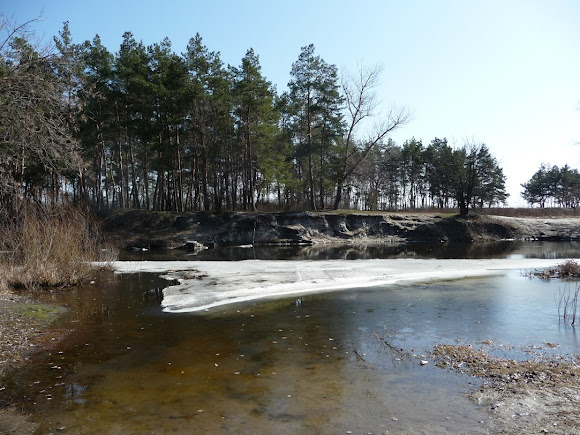 |
| Kytaihorod. The Oril River |
This right tributary of the Dnipro is rich in fish, and its banks are covered with the green sheet of nature reserves and floodplain forests.
The local historians planned to create tourist routes through the Oril area, including the "Petrykivka" centre of applied art.
 |
| Kytaihorod. The Oril River |
Of course, the value of our folk heritage needs to be popularised. But one would like this not to cause harm to the monuments of national significance and to the surrounding nature, and not to turn the picturesque banks into places for picnics and tourist camps.
 |
| Kytaihorod. The temple complex |
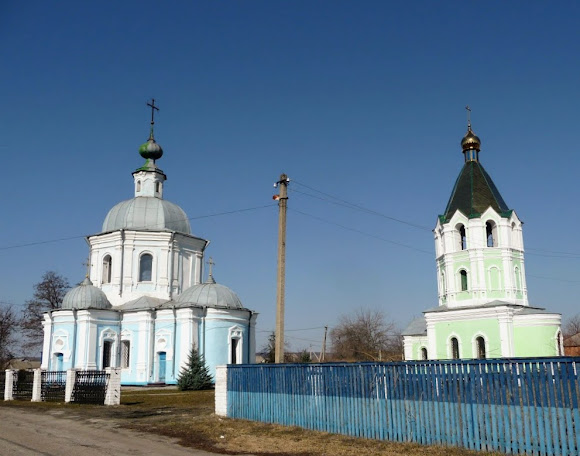












No comments:
Post a Comment
Leave your impression