Seeing a live horse these days is difficult, but possible. Despite the fact that cars have driven horse-drawn transport off the city streets and agricultural labour has been mechanised, horses remain among the most faithful companions of humankind over six millennia and give people strength and inspiration. The beauty and endurance of these animals — which served humanity on the battlefield and at the plough, carried people over long distances and won tournaments — were valued in ancient Greece and the Roman Empire, where equestrian statues were erected in their honour. A touching and very fine sculptural depiction of a horse and a foal has been installed in the village of Dibrivka, Myrhorod district, on the grounds of the stud farm.
 |
| Dibrivka, Myrhorod district, Poltava region. The stud farm |
What is the history of one of the oldest centres of horse breeding in Ukraine? What is happening there now, and how does one reach the Dibrivka stud farm?
From the bus station of
Myrhorod scheduled buses depart for Dibrivka several times a day; excursion routes are also organised. Ten kilometres of weaving between potholes and gaps in the asphalt, seasoned with the driver's jokes that it was the Dibrivka horses that had knocked the road out with their hooves.
 |
| The Dibrivka-Myrhorod road |
The road sign at the entrance to the village is decorated with an image of a horse and a rider.
Horses have long been used in these parts to work the fertile lands and were inseparable from the Cossacks in battle and in daily life. Through the window the camera managed to catch a wooden windmill with four sails and flour-milling equipment.
A few minutes' drive along the main village street to the fork, and then on foot along Kinnozavodska Street.
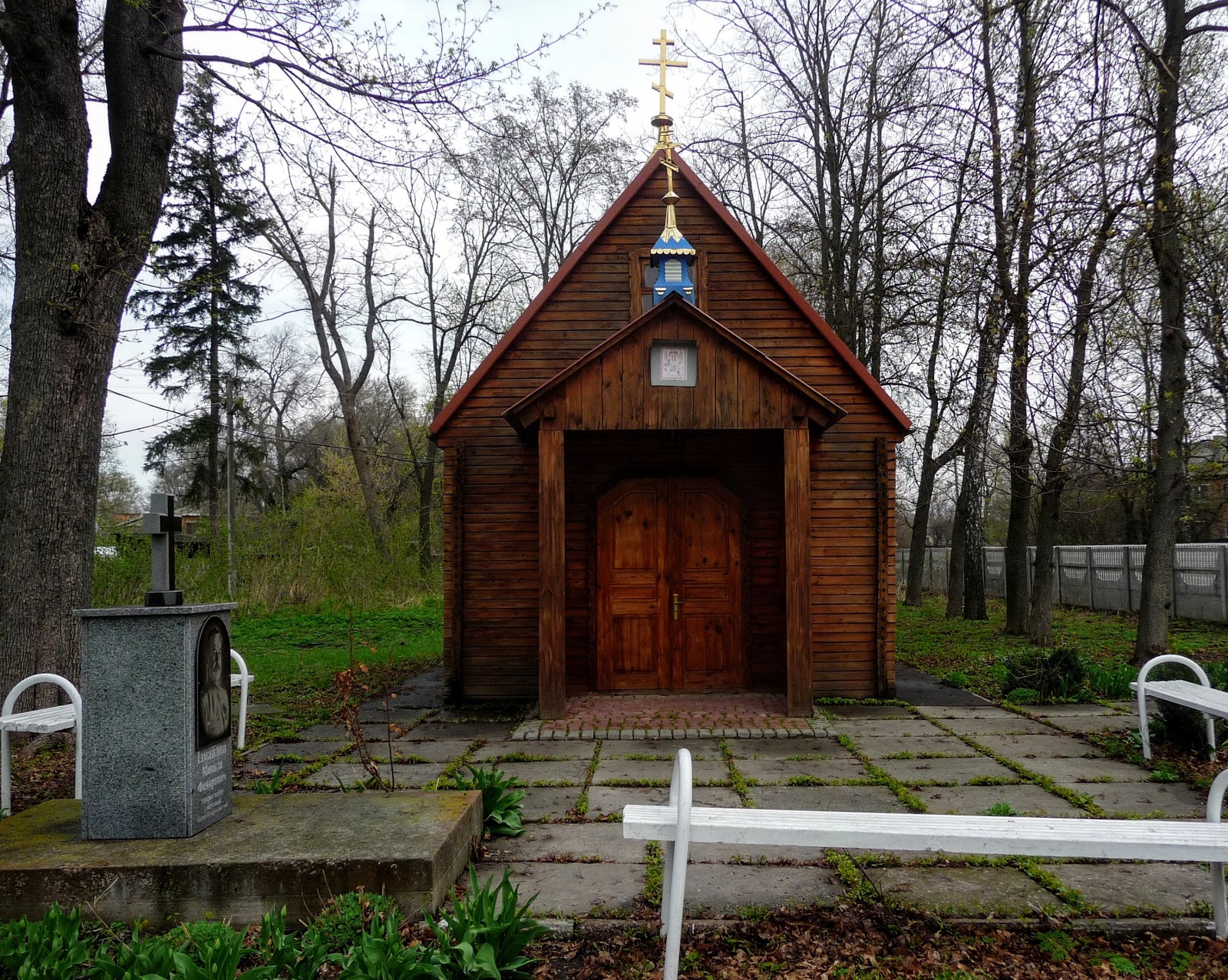
To the right along our course is the small wooden Church of the Holy Martyrs Florus and Laurus, consecrated in 2010.
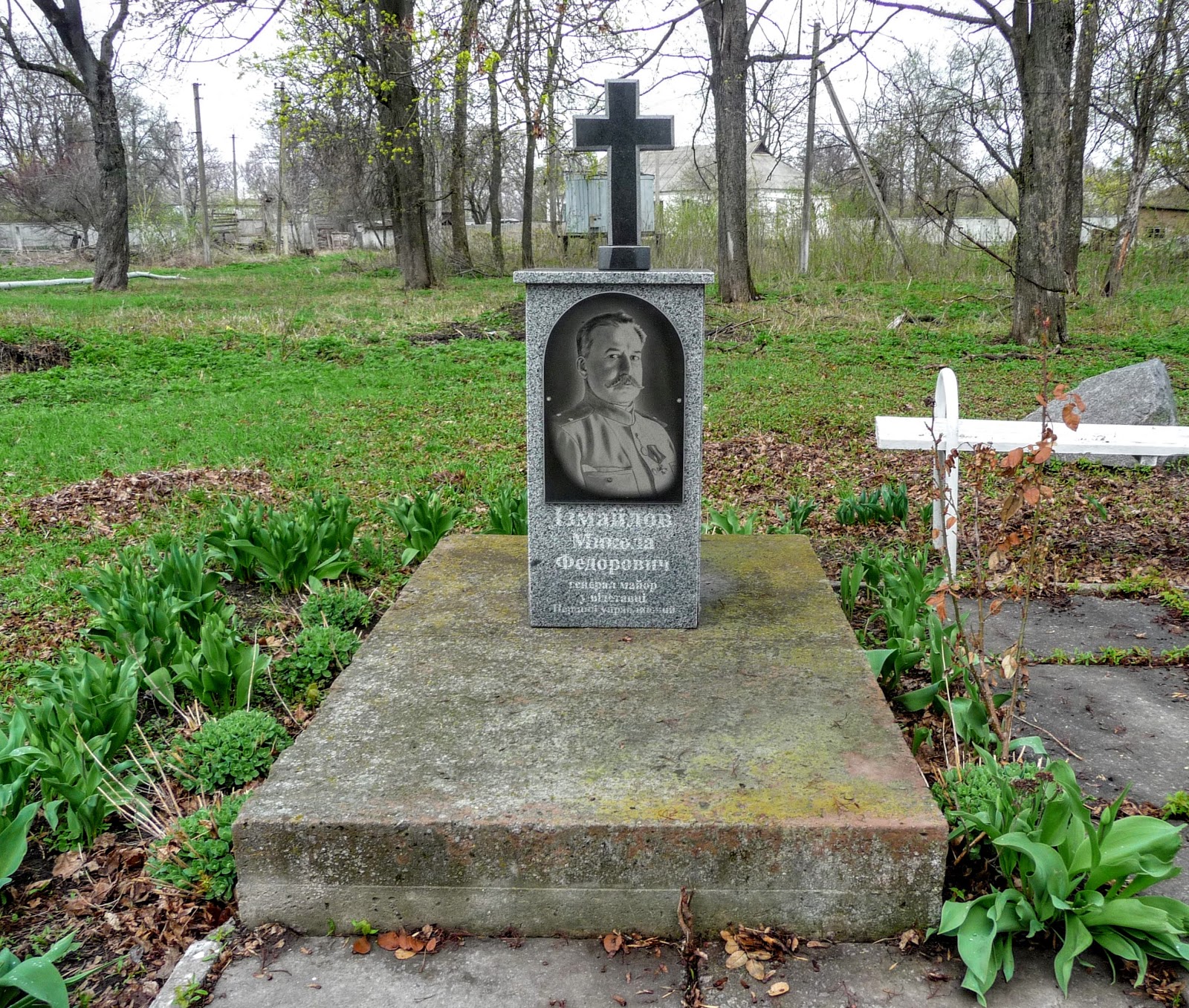
Its predecessor was built in 1908 thanks to the first manager of the stud farm, M. F. Izmailov, who five years later was laid to rest in the church yard.
In 1936 the Bolshevik authorities demolished the stone five-domed shrine, erected in the Ukrainian Baroque style. For some time a house church was located in the stable building.
To the left along the way is the administrative building of the Dibrivka stud farm, which occupies the former princely residence of the enterprise's founder, Grand Duke Romanov.
In honour of the founder, and also of the manager M. F. Izmailov and the international-class master rider M. D. Stasenko, memorial plaques have been installed by the entrance.
The lobby of the office is decorated with display stands and a mosaic panel depicting scenes on the theme of horse breeding.
Payment for the tour of the stud farm grounds is made at the accounts office.
The work of every employee — the veterinarian, the groom, the farrier, the rider, the animal husbandry specialist — is held in honour and respect.
The prototypes for the sculptural composition were the mare Hovorukha and her son Hranit, a racetrack fighter and the greatest producer of pedigree stallions.

But there is a version that the sculpture is dedicated to the blind mare Hilda, about whom a legend has survived. During the Second World War, part of the breeding stock was moved under their own power to the Trans-Volga region. Pregnant mares remained in the stables. Among them was the bay mare Hilda. The occupiers sent the pedigree mares to Germany. Hilda submitted to no German rider, escaped from captivity and headed for Dibrivka, where her pursuers awaited her. In July 1942 Hilda was returned once again from Poltava to Berlin in a freight-train wagon. Within a month she killed two of her enslavers. The first to die was a careless groom who came too close to the mare and received a fatal blow of the hooves to the chest. When one of the riders dared to lead Hilda out onto the running track, the captive reared up on her hind legs, fell on him with all her weight and strangled him. After this incident the Nazis abandoned their attempts to tame the headstrong animal. So that she would no longer try to escape or harm anyone, the captive's eyes were put out. On 3 May 1945 the tank driver Hryhorii Safroniuk, a groom of the Dibrivka stud farm, took part in the fighting on the streets of Berlin. Deep in one public garden the soldier saw a herd of horses. In a mare that stood apart from the others, gloomily lowering her head, he recognised Hilda. Such are the charges reared at the stud farm in the Poltava region!

The administrative building is connected by a passage to the club, in whose premises, before the revolution, Grand Duke Romanov held auctions for the sale of horses that were in great demand abroad.
Passing through the checkpoint, you find yourself in a peculiar little town where, over more than 100 years, its own rules and traditions have taken shape.
 |
| The stud farm. The checkpoint |
 |
| The grounds of the stud farm |
Separate paddocks are fenced off for the trotters, the yearling stallions and the mares, and there are different stables for keeping and feeding the animals.
In the brood-mare barn the mares prepare to become the mothers of future champions.
On the training tracks and with the help of lead reins, experienced riders cultivate leadership qualities in the future favourites.
The breeding stock is tended, trained and worked on by professionals who know the temperament of their charges.
A great deal of work is required to provide the daily ration of provisions for each charge.
Horses being trained for the races must consume 6 kg of oats, 4 kg of hay and 6 kg of straw a day. Carrots and apples the charges devour with pleasure.
While the horses greet the guests warmly and allow themselves to be stroked on the withers, the guide Tetiana Petrivna tells with inspiration the history of the enterprise.
At the end of the 19th century, with the expansion of capitalism in the agrarian rural regions, a need arose to increase the number of draught horses. And the beloved horse races, betting pools and prizes for victory stimulated the breeding of trotting stock. Grand Duke Dmitry Romanov, a cousin of Emperor Nicholas II, in 1888, sparing no expense of his own, undertook the comprehensive construction of stables, a riding arena, a racetrack, an infirmary and living quarters for the enterprise's employees.
Schools were opened for jockeys, veterinary assistants and horse-care specialists.
In the words of D. K. Romanov: "When founding the farm in 1888, I set myself the goal of creating a nursery of Russian breeds of riding and trotting horses, and also of breeding small draught horses, capable of hauling heavy loads and possessing swift gaits."
M. F. Izmailov was appointed manager and served here for 25 years, until his very death. Mykola Fedorovych had great abilities in the science of horse breeding, knew veterinary medicine and animal husbandry, and was a talented director. The main focus of the stud farm was the breeding of the Oryol Trotter breed.
The Dibrivka charges were distinguished by strength, beauty and endurance, and became winners of prestigious derbies.
Foreign intervention and the alternating raids of the Red Army cavalry and the hordes of Petliura and Makhno during the years of the revolution and the civil war brought ruin and devastation to the farm.
After nationalisation the Dibrivka farm took up the breeding not only of Oryol trotters but also began raising the Russian-American breed. During the Nazi occupation some of the elite horses were successfully evacuated; others the fascists took away to Germany together with the farm's workers. The restoration of the farm began after the liberation of the Poltava region in 1943. The charges that ended up in the English zone of defeated Germany, after negotiations, returned to their native home in 1946.
The list of laureates and champions — those bred at the Dibrivka stud farm — grew and was replenished constantly. The trained young horses set off for the racetracks of other cities.
Every May, races and theatrical performances are held in Dibrivka, in which the horses demonstrate all their abilities.
Those who wish may learn to ride or simply take a ride on horseback; there is the option of ordering a festive phaeton.
After the walk around the grounds of the stud farm, visitors are invited to acquaint themselves with the exhibits of the museum, which is housed in the administrative building. In the museum halls, relics connected with the history of the farm, its founders, its riders and the large collective of the nursery are kept. Of great value are the photographs of the horses that glorified the Dibrivka stud farm with their high achievements.
A large collection of books and printed literature on the enterprise's specialism has been gathered.
The numerous cups, awards and prizes are kept with special care.
Colourful horse blankets are used at solemn and festive events.
A small picture gallery on the equine theme has been assembled.
A tour of the Dibrivka stud farm will be not only interesting and educational but will also bring the joy of communion with the gentle charges of this unusual enterprise for breeding pedigree horses.
The address of the stud farm: the village of Dibrivka, Myrhorod district, Poltava region. Kinnozavodska Street, 2.
Coordinates: 50°2'21"N 33°30'8"E
I would like to write a few more lines about one more acquaintance in Dibrivka. Before the bus to
Myrhorod there were about 20 minutes left, and I walked over to the school.
It is always interesting to see the alma mater of the local kids. If in the morning in
Velyki Sorochyntsi I was refused my request to enter the boarding school built in 1905 with the status of an architectural monument, then in Dibrivka I did not even try to do so. The head of the school saw me through the window and invited me into the building. Lessons had already ended, the classrooms had emptied, and Larysa Oleksandrivna, together with the deputy head, arranged an interesting tour for me with a story about the school.
Every classroom, the assembly hall and the corridors have been decorated by the teachers and parents with great care and skill.
For the 109 pupils an atmosphere of a home from home has been created. Not every city school can boast such creativity and innovation.
I thank the leadership and teachers of the Dibrivka school for their inventiveness, creativity and hospitality, and I wish all the people of Dibrivka peace, inspiration and goodness.




No comments:
Post a Comment
Leave your impression