The village of Golubyne, in the Svaliava district of the Zakarpattia region, stretches along the Perechyn — Svaliava road.
Driving along the main street, Vesela, you can see from the signs that the house numbers reach 500 — something you do not often come across in the countryside. I had only half an hour, and I got off the bus to take a walk and see what this village was like, known since the 15th century and whose name is connected with the symbol of peace — the dove.

All 3 legends are each more beautiful than the last, and in every one this feathered means of postal communication lived in the floodplain of the Pynia river, along which Golubyne spread out. In these parts you are forever crossing small rivers and streams over little bridges — wooden, stone, iron.
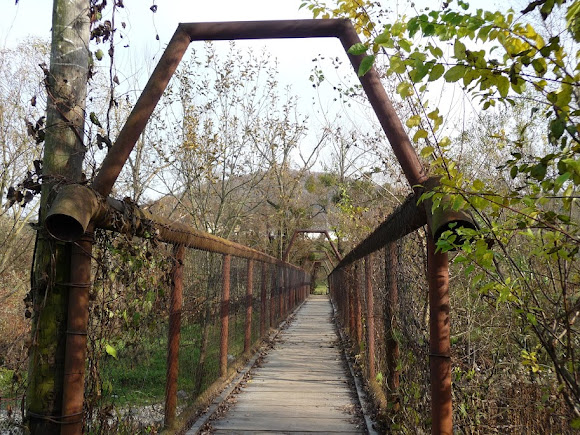
In spring, during the flood, this whole many-armed water system becomes unmanageable and has a habit of bursting its banks. There are many healing springs in the district with incredibly tasty water. The most famous are "Luzhanska" and "Poliana Kvasova", around which endless sanatoriums and guesthouses have sprung up.
In the village there are 2 churches — an Orthodox one and a Greek Catholic one, both consecrated in honour of the Dormition of the Mother of God.
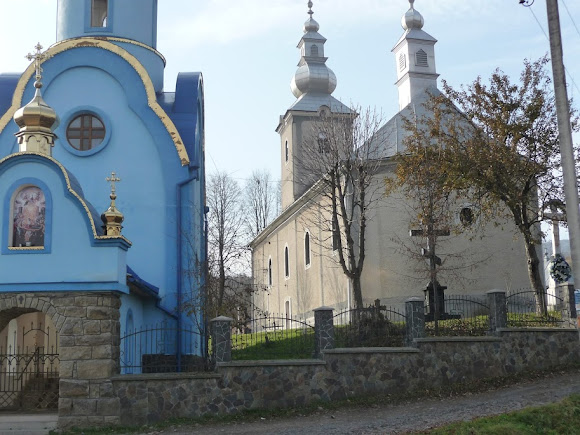
You can enter the grounds of the Holy Dormition Orthodox Church through the gate bell tower, painted sky-blue.
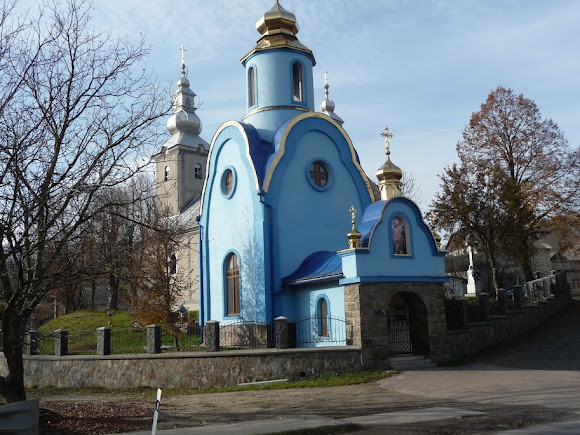
But the entrance was closed; I walked round the shrine from only one side — on the other there were houses.

A hundred years ago Greek Catholic churches were in the majority in the Svaliava district. In 1944-1949, after administrative persecution, they were closed, and afterwards the churches were handed over to Orthodox believers. The revival of the UGCC began in the 1990s. In Golubyne the community waited several years for the allocation of a small plot of land for the building of a church, which was then erected in 5 years. The area of the church courtyard is tiny, right beside the school. The buildings are pressed so tightly against one another that I could not photograph the church from the entrance. And from the rear I had to take the shot running out onto the asphalt while the flow of cars stopped for a second.

By the church is a sculpture of the Most Holy Virgin Mary, which is characteristic of Catholic and Greek Catholic churches.

The school is a 9-year one. It houses the village museum. On the facade are fixed memorial plaques in memory of former school head teachers — intellectuals, ethnographers, folklorists.

I saw that some children from Golubyne travel to Svaliava to study. I would like to note that the rising generation here is well brought up, and on public transport the youngsters give up their seats.
Across the road is the village outpatient clinic with a pharmacy.

For some reason it is on this building, and not on the village council or the club, that a memorial plaque about the village's liberation from the fascists in 1944 is placed.
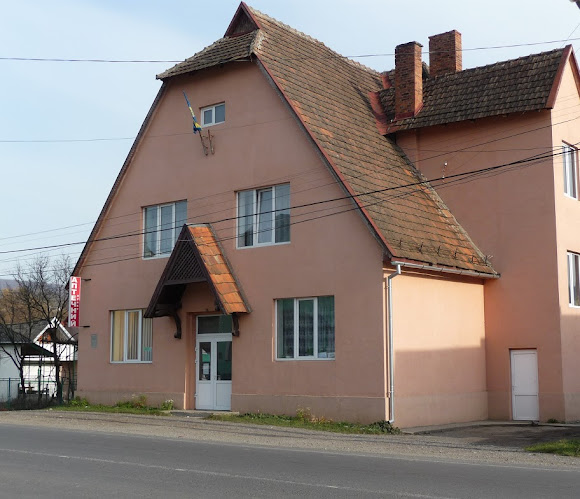

I saw quite a few such plaques in Zakarpattia. It is good that they preserve their history; not every settlement knows these dates, still less marks them with memorial signs.
The village shop with all sorts of odds and ends.

In memory of the fellow-villager soldiers who fell during the Second World War, a monument has been erected bearing the names of the heroes.

In the building of the village council there are the post office and other institutions necessary for the everyday life of the village's population of three thousand.
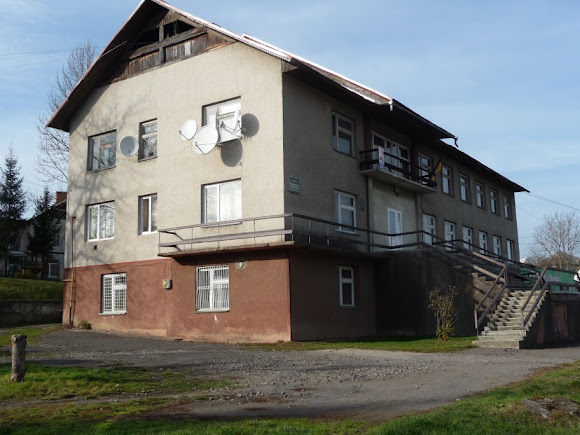
I don't know what goes on now in the village clubs, apart from the holding of endless elections. Such centres of culture look gloomy and unappealing.

Such is this little sketch of Golubyne, the impressions of which I share with you.

All 3 legends are each more beautiful than the last, and in every one this feathered means of postal communication lived in the floodplain of the Pynia river, along which Golubyne spread out. In these parts you are forever crossing small rivers and streams over little bridges — wooden, stone, iron.

In spring, during the flood, this whole many-armed water system becomes unmanageable and has a habit of bursting its banks. There are many healing springs in the district with incredibly tasty water. The most famous are "Luzhanska" and "Poliana Kvasova", around which endless sanatoriums and guesthouses have sprung up.
In the village there are 2 churches — an Orthodox one and a Greek Catholic one, both consecrated in honour of the Dormition of the Mother of God.
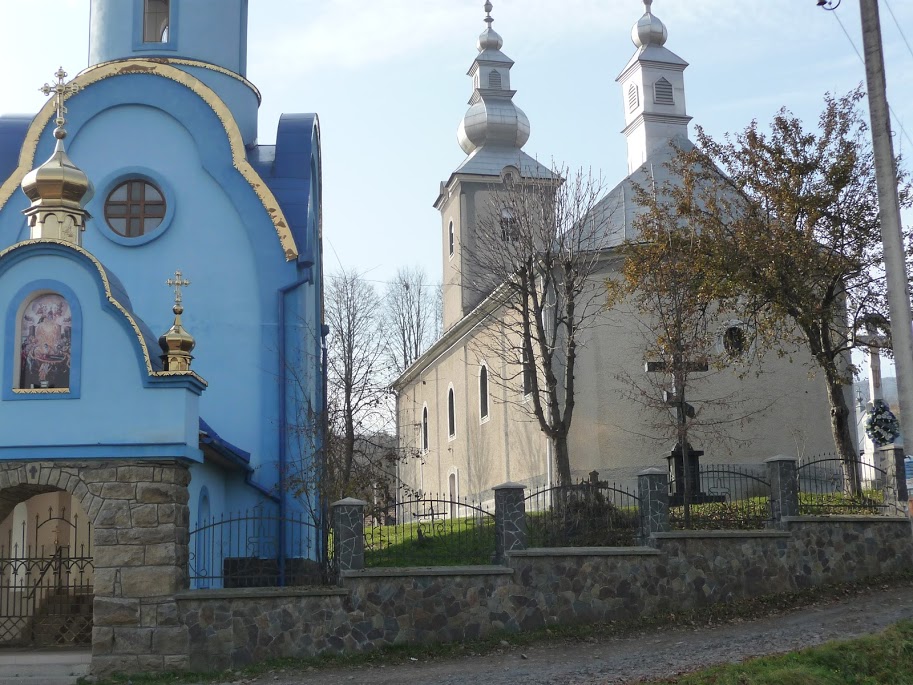
You can enter the grounds of the Holy Dormition Orthodox Church through the gate bell tower, painted sky-blue.

But the entrance was closed; I walked round the shrine from only one side — on the other there were houses.

A hundred years ago Greek Catholic churches were in the majority in the Svaliava district. In 1944-1949, after administrative persecution, they were closed, and afterwards the churches were handed over to Orthodox believers. The revival of the UGCC began in the 1990s. In Golubyne the community waited several years for the allocation of a small plot of land for the building of a church, which was then erected in 5 years. The area of the church courtyard is tiny, right beside the school. The buildings are pressed so tightly against one another that I could not photograph the church from the entrance. And from the rear I had to take the shot running out onto the asphalt while the flow of cars stopped for a second.

By the church is a sculpture of the Most Holy Virgin Mary, which is characteristic of Catholic and Greek Catholic churches.

The school is a 9-year one. It houses the village museum. On the facade are fixed memorial plaques in memory of former school head teachers — intellectuals, ethnographers, folklorists.

I saw that some children from Golubyne travel to Svaliava to study. I would like to note that the rising generation here is well brought up, and on public transport the youngsters give up their seats.
Across the road is the village outpatient clinic with a pharmacy.


I saw quite a few such plaques in Zakarpattia. It is good that they preserve their history; not every settlement knows these dates, still less marks them with memorial signs.
The village shop with all sorts of odds and ends.

In memory of the fellow-villager soldiers who fell during the Second World War, a monument has been erected bearing the names of the heroes.

In the building of the village council there are the post office and other institutions necessary for the everyday life of the village's population of three thousand.

I don't know what goes on now in the village clubs, apart from the holding of endless elections. Such centres of culture look gloomy and unappealing.

Such is this little sketch of Golubyne, the impressions of which I share with you.
This story is also available in Ukrainian: Голубине. Замальовка біля траси

No comments:
Post a Comment
Leave your impression