For me, the city of Sumy long seemed a terra incognita.
It probably does too little to announce itself for tourist trips.
 |
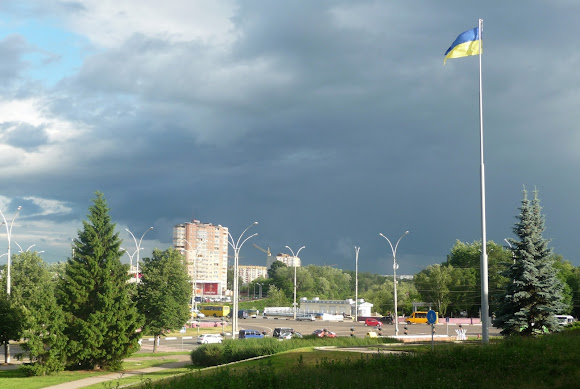
| The Psel River |
 |
| Kharkivska Street |
 |
| Soborna Street |
And that is a pity.
 |
| Pedestrian streets |
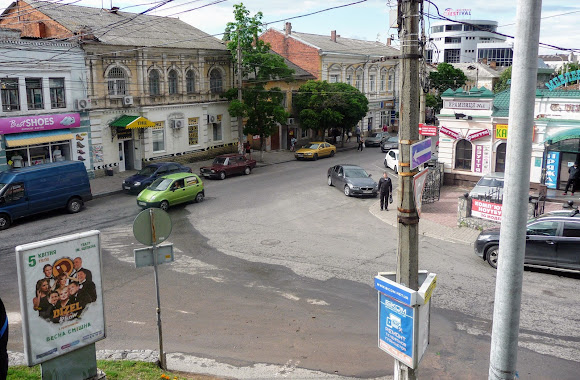 |
| Kooperatyvna Street |
Even in a few hours' walk here you can see and learn a great deal that is interesting.
 |
| An 8-metre image of the Mona Lisa against the backdrop of the fields of the Sumy region |
I came to Sumy from
Konotop by bus and got off in the historic centre by the monument to the sugar magnate I. H. Kharytonenko, whose name I would keep coming across throughout my whole walk around the town.
 |
| A monument to I. H. Kharytonenko in the public garden of the same name |
Grateful residents erected a statue to their benefactor, who built churches and hospitals, as early as the end of the 19th century. But the Bolsheviks replaced the figure of the capitalist with a statue of the leader of the proletariat. As early as 1991 Sumy, one of the first cities in Ukraine, dismantled its monument to Lenin. Kharytonenko was returned to the pedestal.
At the beginning of the 20th century geologists tried unsuccessfully to find oil, and after the drilling a borehole was left. It was closed off with a slab and a gazebo was built.
 |
| The gazebo in the Kharytonenko public garden |
To the pseudo-Russian wooden style, elements of paganism and a Jewish star have been added. The openwork gazebo not only adorns the Kharytonenko park but has also become a calling card of the city.
 |
| The gazebo in the Kharytonenko public garden |
About the history of the Sumy region you can learn at the local history museum, housed in the building of the former Zemstvo administration of 1886.
 |
| The local history museum. 1886 |
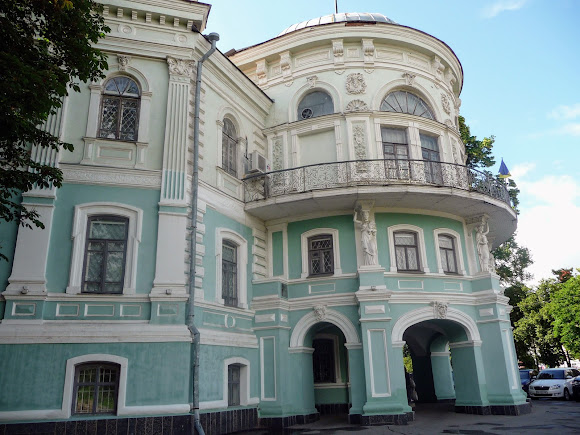 |
| The local history museum. 1886 |
Sumy is a city of theatrical traditions.
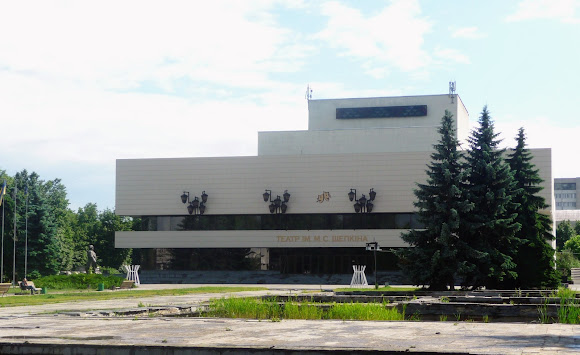 |
| The Shchepkin Drama and Comedy Theatre |
The Drama and Comedy Theatre moved to new premises in 1981, and before that it was housed on Pokrovska Street in a historic building of 1912, where the youth theatre is now located.
 |
| The youth theatre. 1912 |
Beside the monumental building in the style of the Egyptian pyramids stands a sculpture of the founder of the theory of acting.
 |
| A monument to M. S. Shchepkin beside the theatre of the same name |
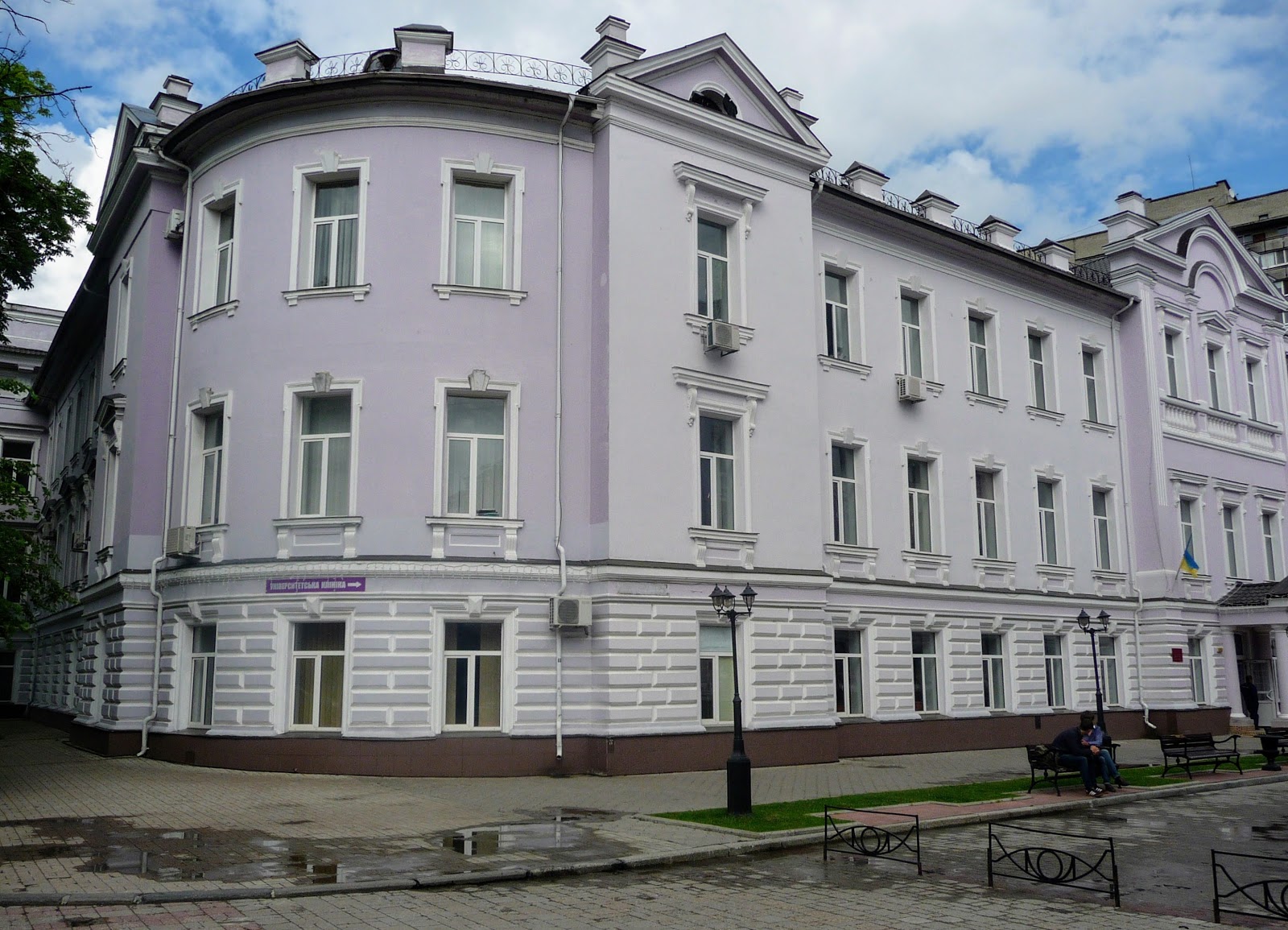
The regional centre has several prestigious higher education institutions. The law building of the banking academy is located in the building of the former girls' gymnasium, built in 1873 in the neo-Gothic style.
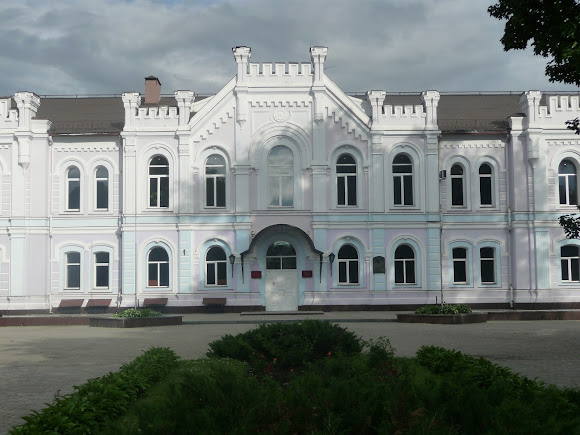 |
| The former girls' gymnasium. The banking academy. 1873 |
Building No. 2 occupied the premises of the former district court of 1917.
 |
| The former district court. The banking academy. 1917 |
The main building was constructed in the 1980s on the site of a historic building, but all the architectural features have been preserved.
 |
| The banking academy. The main building |
The clock on the tower was showing the exact time.
 |
| The banking academy. The main building |
The palatial house of the patron Sukhanov houses the Institute of Applied Physics and other institutions.
 |
| The Sukhanov estate. The Institute of Applied Physics |
 |
| The Sukhanov estate. The Institute of Applied Physics. An architectural monument. 1895 |
Today an architectural monument, and from 1891 the Nobility Assembly.
 |
| The Nobility Assembly. 1891. The Philharmonic |
The buildings are painted in caramel colours.
 |
| The historic centre |
The blocks of Petropavlivska, Pokrovska and Soborna streets are the territory of the demolished Sumy fortress, the largest defensive structure of Slobozhanshchyna.
 |
| 29a Soborna Street |
Every building is a piece of architectural creativity.
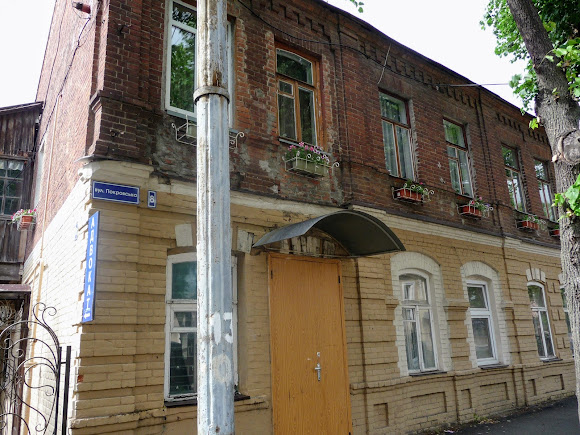 |
| 8 Pokrovska Street |
In the courtyard of a house on Pokrovska Street.
 |
| Pokrovska Street |
A new building of 2010 — the congress centre of Sumy State University.
 |
| The congress centre of Sumy State University |
An Evangelical church with elements of neo-Gothic.
 |
| The Evangelical church |
The bakery's roof has been redone, but a cat has been walking on it since 1907.
 |
| Pokrovska Street. The bakery, 1907 |
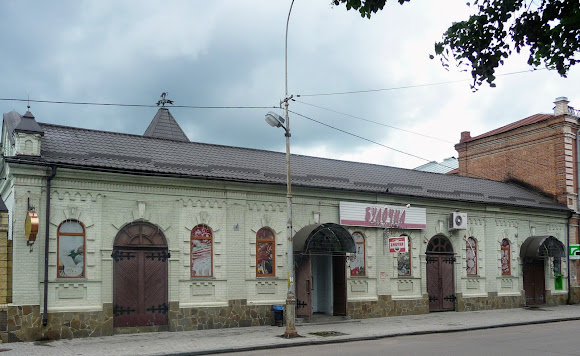 |
| Pokrovska Street. The bakery. 1907 |
The second building of the local history museum, with a storage collection of 45 thousand items.
 |
| The local history museum. The second building |
A folk restaurant named after a favourite folk dish, 'Shalena Shkvarka' (Mad Crackling).
 |
| The 'Shalena Shkvarka' restaurant |
Above the historic centre rise ancient churches and cathedrals.
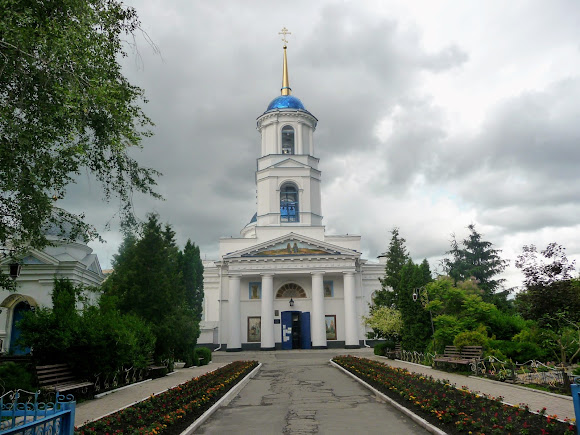 |
| The Church of St Elijah. 1851. UOC-MP |
 |
| The Church of St Elijah. 1851. UOC-MP |
The Church of St Elijah was built on an artificial hill in the middle of the 19th century.
 |
| The Church of St Elijah. 1851 |
 |
| The grounds of the Church of St Elijah. 1851. UOC-MP |
The Transfiguration Cathedral was built in 1782 and combined different styles: baroque, Renaissance and classicism.
 |
| The Transfiguration Cathedral. 1782. UOC-MP |
 |
| The Transfiguration Cathedral. 1782. UOC-MP |
 |
| The Transfiguration Cathedral. 1782. UOC-MP |
 |
| The Transfiguration Cathedral. 1782. UOC-MP |
And this is the only Orthodox cathedral in the world on which statues of the apostles are installed.
 |
| The Transfiguration Cathedral. 1782. UOC-MP |
 |
| The Transfiguration Cathedral. 1782. UOC-MP |
The clock on the bell tower was showing the correct time.
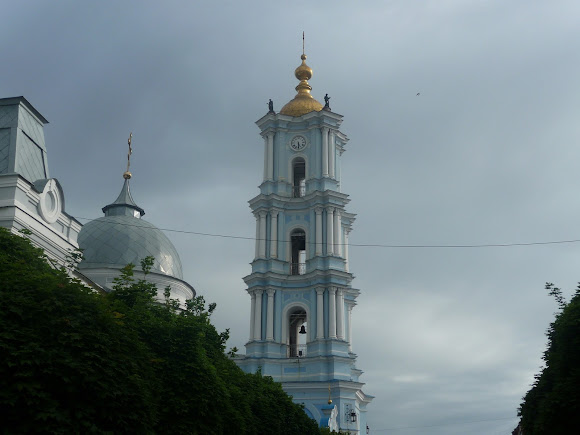 |
| The Transfiguration Cathedral. 1782. The bell tower. UOC-MP |
 |
| The Transfiguration Cathedral. 1782. The clock. UOC-MP |
The Holy Resurrection Cathedral was consecrated in 1702 and had defensive functions, its walls 1.5 metres thick.
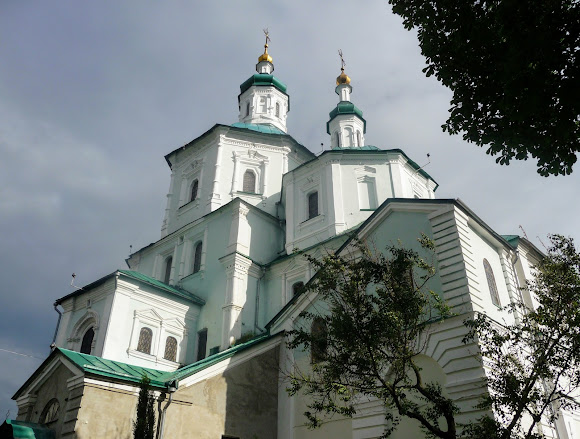 |
| The Holy Resurrection Cathedral. 1701. UOC-KP |
 |
| The Holy Resurrection Cathedral. 1701. The bell tower. UOC-KP |
 |
| The Holy Resurrection Cathedral. 1701. UOC-KP |
This is the first stone construction in the city.
 |
| The Holy Resurrection Cathedral. 1701. UOC-KP |
 |
| The Holy Resurrection Cathedral. 1701. UOC-KP |
And those of glass, metal and concrete were built at the height of developed socialism.
 |
| The regional council. 1979. Architect Virchenko |
A four-storey Stalinka of 1951 with a tower on the roof and shops on the ground floor.
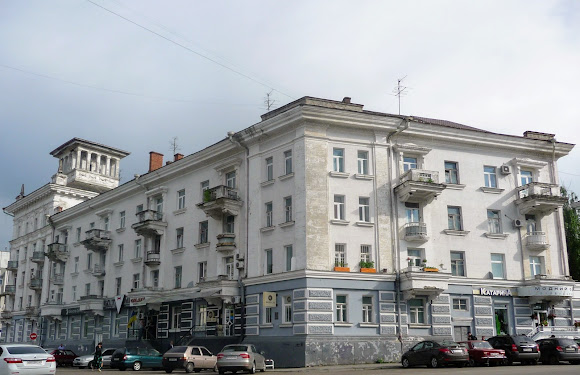 |
| 32 Soborna Street. 1951. Architect Klochko |
In
Lviv,
Odesa,
Mykolaiv,
Kherson,
Dnipro I have come across various sculptural depictions of lions. In Sumy the stone king of beasts offers quick money.
 |
| A sculpture of a lion |
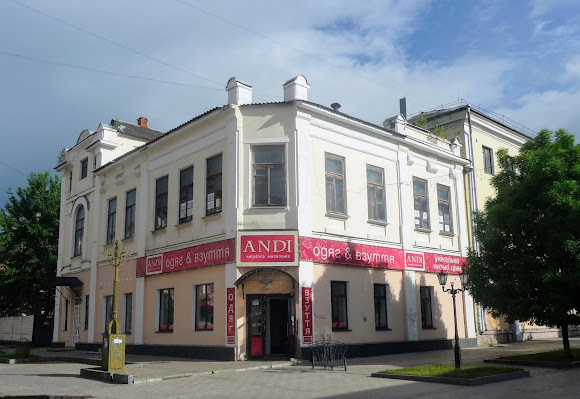
It is very pleasant to stroll along the pedestrian streets.
 |
| 34 Soborna Street |
 |
| 16 Voskresenska Street |
 |
| 11 Voskresenska Street |
 |
| 11 Voskresenska Street, the 'Mimino' restaurant |
 |
| 7 Voskresenska Street. The Treasury |
 |
| 8 Voskresenska Street |
 |
| 8a Voskresenska Street. The Department of Urban Planning and Architecture |
 |
| 8a Voskresenska Street. The Department of Urban Planning and Architecture |
 |
| 2 Voskresenska Street. The Museum of the Sumy Regiment |
The cinema — an architectural monument of 1910.
 |
| Soborna Street. The cinema. 1910 |
On Voskresenska Street the fragrant lindens and other trees, whose names I shall let the readers suggest, were in bloom.
 |
| Sumy — a city of fragrant lindens |
 |
| Sumy — a green and blossoming city |
Sumy has its own Red Square, with the 'Reikartz Sumy' Hotel
 |
| 10 Red Square. The 'Reikartz Sumy' Hotel |
and with lamps that resemble a palm tree.
 |
| 10 Red Square. The 'Reikartz Sumy' Hotel |
On the streets and squares one comes across a great many interactive sculptures. Any sweet-tooth can join the confectioner scooping sugar from a sack with a mug. The sculpture is a tribute to the memory of the Kharytonenko family.
 |
| A sculpture of the sweet-tooths |
The student resistance of 2004, when on the Prime Minister's instruction three Sumy universities were to be merged, is recalled by a sculptural composition in the Shevchenko public garden.
 |
| The Shevchenko public garden. A memorial sign in honour of the student resistance of 2004 |
The Kobzar himself has been here since 1957.
 |
| The Shevchenko public garden. A monument to T. H. Shevchenko |
All the best for the children. The building of the former treasury bank serves for the creative development of children and young people.
 |
| The former bank. 19th c. The Centre for the Development of Children and Youth |
 |
| The former bank. 19th c. The Centre for the Development of Children and Youth |
The Kozhedub Park is one of the popular recreation spots for the people of Sumy.
 |
| The Kozhedub Park |
 |
| The Kozhedub Park |
 |
| The Kozhedub Park |
At the entrance to this green urban expanse, with its dozens of varieties of trees and shrubs, a monument to the most effective fighter pilot has been erected.
 |
| The Kozhedub Park. A monument to I. M. Kozhedub |
The park was founded in 1908; it was given to the residents of Sumy by the merchant Leshchynskyi as compensation for the pollution of the river during sugar production.
 |
| The Kozhedub Park. The arch-colonnade 'Leshchynskyi Park. 1908' |
The arch-colonnade 'The Embankment' is located on the lower tier of the park, right by the Psel.
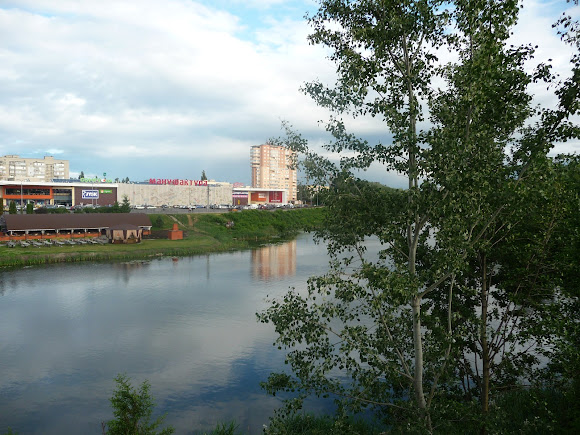 |
| Sumy. The embankment of the Psel |
 |
| The Kozhedub Park. The arch-colonnade 'The Town Embankment' |
This wonderful river was favoured by Anton Chekhov, who lived in Sumy and received patients in 1888-1889.
 |
| The Kozhedub Park. A monument to A. P. Chekhov |
The Kharkiv Bridge over the river leads to the modern residential districts.
 |
| The Kharkiv Bridge |
 |
| The Kharkiv Bridge and Kharkivska Street |
On Heroiv Sumshchyny Street
 |
| Heroiv Sumshchyny Street. The scientific library. 1987 |
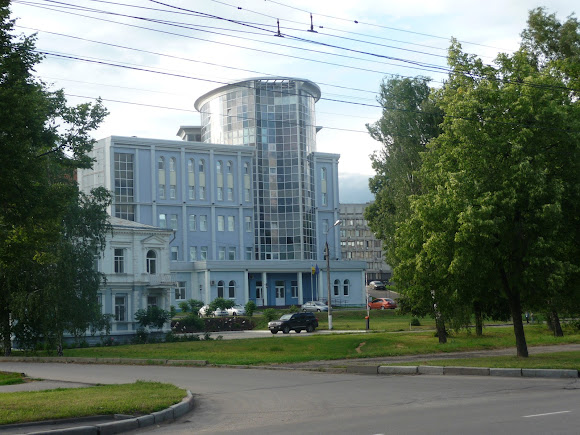 |
| Heroiv Sumshchyny Street. The 'Acropolis' business centre |
 |
| Heroiv Sumshchyny Street |
an Alley of Glory has been created, with portraits of the heroes of the Second World War who were natives of the Sumy region.
 |
| Heroiv Sumshchyny Street. The Alley of Heroes |
The pysanka is a symbol of rebirth, beauty, love and goodness.
 |
| Heroiv Sumshchyny Street. A pysanka |
I did not manage to see the fountains in action.
 |
| The 'Sadko' fountain |
 |
| The 'European' fountain. A memorial sign to the twin cities |
A bridge over the Sumka River leads straight to the former Kharytonenko estate.
 |
| The bridge over the Sumka River. The Kharytonenko estate |
Sadly, the capitalist-benefactor's magnificent palace is in a pitiful state.
 |
| The Kharytonenko palace. 1914 |
At this spot begins one of the most beautiful streets — Troitska.
 |
| Troitska Street. The regional union of consumer societies |
 |
| Troitska Street. A building of the Alexander Gymnasium |
 |
| Troitska Street. School No. 8 |
Kharytonenko invited foreign specialists in the field of machine building to work at the factories. And so, at the beginning of the 20th century, a Roman Catholic Church of the Annunciation of the Blessed Virgin Mary appeared in this Orthodox city.
 |
| Troitska Street. The Roman Catholic Church of the Blessed Virgin Mary. 1901 |
 |
| Troitska Street. The Roman Catholic Church of the Blessed Virgin Mary. 1901 |
The city's oldest educational institution is named in honour of Emperor Alexander III.
 |
| Troitska Street. The Alexander Gymnasium. 1873 |
 |
| Troitska Street. The Alexander Gymnasium. 1873 |
Built in 1873, the Alexander Gymnasium has not lost its educational purpose.
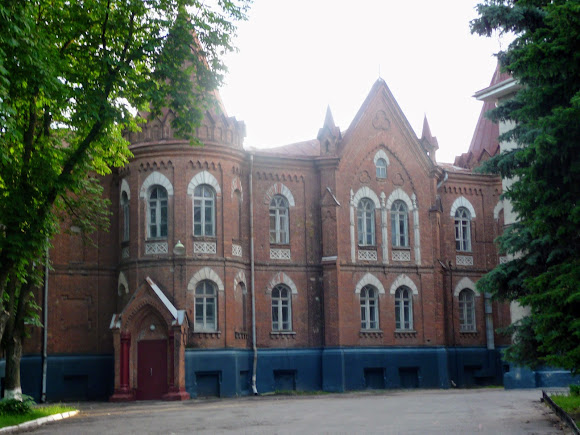 |
| The Alexander Gymnasium. 1873. An architectural monument |
I have seen similar high reliefs in
Bolekhiv in the Ivano-Frankivsk region.
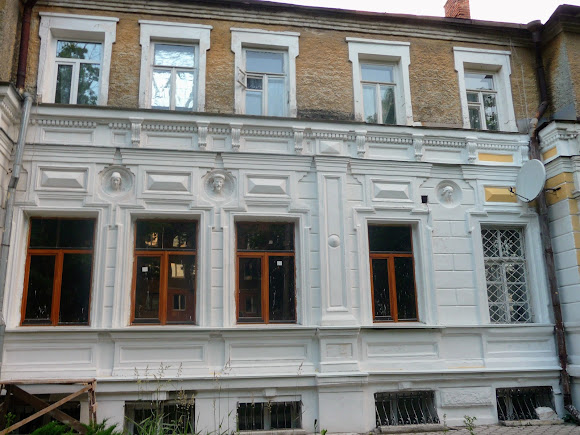 |
| Troitska Street. A building with high reliefs |
 |
| Troitska Street. A building with high reliefs |
The red-brick building is in need of restoration.
 |
| 5a Troitska Street |
 |
| 5a Troitska Street |
The Trinity Cathedral was built in the image of the most famous St Petersburg cathedrals with Kharytonenko's funds.
 |
| Troitska Street. The Trinity Cathedral. 1901 |
An architectural monument of 1901, in Soviet times it was a museum and an organ music hall.
 |
| Troitska Street. The Trinity Cathedral. 1901 |
In 1996 it was returned to the believers.
 |
| Troitska Street. The Trinity Cathedral. 1901 |
The first children's hospital in the Russian Empire was built by the Kharytonenko sugar manufacturers in 1891. Children were treated free of charge. Now the regional health authority is located here.
 |
| Troitska Street. The St Zinaida Children's Hospital. 1896 |
My promenade ended, quite literally at dusk, in the park and estate of Asmolov, an entrepreneur, plant breeder and traveller, to whom exotic plants were brought from all over the world.
 |
| Troitska Street. The park and estate of Asmolov. 19th c. |
 |
| Troitska Street. The park and estate of Asmolov. 19th c. |
This long June day was very productive for me.
 |
| Sumy. The Psel |
Of course, in a few hours' tour I did not manage to see much, but I can say that Sumy is a tourist city and there is something to see and somewhere to rest here.
 |
| The historic centre. Pedestrian streets |






No comments:
Post a Comment
Leave your impression