The most famous landmarks of Novomoskovsk —
Samara Hermitage Monastery, the main shrine of the Zaporozhian Sich, and the Holy Trinity Cathedral, an architectural masterpiece of 18th-century wooden architecture.
 |
| Novomoskovsk. Holy Trinity Cathedral. 1778. |
This architectural monument of national significance can be seen from several kilometres away, before you even reach the entrance to the town.
On the initiative of Otaman Petro Kalnyshevsky, many significant religious buildings were erected across Ukraine. The cathedral in Novomoskovsk holds a special place among the hundred most astonishing wooden structures in the world.
In 1778, under the direction of Colonel Holovaty and with the funds of the Zaporozhian Host, the Holy Trinity Cathedral was built. The folk master Yakym Pohrebniak, invited from Nova Vodolaha, who had built several well-known churches in Slobozhanshchyna, first wove a model of the church out of willow branches. The Holy Trinity Cathedral, his principal project, became the pinnacle of the master builder's professional career.
In the 18th century this was the tallest wooden structure, standing about 65 metres high. The unique building, put together from oak and pine beams without a single iron nail, forms a pentagon in plan rather than the traditional cross.
Its nine cupola-towers are set out three to a line and three to a row. The tallest tower is in the centre, the side ones are lower, and the corner ones are lowest of all. From any point on the ground, save for a view from above, no more than eight towers are ever visible at once.
It is the only project of its kind in the world executed without supporting columns or props.
Stone steps lead up to the church from three sides. On the outside the shrine is sheathed with boards painted white.
Sadly, wood is not an everlasting material. In the 19th century the old logs had to be replaced. When the structure was examined, a great many decayed beams and logs came to light. The restoration essentially turned into building the church anew, leaving only the foundation untouched.
The architect Kharmansky, taking no account of the church's original character, made substantial changes to its structure. The inner slope became different, the proportions were thrown off, the arches and cupolas took on another shape, and the vertical cladding became horizontal. With the rebuilding, the church lost the visual features that had lent it even greater grandeur and beauty.
But the main features of Ukrainian Cossack baroque survived. The church has a main altar — dedicated to the Most Holy Trinity; a right one — to the apostles Peter and Paul; and a left one — to the three holy hierarchs Basil the Great, Gregory the Theologian and John Chrysostom.
The main altar was taken from the predecessor church on whose site the cathedral was built, and was consecrated in 1778. The left and right ones were consecrated in 1880.
After the reconstruction of 1887, a bell tower with a clock was raised, which now, 130 years on, is being restored by specialists.
In Soviet times the shrine was closed and, as in many other churches, a warehouse was housed inside. During the years of the campaign against religion, under the guise of confiscating church property, someone enriched themselves considerably — all the while mocking believers, tearing down churches and abolishing religious holidays.
In 1967 the Ukrainian writer Oles Honchar's problem-and-philosophical novel "The Cathedral" was published, its action unfolding around the Novomoskovsk cathedral. For two centuries the Cossack church had borne witness to various historical events, and the authorities' attitude towards it was far from uniform.
 |
| Novomoskovsk. Holy Trinity Cathedral. 1778. The parish house. |
Throughout the whole work the cathedral remains at the epicentre of events. Once people found solace in it in life's hardest moments; later there were those who wanted to pull it down and put up yet another cheap eatery.
 |
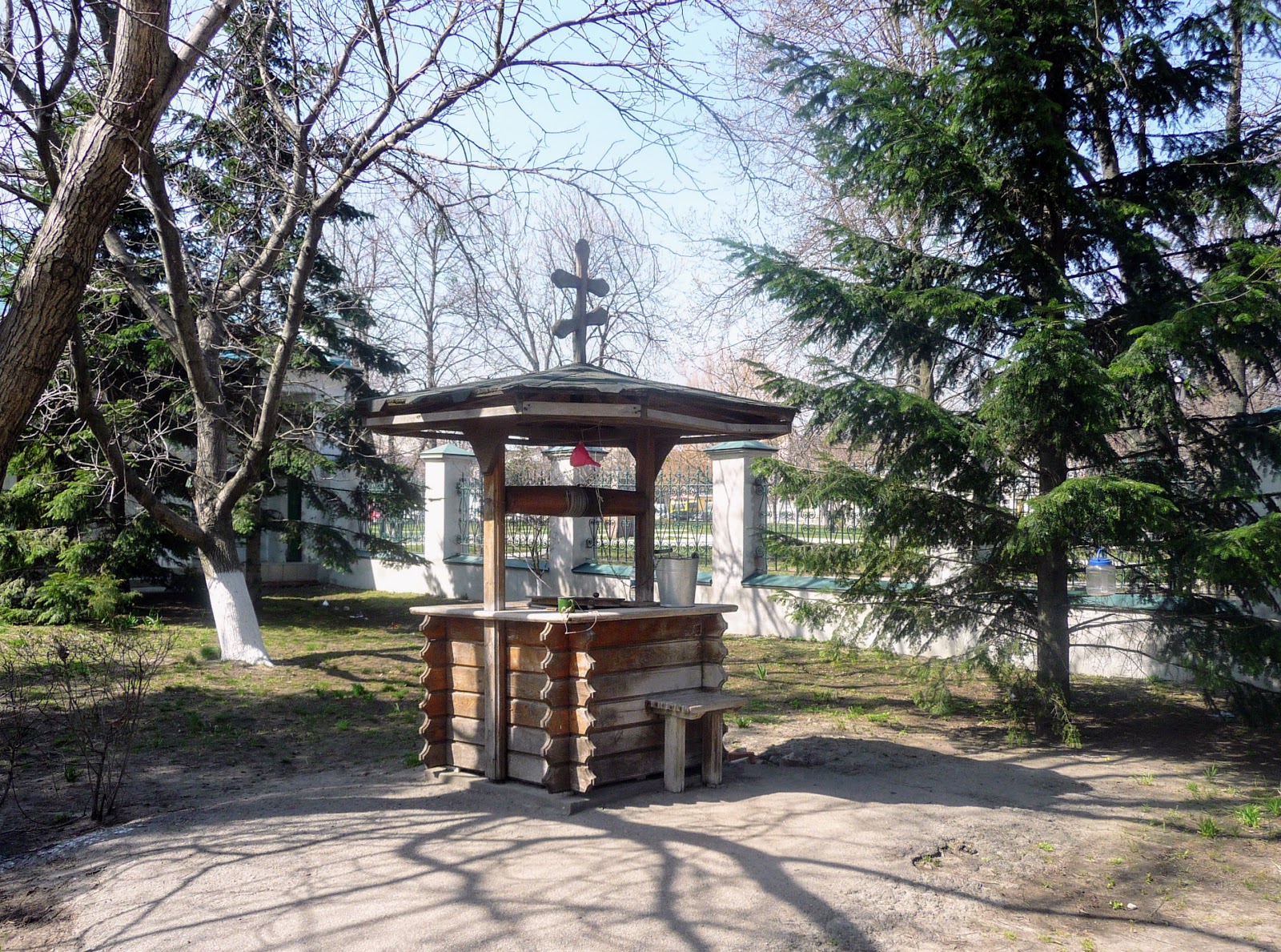
| Holy Trinity Cathedral. 1778. The well in the church courtyard. |
The theme of spirituality, of uniting the nation, of preserving national values and historical memory, runs through the novel like a red thread. The novel was banned by the party censors, for the men at the helm recognised themselves in it.
 |
| The Church of the Nativity of Christ, built by the town's enterprises and organisations in 1999 on the grounds of the Holy Trinity Cathedral |
"The Cathedral" was written over 50 years ago, yet its theme remains as relevant as ever. Will the Ukrainian people be able to unite and hold back the rampage of soullessness and desolation? Will they be able to preserve their national spirit, their shrines and the temple of their own soul?
 |
| Novomoskovsk. Holy Trinity Cathedral. 1778. |
Address: the town of Novomoskovsk, Dnipropetrovsk region, 1 Peremohy Square.
Coordinates: 48°37’40"N 35°15’49"E




No comments:
Post a Comment
Leave your impression