Zolochiv Castle together with Olesko and Pidhirtsi is part of the popular tourist route 'The Golden Horseshoe of the Lviv Region'.
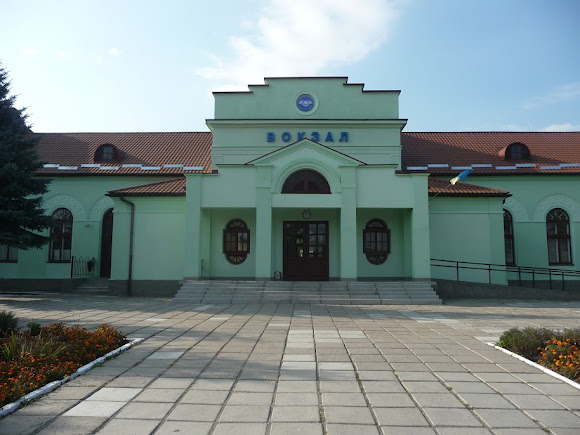
I went there by the electric train Lviv — Ternopil. An hour and a half on the way — and I was at 'Zlochiv' station, whose name has undergone small metamorphoses. Having lost one letter 'O', and thereby differing from the name of the town and the station of the same name in the Kharkiv region, it is pronounced in the Polish manner, recalling its origin.

Zlochiv — 'to hear evil' (zlo chuty), that is, to give warning of the enemy's approach. The town has been known since the 15th century, lies 60 km from Lviv, and has always held important strategic significance.
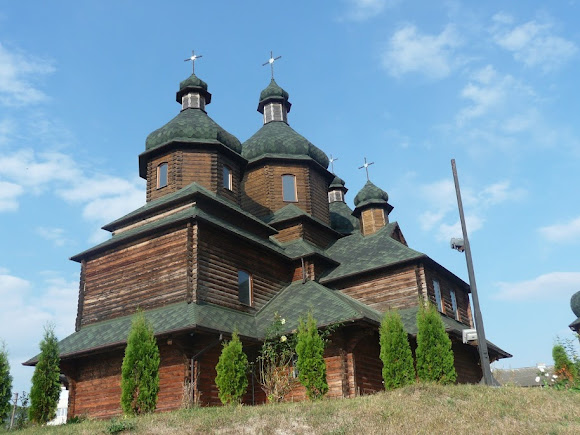
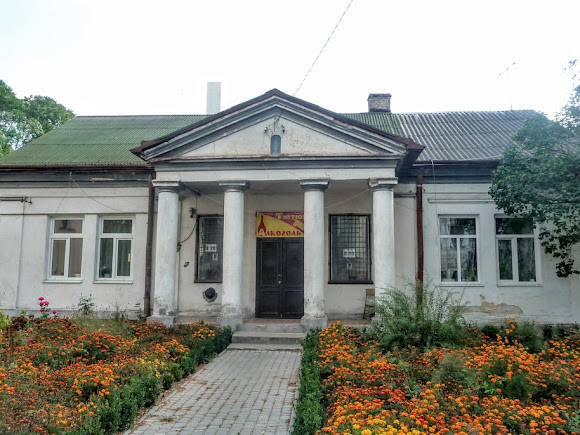
The weather in Zolochiv was splendid — golden autumn, October had returned to summer, and the walk promised to be wonderful. From the station I set off along Markiyan Shashkevych Street, two kilometres long, and my first stop was by the three-tiered church of Mykolai Charnetskyi, built in 2011 of logs and covered with modern bitumen shingles. The church belongs to the UGCC; its interior decoration, though made of wood, also looks modern.
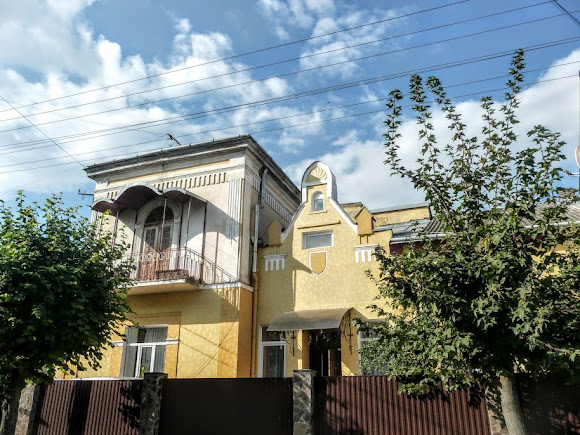
The buildings on this quiet street are new and multi-storeyed, but I, as always, pay attention to the old ones. There are many here built back in the Austrian period, already more than a hundred years old.
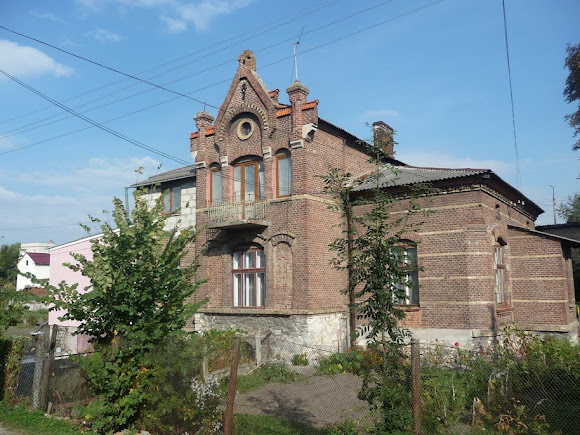
A building with a red-brick facade has undergone radical changes, but part of the old structure is still visible.
Nothing human is alien to the people of Zolochiv, and the shop selling alcohol and tobacco products looks a touch pompous.
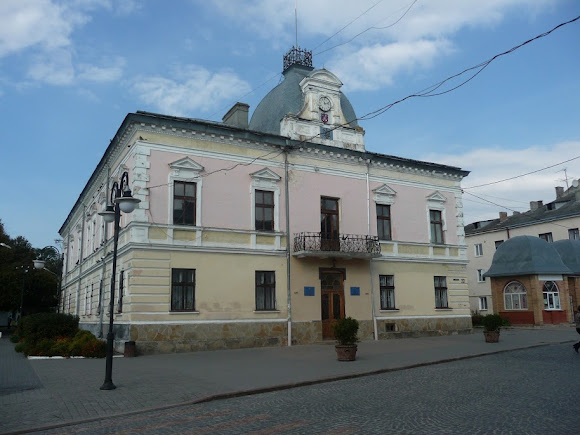
The centre of Zolochiv is the town council, with a clock set on its acroterion that showed the correct time,
and a monument to Viacheslav Chornovil on the square.

The Zolochiv manor house is the historic dominant of the town and one of the oldest buildings in Ukraine. Built in the 14th century in the Renaissance style, it was part of the defensive complex and served at various times as a royal residence, an arsenal, an almshouse (hospital) for the poor, and in Soviet times it was turned into a trade depot with all the consequences that followed. Despite its centuries-long chronicle, the building has preserved its monumental portal, crenellated pediment, attic and fireplace with a Gothic arch. Today it houses a cultural and educational centre of the UGCC.
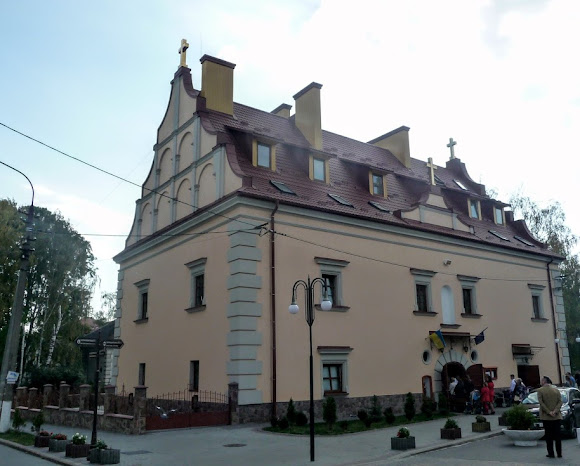
Sadly, during the restoration the architectural monument was 'dressed' from an ordinary building-materials store. Now it looks like a European dandy, and it is very hard to recognise in it the town's old-timer.
The Holy Resurrection Church was built in the 1620s as a Roman Catholic church, and now belongs to the Orthodox church.
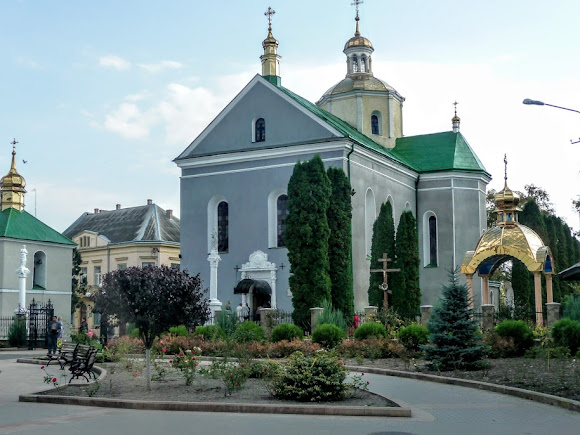

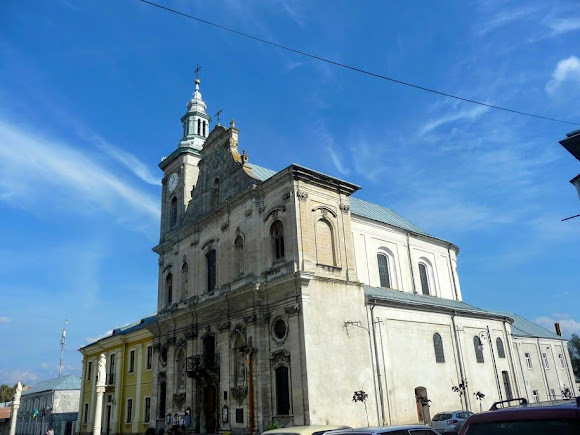
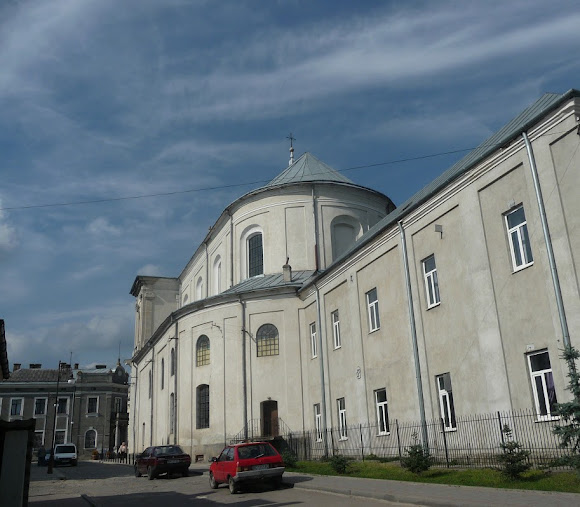
Another architectural monument — the Baroque Church of the Assumption of the Most Holy Mother of God, built in the 1760s — has niches on its facade with sculptures set into them. The tower with a clock, which also showed the correct time, has it on only one side.
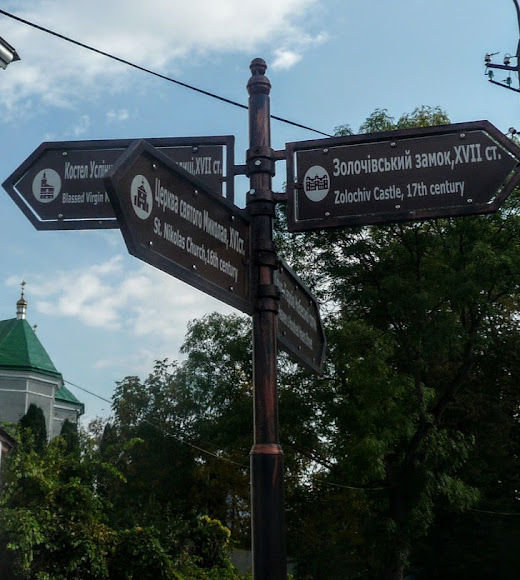
A signpost directed me to the castle,
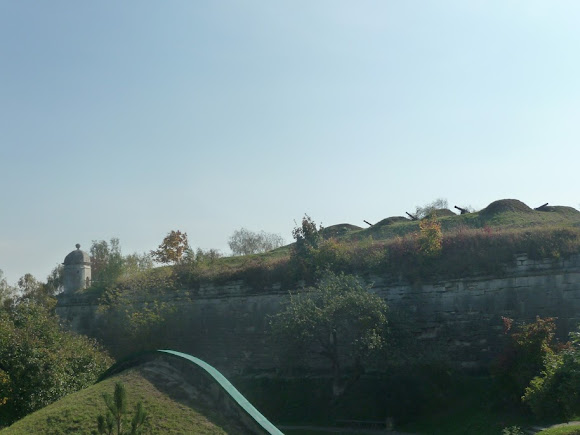
and even from afar I saw the bastions with their cannons.
By the ravelin, on which souvenir kiosks and a cafe are now set up, an indeterminate sculpture greets you.
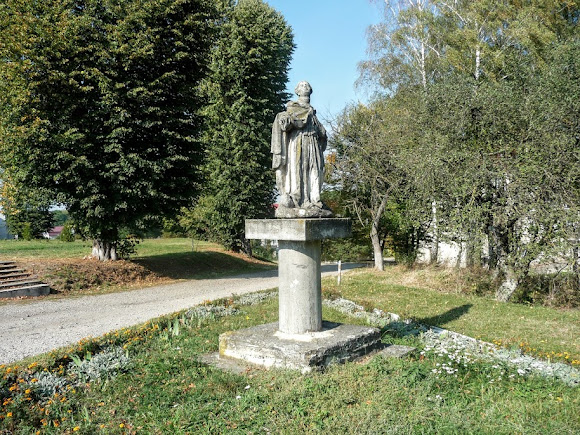
The fortress ramparts, reinforced with walls, and the deep moats are well preserved.

I walked across the restored drawbridge to the entrance of the impregnable stronghold,
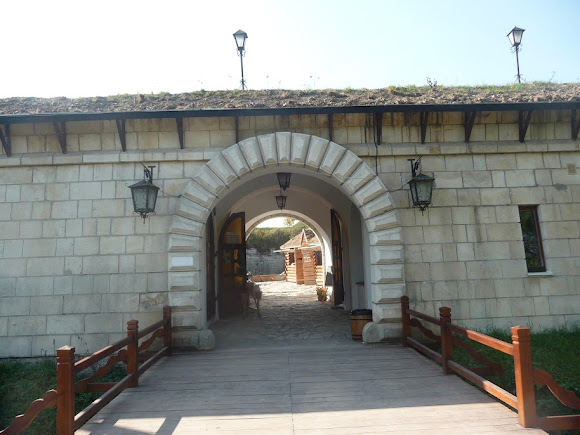
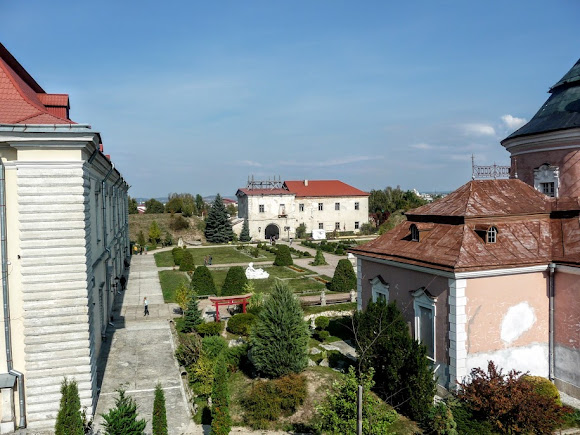
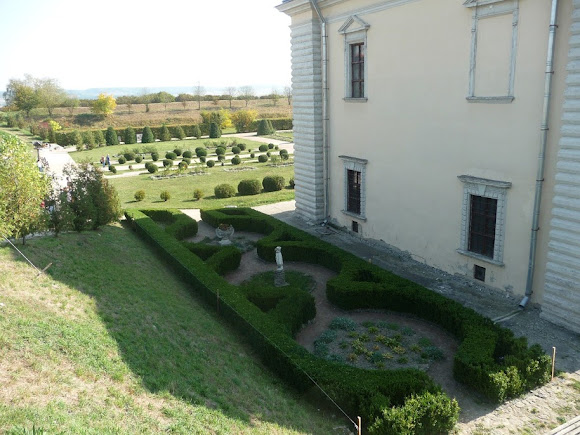
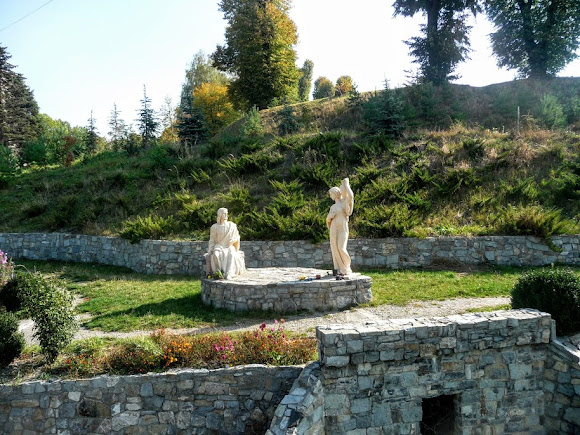
and before my eyes opened a castle courtyard, rectangular in plan, with a French garden laid out in the centre, adorned with sculptures and fountains.
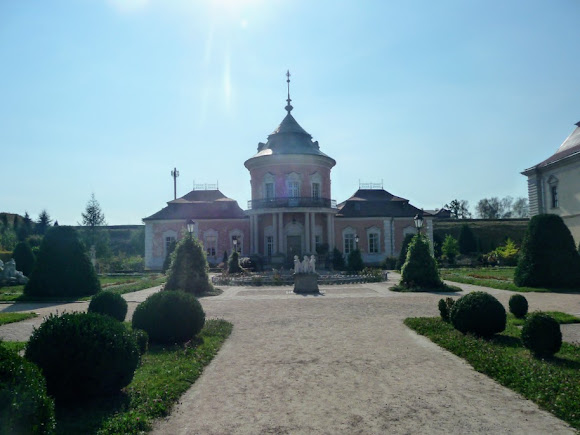


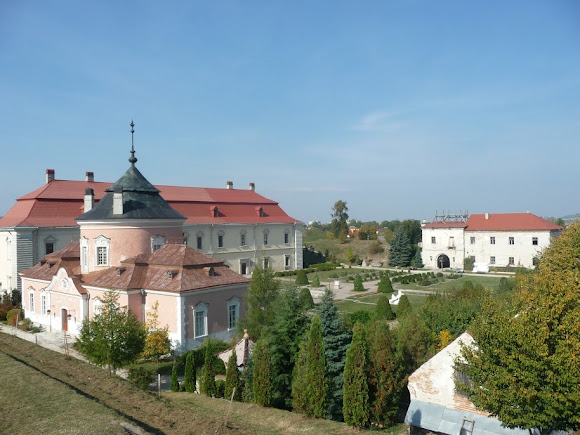
The blinding sun made it impossible to make out and photograph the pink-and-white Chinese Palace, and only when I climbed onto the rampart from the other side did I see the centuries-old calling card of Zolochiv as if in the palm of my hand.

There are only three palaces in the whole world like the Chinese Palace, built in the 17th century in the Eastern style — here, in France and in Peterhof (Russia).

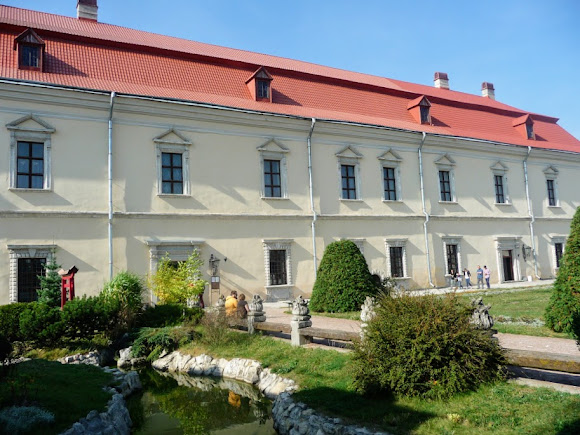
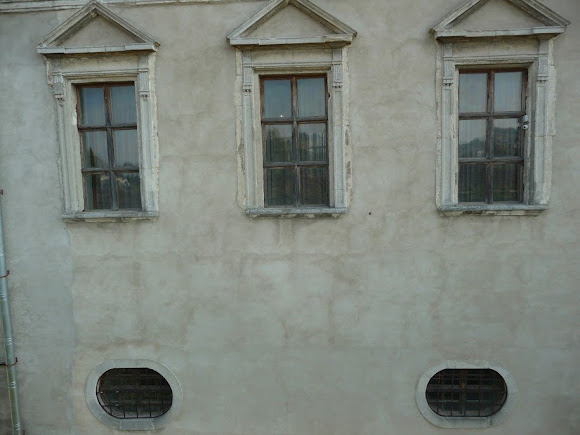
A two-storey rotunda with columns, a balcony and a tented roof crowned by a spire stands in the centre; to its left and right, like wings, are two single-storey buildings with windows framed in white bas-relief moulding.

The same cornice runs around the entire perimeter.

The Great Palace, decorated with rustication, looks more austere.
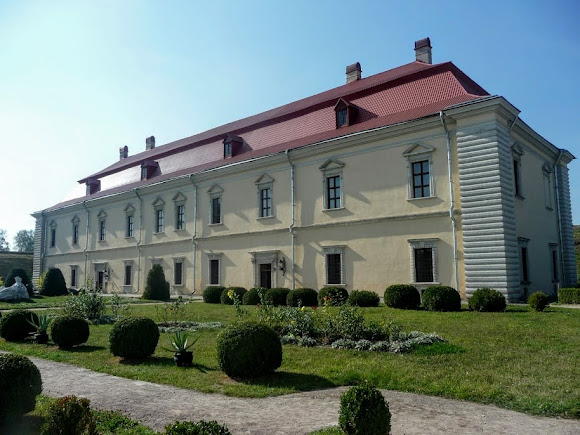
It is a two-storey building of the 17th century, a former royal residence with secret passages, underground cellars and a sewage system.
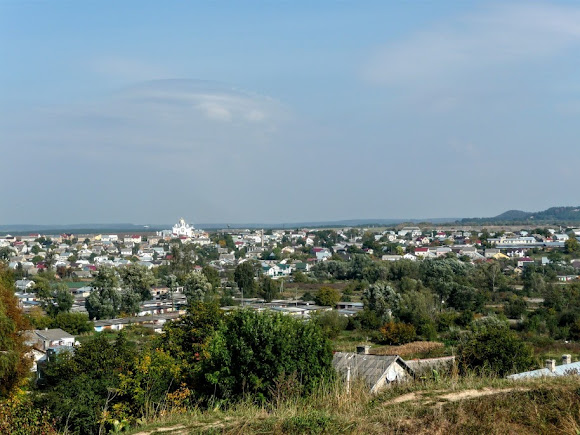
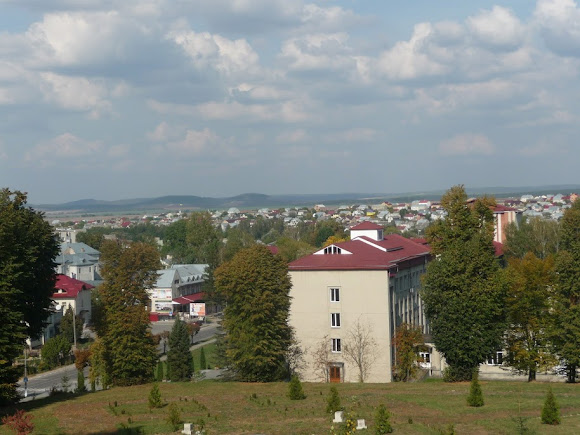
Having walked along the crest of the earthen fortifications and admired the panorama of the town and its surroundings,
I went off to get acquainted with the museum exhibitions.
In the Chinese Palace, five halls display works of art of various genres from Asian countries — paintings, sculptures, vases and much more. Your hands reach out of their own accord to touch the Chinese silk sheet with its embroidered pictures. But in this museum even paid photography is forbidden. To my request to photograph at least a general view, the attendant replied with a question: 'And what's in it for me?' Still, I did take a few smuggled shots to popularise the museum.

In the Great Palace, on the contrary, photography is allowed, and I invite you on a photo-tour of the halls with their preserved cross vaults.

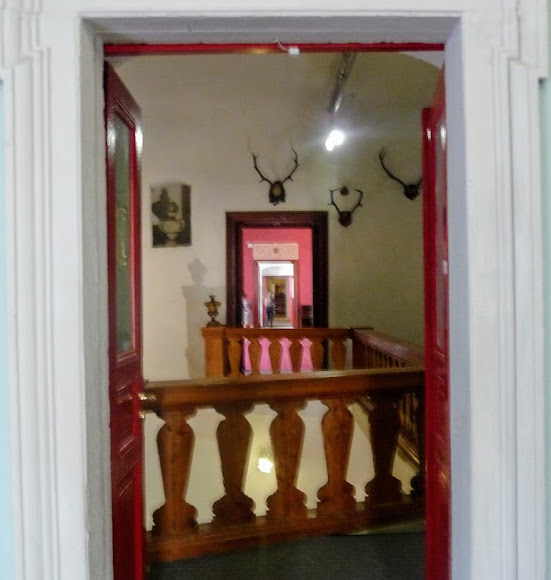
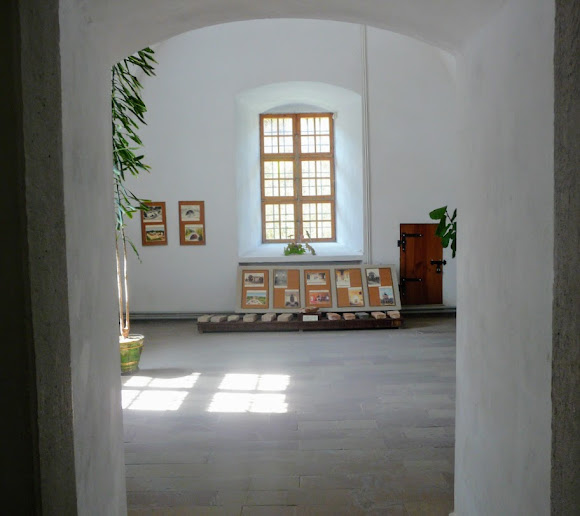
The most terrible page in the palace's history is the years when a prison was housed in it. After the fascist occupation it remained here until 1953. An exhibition in a special hall is devoted to these events.
The Subcarpathian forests have long been a place for hunting. The museum has gathered a collection of trophies from the lords' pastimes.


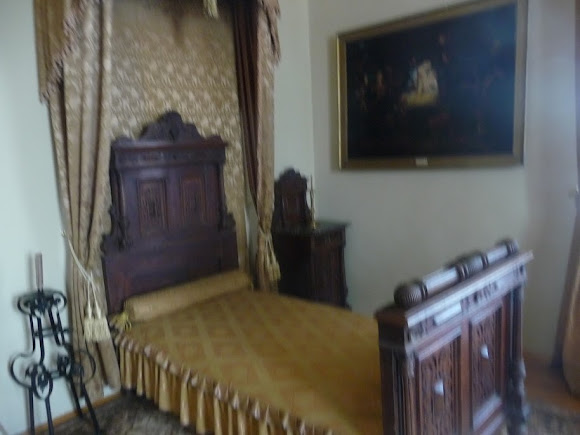
I especially liked the halls with interiors of the 17th and 18th centuries.


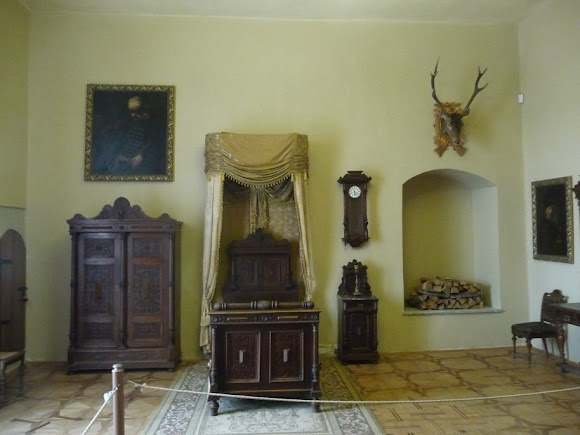
Copies of very famous canvases by world classics, porcelain, exquisite furniture, carpets and other wonders were provided by the Lviv Art Gallery.
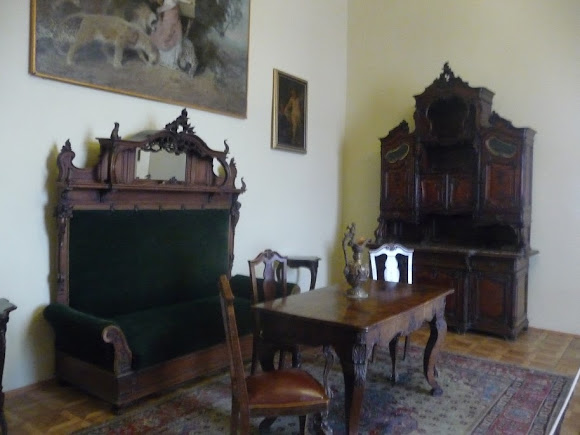

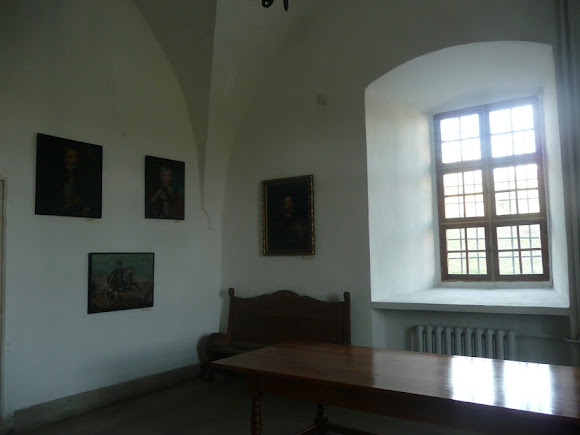
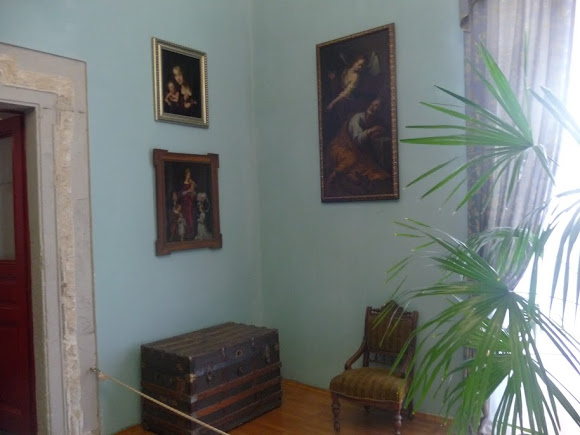


I want to note the attitude of the museum attendants to their profession: they meet the endless stream of visitors very warmly, not with gloomy faces, and point out what to pay attention to.
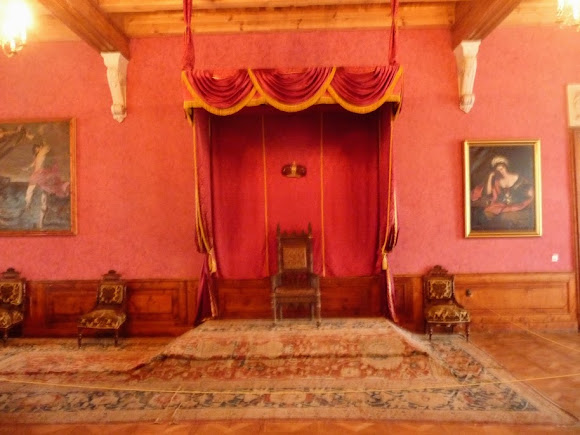

Great interest is aroused among tourists by the arrangement of the palazzo's plumbing. In the living quarters there were six toilets, and the chambers were divided into women's and men's.
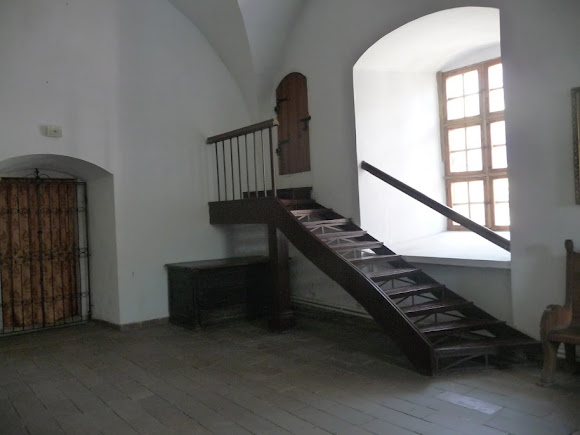


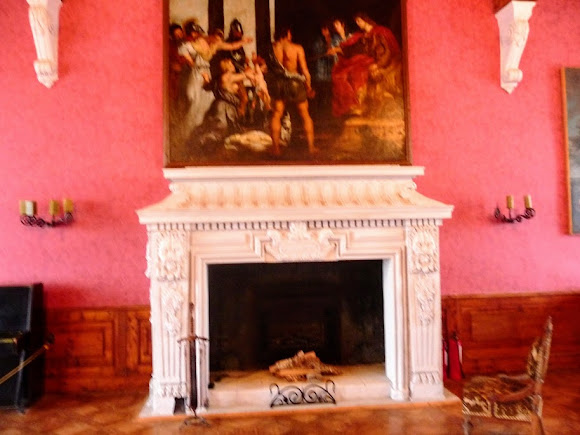
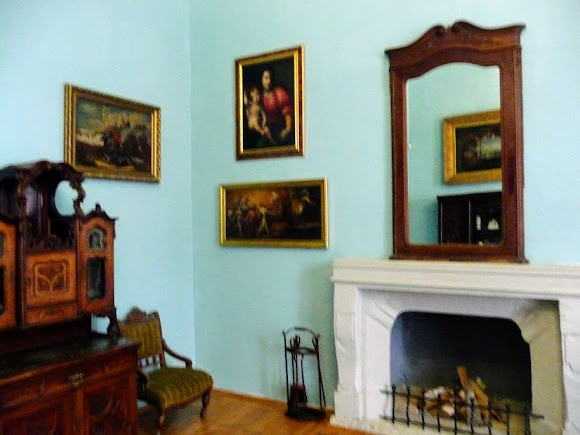
The castle was heated by fireplaces, which have not survived owing to their age but have been recreated by the restorers with the greatest possible fidelity.


In 2016 the temple's underground vault was opened for viewing; intended as a cellar, it long served as a chamber for torture.

In two halls there is the exhibition 'Architectural Fragments and Lighting of Old Lviv', dedicated to Borys Voznytskyi, director of the Lviv Art Gallery, thanks to whose efforts the castles of the Golden Horseshoe became open to visitors. You can get into the underground only with a tour, which is held every half-hour.
I have long noticed that museologists are very beautiful people, and this tour was no exception. A charming girl told interesting stories about the exhibits. In recent times the Renaissance window portals of 15th-16th century buildings from Lviv's Market Square were paved over into the asphalt. But the residents tried to save them and hid the architectural masterpieces in their own courtyards.
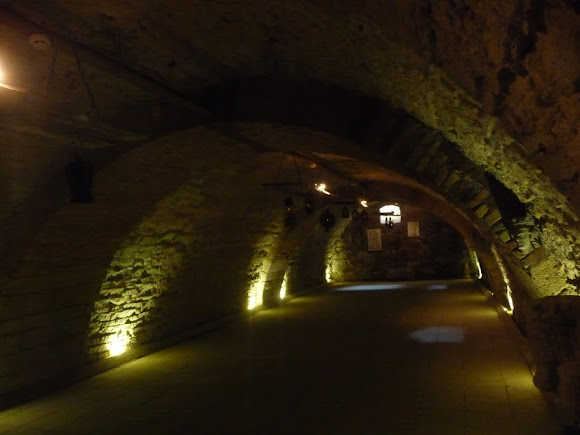


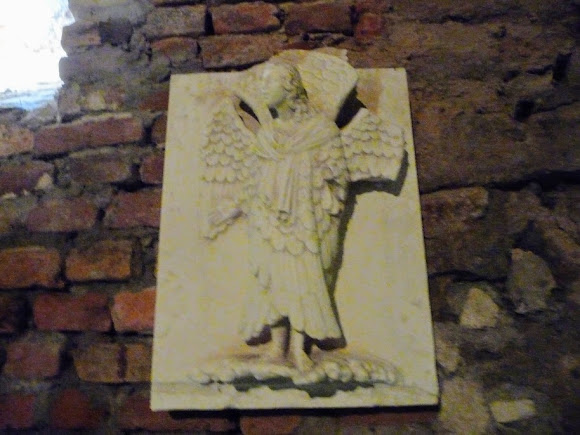
The most varied lanterns that once lit the streets of the City of the Lion have also survived, thanks to the concern of the townspeople.


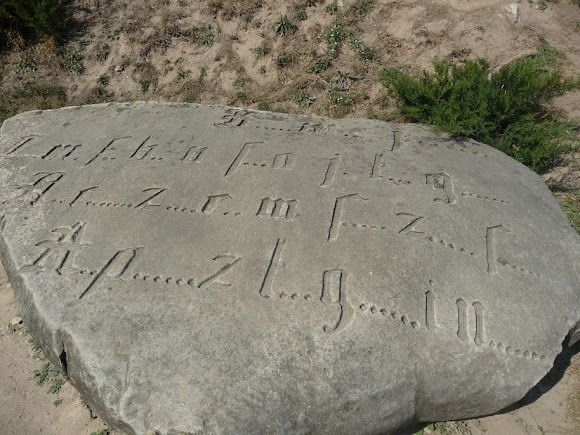
Every castle has its own legends and secrets. The inscriptions on a stone, found twenty kilometres from the fortress in the village of Novosilky and brought onto the grounds of the stronghold, remain unsolved. It is hard to say in what ancient language the writings of the 15th century are composed. Understandable are only the eternal symbols carved on the stone and addressed to posterity: the crown of thorns — martyrdom, suffering; the laurel — victory, peace, glory, spirituality.

Having walked once more along the bastions, I finished my tour of the castle.


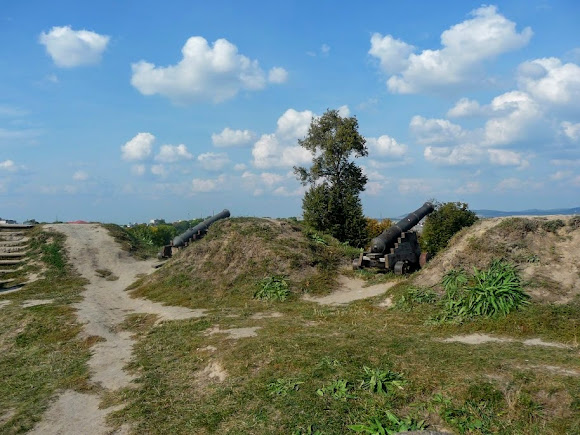
I still had a little time, so as not to head straight for the station but to make a small circle through the town streets.
Alongside legends of the deep past, in a building resembling all its administrative twin-brothers, the district authorities are housed.

On the quiet Chaikovskyi Street (I don't know whether Petro or Andrii — the composer or the writer; I would have liked the plaques to give the first name) a super-discovery awaited me.

Such town-houses can be seen only in Lviv. The vaulted windows emphasise the beauty of the stone and give the two-storey dwelling a Gothic character. Stone lacework adorns the facade, with a bas-relief of a winged lion — a symbol of might and courage.
In the centre, the Shashkevych Street already familiar to me serves only pedestrians. Before the Second World War it was named after the Polish king Jan Sobieski, owner of Zolochiv and other castles.

The buildings are unlike one another and differ in their balconies, columns and domes on the roofs.

I did not get to see the Basilian monastery and the church of St. Nicholas, built in the 16th century, which I regret. Nor did I reach the monuments to our classic writers — T. H. Shevchenko and A. S. Pushkin. But on a short trip it is impossible to see everything, and the electric train returning from Ternopil was already waiting for me. The trip was wonderful, and I gladly share my delightful impressions.
Address of the castle: the town of Zolochiv, Lviv region, 5 Ternopilska Street. Coordinates: 49°48’7"N 24°54’22"E

I went there by the electric train Lviv — Ternopil. An hour and a half on the way — and I was at 'Zlochiv' station, whose name has undergone small metamorphoses. Having lost one letter 'O', and thereby differing from the name of the town and the station of the same name in the Kharkiv region, it is pronounced in the Polish manner, recalling its origin.

Zlochiv — 'to hear evil' (zlo chuty), that is, to give warning of the enemy's approach. The town has been known since the 15th century, lies 60 km from Lviv, and has always held important strategic significance.
The weather in Zolochiv was splendid — golden autumn, October had returned to summer, and the walk promised to be wonderful. From the station I set off along Markiyan Shashkevych Street, two kilometres long, and my first stop was by the three-tiered church of Mykolai Charnetskyi, built in 2011 of logs and covered with modern bitumen shingles. The church belongs to the UGCC; its interior decoration, though made of wood, also looks modern.

The buildings on this quiet street are new and multi-storeyed, but I, as always, pay attention to the old ones. There are many here built back in the Austrian period, already more than a hundred years old.

 |
| Shashkevych Street. A bank |
 |
| Zolochiv. Shashkevych Street. Police department |

Nothing human is alien to the people of Zolochiv, and the shop selling alcohol and tobacco products looks a touch pompous.

The centre of Zolochiv is the town council, with a clock set on its acroterion that showed the correct time,

and a monument to Viacheslav Chornovil on the square.

The Zolochiv manor house is the historic dominant of the town and one of the oldest buildings in Ukraine. Built in the 14th century in the Renaissance style, it was part of the defensive complex and served at various times as a royal residence, an arsenal, an almshouse (hospital) for the poor, and in Soviet times it was turned into a trade depot with all the consequences that followed. Despite its centuries-long chronicle, the building has preserved its monumental portal, crenellated pediment, attic and fireplace with a Gothic arch. Today it houses a cultural and educational centre of the UGCC.

Sadly, during the restoration the architectural monument was 'dressed' from an ordinary building-materials store. Now it looks like a European dandy, and it is very hard to recognise in it the town's old-timer.
The Holy Resurrection Church was built in the 1620s as a Roman Catholic church, and now belongs to the Orthodox church.


Another architectural monument — the Baroque Church of the Assumption of the Most Holy Mother of God, built in the 1760s — has niches on its facade with sculptures set into them. The tower with a clock, which also showed the correct time, has it on only one side.


A signpost directed me to the castle,

and even from afar I saw the bastions with their cannons.

By the ravelin, on which souvenir kiosks and a cafe are now set up, an indeterminate sculpture greets you.

The fortress ramparts, reinforced with walls, and the deep moats are well preserved.

I walked across the restored drawbridge to the entrance of the impregnable stronghold,

and before my eyes opened a castle courtyard, rectangular in plan, with a French garden laid out in the centre, adorned with sculptures and fountains.


The blinding sun made it impossible to make out and photograph the pink-and-white Chinese Palace, and only when I climbed onto the rampart from the other side did I see the centuries-old calling card of Zolochiv as if in the palm of my hand.

There are only three palaces in the whole world like the Chinese Palace, built in the 17th century in the Eastern style — here, in France and in Peterhof (Russia).

A two-storey rotunda with columns, a balcony and a tented roof crowned by a spire stands in the centre; to its left and right, like wings, are two single-storey buildings with windows framed in white bas-relief moulding.

The same cornice runs around the entire perimeter.

The Great Palace, decorated with rustication, looks more austere.

It is a two-storey building of the 17th century, a former royal residence with secret passages, underground cellars and a sewage system.


I went off to get acquainted with the museum exhibitions.
In the Chinese Palace, five halls display works of art of various genres from Asian countries — paintings, sculptures, vases and much more. Your hands reach out of their own accord to touch the Chinese silk sheet with its embroidered pictures. But in this museum even paid photography is forbidden. To my request to photograph at least a general view, the attendant replied with a question: 'And what's in it for me?' Still, I did take a few smuggled shots to popularise the museum.

 |
| Museum of Eastern Cultures. Panel 'The Story of the Ramayana'. Sandalwood. A gift from the Ambassador of Indonesia |
In the Great Palace, on the contrary, photography is allowed, and I invite you on a photo-tour of the halls with their preserved cross vaults.


 |
| Model of the castle |
 |
| Gates of the former prison |


I especially liked the halls with interiors of the 17th and 18th centuries.


Copies of very famous canvases by world classics, porcelain, exquisite furniture, carpets and other wonders were provided by the Lviv Art Gallery.


I want to note the attitude of the museum attendants to their profession: they meet the endless stream of visitors very warmly, not with gloomy faces, and point out what to pay attention to.


 |
| Plan of Paris |
 |
| Cossack map of the Ukrainian lands. 1712 |
 |
| Mirror map |
Great interest is aroused among tourists by the arrangement of the palazzo's plumbing. In the living quarters there were six toilets, and the chambers were divided into women's and men's.


The castle was heated by fireplaces, which have not survived owing to their age but have been recreated by the restorers with the greatest possible fidelity.


In 2016 the temple's underground vault was opened for viewing; intended as a cellar, it long served as a chamber for torture.


In two halls there is the exhibition 'Architectural Fragments and Lighting of Old Lviv', dedicated to Borys Voznytskyi, director of the Lviv Art Gallery, thanks to whose efforts the castles of the Golden Horseshoe became open to visitors. You can get into the underground only with a tour, which is held every half-hour.
I have long noticed that museologists are very beautiful people, and this tour was no exception. A charming girl told interesting stories about the exhibits. In recent times the Renaissance window portals of 15th-16th century buildings from Lviv's Market Square were paved over into the asphalt. But the residents tried to save them and hid the architectural masterpieces in their own courtyards.


The most varied lanterns that once lit the streets of the City of the Lion have also survived, thanks to the concern of the townspeople.


Every castle has its own legends and secrets. The inscriptions on a stone, found twenty kilometres from the fortress in the village of Novosilky and brought onto the grounds of the stronghold, remain unsolved. It is hard to say in what ancient language the writings of the 15th century are composed. Understandable are only the eternal symbols carved on the stone and addressed to posterity: the crown of thorns — martyrdom, suffering; the laurel — victory, peace, glory, spirituality.


Having walked once more along the bastions, I finished my tour of the castle.


I still had a little time, so as not to head straight for the station but to make a small circle through the town streets.

Alongside legends of the deep past, in a building resembling all its administrative twin-brothers, the district authorities are housed.

On the quiet Chaikovskyi Street (I don't know whether Petro or Andrii — the composer or the writer; I would have liked the plaques to give the first name) a super-discovery awaited me.

Such town-houses can be seen only in Lviv. The vaulted windows emphasise the beauty of the stone and give the two-storey dwelling a Gothic character. Stone lacework adorns the facade, with a bas-relief of a winged lion — a symbol of might and courage.
 |
| Zolochiv. Chaikovskyi Street. The town-house 'Under the Winged Lion' |
In the centre, the Shashkevych Street already familiar to me serves only pedestrians. Before the Second World War it was named after the Polish king Jan Sobieski, owner of Zolochiv and other castles.

The buildings are unlike one another and differ in their balconies, columns and domes on the roofs.
 |
| School |
 |
| District court |
 |
| Kindergarten |

 |
| Shop |
 |
| Polyclinic |
 |
| Zolochiv. Mariya Fenveshi Street |
I did not get to see the Basilian monastery and the church of St. Nicholas, built in the 16th century, which I regret. Nor did I reach the monuments to our classic writers — T. H. Shevchenko and A. S. Pushkin. But on a short trip it is impossible to see everything, and the electric train returning from Ternopil was already waiting for me. The trip was wonderful, and I gladly share my delightful impressions.

Address of the castle: the town of Zolochiv, Lviv region, 5 Ternopilska Street. Coordinates: 49°48’7"N 24°54’22"E
This story is also available in Ukrainian: Золочівський замок. Фортеця, королівська резиденція, катівня, музей

No comments:
Post a Comment
Leave your impression