One could speak endlessly of the magical charm of our Carpathians. The more often you come here, the more you long to know about every corner of this blessed land.

Skole is a unique place where you revel in the beauty of mountain peaks and crystal waterfalls and get to know the authentic traditions of a hospitable people and their multi-ethnic culture.

The town lies in the picturesque valley of the Opir River at the foot of the Carpathian Mountains and is known for its rafting tours.

Skole is impossible to miss when driving along the Kyiv — Uzhhorod highway, or by rail on the Lviv — Mukachevo line.
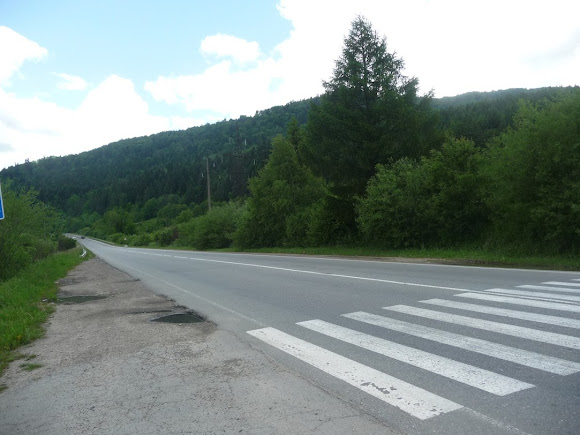
A landmark is the partly ruined monument on the Tukholka Pass, once the calling card of Skole. It was originally dedicated to the liberation of the Skole area from Hitler's forces in 1944. Now only two sculptures of shepherds remain, trembitas in their hands, greeting the passing guests and travellers — or perhaps announcing the driving of the sheep out to pasture, or some other notable event, because for a dweller of the mountains the trembita is an indispensable means of communication, like a mobile phone.

I came to Skole on the Lviv — Mukachevo suburban train, known to the locals as the "mukachivka".

The railway was built in 1885.

And although the name of the district centre does not decline, here people say "to go to Skolioho".
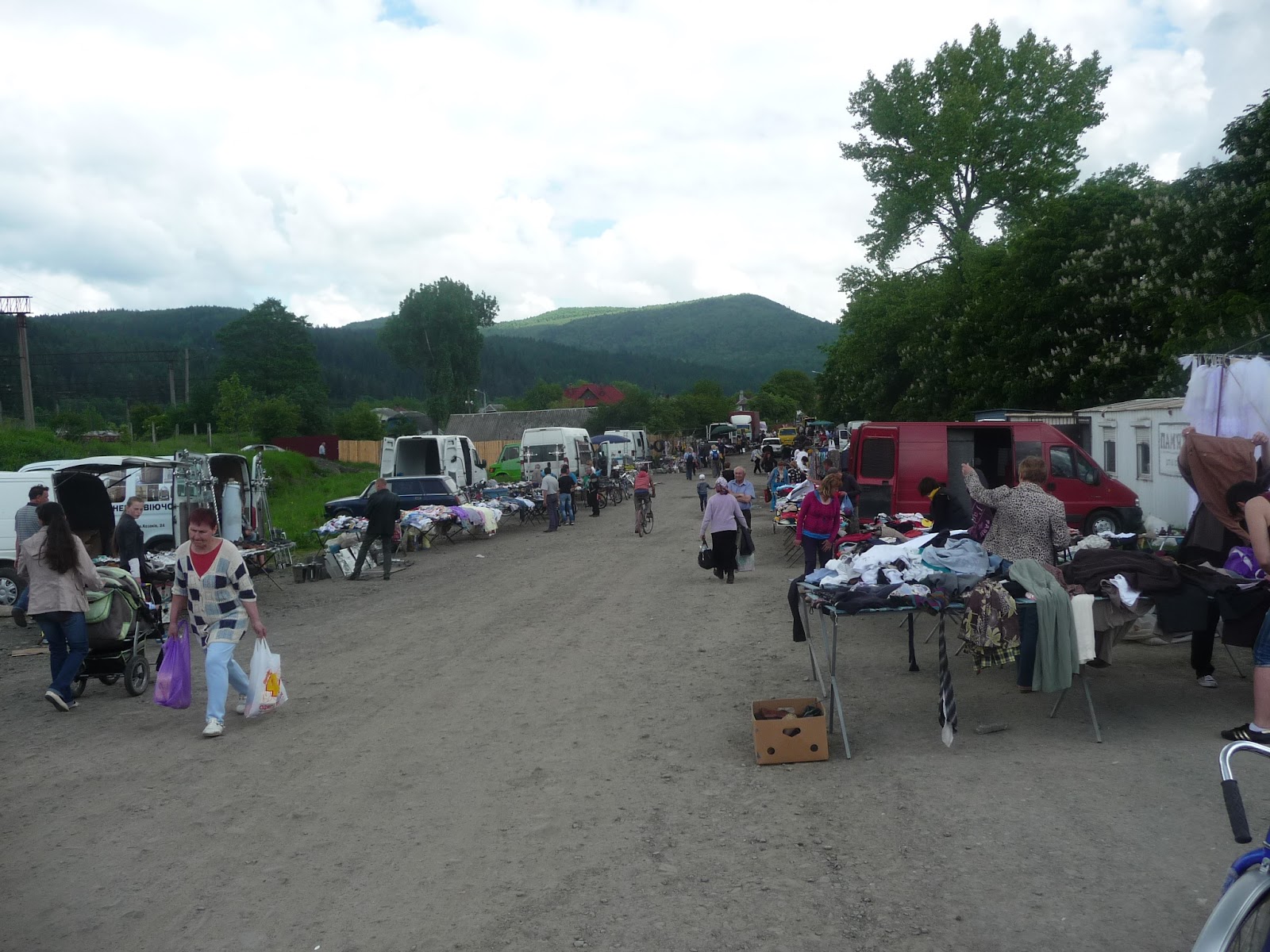
Right by the station stretched what seemed to me an endless market. Mostly second-hand goods were on sale, and the stalls with this European jumble ran along the road, right under the fences of the residential houses. It is very strange that the numerous trading spots are on the street rather than in a special square. The piles of worn clothes and shoes, the fuss and the din badly spoil one's first impression of the town. It seemed that the entire adult population had taken up trading, which speaks of low purchasing power and of the absence of economically developed enterprises.

Those who worked hard abroad and improved their fortunes have been able to build mini-hotels to European standards for the many tourists.

But not everyone relishes the lot of the migrant worker.

Skole has been known since the end of the 14th century and is on the list of historic settlements of Ukraine.


Thanks to this it has not lost its town status, for it has only around 6,000 inhabitants.


On the town's coat of arms and flag is an image of its patron, the Archangel Michael.


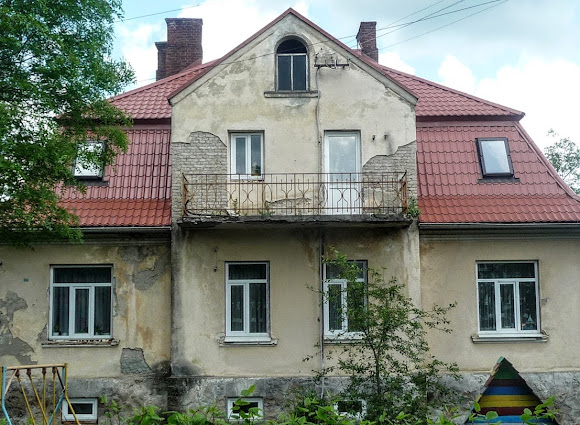
The Skole gymnasium occupies a building from 1894, to which running water and sewerage were laid on only a few years ago.


By the small school garden

I met the school's lab assistant, who told me about the institution where, before the Second World War, the children of Ukrainians, Poles and Jews studied at the same desks.
It used to be a school for boys.

A hospitable woman of Skole, wishing to enrich my acquaintance with the town with interesting facts, advised me to apply to the town hall so that they would assign me a competent guide. Dear, kind Stefaniia Stefanivna, I am most grateful for your warmth and care, but I am used to travelling on my own.
On the advice of the good Stefaniia Stefanivna, I set off for Altana Hill.

Here begin the tourist trails through the "Skolivski Beskydy" National Nature Park, with its protected tracts and waterfalls.


Filling my lungs with air saturated with phytoncides, I wanted simply to take flight up the steep slope of the highlands.

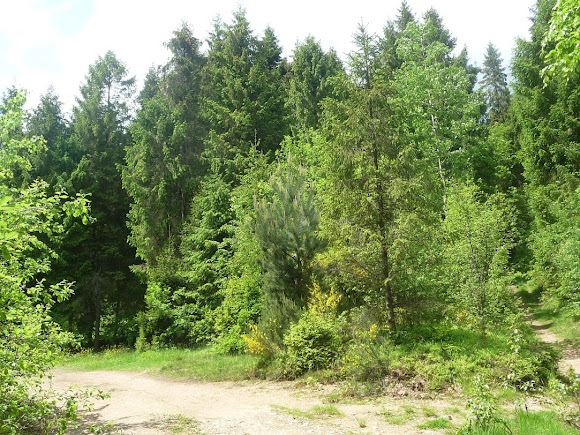
Within the reserve, primeval forests unique for Europe have been preserved.


The scent of the flowering wild herbs draws the bees, which are famed here for their heightened industry.
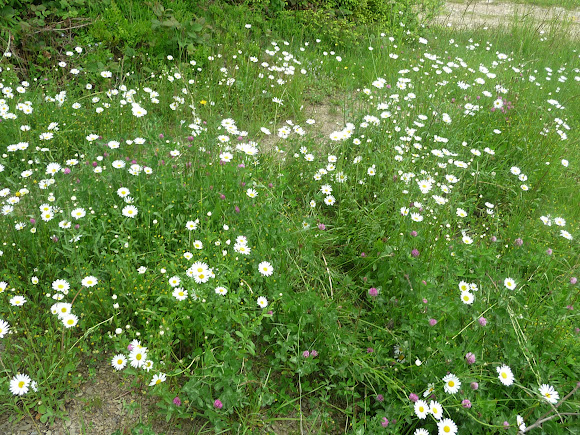

And Carpathian honey is a source of health.
I climbed up to the memorial along a picturesque hillside, admiring the landscape and the panorama of the town.

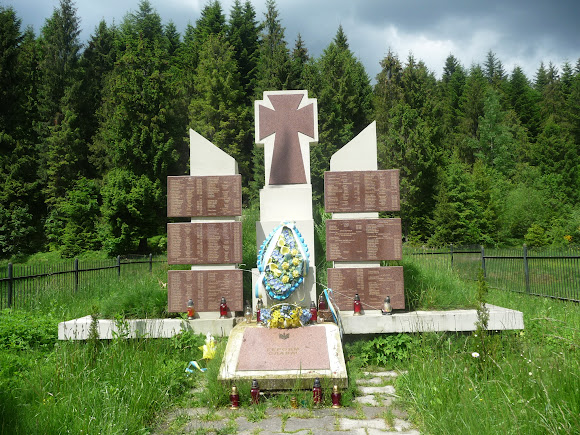
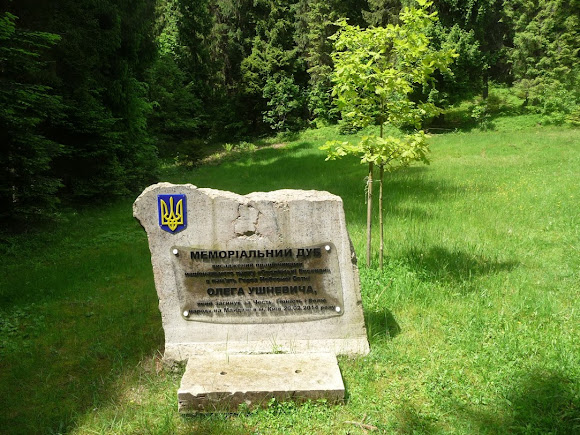
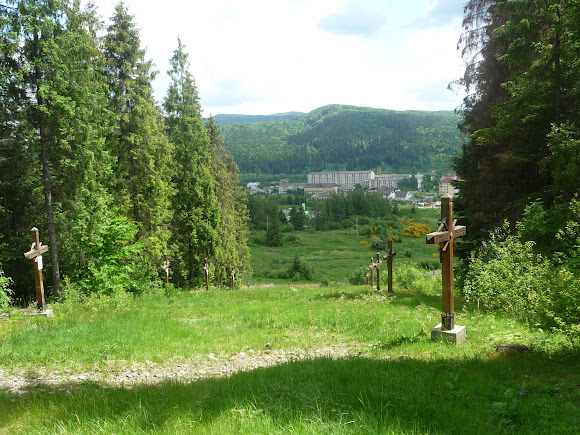
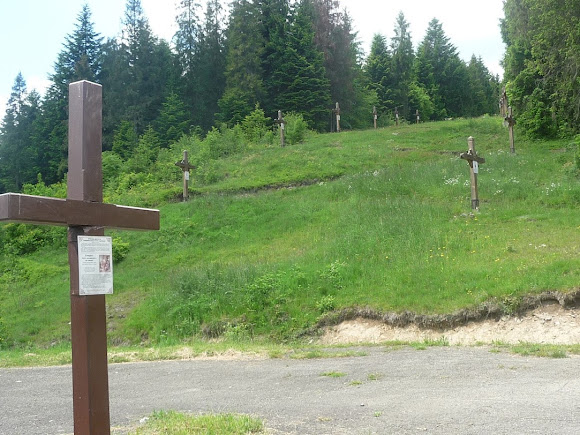
On this sacred spot stand the stations of the Way of the Cross.

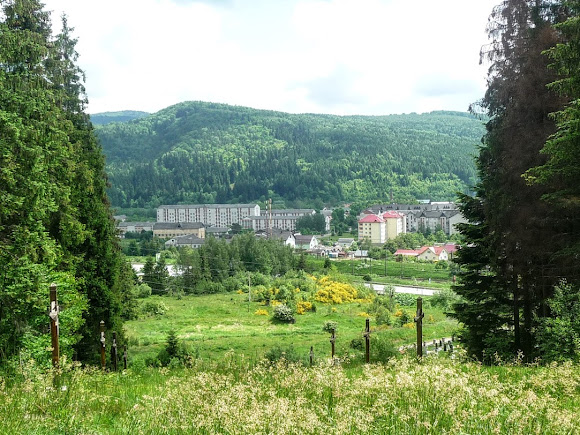
At each cross, during the procession, the pilgrims stop with prayers to the glory of God and for peace in Ukraine.
In this small town there are four churches of various religious denominations.

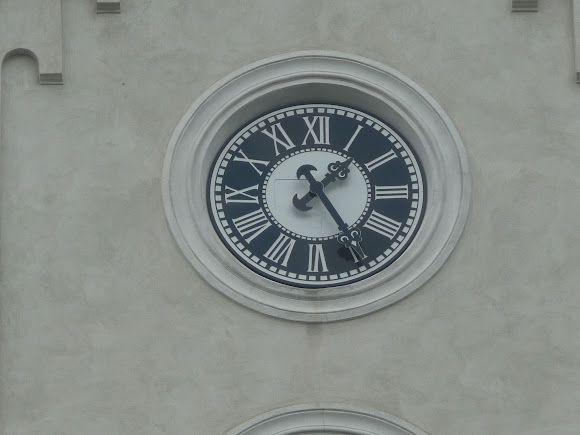
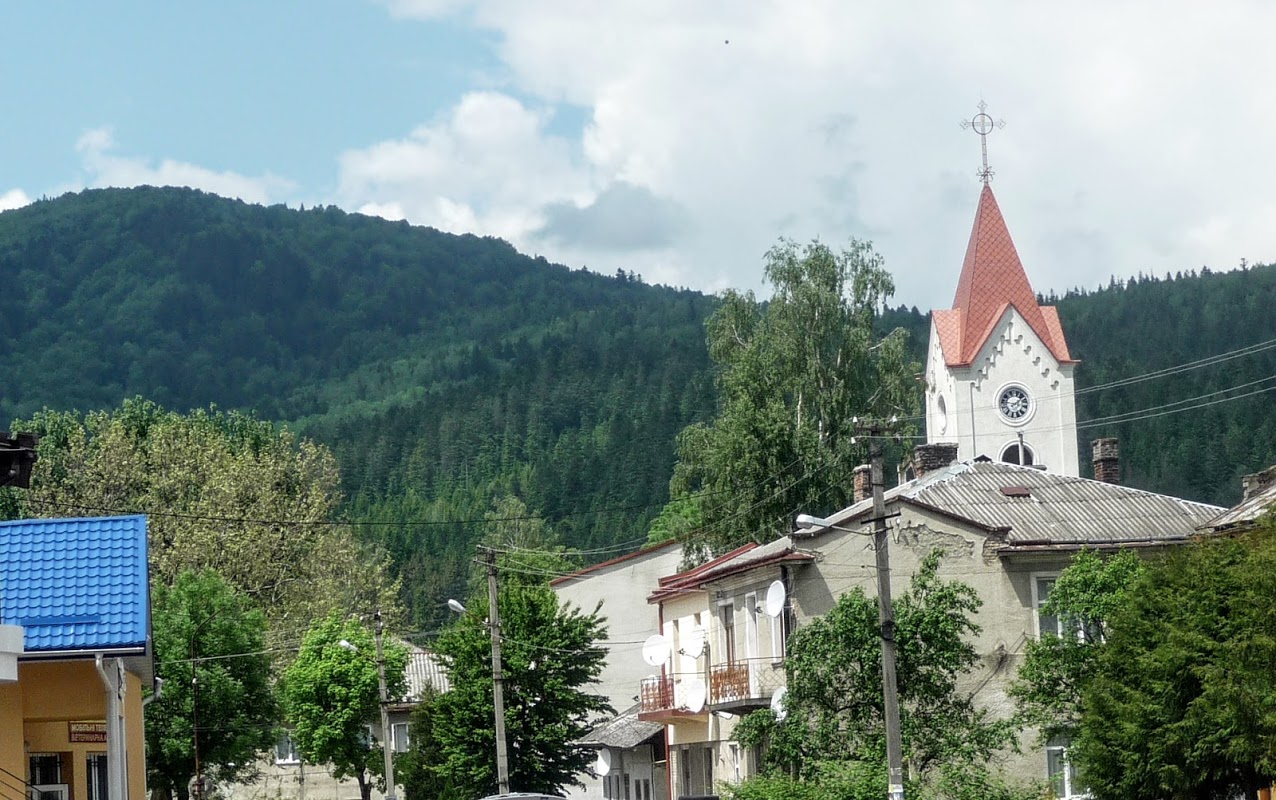
The Roman Catholic Church of the Seven Sorrows of the Virgin Mary was built in 1895 on the site of a wooden one that burned down in the fire that destroyed a third of the town. Mass was celebrated here until the coming of Bolshevik rule in 1939. That a church might house a power station is something I had never heard of before. The Skole church held equipment for supplying electricity, which reduced it to ruins. The small Catholic parish has restored the shrine.

The clock on the tower showed the exact time.
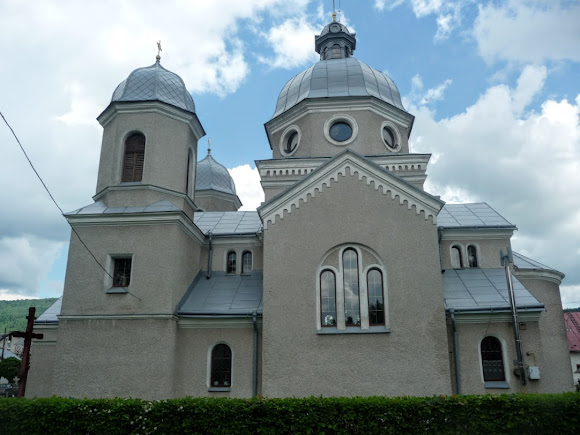
A contemporary of the Roman Catholic church is the Greek Catholic Church of the Nativity of the Most Holy Mother of God.


On the church there is a plaque commemorating the Union of Brest of 1596, when the Orthodox parishes went over to Greek Catholicism.


Sadly, I did not manage to see the Orthodox wooden Church of the Archangel Michael, since rain clouds were gathering and it lay at the other end of town. And in any case I was more interested in an ancient sacred structure — the 16th-century Church of Saint Panteleimon. What else did I manage to see along the way?

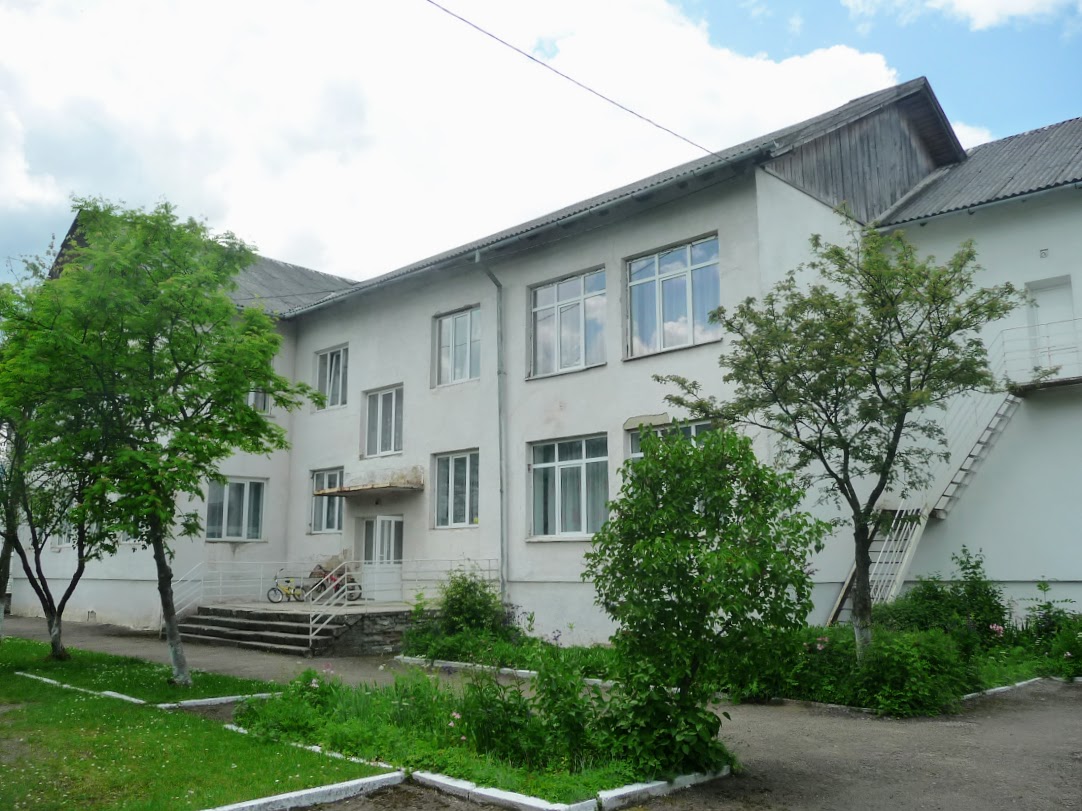
The yard of the kindergarten was empty — it was quiet time.

The second school, with Russian as the language of instruction, was set up specially for the children of the servicemen stationed in Skole. Paper snowflakes were stuck to the school windows, even though the last bell of the school year was approaching.

Five sons of the Skole area died in Afghanistan, doing their internationalist duty. Five cranes, flown forever from their native places.


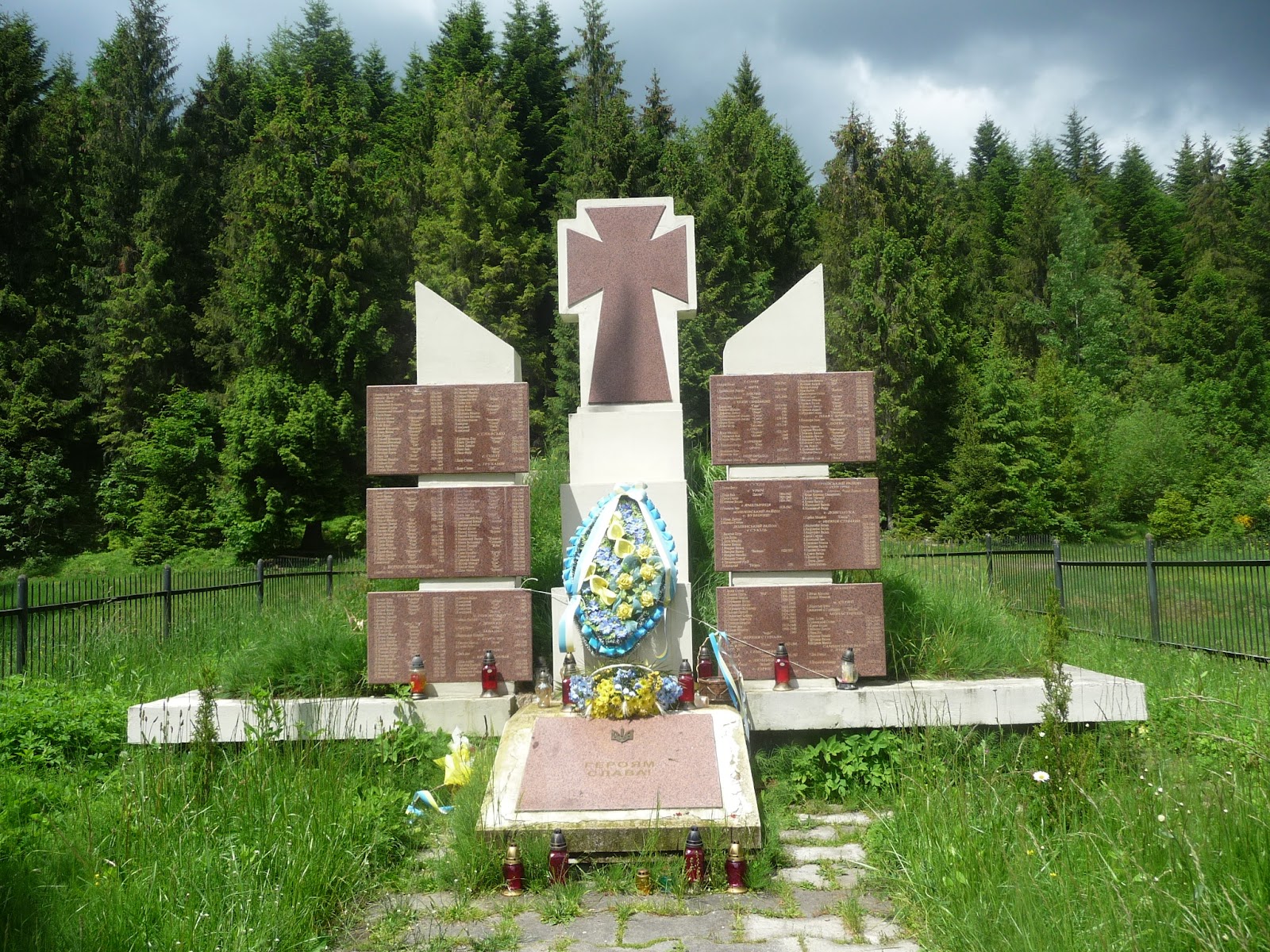
On the memorial plaques of the Second World War military memorial are the names of the soldiers who liberated the area from Nazism in 1944.

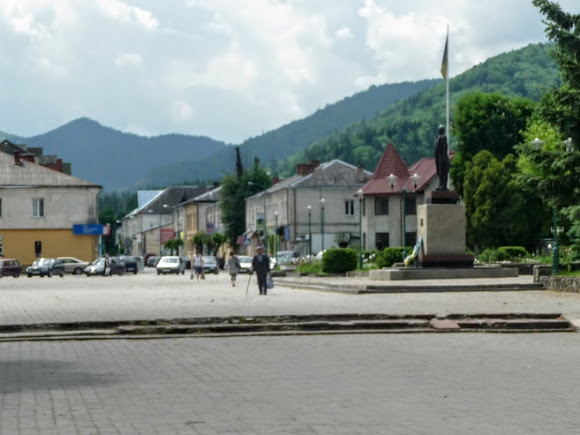
On Independence Square the town's events and festivals are held.


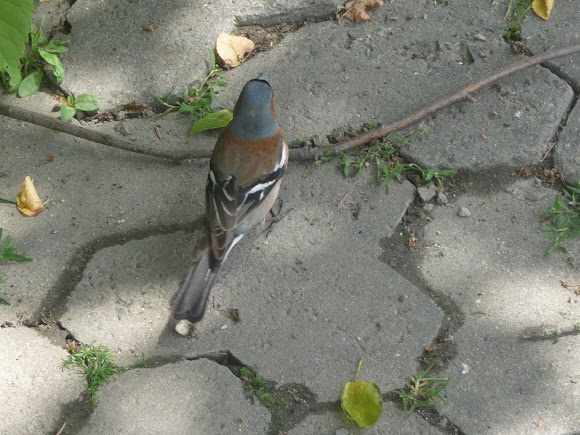
The birds, too, feel quite at home there.
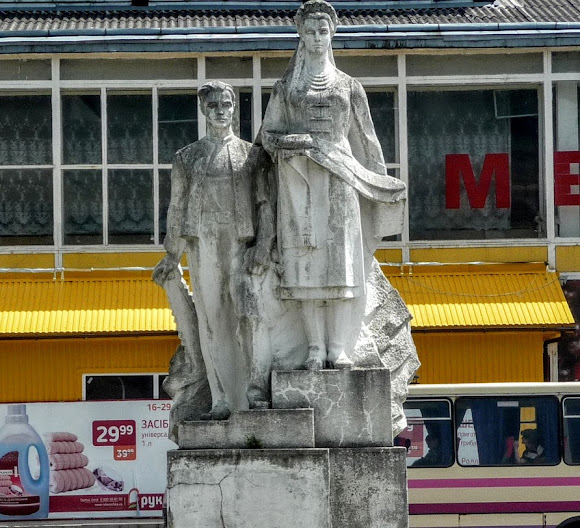
The sculpture of a lumberjack and a hospitable Skole woman is in need of restoration.
Numerous little shops have taken over the premises of the cinema, whose facade has been disfigured with advertising.

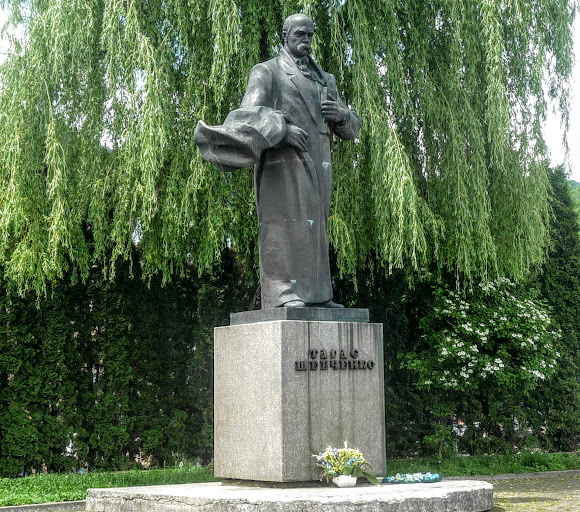
The monument to our prophet was put up back in 1961, for the centenary of the poet's death. The sculpture, to my eye, is a very fine one from an aesthetic point of view. The Kobzar's mother, Kateryna Yakymivna Shevchenko, was a Boiko by birth — and the Skole area is part of the Boiko land.
Five minutes' walk from the monument, along the street named after the poet,

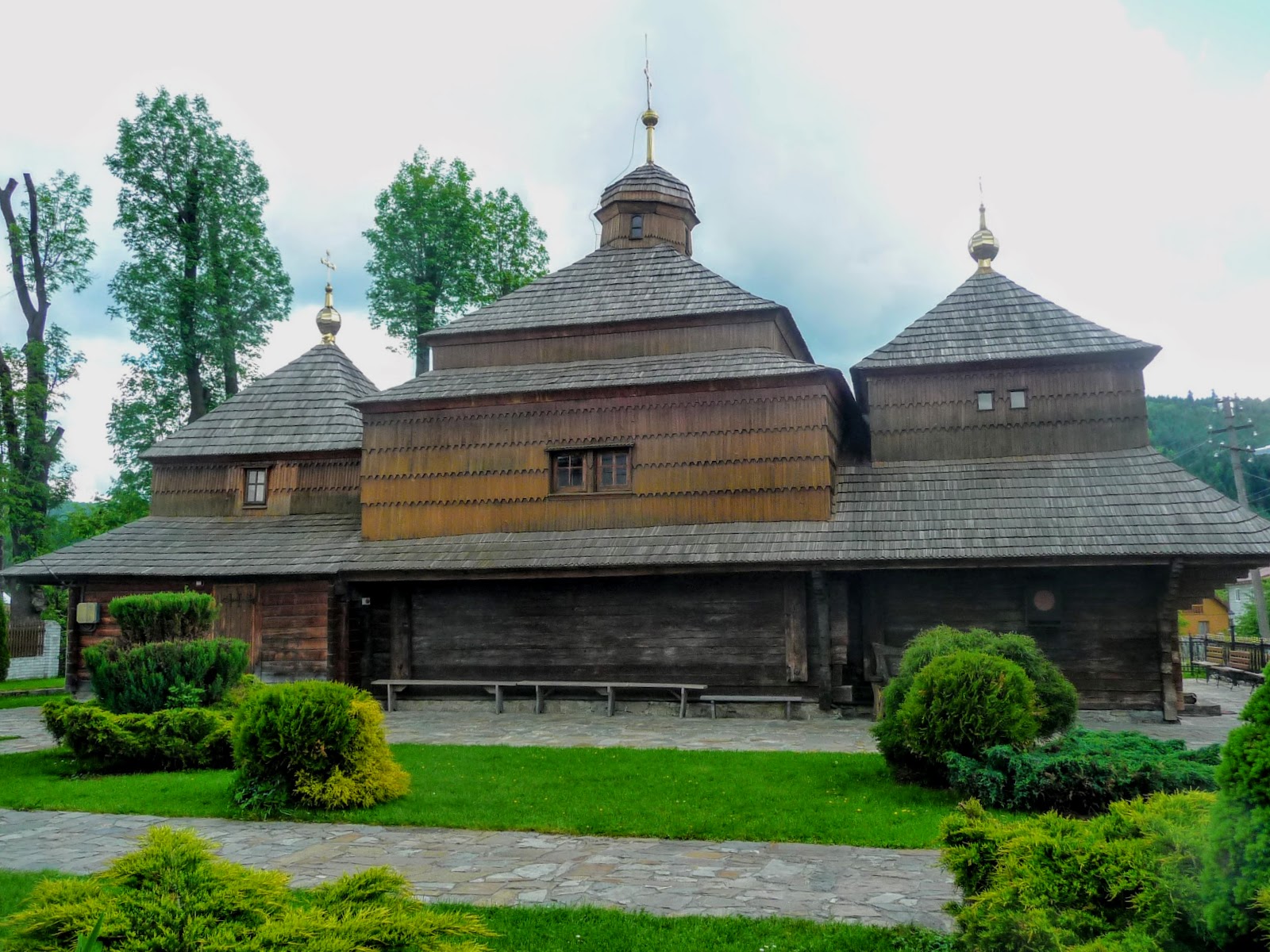
and I was already looking at the ancient wooden Church of Saint Panteleimon.
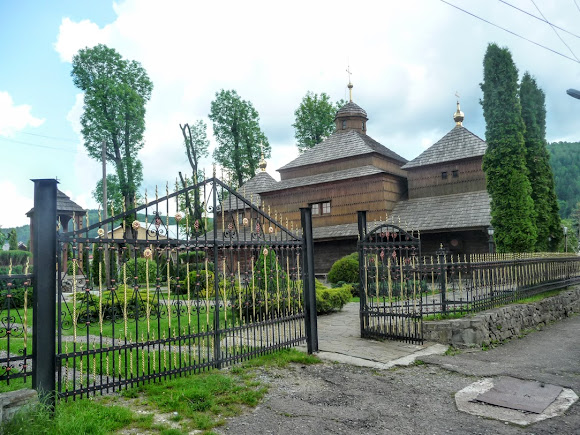
Built in 1591 in the Boiko style, it has survived thanks to the efforts of the people of Skole.

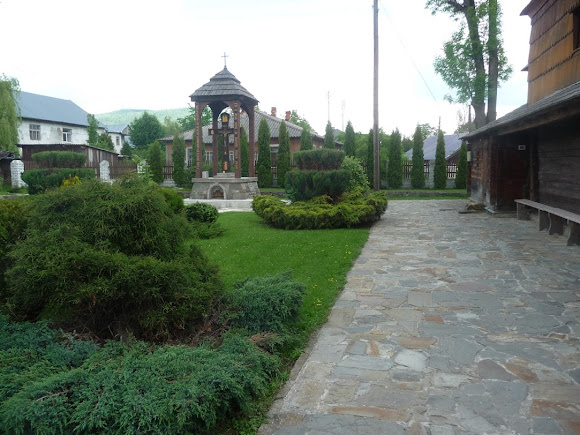
Earlier the church was consecrated in honour of Saint Paraskeva.


Once the Church of the Nativity of the Most Holy Mother of God was built, services were held in this church only on the great feast days.

After the Second World War it was closed, and for a long time it housed a Lenin museum, which was also shut down. The church furnishings and utensils vanished without a trace. In 1993 the first service was held in the reopened church.

The wooden bell tower, with its surviving inscription showing it was built in 1760, is an inseparable part of the architectural ensemble.
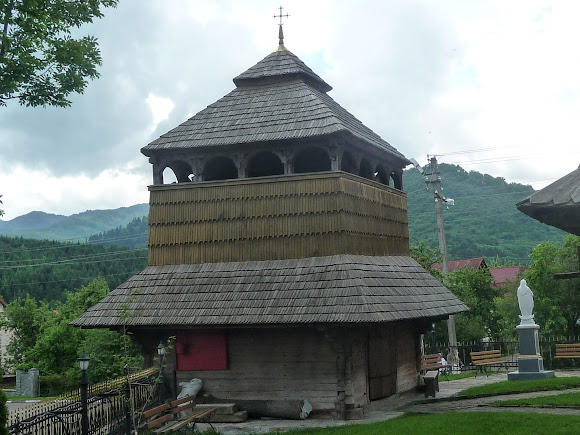
It once served as the entrance to the churchyard.


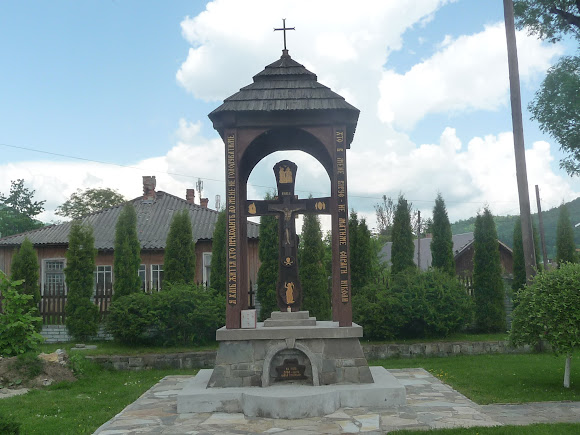
Next to the church, at the crossroads, stands a memorial marker for the 600th anniversary of Skole.
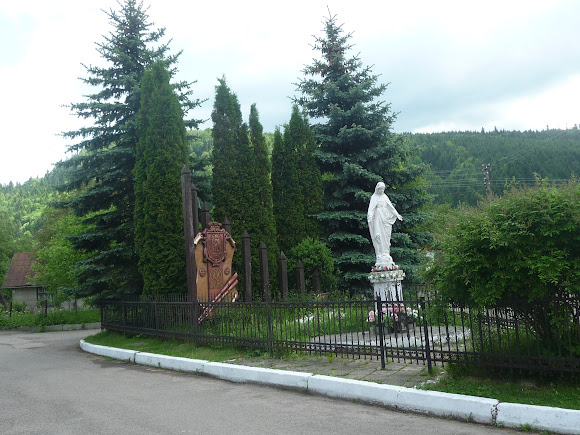

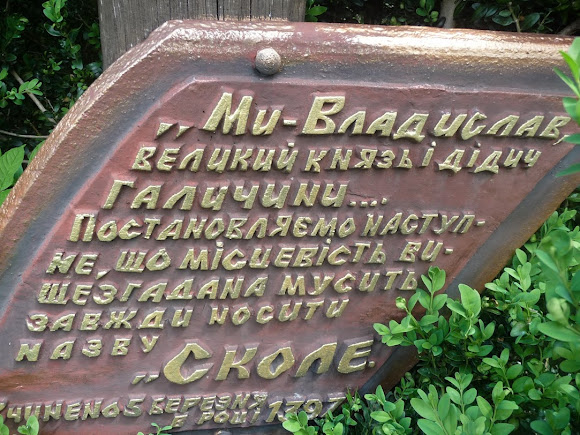
Suddenly the rain began, and I did not have time to see the palace of the Barons Groedl in Demnia.
After the Second World War, the NKVD torture chambers were housed in this splendid palazzo adorned with stucco. Now it holds a boarding school for orphans and for children from distant villages that have no school of their own. But even without seeing it, my trip to Skole stayed full of impressions, which I share with you.


 |
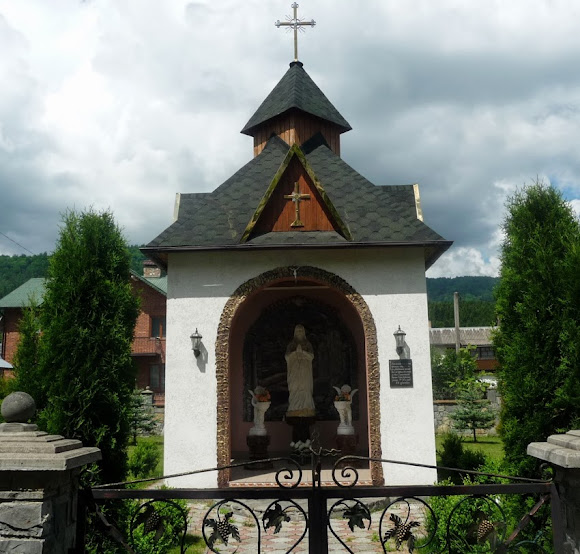
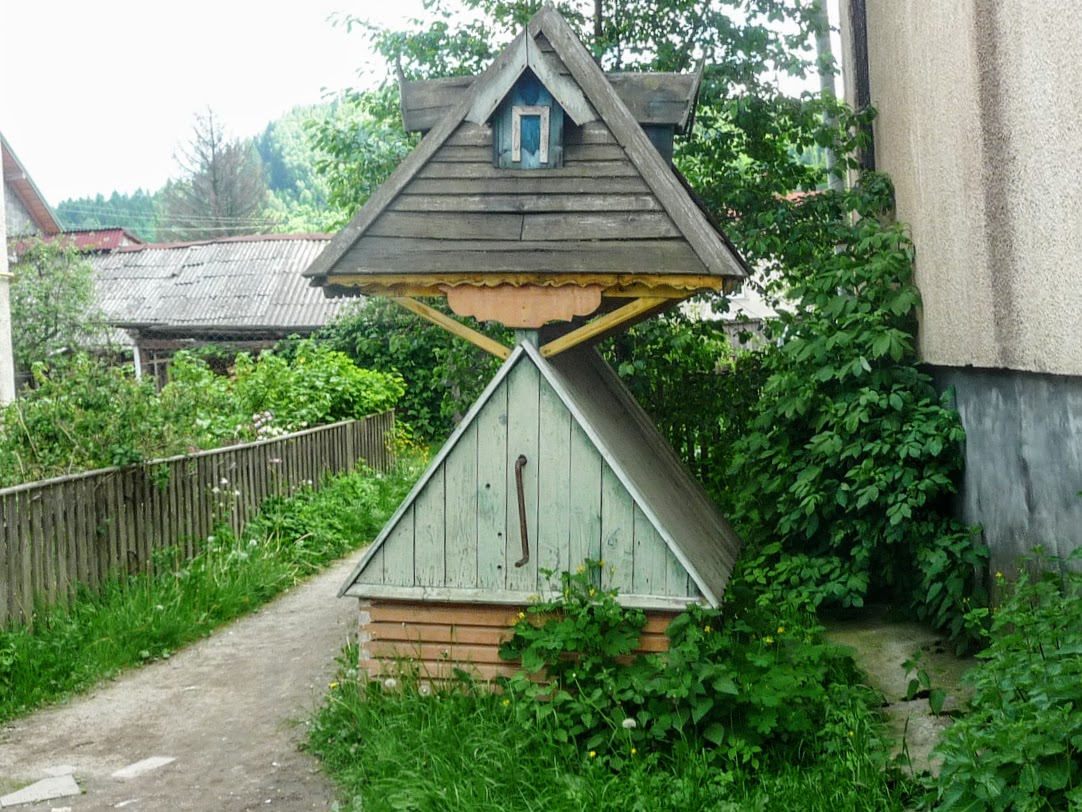
| Skole. The chapel. |


It used to be a school for boys.










Suddenly the rain began, and I did not have time to see the palace of the Barons Groedl in Demnia.
After the Second World War, the NKVD torture chambers were housed in this splendid palazzo adorned with stucco. Now it holds a boarding school for orphans and for children from distant villages that have no school of their own. But even without seeing it, my trip to Skole stayed full of impressions, which I share with you.

This story is also available in Ukrainian: В Сколе – і по горам, і по місту

No comments:
Post a Comment
Leave your impression