Vasylkivka is one of the 22 district centres of Dnipropetrovsk region.
 |
| Vasylkivka. Dnipropetrovsk region |
Along an unpaved road from
the Bakai reserve I came out onto the outskirts of the settlement.
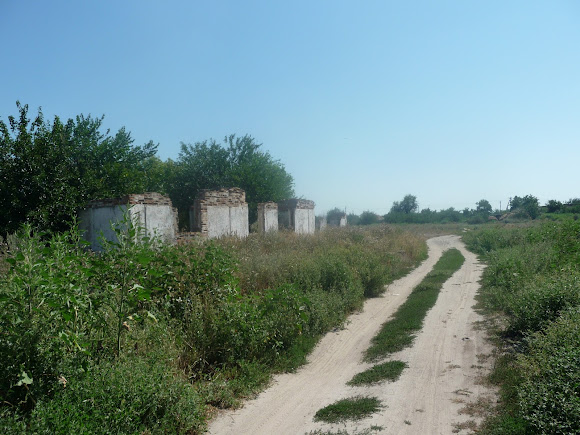 |
| The outskirts of the settlement. Ruins of agricultural buildings |
The first to pay their respects were the goats grazing by the ruins of the homesteads.
 |
| The outskirts of the settlement. Goats by the ruins |
Horned Whiteys and Blackies kept crossing my path throughout the whole tour of the streets of Vasylkivka, my acquaintance with which I began in the residential district called Nyz (the Lower part).
 |
| The outskirts of the settlement. People ride to the milking on motor transport |
 |
| The Nyz district. Soborna Street. A shop |
 |
| The Nyz district. Soborna Street. Shops |
 |
| Soborna Street. A building that belonged to the collective farm |
The former Lenin collective farm is named as it is because it stands on the southern side of the settlement.
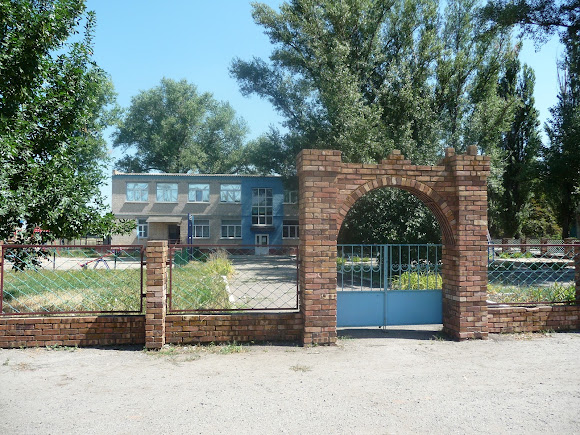 |
| Soborna Street. A kindergarten |
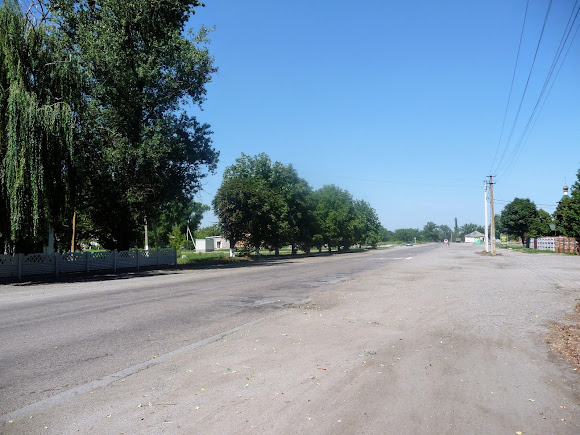 |
| Soborna Street. Highway T 04-01 |
A shop with the characteristic name 'Nyzovychok' (Little Lowlander).
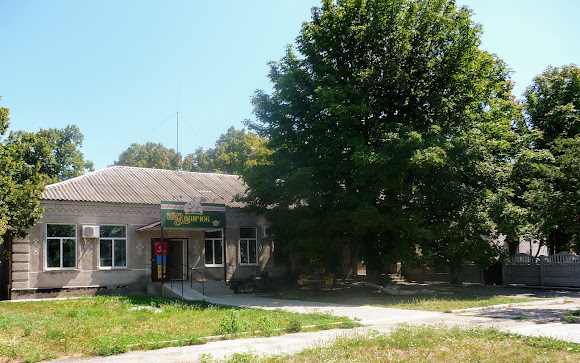 |
| Soborna Street. The 'Nyzovychok' shop |
The architects of Vasylkivka, wishing to give it a festive, upbeat look, designed buildings with pompous columns.
 |
| Soborna Street. The House of Culture |
 |
| The House of Culture with a library. A former cinema |
I came across quite a few of them.
 |
| The Nyz district. Soborna Street. An administrative building |
The school is a temple of learning. By the end of the 19th century Vasylkivka already had two schools.
 |
| The Nyz district. Soborna Street. The school |
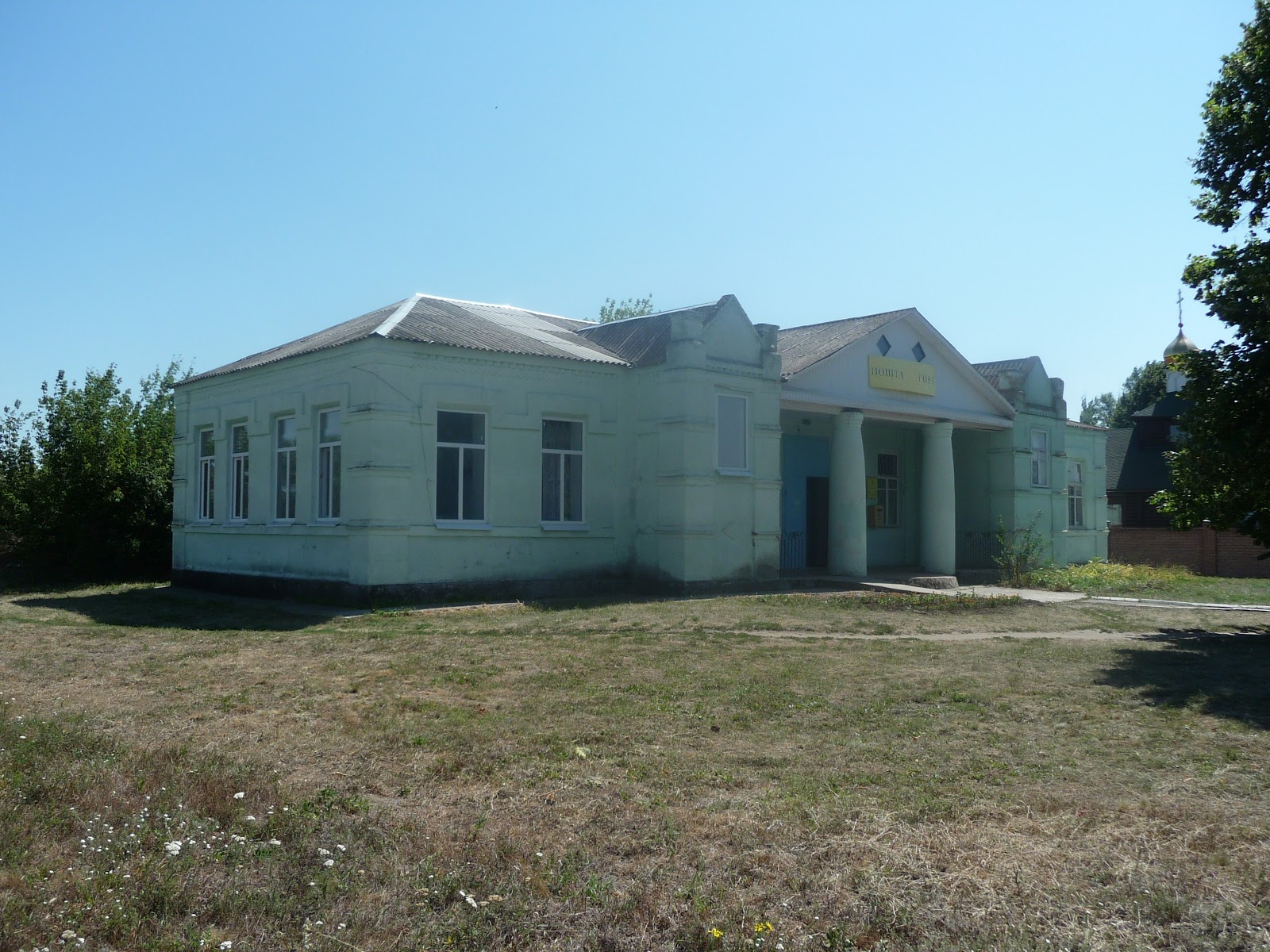
In a building with columns resembling milk bottles are housed the post office and the outpatient clinic.
 |
| Soborna Street. The outpatient clinic |
 |
| Soborna Street. The post office and the outpatient clinic |
 |
| A building that was an annexe to the demolished church |
A postbox with the emblem of post horns — the international symbol of the postal service.
 |
| A postbox |
 |
| Soborna Street. The post office |
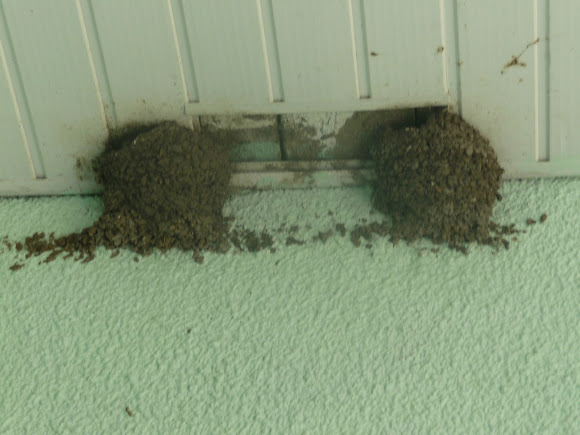 |
| Soborna Street. The post office. Swallows' nests |
On this spot there used to be a church; now only ruins remain.
 |
| Soborna Street. Ruins of the church |
Nearby, in 2007, a wooden Church of St Nicholas was built without a single nail.
 |
| Soborna Street. The Church of St Nicholas. UOC-MP. 2007 |
 |
| The wooden Church of St Nicholas. UOC-MP. 2007 |
 |
| The Church of St Nicholas. UOC-MP. 2007 |
A large area is taken up by a war memorial.
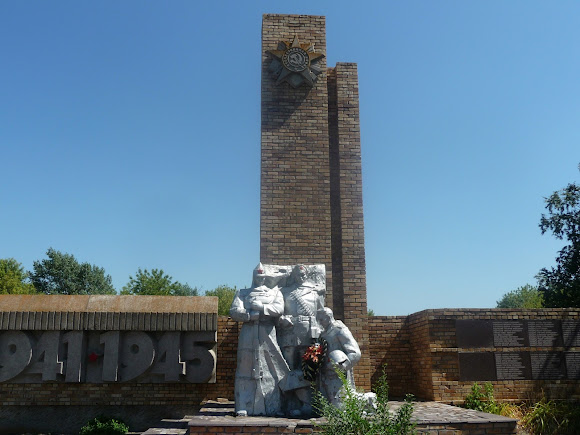 |
| The Second World War memorial |
On the approaches to the Dnipro, in September 1943, fierce fighting took place, and mass graves are at every step here.
 |
| Vasylkivka was liberated on 17 September 1943 by the 3rd Tank Brigade of the 243rd Rifle Division |
On a small football pitch, livestock now graze, devouring the unmown grass. And once, perhaps, it was here that the sports commentator Volodymyr Maslachenko, beloved of many and a native of Vasylkivka, scored his first goals.
 |
| The football pitch and sports ground |
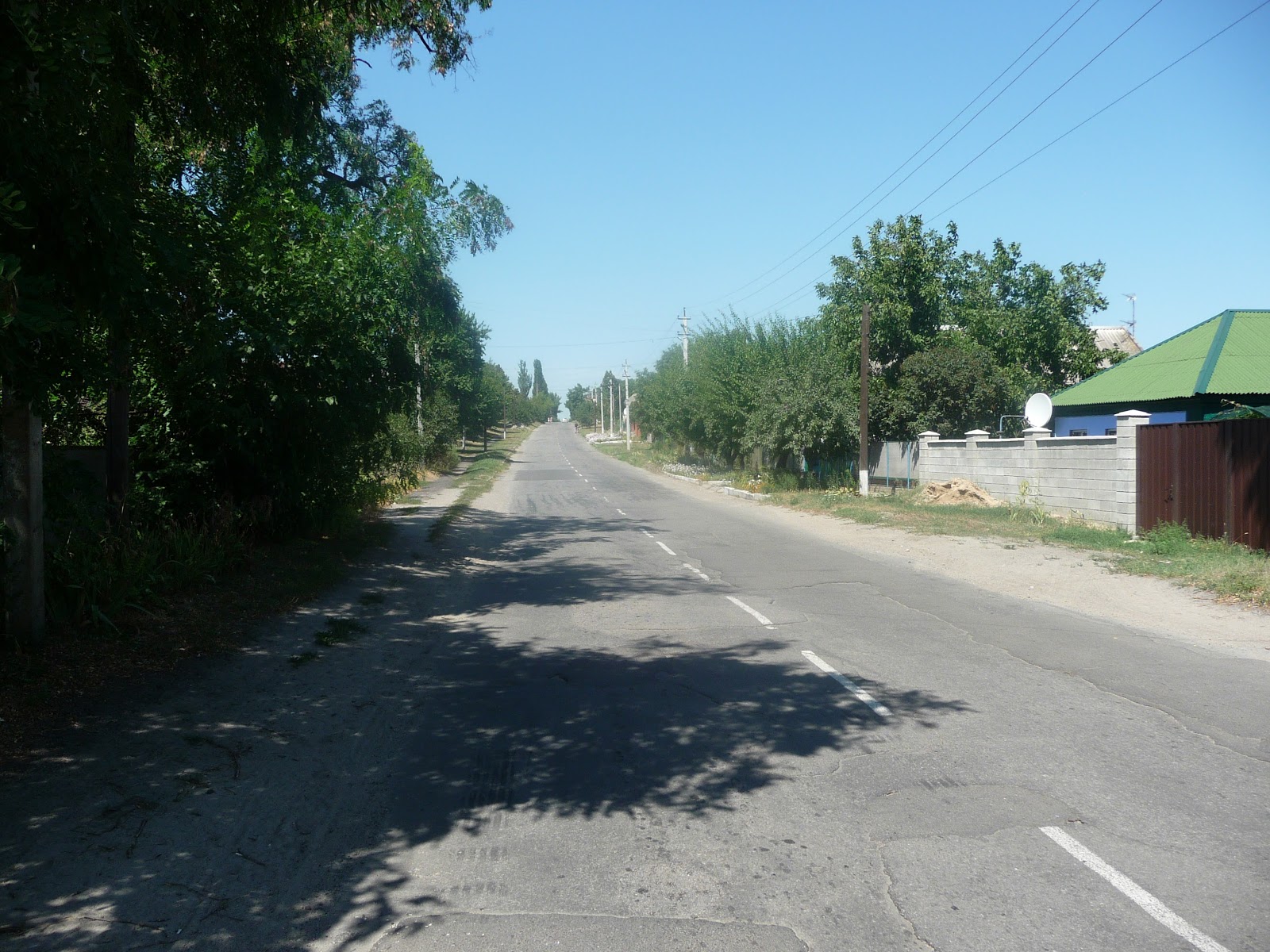
My route continued along Soborna Street, the central and utterly deserted one, over asphalt that had melted in the 38-degree heat.
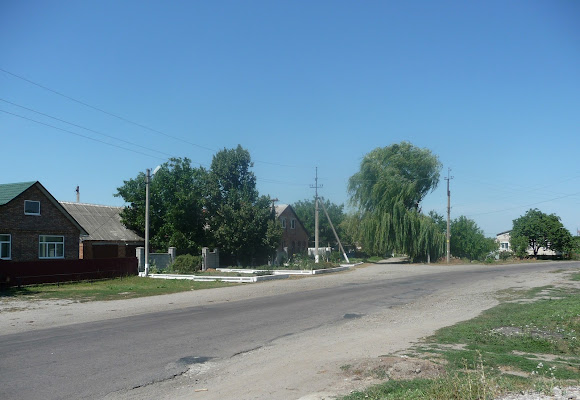 |
| The Nyz district. Soborna Street |
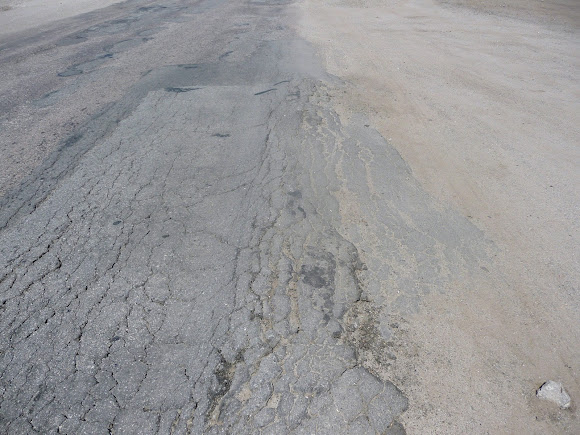 |
| Soborna Street. Highway T 04-01 |
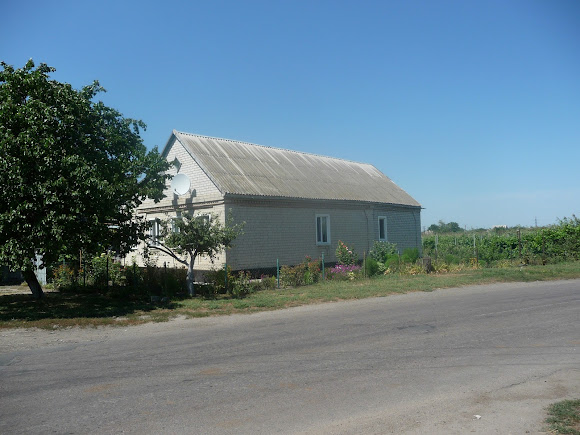 |
| The Dnipro — Vasylkivka — Chaplyne — Pokrovske — Melitopol motor road |
The shop-cafe in this district was closed,
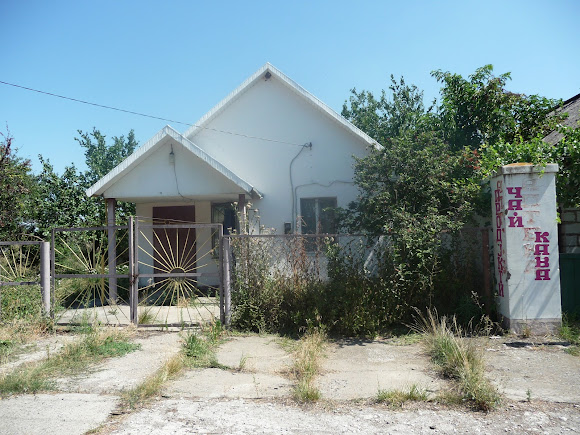 |
| Soborna Street. A closed shop-cafe |
but the residents carry on roadside trade in garden produce.
 |
| Vegetables for sale on the verge of Highway T 04-01 |
Motorists driving along the Dnipro — Synelnykove — Vasylkivka — Pokrovske — Melitopol road are grateful to the people of Vasylkivka for the fresh fruit and vegetables. This year the branches in the orchards are simply breaking under the weight of apricots and plums.
 |
| Soborna Street. A large apricot tree |
On the roadside the goats studied me with curiosity — what kind of lone traveller was this, passing by them in the incredibly scorching heat.
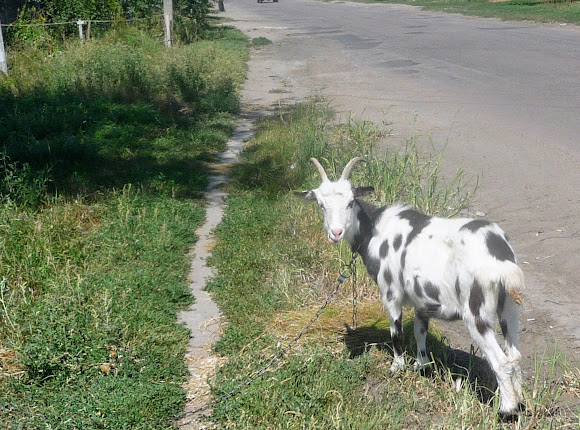 |
| Soborna Street. Goats on the roadside |
 |
| The black goats find it even hotter than the white ones |
 |
| Soborna Street. Goats for sale |
In the 16th-18th centuries these lands were part of the Zaporizhian Sich.
 |
| The Nyz district. Soborna Street |
The year of the settlement's founding is generally taken to be 1707, when a Cossack officer set up a watch post in a natural boundary here, which served to observe the movements of the Tatars.
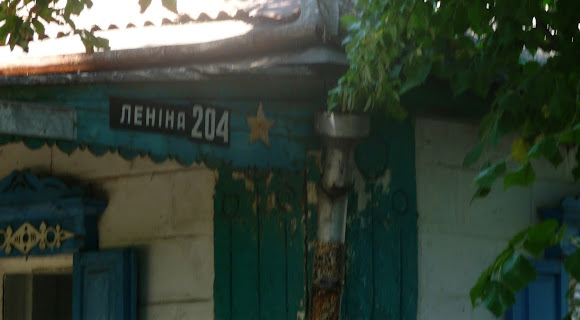 |
| The former Lenin Street. Now Soborna Street. A star on a veteran's house |
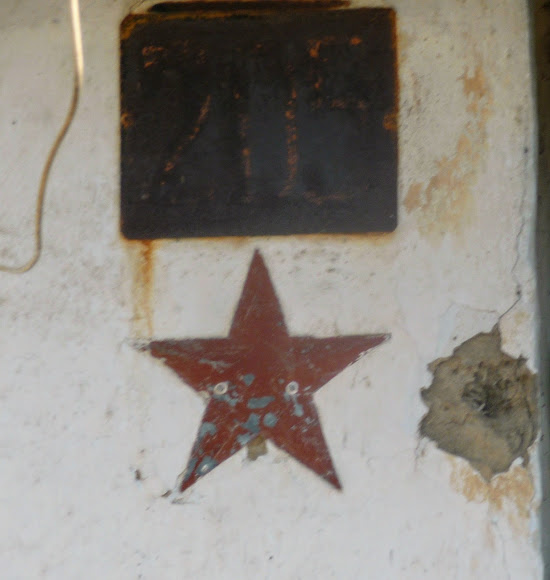 |
| Soborna Street. A star on a veteran's house |
 |
| Soborna Street. A veteran's house with the star preserved |
After the decree of Catherine II the Zaporizhian Sich was abolished, and the winter camp received the status of a military settlement, to which families from the Poltava region moved.
 |
| Vasylkivka. The Nyz district. Soborna Street. Houses |
The construction of the Katerynynska Railway at the end of the 19th century fostered the development of the region's economy. Three fairs a year at that time were an indicator of the economic growth of the Vasylkivka volost. The station is called Nerodivka.
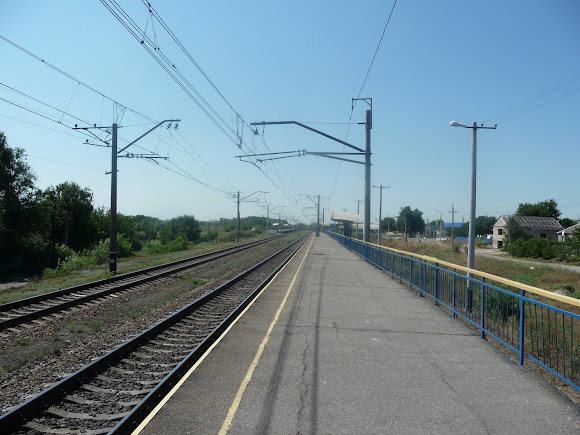 |
| The Nerodivka (Vasylkivka) railway platform |
A legend has survived that the residents did not want the station to be built, considering the 'chavunka' (the iron railway) a devilish thing. The station was opened three kilometres from Vasylkivka, at Ulianivka, while the platform in the settlement was named Nerodivka (which does not gladden).
 |
| The Nerodivka (Vasylkivka) railway platform |
The Synelnykove — Chaplyne branch line crosses the settlement through the middle from west to east. The northern part is called the Centre, the southern one — Nyz (the Lower part).
 |
| A level crossing over the Synelnykove — Chaplyne branch line |
There are two versions of the settlement's name. The first mentions its founder, the Cossack scribe and priest Vasyl Poklovytyi; the second, the estate owner Vasylenko.
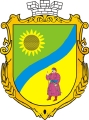 |
| The coat of arms of Vasylkivka, depicting a Cossack, the settlement's founder, a wheat field, the Vovcha River and a sunflower on a green field |
Through the central part of Vasylkivka I had to walk uphill.
 |
| Vasylkivka. Soborna Street |
I always say 'thank you' for the wells and benches by the road.
 |
| Soborna Street. A well |
The residents call the part of Sportyvna Street with its half-withered spruces and administrative buildings the boulevard.
 |
| Sportyvna Street |
 |
| Sportyvna Street. The district court |
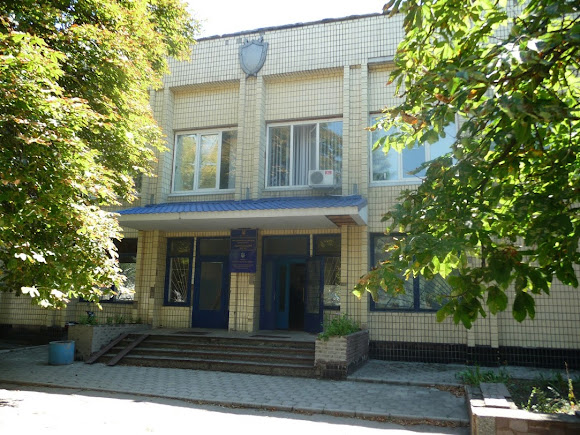 |
| Sportyvna Street. The justice building |
A shopping centre with small little shops.
 |
| Sportyvna Street. Shops |
A park with a war memorial
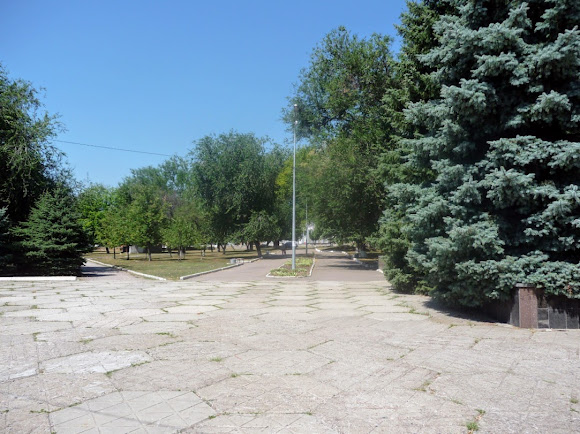 |
| The park |
 |
| The park. The war memorial |
and with a flower bed of blooms that were begging for moisture.
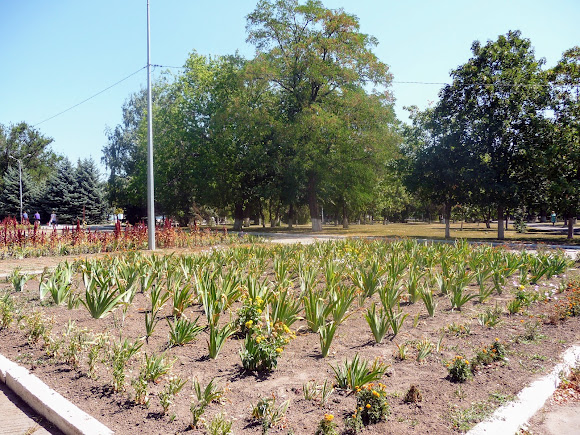 |
| The park. The flower bed |
The cross was erected on the site of the Holy Ascension Church, built in 1781, where Vasyl Poklovytyi was the priest, and demolished by the Bolsheviks in 1933.
 |
| The park. A cross on the site of the demolished church |
Typical of district centres is the district council, with its multitude of officials' offices, where pressing and important matters are settled.
 |
| Vasylkivka. The district council |
Young musicians grasp the rudiments of their craft in a building with four columns adorned with scroll-like volutes.
 |
| The music school |
The fairly wide Parkovyi Lane, which borders the green oasis of Vasylkivka's centre, led me to the local history museum, which, of course, was closed, despite it being working hours.
 |
| Parkovyi Lane |
 |
| Parkovyi Lane. The Local History Museum |
In the 11th-13th centuries the nomadic Cumans left a great number of kurgans in these parts, the entrances to which were guarded by stone babas.
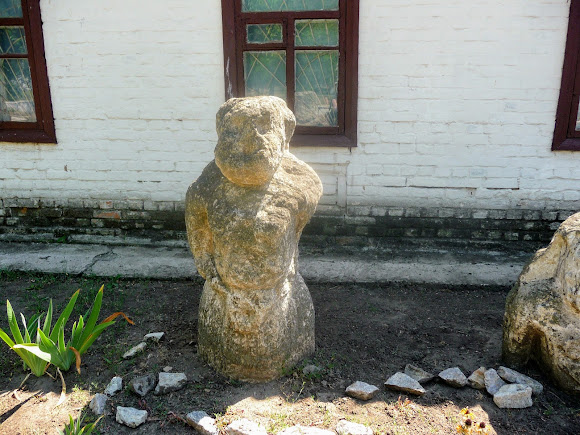 |
| The Local History Museum. An open-air exhibition |
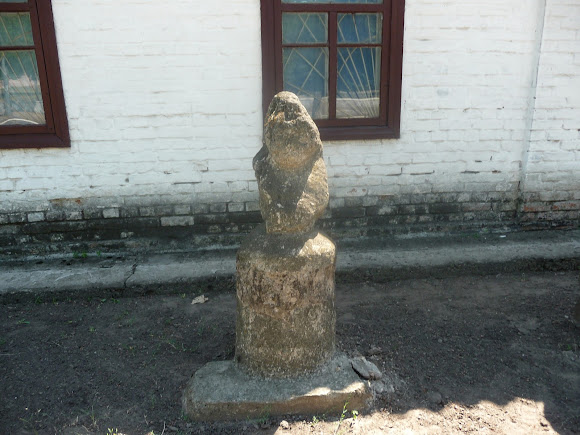 |
| Cuman stone babas |
Now a row of ancient warriors, linked with the cult of the ancestors, stands guard over the museum, which, to my regret, was closed.
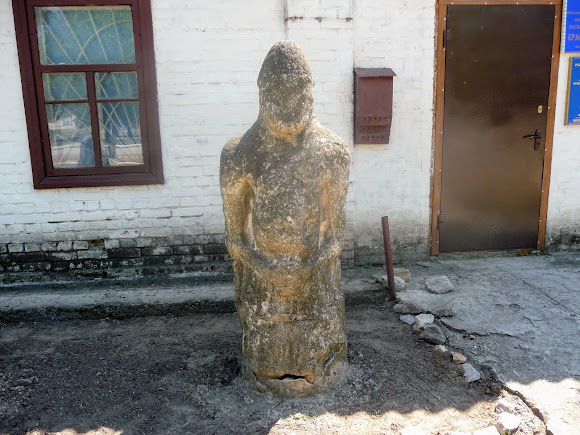 |
| A stone warrior |
 |
| The Local History Museum. An open-air exhibition |
In Vasylkivka the social barber's shop and the sewing workshop have not sunk into oblivion.
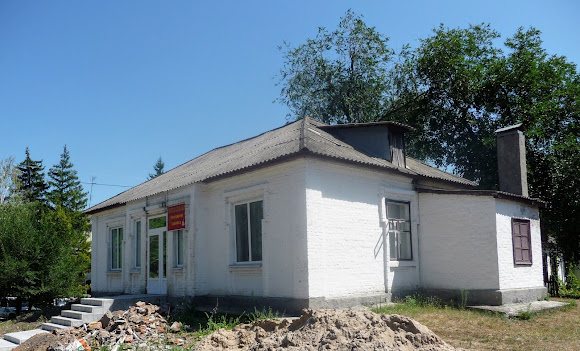 |
| The social barber's shop and sewing workshop |
On Pershotravneva Street the Martas and Lyskas greeted me again — goats that would not have said no to a drink of water on that stifling hot noon, but there was no vessel for drinking anywhere near them.
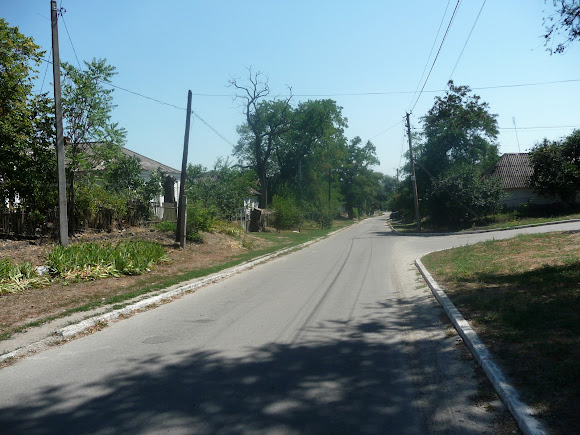 |
| Pershotravneva Street |
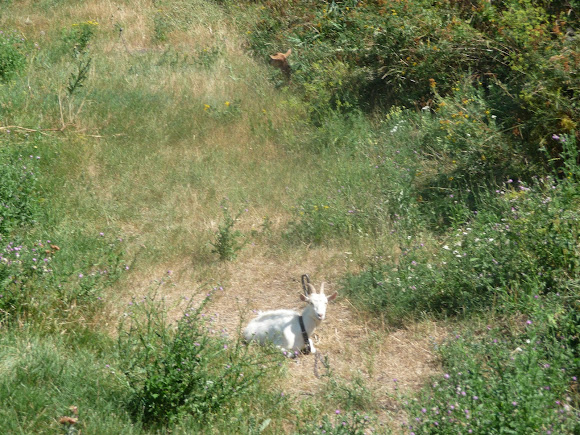 |
| Goats. Goats again. |
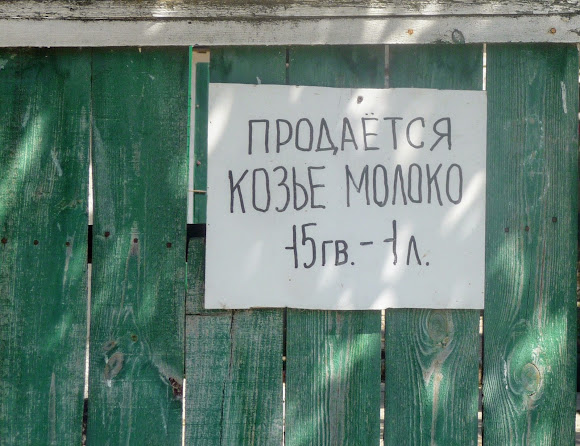 |
| Pershotravneva Street. Milk for sale |
The fire and rescue station works tirelessly during this extraordinarily hot time of year.
 |
| The fire and rescue station |
My tour of sunny Vasylkivka ended under the saving canopy of the passenger shelter at the Nerodivka (Vasylkivka) railway platform, but some evil spirits had cancelled the Dnipro — Chaplyne electric train.
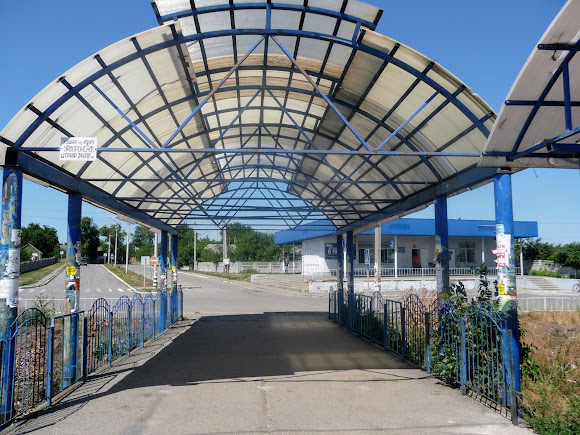 |
| The passenger shelter and the bus station |
Buses at the bus station are not as frequent an occurrence as in the city. I had to climb back up to the centre in order to leave by the bus
Dnipro - Pokrovske, which for some reason does not call at the bus station.
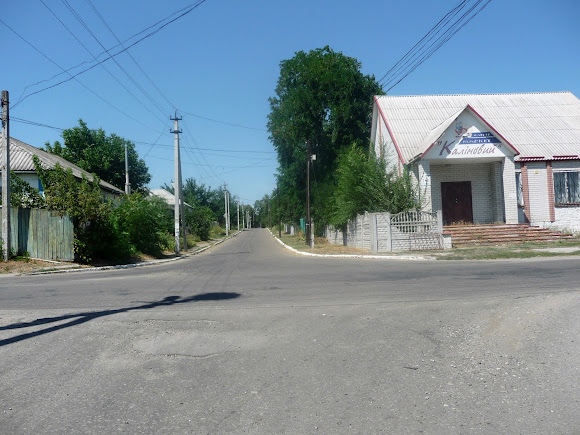 |
| The 'Kalynovyi' shop. The Dnipro — Pokrovske bus stops beside it |









No comments:
Post a Comment
Leave your impression